

From deploying online public services and supporting citizens in using chip-embedded national identity cards and cashless payments to guiding farmers in applying technology in agricultural production and consumption, digital transformation has been creating many positive changes in border regions.

"Paving the way" for a government closer to the people.
Following the merger, Tay Ninh has 19 communes located in border areas. Despite the challenging socio -economic conditions, the local authorities have invested in infrastructure to support digital transformation, including internet access, mobile network coverage, and public administrative service centers. Digital platforms serving people's lives are increasingly being improved, creating favorable conditions for people to access modern services.
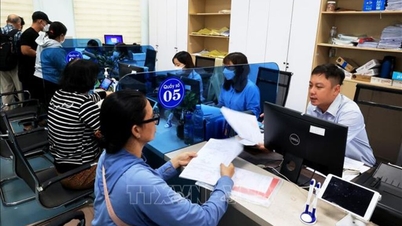
In Long Thuan commune, the application of information technology in resolving administrative procedures has yielded many positive results. The digitized "one-stop" service center allows people to submit applications, search for information, and receive results online quickly, reducing the need for multiple trips as before. Many procedures are handled using the "four-in-one" model, including receiving, evaluating, approving, and returning results right at the public administrative service center.

According to Tran Thi Tanh , Vice Chairman of the People's Committee of Long Thuan commune, the locality has not only invested in more machinery and equipment to support digital transformation but also applied AI to help people carry out administrative procedures more conveniently. As a result, the process of handling applications has been shortened, transparency has increased, and people's satisfaction has improved.
Along with Long Thuan, Phuoc Chi commune is also implementing a comprehensive digital transformation in public administration. At the commune's Public Administrative Service Center, officials and civil servants are fully equipped with computers connected to the internet and regularly receive training in information technology skills to support citizens in operating in the digital environment.
According to Le Vu Phuong , Deputy Director of the Phuoc Chi Commune Public Administrative Service Center, in the beginning, people were unfamiliar with accessing online public services. However, through propaganda work and the support of mass organizations, people gradually became accustomed to submitting applications online and receiving results according to the appointment schedule, reducing the need for frequent travel.
As someone who has directly experienced the digital administrative model, Mr. Nguyen Tan Phong (residing in Phuoc Chi commune) said that operating on the current Public Service Portal is quite convenient. If people encounter difficulties, they are always guided attentively by local officials, making the process of completing procedures easier.
Beyond administrative procedure reform, digital transformation has also enabled people in border areas to access healthcare, education, e-commerce, and agricultural production information more quickly. Many households have learned to apply technology in promoting and selling agricultural products, gradually increasing their income and improving their living standards.

"Digital literacy for the masses" is spreading to every household.
One of the highlights of the digital transformation process in the border communes of Tay Ninh is the "Digital Literacy Movement for the People". This is considered a practical solution to improve digital skills for the people, especially the elderly, farmers, and people in remote areas.
In Long Chu commune, 12 community digital technology teams have been established with 377 members, including village heads, community organizations, and people knowledgeable in information technology. These community digital technology teams play a core role in guiding people to install and use applications that serve their daily lives, such as VNeID, online public services, cashless payments, and electronic health records.
According to Nguyen Van Phuoc , Head of the Culture and Social Affairs Department of Long Chu commune, the community digital technology teams are assigned specific tasks to directly support people in accessing digital technology. Through this, they gradually help people adapt to the digital environment and improve their ability to apply technology in their daily lives.

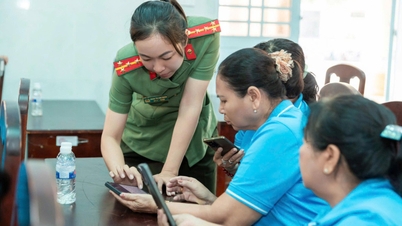
Notably, many community-based digital technology teams not only organize centralized training sessions but also go directly to individual households to assist with app installation and guide users on smartphone operation.
Mr. Lai Ngoc Loi, Party Secretary and Head of Long Thanh Hamlet, Long Chu Commune, said that members of the team often take advantage of their days off to visit each household to assist in installing VNeID and guide people on using applications for electronic transactions. To date, about 80-90% of households in the hamlet have received support in installing basic digital applications.
In Phuoc Chi commune, the "Popular Education Movement" is also being strongly implemented with many flexible forms. People are guided directly at cultural centers, residential areas, or through mobile propaganda sessions reaching individual households. Basic skills such as information retrieval, safe social media use, cashless payments, and accessing applications serving agricultural production are taught in an easy-to-understand manner, suitable for each target group.
According to Bui Thanh Tam , Deputy Head of the Culture and Social Affairs Department of Phuoc Chi commune, in the coming time, the locality will continue to improve the quality of activities of community digital technology groups; integrate the content of "Digital literacy for the masses" into party branch meetings, residential group meetings and the movement to build cultured families in order to widely spread the spirit of digital transformation in the community.
From these initial results, it is clear that digital transformation is no longer a distant concept in the border communes of Tay Ninh province, but is becoming increasingly evident in the lives of the people. Digital infrastructure is being invested in comprehensively, digital skills are gradually improving, and many essential services are being provided electronically, contributing to narrowing the gap between border areas and urban areas.
Digital transformation not only creates momentum for socio-economic development but also contributes to improving the efficiency of state management and maintaining national defense and security in border areas. Thanks to these positive changes, the border region of Tay Ninh is gradually catching up with the overall development of the province, opening up many opportunities for rapid and sustainable development in the future.
Source: https://baotayninh.vn/vung-bien-chuyen-minh-trong-ky-nguyen-so-148083.html


![[Photo] General Secretary and President To Lam presides over a meeting on preparations for the review of one year of operation of the three-tiered government system.](https://vphoto.vietnam.vn/thumb/1200x675/vietnam/resource/IMAGE/2026/06/02/1780391821195_a1-bnd-4595-9717-jpg.webp)

















































































Comment (0)