

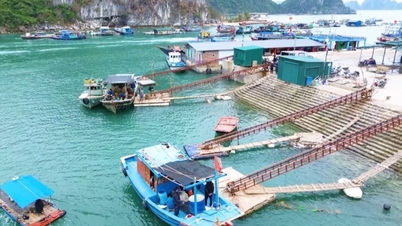
Surrounded by rugged terrain and mountains, Quang Hanh ward, the western gateway to Cam Pha City, has undergone a long process of development. It is the long-standing home of various ethnic communities: Kinh, San Diu, Tay, Hoa, etc. According to historical documents, before the 19th century, Quang Hanh was called Thach Long village, belonging to Cam Pha commune, Tien Yen district, Hai Dong prefecture, Quang Yen region.
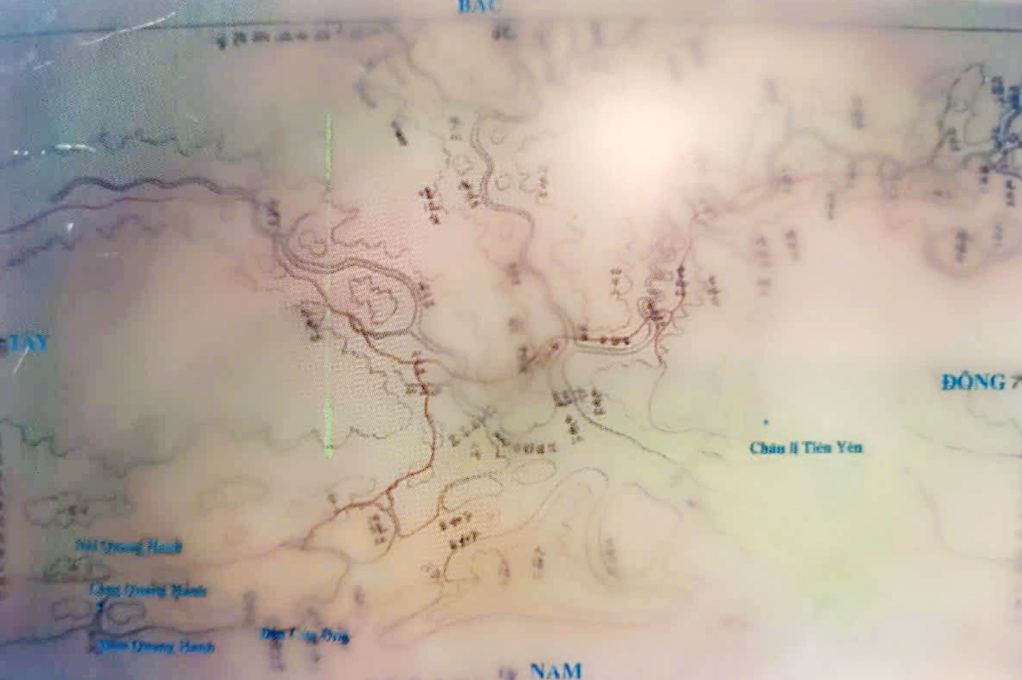
According to the map of Tien Yen district, Quang Yen province during the Dong Khanh era (1886-1888), place names such as Hanh Son and Hanh Tri were recorded. The village of Quang Hanh was named after these places. Some documents suggest that the first people to set foot on this land were Kinh people. They traveled by sea, passed through Hanh cave and Hanh lagoon to get fresh water, take shelter from storms, and then settled down. Other records suggest that the first people to explore and discover the value of this land were the San Diu ethnic group who came here to establish villages and communities.
The merits of the ancestors from the dawn of time are worshipped by the people at the Quang Hanh village communal house and are revered as the village's tutelary deity. Before 1945, Quang Hanh commune was divided into four villages: Dong Lon, Lang Cu, Lang Dai, and Lang Bai. Dr. Tran Quoc Hung, from the Institute of Ethnic Minority Culture Research under the Government 's Committee for Ethnic Minorities, who has thoroughly researched the culture and geography of this land, assessed that Quang Hanh has a long history of formation and development, closely linked to the development and convergence of people from many regions, creating a diverse and unique culture, contributing to the development of this beautiful land.
During the years of resistance against the French (1946-1954), Quang Hanh commune was an administrative unit belonging to Cam Pha district, Hon Gai special zone, Quang Yen district (1946), then belonged to Cam Pha town, Hong Quang special zone, and became Quang Hanh ward on September 1, 2001, according to Government Decree No. 51/CP.
In 1946, when the nationwide resistance war broke out, the people of Quang Hanh always supported the resistance, bravely sheltering cadres and secret bases, and fighting against French spies and Vietnamese traitors. Quang Hanh communal house became a place for secret meetings, a transit point for revolutionary cadres and food supplies for the mining area and the Dong Trieu and Hoanh Bo war zones.
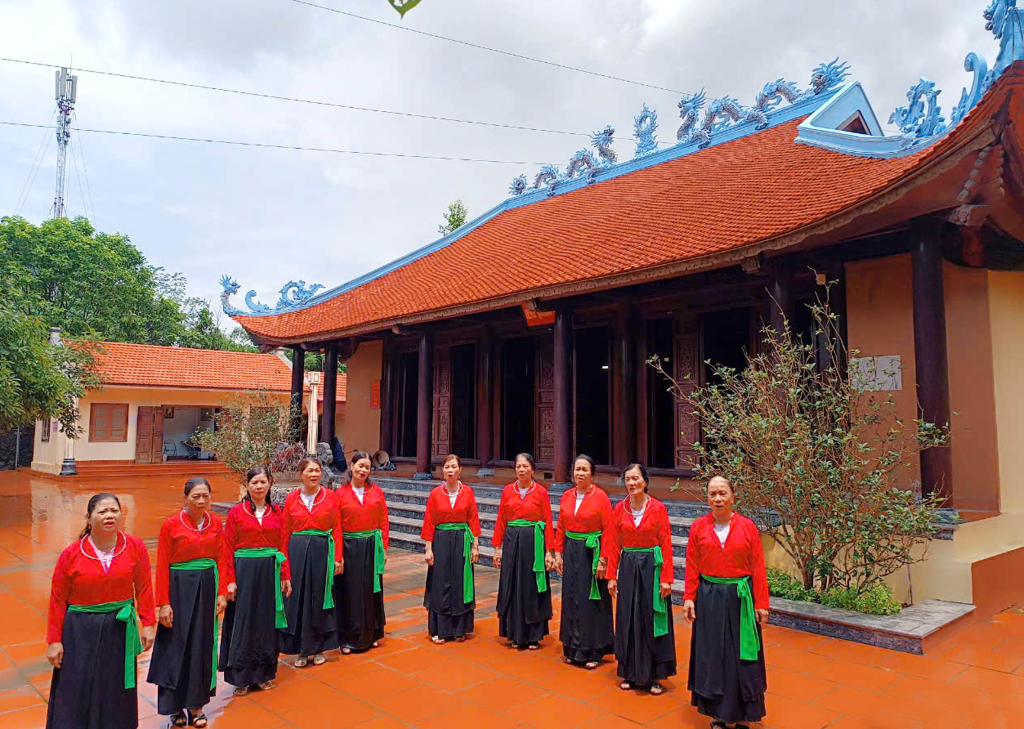
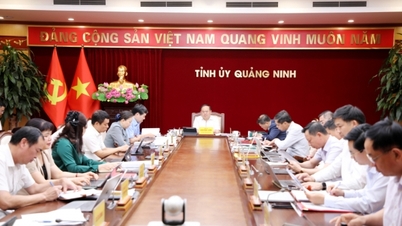
Building upon its historical traditions, Quang Hanh today is a place where traditional values from generations past are preserved and promoted, showcasing the values of the Kinh, San Diu, Tay, and Hoa ethnic groups in the area. "Thanks to these strengths and cultural values, the ward has been guided and has leveraged its combined strength to become a highlight in the western part of Cam Pha City," shared Comrade Nguyen Minh Tuan, Secretary of the Quang Hanh Ward Party Committee.
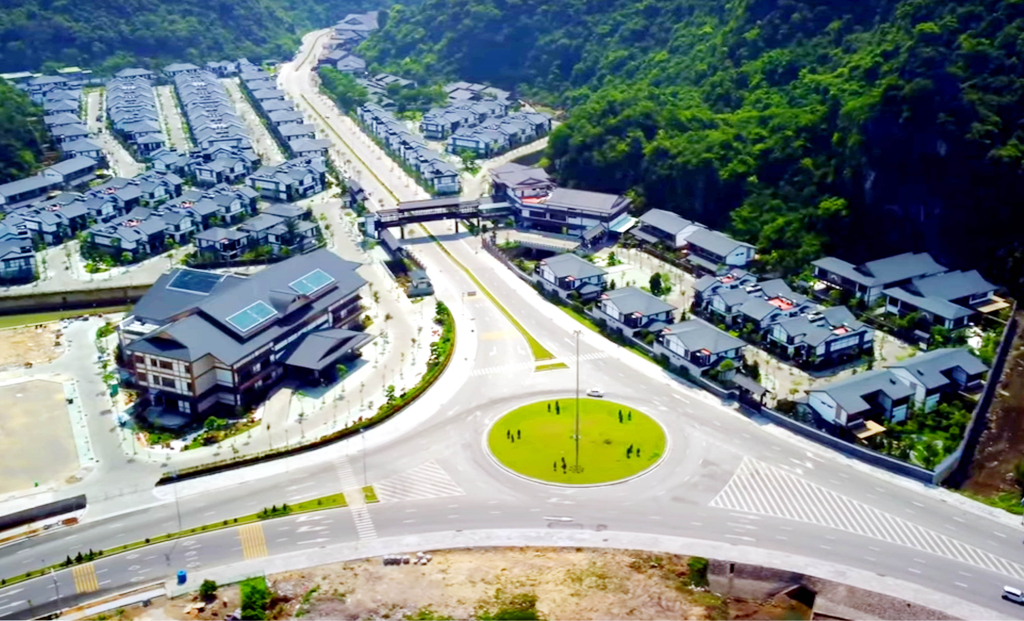
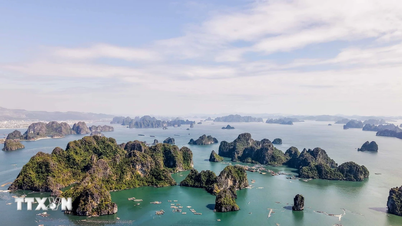
Thanks to this, over the past 23 years, Quang Hanh has strived to build and develop its socio-economic aspects comprehensively. This includes creating favorable conditions for the development of all economic sectors, shifting the economic structure towards increasing the proportion of industry, tourism, and services; and investing in infrastructure development. Quang Hanh is currently home to many large factories and coal mines. The locality has also leveraged the value of its Quang Hanh mineral water resources, transforming it into an international-class hot spring resort. Quang Hanh has become a highlight of Cam Pha's tourism and service sector, with its unique Quang Hanh Temple Festival, Luong Ngoc beach area, and the Bai Tu Long Bay complex, attracting tourists.
Source
![[Image] Hanoi's urban life under the challenge of a "scorching hot" environment](https://vphoto.vietnam.vn/thumb/1200x675/vietnam/resource/IMAGE/2026/05/25/1779706979265_nang-nong-t5-2026-minh-duy-7-4636-jpg.webp)



![[Image] Close-up view of the interchange connecting the two expressways and Long Thanh Airport.](https://vphoto.vietnam.vn/thumb/1200x675/vietnam/resource/IMAGE/2026/05/25/1779703378210_ndo_br_z7863716673926-224453a31600126cce10622af6290afd-4549-jpg.webp)









































































Comment (0)