


Illustration photo: TL
The "Dong Chung" period lasts about half a month, or twenty days, and usually falls at the end of July or the beginning of August in the lunar calendar. As for why it's called "Dong Chung," when asked, experienced farmers just smile and shake their heads: "We just say what our ancestors said!" , but no one has given a clear explanation. Perhaps "Dong Chung" refers to the vast expanse of the Southwestern Mekong Delta, where during these days, no single "wind" truly reigns supreme. A little old south wind, a little young northeast wind, then a sneaky north wind, sometimes a bit of north wind creeping in… all pushing and shoving, no one truly prevails?
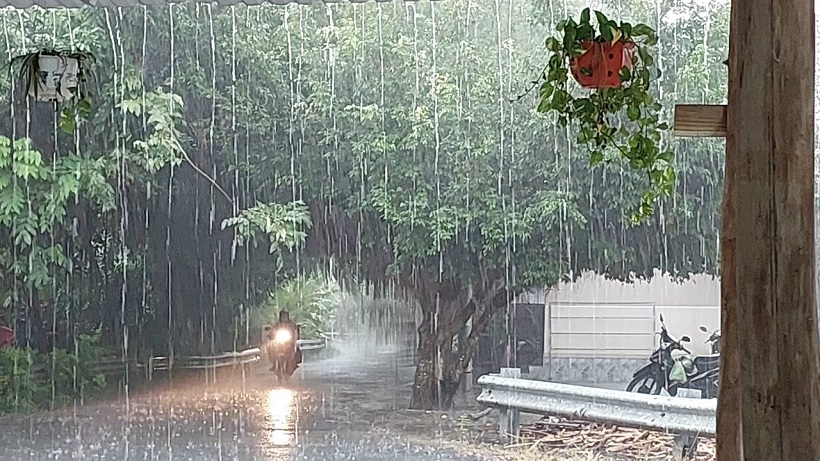
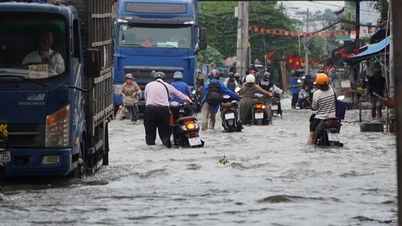
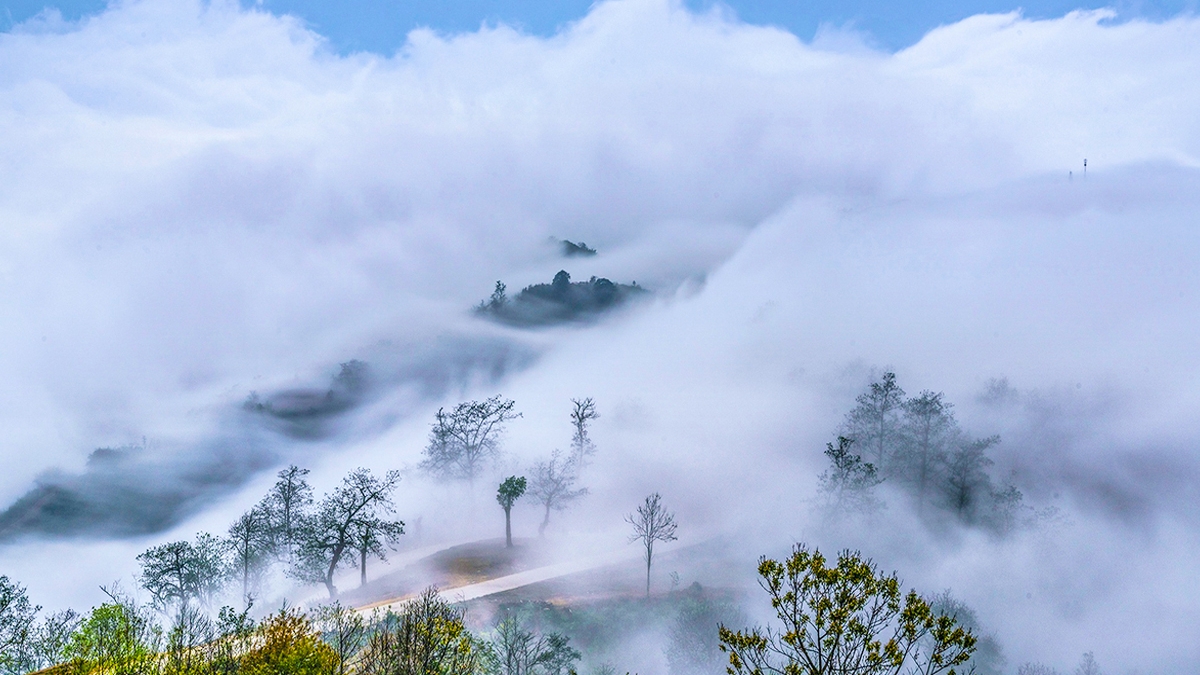
In general, the winds constantly push against each other, preventing the clouds from dispersing. They pile up in the sky day and night, gloomy and dreary, rarely revealing a warm ray of sunshine. As is often the case, many clouds mean much rain. A shift to south brings rain, a shift to northeast brings rain, a shift to north brings rain, a shift to southwest brings rain. Sometimes, in a single day, there can be five or seven rain showers, with one arriving before the next; within a single rain shower, the south might shift to northeast, then back to south, suddenly interspersed with a bit of north or southwest. Dark clouds mean rain, but sometimes, even when the sun is shining, it still rains, with clouds gathering at the same time. Each rain shower creates bubbles; instead of the usual patter of raindrops, it sounds like someone pouring water onto a roof. The heavy, continuous downpour saturates the soil, preventing it from absorbing water, especially in the sandy soil – the rain turns the earth rotten. On the ground, low-lying areas are covered in puddles, while higher areas can be easily reached with just a light push of the big toe – the soil is waterlogged. Heavy rains, with continuous downpours and rising moisture, create an extremely humid atmosphere, with the sky appearing hazy – a water-soaked sky. Now, due to climate change, average annual rainfall has decreased, and this phenomenon of heavy rains causing soil seepage only occurs in La Nina years – like the year 2023 (Year of the Rabbit).
The "Dong Chung" season is the most unpleasant time of year in the Southwestern region of Vietnam. The air is always humid, there's rarely any sunshine, the wind rushes back and forth then stops abruptly, making it stifling and difficult to breathe. Clothes and bedding always feel damp to the touch, and it's impossible to hang them out to dry. Stepping outside the veranda means your feet are soaked in water. Therefore, during the "Dong Chung" season, people's health seems to be weak; they are easily susceptible to rain and colds, children are prone to eye infections (now called conjunctivitis), and the elderly suffer from joint pain and aches, especially in the spine where they can't reach, constantly coughing and having runny noses, always carrying a bottle of medicated oil in their pockets wherever they go.
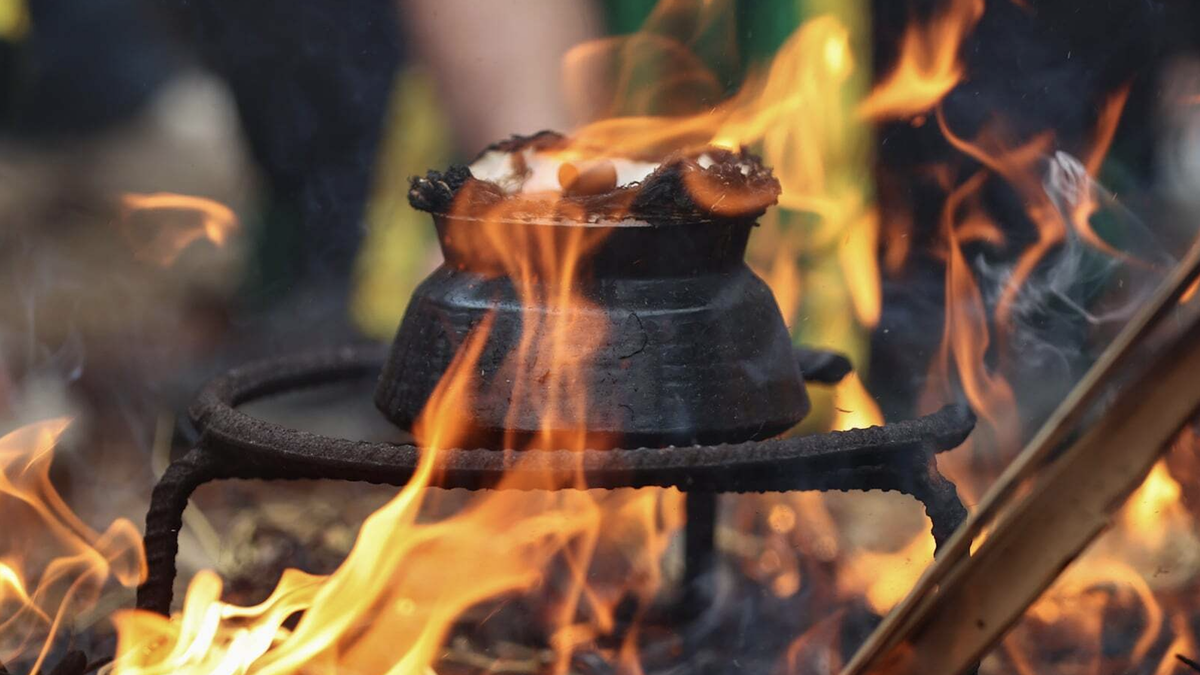
I remember a few decades ago, on the fertile alluvial plains, most farmers in the Southwestern Mekong Delta only planted one rice crop per year, so few families had enough rice all year round. Houses were made of bamboo pillars and thatched roofs; the constant rain soaked the thatched roofs, making them heavy and unstable, leaking in some places and dry in others. On rainy days, the rice bins would often be empty, and the homeowner would have to go to the neighbors with a basket, begging and pleading. In the kitchen, except for the wealthier families who had plenty of red firewood like mangrove, old-growth wood, or fig trees, the poor relied on the coconut trees behind their houses, using the husks for firewood and the leaves as kindling. Coconut wood (whether from tree or coconut) always caused hardship for the poor; no matter how carefully it was dried in the dry season, the water would still soak in, the husks would become soft and brittle, and the leaves would become pliable. The landlady sat hunched over, blowing on the fire, but before it even caught, smoke filled the house, making her eyes water. Even after the fire was lit, she had to sit there watching, for the slightest lapse in vigilance would extinguish the fire and the hearth would grow cold, forcing her to bend over again and blow. Once the fire was strong, the heat pushed the moisture to the other side of the firewood, sometimes dripping onto the feet of the kitchen god. Her bowl of rice was soaked with tears.
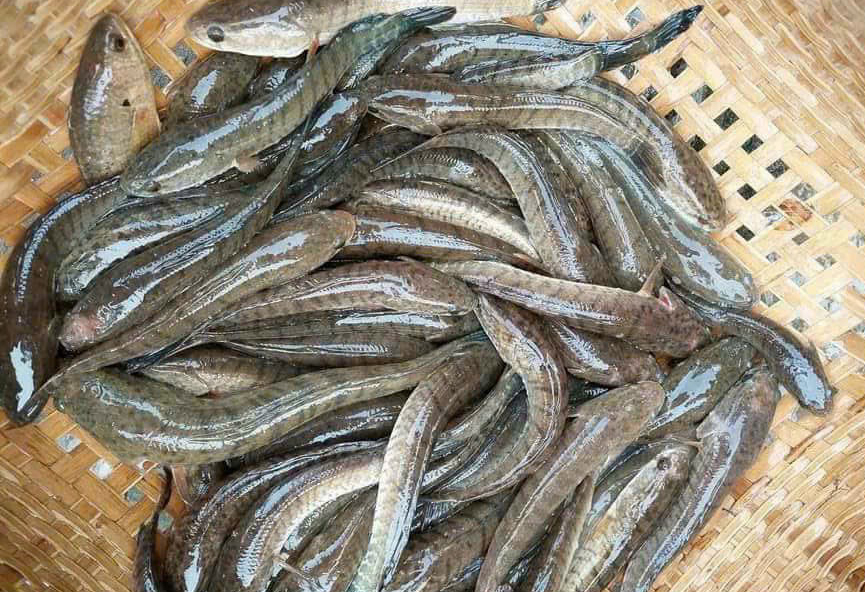
Illustration photo: TL
During the rainy season, when the soil is waterlogged, the crops on the ridges and in the fields, which had been thriving for several months during the southern monsoon season with favorable weather, suddenly stop growing and shed their leaves. Both the old and new roots encounter the waterlogged soil, causing them to rot and shrivel. The plants are like people without legs; even a gentle breeze can easily uproot them. Therefore, during these rainy days, you often see bunches of unripe bananas and papayas scattered in the market (papayas and bananas from the garden that were thriving but uprooted would be a waste to throw away, so they'll bring them to the market to salvage whatever they can!), selling at any price. To minimize losses, in the seventh lunar month, gardeners usually dig mounds of soil, fertilize, and mound the roots to encourage the new roots to emerge, avoiding the waterlogged soil underneath. Unfortunately, the emerging new roots also attract earthworms, crickets, and other insects, which then gnaw at the young roots. This season, if you follow the rows of cassava, sweet potatoes, or raised mounds of earth and turn over the soil, each hoe stroke will reveal two or three plump, white, juicy grubs clinging to the cassava tubers, sweet potatoes, and grass roots. These grubs are abundant and delicious, a gift from nature to the farmers on the sandy, hilly slopes.
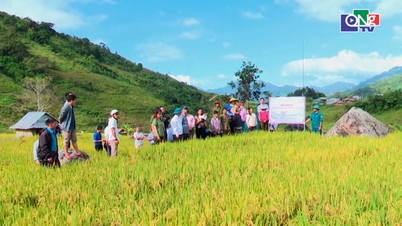
During the rainy season, with prolonged downpours, little sunshine, and humid air, conditions are ideal for harmful insects such as caterpillars and aphids to thrive. They cling to the young stems and leaves of crops, providing both shelter and a rich food source, allowing them to spread rapidly. Furthermore, damaged root systems significantly reduce the plants' resistance. In deep, waterlogged fields, the humid air easily leads to rice blast disease, causing healthy rice plants to wither and lose their ability to develop panicles and flower. Regardless of the weather, farmers must regularly visit the fields to care for their crops, at least checking on the rice plants. Neglecting the crop for even a few days can result in severe pest damage to entire rice paddies or crop fields, leading to crop failure and poverty.
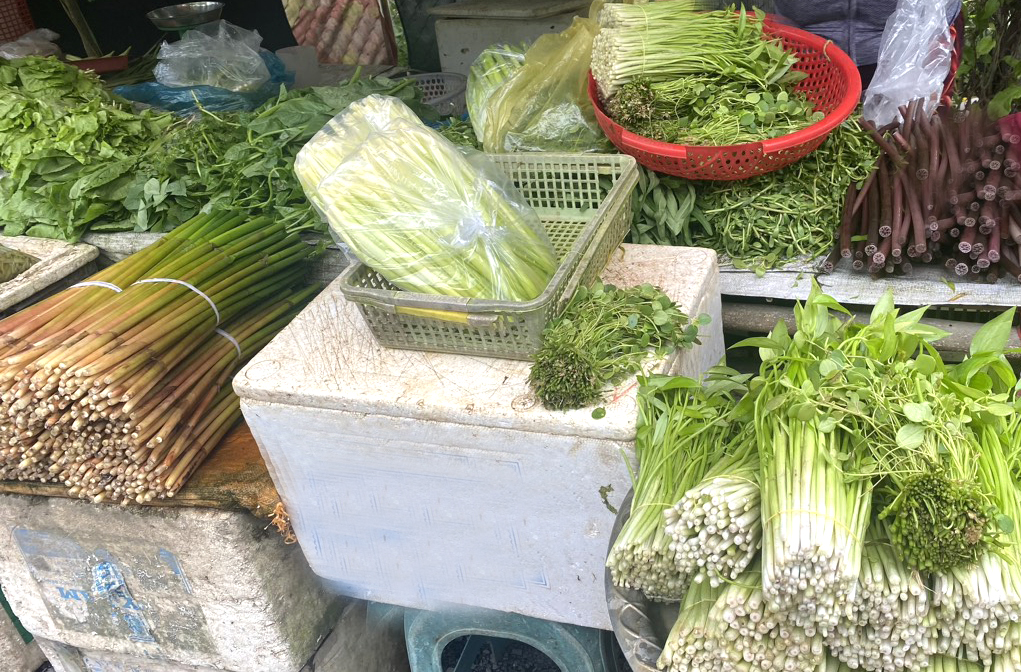
Illustration photo: TL
Of course, there are also beneficial plants that thrive in flooded environments and grow even faster during prolonged rainy days. Farmers in my hometown would paddle their boats out into the swamps to pick water hyacinths and water lilies; they'd go to the shallow fields to cut bitter herbs like water spinach, watercress, water celery, plantain, and bulrush… or they'd go to the fields to pull up water hyacinth shoots and watercress… to add to their meals or take to the market for a little extra income, even if it was meager, it was better than nothing. The prolonged rain, deep flooding, and drop in water temperature caused many types of freshwater fish to try to escape to the foothills, ditches, and even sandy soil where the water was shallow. In previous decades, it wasn't uncommon to see schools of hundreds of snakehead, catfish, and tilapia fish, taking advantage of the torrential afternoon rain to cross the flooded fields in broad daylight. It was raining, someone sitting on the veranda looked out and spotted fish swimming across the road, quickly calling out to each other to bring buckets and baskets to catch the fish along the way – a scene that today's younger generation would probably find hard to believe.
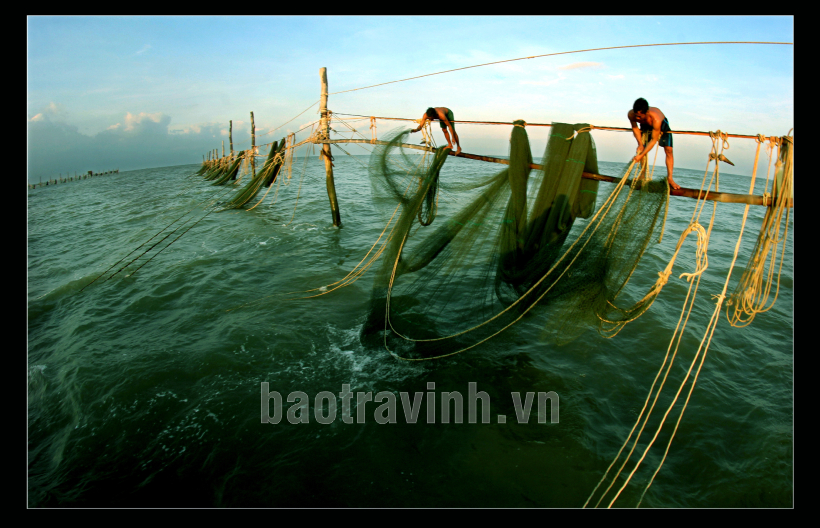
Deep-sea fishing in Duyen Hai district, Tra Vinh province . Photo: BA THI
In the waters off Tra Vinh and some provinces in the Southwestern Mekong Delta, the deep-sea bottom trawling profession is very popular. In the vast ocean, this profession depends on the water currents and wind direction, so there are two trawling seasons each year: the southerly season and the northeasterly season. The "dong chung" (common season) is when the "nam" trawlers lie down to rest while the owners and their crews set sail to find new channels favorable to the approaching northeasterly wind. While the men are out at sea on the "dong chung" day, the women at home are restless, leaning against the window sills, their eyes fixed on the vast ocean, anxiously awaiting the sound of the returning boats. Those who work at sea are skilled at reading the wind direction, knowing how to steer their boats to cut through the waves. On the "dong chung" day, the wind frequently changes direction, making it impossible to predict. Not to mention the sudden thunderstorms accompanied by fierce winds that stir up waves from all directions, making even a boat carrying several tens of tons with a powerful engine as fragile as a leaf in a raging torrent. Just imagine seventy or eighty years ago, when fishermen in the Southwestern Mekong Delta still ventured out to sea in tiny sailboats, relying on the wind for support – how much more terrifying the fear of storms and rough seas must have been. Therefore, for the women living along the coast of the Mekong Delta, the saying "marrying a fisherman means your soul is tied to the mast" has always haunted and tormented them from generation to generation.
Fortunately, the days of communal harvesting didn't last too long. One morning in mid-August of the lunar calendar, the gloomy sky suddenly brightened in the east, and the accumulated clouds clumped together like the rubbish scattered by farmers plowing (hence the name "clouds scattering the plow"), then were gradually pushed towards the setting sun. The sky gradually cleared, and both the land and the sky dried up. People felt healthier. Animals and plants gradually regained their vitality.
The rustling sound of the young flame tree has arrived.
TRAN DUNG
Source






![[Photo] The General Secretary presents the title of Hero of the People's Armed Forces to the Navy.](https://vphoto.vietnam.vn/thumb/1200x675/vietnam/resource/IMAGE/2026/02/28/1772251730336_vna-potal-tong-bi-thu-to-lam-du-va-trao-danh-hieu-anh-hung-llvt-nhan-dan-cho-quan-chung-hai-quan-8612073-jpg.webp)












































Comment (0)