


Minister of Planning and Investment Nguyen Chi Dung stated that the country's GDP growth in the third quarter could decrease by 0.35 percentage points; and in the fourth quarter by 0.22 percentage points compared to the scenario without Typhoon No. 3. The estimated GDP growth for the whole year could decrease by 0.15 percentage points compared to the 6.8-7% growth scenario. In particular, Typhoon No. 3 has seriously affected the production and business activities of many localities that are the driving forces of national growth. Accordingly, the GRDP growth rate in 2024 for Hai Phong, Quang Ninh, Thai Nguyen, Lao Cai, etc., could decrease by more than 0.5 percentage points.
According to calculations by the General Statistics Office, compared to the first estimated GRDP growth scenario for localities as of July 2024, the annual growth decline for Hanoi is 0.2 percentage points; Hai Phong is 0.63 percentage points, Quang Ninh is 0.65 percentage points, Cao Bang is 0.51 percentage points, Lao Cai is 0.63 percentage points, Tuyen Quang is 0.5 percentage points, Yen Bai is 0.53 percentage points, and Thai Nguyen is 0.59 percentage points.
Quang Ninh was one of the localities most severely affected by Typhoon No. 3. According to reports, the estimated damage in the province reached 24,876 billion VND. Although production and business activities have now resumed, and some accommodation and tourism establishments have reopened, according to Mr. Cao Tuong Huy, Chairman of the Quang Ninh Provincial People's Committee, the province is reviewing, adjusting, and implementing the 2024 economic growth plan to ensure it is consistent with reality. Five days after the typhoon passed, Quang Ninh has welcomed tourists back.
Not only in Quang Ninh, but Typhoon No. 3 has also caused significant damage to the agricultural sector in other localities, and the recovery period is expected to be longer than in other sectors. However, with support from the Government and economic recovery policies, Vietnam can expect a strong recovery in the remaining months of the year.
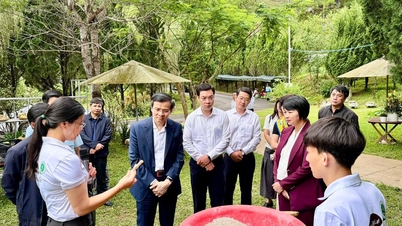
Mr. Vu Duc Hao, Deputy Director of the Department of Agriculture and Rural Development of Thai Nguyen province, said: The agricultural sector is guiding localities in the province to focus on pumping out floodwaters to prevent prolonged flooding and damage. For rice fields in the heading - milky ripening - waxy ripening stages, after draining the water from the fields, people are supporting the rice plants by tying 3-4 rice stalks together with string to form a tripod shape to help the plants stand upright, creating favorable conditions for the rice to mature and ripen.
Regarding banking operations, to support customers in overcoming difficulties and restoring production and business, following the direction of the State Bank of Vietnam in Official Letter No. 7417/NHNN-TD dated September 9, 2024, the Quang Ninh Provincial Branch of the State Bank of Vietnam issued Official Letter No. 785/QUN1 dated September 10, 2024, requesting credit institutions and branches in the area to restructure loan terms and maintain the same loan classification for customers affected by Typhoon No. 3.
In addition, the credit institution branch will consider waiving or reducing interest rates for affected customers; continue providing new loans to customers to restore production and business after the storm in accordance with current regulations; and implement debt restructuring and risk management in accordance with current regulations for customers who suffered heavy losses and are unable to repay.
Along with sharing the losses, businesses in Hai Phong city have stabilized production and business operations and proposed support from the Hai Phong Economic Zone Management Board. Mr. Jung Hyeok, General Director of LS Metal Vina Company, representing the group of businesses in Deep C Industrial Park, proposed that a portion of the wages of workers affected by production stoppages should be covered by social insurance, which would help companies retain employees and reduce their financial burden.
To urgently address the consequences of Typhoon No. 3, the Government has also issued Resolution No. 143/NQ-CP on key tasks and solutions to urgently overcome the consequences of Typhoon No. 3 (Yagi), quickly stabilize the situation for the people, promote the restoration of production and business, actively promote economic growth, and effectively control inflation.
Accordingly, the Resolution clearly states that the scope and beneficiaries of support are people, workers, vulnerable groups, business households, cooperatives, and enterprises in areas affected by Typhoon No. 3, flooding, landslides, and mudslides. The support will primarily be provided in September and October 2024. Some policies supporting business households and enterprises may be extended, with additional resources allocated until the end of 2025, to align with the recovery of businesses and households, as well as seasonal factors in production and business.
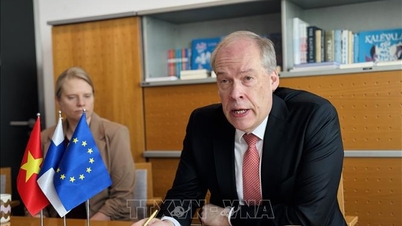
Thanks to the timely actions of the Government and the rapid implementation of measures to restore production by the people and businesses, the recently published UOB Bank's Global Economic Outlook Report for Q4 2024 also offers optimistic forecasts for Vietnam's economic growth; however, doubts remain about the sustainability of this growth in the global context.
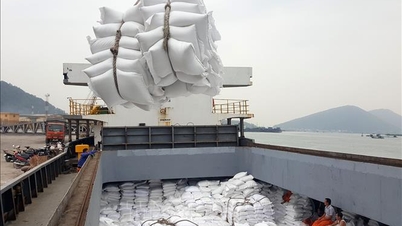
Many economists are concerned that the Vietnamese economy remains heavily reliant on exports. As the global economy slows, Vietnam's ability to maintain high growth will be challenged. Maintaining stable growth also requires continued structural economic reforms, particularly in improving labor productivity and the business environment. The government continues to promote policies supporting businesses, especially in the context of increasing global competition.
UOB's forecast for Vietnam's GDP growth in 2024-2025 is a positive sign for the economy. With flexible economic policies, stable inflation, and strong FDI attraction, Vietnam is expected to continue its growth momentum, overcome global challenges, and assert its position on the world economic map.

![[Image] Nearly 125,000 Hanoi students completed the Literature exam for the 10th grade entrance exam.](https://vphoto.vietnam.vn/thumb/1200x675/vietnam/resource/IMAGE/2026/05/30/1780117233041_ndo_br_thiet-ke-chua-co-ten-2-png.webp)

























































































Comment (0)