

Nghe An province has always been a heroic land, marked by numerous victories in the golden pages of the nation's history. The revolutionary movement of 1930-1931, culminating in the Nghe Tinh Soviet, still resonates with heroic spirit today, leaving behind immense values for future generations. The heroic spirit of the Soviets still flows in the veins of many generations, becoming a sacred source of pride for the people of Nghe An.

The Nghe An - Thinh Hoa Soviet was the inevitable development of the revolutionary struggle of workers and peasants nationwide during the years 1930-1931. (Archival photo)
This land is Soviet land.
Turning the pages of the nation's history in the early 20th century, amidst the darkness of slavery, the Communist Party of Vietnam was born like a shining sun, awakening the people to rise up and overthrow the colonial and feudal yoke. The Nghe Tinh Soviet Uprising, which broke out in 1930-1931, shook the ruling apparatus and spread the revolutionary movement throughout the country. "Look, Ben Thuy is the first to rise up / Thanh Chuong follows suit / Nam Dan, Nghi Loc, Hung Nguyen / Anh Son, Ha Tinh all rise up at once" (Revolutionary Song - Dang Chanh Ky).
The uprising began with a demonstration by 1,200 workers and peasants from Vinh - Ben Thuy on International Labor Day, May 1, 1930. At the gathering place of factory workers, the flames of protest blazed fiercely. The French colonialists brutally suppressed the protest, resulting in 7 deaths and dozens more casualties.

Soviet worker-peasant monument in Truong Thi - Ben Thuy ( Nghe An ). Photo: Nghe An Newspaper
Following this, numerous extremely vigorous and fierce struggles by our people took place throughout Nghe An and Ha Tinh provinces . "Red Self-Defense" teams were formed to support farmers in the two provinces in relentlessly attacking the colonial and feudal authorities. Faced with the revolutionary storm of the masses, the colonial and feudal authorities in many areas of Nghe Tinh were thrown into disarray, paralyzed, or disintegrated in many places. "Red villages" sprang up everywhere, from the highlands to the lowlands, notably: Ngoc Dien, Tien Linh, Chi Ne (Hung Nguyen); Thanh Ha, Vo Liet (Thanh Chuong); Phuc Tho (Nghi Loc); Ngoc Son (Do Luong); Lien Thanh (Yen Thanh); Ben Thuy - Vinh City; Phu Viet (now Viet Tien - Thach Ha); Hong Loc, Phu Luu, Tan Loc (Loc Ha); Vinh Loc (now Khanh Vinh Yen commune - Can Loc); Son Chau (Huong Son); Phu Phong (Huong Khe); Gia Lach (now Xuan An town, Nghi Xuan). Kim Nặc (now Cẩm Hưng - Cẩm Xuyên)...
From September 1930, the Nghe Tinh Soviet movement reached its peak. A series of demonstrations broke out in the two provinces of Nghe An and Ha Tinh, most notably the peasant demonstrations in Hung Nguyen and Can Loc. In Nghe An, on the morning of September 12th, approximately 8,000 peasants from three districts: Phu Long, Thong Lang (Hung Nguyen), and Nam Kim (Nam Dan), marched in orderly ranks, armed with sticks, spears, ropes, and carrying red flags with the hammer and sickle, towards Yen Xuan train station.
As the protesters advanced towards Thai Lao, the French colonial forces dropped bombs into the crowd, killing and injuring many. In the afternoon, as the farmers were preparing the bodies for burial, French planes returned and massacred them once again, killing 217, injuring 125, and arresting dozens.

The Soviet Nghệ Tĩnh Monument in Nghèn town (Can Lộc district).
At Nghèn Crossroads, from August to early September 1930, farmers from Can Loc repeatedly marched to the district headquarters demanding the return of communal land and demanding democratic freedoms. Particularly on September 12th, the Can Loc District Party Committee launched a large-scale demonstration. 5,000 people from the upper and lower Can Loc areas, in orderly ranks, carrying banners and slogans, divided into three groups and marched to the district headquarters demanding their rights and democracy. Terrified by the fighting spirit of the masses, the imperialists and feudalists ordered their soldiers to open fire on the demonstrators, resulting in 42 deaths and hundreds of injuries.
Many examples of heroic sacrifice by communist soldiers such as Nguyen Phong Sac, Tran Huu Thieu, Nguyen Dinh Lien, Vo Que, Pham Thi Dung, Phan Gan, Nguyen Khien Suc, Nguyen Thi Nghia, Tran Thi Huong, Nguyen Thi Phuc… have become immortal symbols of patriotism and revolutionary spirit.
“This district and that commune unite/ Let's shout and yell, quickly!” At the peak of the struggle, Nghe An and Ha Tinh had 33 districts, 111 communes, and 1,243 villages rising up against imperialism and feudalism. In Ha Tinh alone, 170 villages had Red Peasant Associations directly or indirectly managing village affairs. Revolutionary spirit and red blood surged throughout the countryside of Nghe An.
In a report titled "Red Nghe An - Ha Tinh" sent to the Executive Committee of the Communist International on February 19, 1931, Nguyen Ai Quoc assessed: "During the French conquest and the national revolutionary movement of 1905-1925, Nghe An - Ha Tinh was famous. In the current struggle, the workers and peasants of Nghe An - Ha Tinh still maintain their revolutionary traditions; Nghe An - Ha Tinh truly deserves the title 'Red'." The poet Huy Can later also praised it:
This land is Soviet land.
The Party held a red flag festival.
From the age of gold and stone, one knows
The enduring bond between workers and farmers
Shining with the spirit and soul of the people of Nghe An.
Ninety-three years have passed, but the echoes of the Soviet drums still resonate, stirring the memories and souls of the people of Nghe An, becoming a great source of pride for the children of the Hong Mountain - Lam River region. Following the flow of history, the Soviet spirit continues to be nurtured, becoming the character of the people of Nghe Tinh through the two wars of national defense in the 20th century and in the current process of national renewal.

The Nghe Tinh Soviet is a great source of pride for the people of the Hong Mountain - Lam River region.
Despite the hardships and difficulties caused by the harsh natural environment ("the Lao wind withers the bamboo groves"), or during the life-or-death moments of the nation ("history has chosen us as its anchor"), and times of hunger and scarcity: "In 1980, rice was also 80% of the same / The people of Nghe An had faces as yellow as turmeric...", the people of Hong Lam never shied away from hardship and sacrifice, always ready to lead the way, with a fervent love for their country and unwavering loyalty to the Party and the revolution.
The image of the exemplary leaders of the Party and the nation from Nghe An province will forever illuminate the nation's history, becoming a spiritual anchor for generations of Vietnamese people, such as President Ho Chi Minh, the national liberation hero and world cultural figure; the General Secretaries of the Party: Tran Phu, Ha Huy Tap, Le Hong Phong; revolutionary predecessors: Nguyen Thi Minh Khai, Mai Kinh, Phan Dang Luu, Tran Huu Duyet, Ho Tung Mau, Le Hong Son, Le Ba Canh, Nguyen Huy Lung… The names of heroes and martyrs: Ly Tu Trong, Phan Dinh Giot, Tran Can, Dang Dinh Ho, the 10 girls of Dong Loc, Vo Trieu Chung, Vuong Dinh Nho… will forever be remembered with the mountains and rivers for eternity.

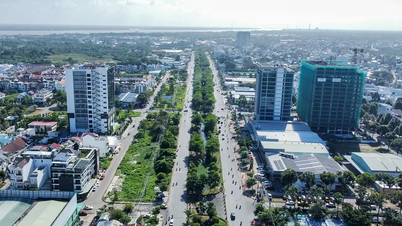
Ha Tinh is becoming increasingly modern and civilized.
For thousands of years, and even today, the people of Nghe An and Ha Tinh have remained wholeheartedly patriotic and loyal to the Party and the Fatherland. The traditions of the "red villages" in Nghe An and Ha Tinh are always upheld. Ha Tinh is one of the four provinces that seized power early in the country. During the two national resistance wars of the 20th century, Nghe An and Ha Tinh were always provinces where "not a single grain of rice was lacking, not a single soldier was lacking." The people of Nghe An are always courageous, brave, unafraid of hardship and sacrifice, studious, optimistic, passionate about cultural creation, gentle, tolerant, romantic, and deeply affectionate.
Who knows whether the water of the Lam River is clear or muddy? Then who knows whether life is shameful or glorious? My boat goes up the rapids and down the waterfalls / The land and water are meaning, love, my dear…

The Ben Thuy Bridge connects the banks of Nghe An and Ha Tinh provinces. Photo: Nghe An Newspaper
The culture and people of Nghe An, with their Soviet spirit, have become invaluable spiritual assets and immense intrinsic strength, enabling the people of Nghe An and Ha Tinh to overcome bombs and bullets, droughts and storms, unite against common enemies, conquer nature, beautify the land, and build a new life worthy of the contributions of their ancestors. In the torrent of national renewal, the two provinces of Nghe An and Ha Tinh have made significant strides, transforming the face of the Hong Mountain and Lam River region.
Along the entire stretch of land from Quynh Luu to Ky Anh town, life is changing day by day. Political stability, economic growth, significant cultural and social development, increasingly prosperous and happy lives for the people, a radiant new face of rural areas, and the exploitation and development of natural resources and human potential, all live up to the aspirations of our ancestors for generations.
“Oh, the soul of Nghe An/ In the soul of Vietnam/ There is something from our ancestors/ So ancient yet so young” (Huy Can). Through the vicissitudes of history and society, the soul and spirit of the people of Nghe An remain intact, radiant, and beautiful. Through the ebb and flow of life and humanity, the folk songs of Nghe Tinh still resonate today, reflecting the spiritual life of the people, beautifying the character of the people of Nghe An, making the Soviet homeland even richer in identity, attracting tourists from near and far.
Source: BHT
Source

![[Photo] Prime Minister Pham Minh Chinh presides over a meeting on private sector economic development.](/_next/image?url=https%3A%2F%2Fvphoto.vietnam.vn%2Fthumb%2F1200x675%2Fvietnam%2Fresource%2FIMAGE%2F2025%2F12%2F20%2F1766237501876_thiet-ke-chua-co-ten-40-png.webp&w=3840&q=75)






























































Comment (0)