

In the agricultural market, Vietnam's rice exports from the beginning of the year to date are witnessing a paradox: export volume has increased, but export value has decreased. Not only facing price pressure from competitors, the rice industry is also significantly impacted by escalating conflicts in the Middle East.
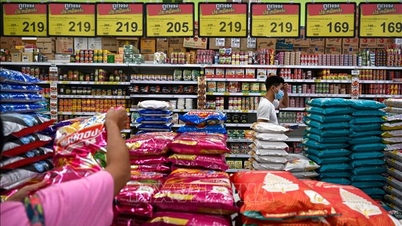
Currently in the Mekong Delta, farmers are busy harvesting the winter-spring rice crop. This year's rice harvest is bountiful, but farmers are unhappy because prices have fallen. Currently, the actual purchase price of rice only fluctuates between 5,400 and 5,800 VND/kg. ST and RVT rice varieties fetch higher prices, around 7,000 VND/kg. This stagnation closely reflects the current gloomy export picture. According to customs data, in the first two months of 2026, Vietnam exported 1.27 million tons of rice. However, the paradox of "exporting a lot, earning little" has occurred, with revenue decreasing by nearly 12% compared to the same period. The main reason is that supply from major players like India and Thailand has recovered, driving down global prices and making buyers extremely cautious, shifting to a "wait-and-see" mode.
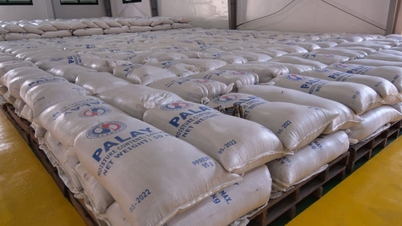
Conflicts in the Middle East are directly impacting the logistics supply chains of businesses. The biggest challenge currently is the skyrocketing freight costs. Specifically, the cost of shipping a container of rice to Europe has almost doubled, and delivery times have extended to over two months instead of the previous 40 days. High risks are leading international customers to prioritize short-term contracts to limit inventory levels. Regarding the market, despite facing a decline in the African region, the Philippines remains a bright spot and our most important customer base.
However, the current difficulties present a golden opportunity for the rice industry to restructure. We cannot continue to chase quantity but need to focus on the high-quality rice segment, which is less susceptible to price fluctuations. In particular, the effective implementation of the Project to cultivate 1 million hectares of high-quality, low-emission rice will be a turning point. Meeting green standards and ensuring transparent traceability are the strongest "passports" for Vietnamese rice to enhance its competitiveness globally.
To overcome the headwinds from the global market, Vietnam's rice industry cannot rely solely on production volume but must transform itself through quality, sustainability, and market diversification. Only then can Vietnamese rice truly maintain and secure its position in the market.
Source: https://vtv.vn/xuat-khau-gao-gap-kho-100260324111037912.htm













































































Comment (0)