

Export bottlenecks
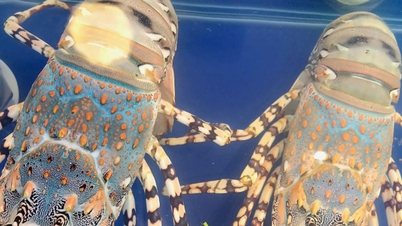
According to reports from several lobster farming and export businesses in Phu Yen and Khanh Hoa provinces, the Chinese market has stopped importing spiny lobsters since October. This is not the first time spiny lobster exports to this market have been disrupted. At the end of September this year, approximately 6 tons of lobsters exported through the Mong Cai border gate (Quang Ninh province) were also halted, forcing businesses to sell them on the market at only 200,000-400,000 VND/kg, one-third of the export price, to recover capital. China is currently Vietnam's largest lobster market, but this year, export value has decreased sharply. As of the end of August, Vietnam's lobster exports to China reached 76 million USD, a decrease of 42% compared to the same period in 2022.
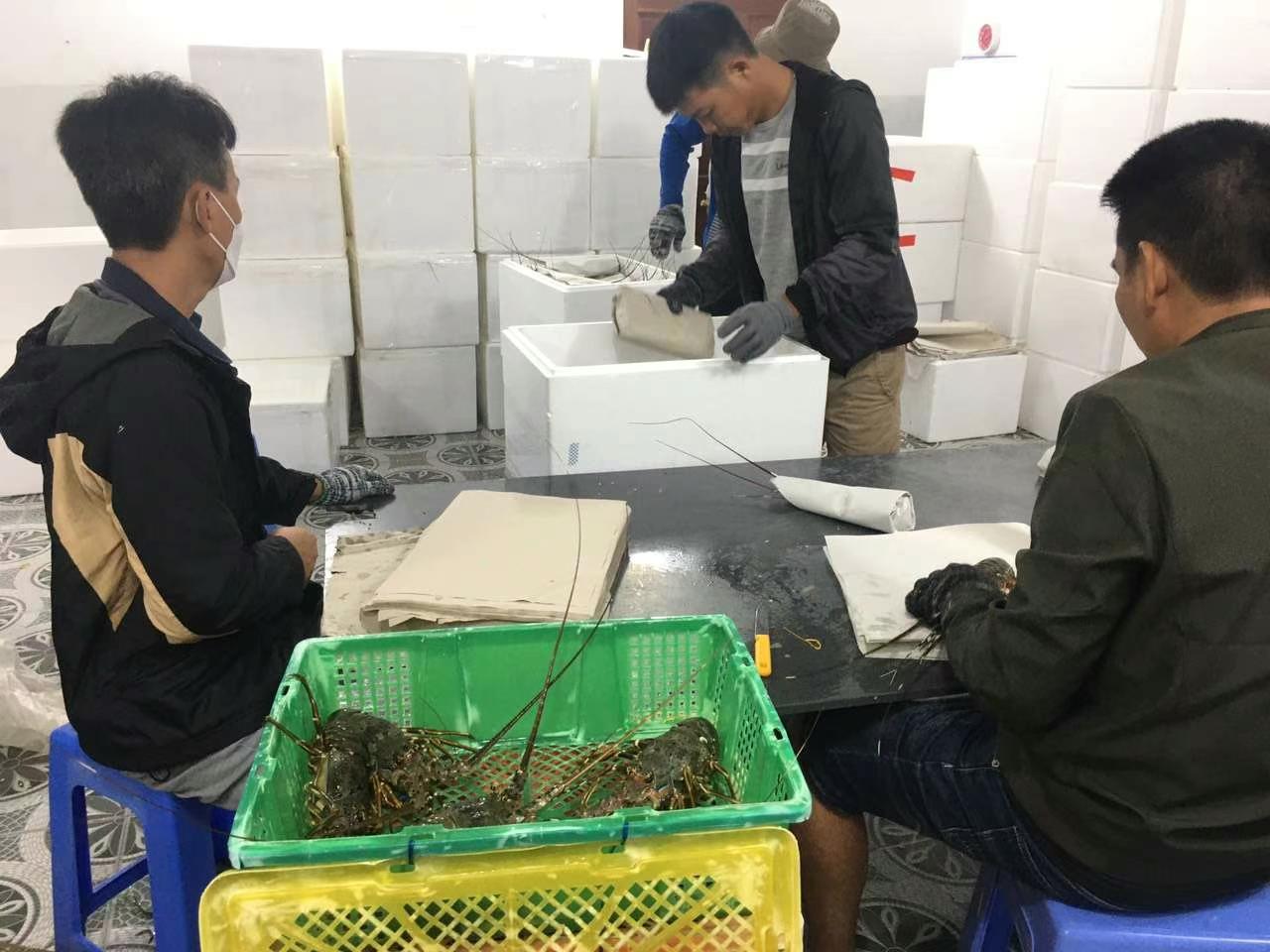
It is necessary to build a quality lobster supply chain, ensuring traceability for official export.
Speaking to Thanh Nien newspaper , Ms. Nguyen Thi Anh Thu, Director of Thanh Nhon Seafood and General Trading Company Limited (Ho Chi Minh City), confirmed: "Our company is the official exporter of lobsters to China, however, consumption in this market this year is very difficult. Although customers have signed contracts for thousands of tons, orders are only scattered across a few tons, mainly for green lobsters, while spiny lobsters are not being bought by customers." The lack of demand from the Chinese market means that spiny lobsters, which are larger and twice as expensive as green lobsters, are facing difficulties in finding buyers, causing their prices to fall, even lower than green lobsters.
According to statistics from the Vietnam Association of Seafood Processing and Export (VASEP), in 2022, Vietnam's lobster exports to China reached over US$257 million, an 8.3-fold increase compared to 2021, thanks to increased consumer demand after a long period of market closure due to the Covid-19 pandemic. From the beginning of the year until now, China's lobster consumption has remained stable, even increasing by over 15% in terms of imported lobster volume. The largest suppliers of lobster to China include Canada, the United States, New Zealand, Cuba, India, Brazil, Mexico, and others.
"Vietnam ranks only 14th in supplying lobster to China, accounting for a small market share of 1%. Vietnamese lobster products exported to China include live rock lobsters, spiny lobsters, and green lobsters. This year, due to difficulties in global consumption caused by the economic recession, the selling price of Vietnamese lobsters is quite high, making them uncompetitive with other countries like Ecuador or India, which is why the market has sometimes experienced disruptions," a VASEP media representative analyzed.
What's the solution?
According to VASEP representatives, the majority of lobster exports to China are currently conducted through informal channels. Lobster farmers face numerous risks due to fluctuating prices and price manipulation by traders. Furthermore, informal exports are becoming increasingly restricted as China gradually implements stricter regulations. To ensure future success, formal lobster exports are essential. This necessitates establishing linkages between production, procurement, and export, along with traceability. To verify and promptly address these issues, in September, the Ministry of Agriculture and Rural Development sent a document to the Vietnamese Embassy and Trade Office in China, as well as the Nanning Customs Bureau (General Administration of Customs of China).
While awaiting a response from China, the Fisheries Department proposed strengthening quality control of lobster larvae, disease prevention and treatment; providing guidance on registering cage farming and arranging cages appropriately according to plan. At the same time, the Fisheries Department also advised people to choose suitable species for farming, reducing the farming of spiny lobsters, increasing the farming of green lobsters, and harvesting at the appropriate time. The agency also requested the establishment of a quality lobster supply chain, ensuring traceability.
Mr. Lam Duy Dung, Vice Chairman of the People's Committee of Song Cau Town (Phu Yen), shared: "We are working with the Fisheries Department, Ministry of Agriculture and Rural Development, to support fisheries cooperatives in building value chains, providing training, and implementing linkages between seed companies and feed companies to establish farming area codes, then exporting to countries around the world , increasing value and minimizing farming areas that affect the environment." Currently, Phu Yen province has about 99,600 lobster cages, with a harvested lobster production of nearly 2,000 tons. The establishment of cooperatives complies with regulations on traceability and meets the conditions for official export."
To export lobsters officially to the Chinese market, businesses must be granted an export business code to the Chinese market and a quarantine certificate issued by the Department of Quality, Processing and Market Development (Ministry of Agriculture and Rural Development). Therefore, farmers need to focus on caring for their lobsters, closely monitoring market developments, maintaining a moderate stocking density according to plan, and registering and declaring fully with state management agencies. According to the Ministry of Agriculture and Rural Development's plan for the development of lobster farming and export until 2025, the target is a total production of 3,000 tons per year and an export value of 200 million USD per year. The provinces with the largest lobster production in the country include Phu Yen, Khanh Hoa, and Kien Giang.
Seafood businesses are still facing difficulties with capital.
The Vietnam Association of Seafood Processing and Export has just released a report on the situation of seafood production and export, as well as obstacles and difficulties related to mechanisms, policies, and administrative procedures.
According to VASEP, the majority of Vietnamese businesses are small and medium-sized enterprises (SMEs) and startups, so bank financing is the main channel for investment and development. Currently, besides loans, other sources of funding from the financial market are almost ineffective. The regulation classifying long-term loans between banks and businesses as related-party transactions, and subsequently capping interest expenses for income tax purposes, is unreasonable and negatively impacts business performance and cash flow in the initial years of investment. Lending between banks and businesses should be considered a normal business activity where the product is capital. This ceiling on interest expenses will discourage businesses from investing or innovating technology. Investment and innovation are crucial for the development of businesses in particular, and the national economy in general.
Source link













































































Comment (0)