

On the occasion of the 100th anniversary of Vietnam's Revolutionary Press Day (June 21, 1925 – June 21, 2025), the book "100 Professional Stories," compiled and published by the National Political Publishing House in collaboration with the Vietnam Press Museum, is a fascinating sharing of professional stories from Vietnamese and international journalists.
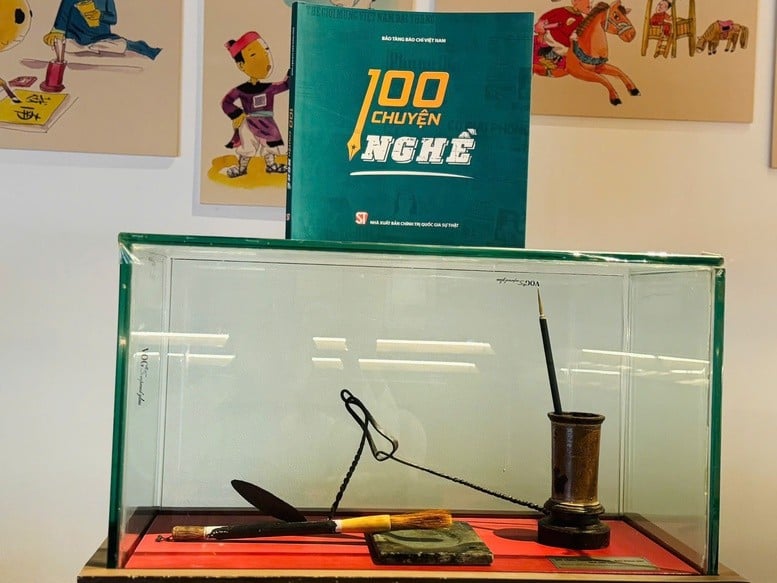
As an important part of the Party's ideological work, the revolutionary press in our country, founded by President Ho Chi Minh , has, since its inception, carried within itself the mission of a vanguard force, a sharp weapon that has made a significant contribution to the cause of national liberation and nation-building.
For a full century, the revolutionary press of Vietnam has accompanied the nation, affirming its pioneering role as a sharp weapon on the ideological and cultural front, and as the voice of the Party, the State, and the people. The press has promptly and comprehensively reflected the Party's guidelines and policies, the State's laws and regulations, and the great and historically significant achievements our country has attained in the struggle for national independence and freedom, and after nearly 40 years of national renewal; it has truthfully and vividly reflected the political, economic , cultural, social, defense, security, and foreign affairs of the country; and at the same time, it has propagated and spread the moral and cultural values and good lifestyles of the Vietnamese people, highlighting good examples and advanced models in all fields of social life with the spirit of "using beauty to overcome ugliness." The press is the frontline in actively protecting the Party's ideological foundation, promptly combating and refuting erroneous, hostile, reactionary, and opportunistic views that are fabricated, slanderous, and cause internal division and undermine unity within the Party and society.
When the country was under colonial rule, the press was the trumpet that awakened and encouraged the people to rise up in revolution to overthrow the colonial and feudal regimes, liberate the nation, and seize power for the people. Once in power, the press mobilized the strength of the entire nation to safeguard the government, protect the achievements of the revolution, wage resistance against invasion, achieve independence and unification, and lead the country to a new stage of development. In peacetime, the press was entrusted by the Party with the pioneering mission of disseminating and educating about the Party and State's policies and guidelines, and reflecting the realities of national construction and defense.
Each story in the book is both relatable and profound, showing that journalists not only perform their duties but also fight, sacrifice, and uphold professional ethics. Through these stories, readers can feel the dedication and courage of generations of revolutionary journalists, along with the quiet beauty of those pens that are always committed to fighting for truth and justice.
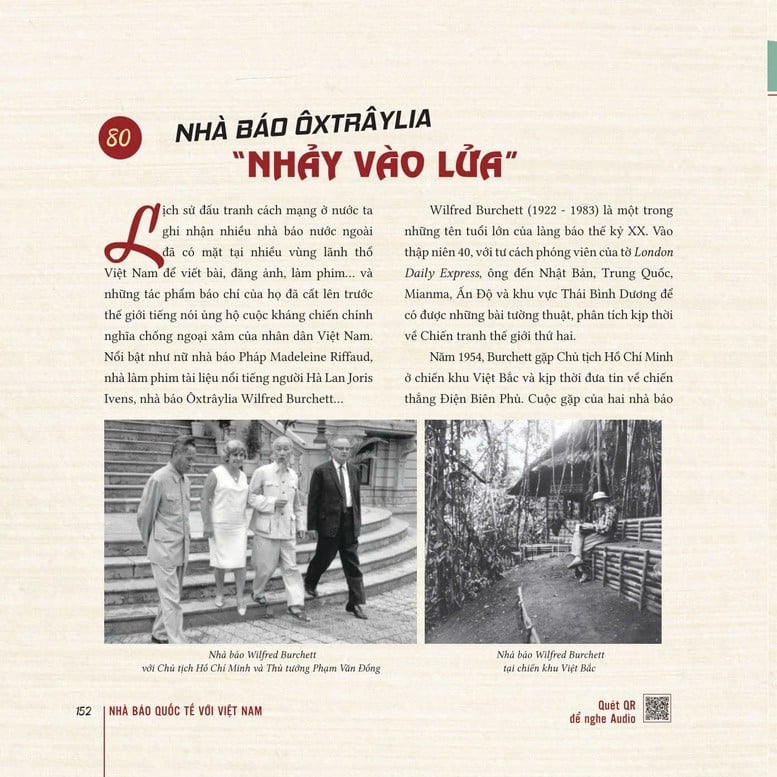
This book compiles many exemplary and highly symbolic stories about the profession. "From the Red Brick to the House of Revolutionary Journalism" recounts the journey of laying the foundation for Vietnam's revolutionary journalism by the Thanh Nien newspaper, associated with the name of leader Nguyen Ai Quoc. "Learning to Write Journalism from Life and the Working Class" affirms that revolutionary journalism must be closely linked to reality, with the people as the center of creativity. Several stories leave a strong impression on journalists Truong-Chinh and Xuan Thuy, such as "The Incident of Losing the Box of Printing Paper," "Doing Journalism on a Bamboo Bed," etc. "The Story Behind the Photo of Two Soldiers" by journalist Chu Chi Thanh demonstrates the power of reconciliation through imagery. In addition, "For Every Journalist to Truly Be a Secretary of the Era" by journalist Ha Dang sparks reflection on the role of journalism in guiding society during the đổi mới (renovation) period; and the story about the famous phrase "Bright Eyes, Pure Heart, Sharp Pen" by journalist Huu Tho sets a sustainable professional standard. "From a soldier who loved writing to a mentor in the journalism world" is a truthful account by journalist Ta Ngoc Tan, recounting his personal passions and his career in journalism education.
This book is not only the story of individuals, but also a vivid memoir of press agencies – "milestones" linked to each historical period. From the journey of building the Nhan Dan Newspaper – the mouthpiece of the Central Party Committee – to the formation of the Tin Tuc (Vietnam News Agency) newspaper under urgent and stressful conditions. The Saigon Giai Phong newspaper, born right after the reunification of the country, carried a great responsibility in ideological work in a land that had once been divided.
It is impossible not to mention other forms of media such as radio, television, and documentaries – with the first news broadcasts from the Voice of Vietnam, the first images broadcast by Vietnam Television, or the films produced by the Central Documentary and Scientific Film Studio – all contributing to a comprehensive and vibrant revolutionary press landscape.
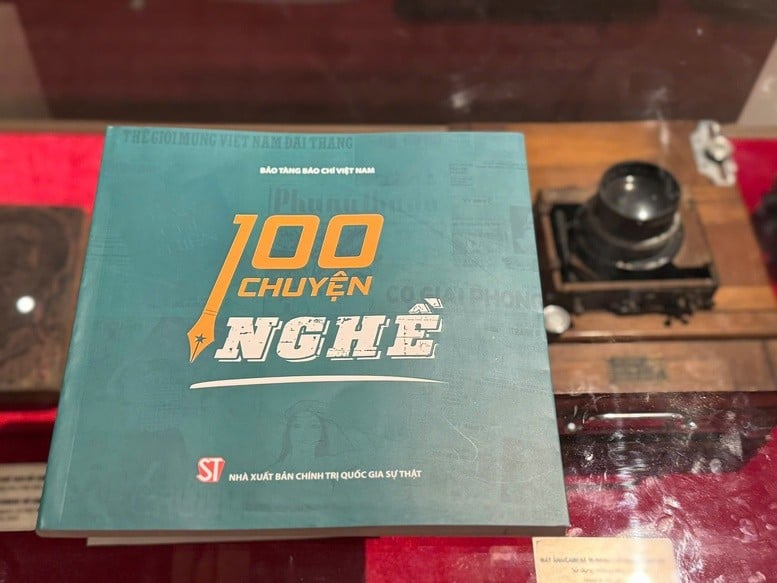
"100 Stories from the Profession" was published on the occasion of the 100th anniversary of Vietnam's Revolutionary Press Day on June 21st - as a heartfelt gift of gratitude, a token of appreciation, and a substitute for flowers sent to journalists of yesterday, today, and tomorrow. The book can be given as a gift to colleagues, relatives, and teachers in the field of journalism - as a way to preserve professional memories and pass on the flame of passion to the next generation.
With its simple style, accessible language, and rich emotions, this book is not only for professionals in the field but also a valuable resource for readers who love journalism, media studies, or simply anyone who wants to gain a deeper understanding of a profession always intertwined with the destiny of the nation.
"100 Stories from the Profession" is a message that journalism is not just a job, but a mission. Each page is a tribute, a memory of the journalistic profession preserved in words, and a flame that continues to guide young writers on their journey of journalism for the people and the nation.
Source: https://baolangson.vn/100-chuyen-nghe-tiep-lua-cho-nhung-cay-but-hom-nay-5049519.html




![[Photo] General Secretary and President To Lam presides over a meeting on preparations for the review of one year of operation of the three-tiered government system.](https://vphoto.vietnam.vn/thumb/1200x675/vietnam/resource/IMAGE/2026/06/02/1780391821195_a1-bnd-4595-9717-jpg.webp)
































































Comment (0)