

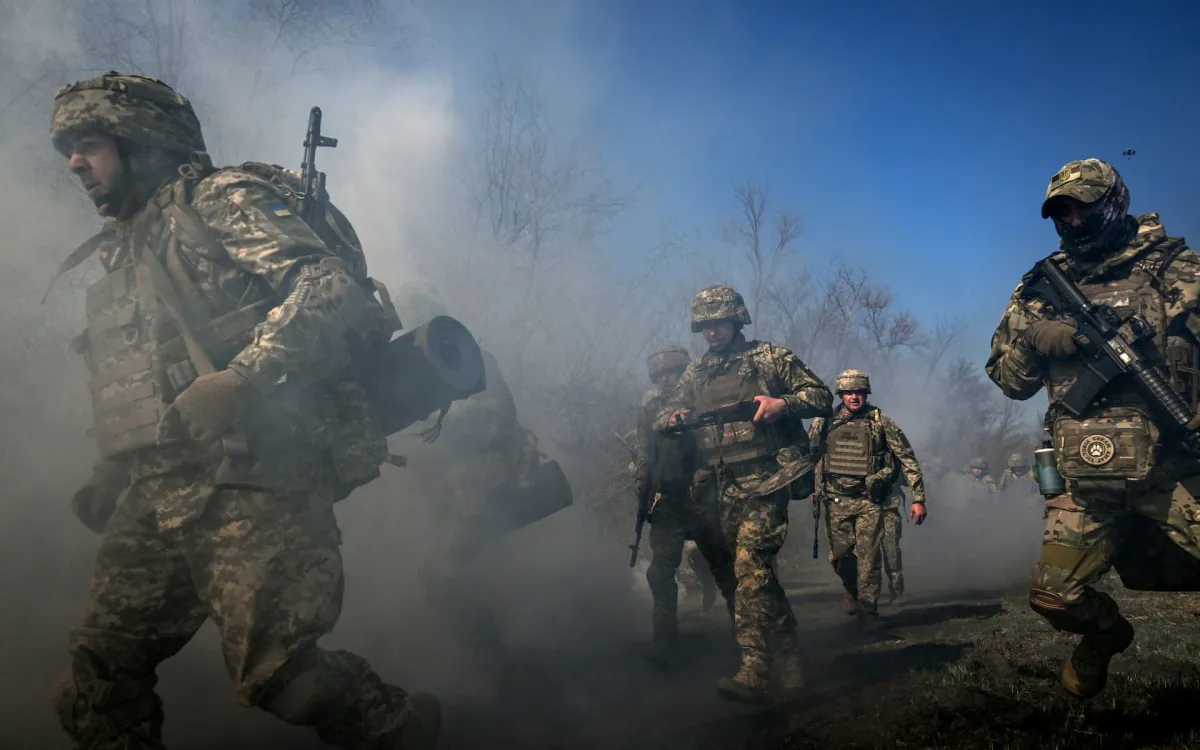
The Russia-Ukraine conflict has now entered its fifth year (Photo: NurPhoto)
The North Atlantic Treaty Organization (NATO) plan to require member states to allocate 0.25% of their gross domestic product (GDP) to military support for Ukraine is facing opposition from at least five member countries, highlighting internal differences within the alliance on how to maintain support for Kyiv amid the protracted conflict with Russia.
According to the British newspaper Telegraph on May 25, the UK, France, Spain, Italy, and Canada have rejected a proposal promoted by NATO Secretary General Mark Rutte. This plan was scheduled for discussion at the NATO Summit in Ankara, Turkey, on July 7-8.
Sources within NATO indicate that the proposal did not receive the necessary consensus to be adopted, as alliance regulations require the unanimous agreement of all 32 member states.
Last week, Mr. Rutte also acknowledged that the initiative was unlikely to be formally presented at the summit. Speaking to reporters, he said, "I don't think this proposal will be put forward," but did not name the countries that opposed it.
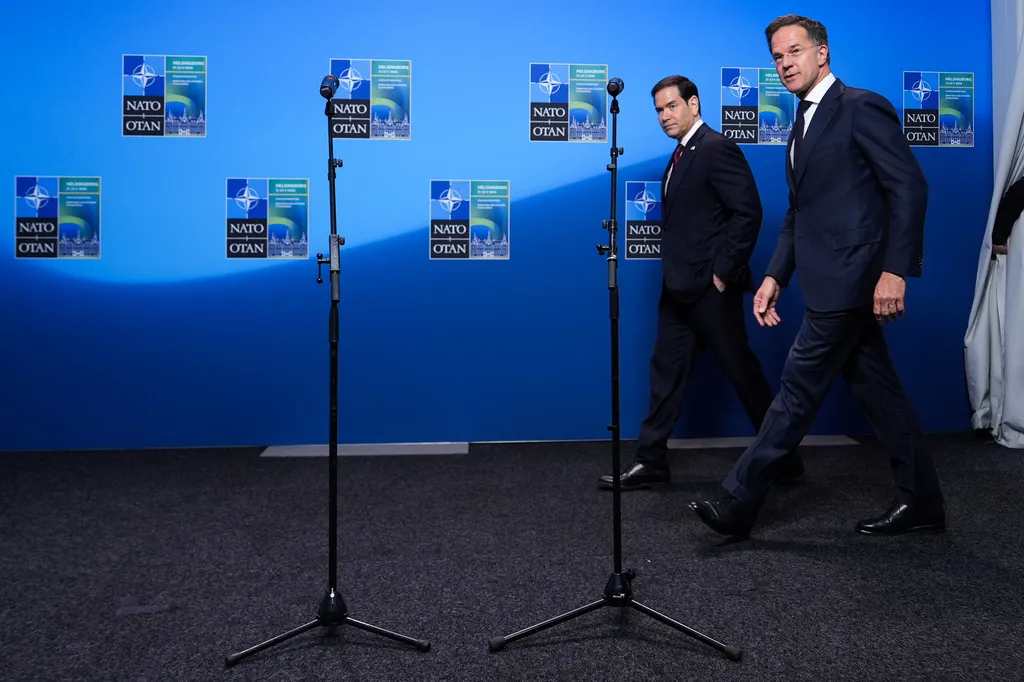
U.S. Secretary of State Marco Rubio (left) and NATO Secretary General Mark Rutte at a meeting of NATO foreign ministers in Helsingborg, Sweden, on May 22, 2026. (Photo: AP)
According to the Telegraph, only seven member states supported the plan. These are all countries that currently provide military support to Ukraine equivalent to or exceeding 0.25% of their GDP. Data from the Kiel Institute shows that the Netherlands, Poland, and the Nordic and Baltic states are currently among the countries providing the most substantial support to Kyiv as a percentage of their GDP.
Rutte's proposal is seen as an attempt to demonstrate European countries' long-term commitment to Ukraine amid a significant decline in US aid under President Donald Trump. The US leader recently restricted direct military aid packages to Kyiv, instead shifting to a mechanism of selling weapons to Ukraine with funding provided by European allies.
NATO officials believe the burden of supporting Ukraine is not yet evenly distributed within the alliance. Rutte has repeatedly emphasized that European countries need to play a larger role in supporting Kyiv, especially as Washington continues to demand that allies share more security responsibilities.
However, the proposal to mandate a fixed percentage of GDP for Ukraine has met with resistance from several major NATO economies . The Telegraph, citing a coalition source, reported that the UK, France, Spain, Italy, and Canada are "not really enthusiastic" about the plan.
For Britain, the protest is seen as having a certain impact on London's image as one of Ukraine's strongest allies since the conflict broke out. Nevertheless, the scale of British military support remains the third largest in NATO, after the US and Germany.
British Prime Minister Keir Starmer has pledged to maintain at least £3 billion annually to support Ukraine in the near future, equivalent to approximately 0.1% of the UK's GDP.

Serbian and NATO soldiers conduct joint military exercises in southern Serbia, May 22, 2026. (Photo: AP)
Meanwhile, many within NATO believe that the main pressure is now directed at France, Spain, Italy, and Canada – countries that are perceived as not contributing commensurately with their economic potential. Three of these countries are among Europe's largest economies, yet their support for Ukraine remains significantly lower than that of many smaller countries in Northern and Eastern Europe.
Speaking on the sidelines of a NATO meeting in Sweden last week, Swedish Prime Minister Ulf Kristersson called on allies to increase their support for Kyiv. He stressed: "I want many countries not only to speak in support of Ukraine but also to demonstrate that with concrete actions."
Meanwhile, the British Foreign Office said London is continuing to engage with NATO allies on any initiatives aimed at ensuring the alliance can support Ukraine as effectively as possible.
At the same time, Russia continued to criticize Western military aid to Ukraine. Moscow argued that supplying weapons to Kyiv could not change the outcome of the conflict but only prolonged the fighting, while increasing the risk of direct confrontation between Russia and NATO.
Russian Foreign Minister Sergey Lavrov last week accused NATO of using Ukraine as a tool to pressure Russia and create security threats near its borders. According to Lavrov, some Western countries have not abandoned their goal of weakening Russia in the long term.
With the conflict in Ukraine showing no signs of abating, internal NATO differences regarding the scale and mechanisms of support for Kyiv are expected to remain a contentious issue at the alliance's upcoming summit in Ankara.
Source: https://vtv.vn/5-nuoc-nato-phan-doi-danh-ngan-sach-ho-tro-quan-su-cho-ukraine-100260525181159159.htm



![[Photo] General Secretary and President To Lam and the President of the Philippines hold talks.](https://vphoto.vietnam.vn/thumb/1200x675/vietnam/resource/IMAGE/2026/06/01/1780283481955_vna-potal-tong-bi-thu-chu-tich-nuoc-to-lam-va-tong-thong-philippines-hoi-dam-8797519-1429-jpg.webp)




































































Comment (0)