

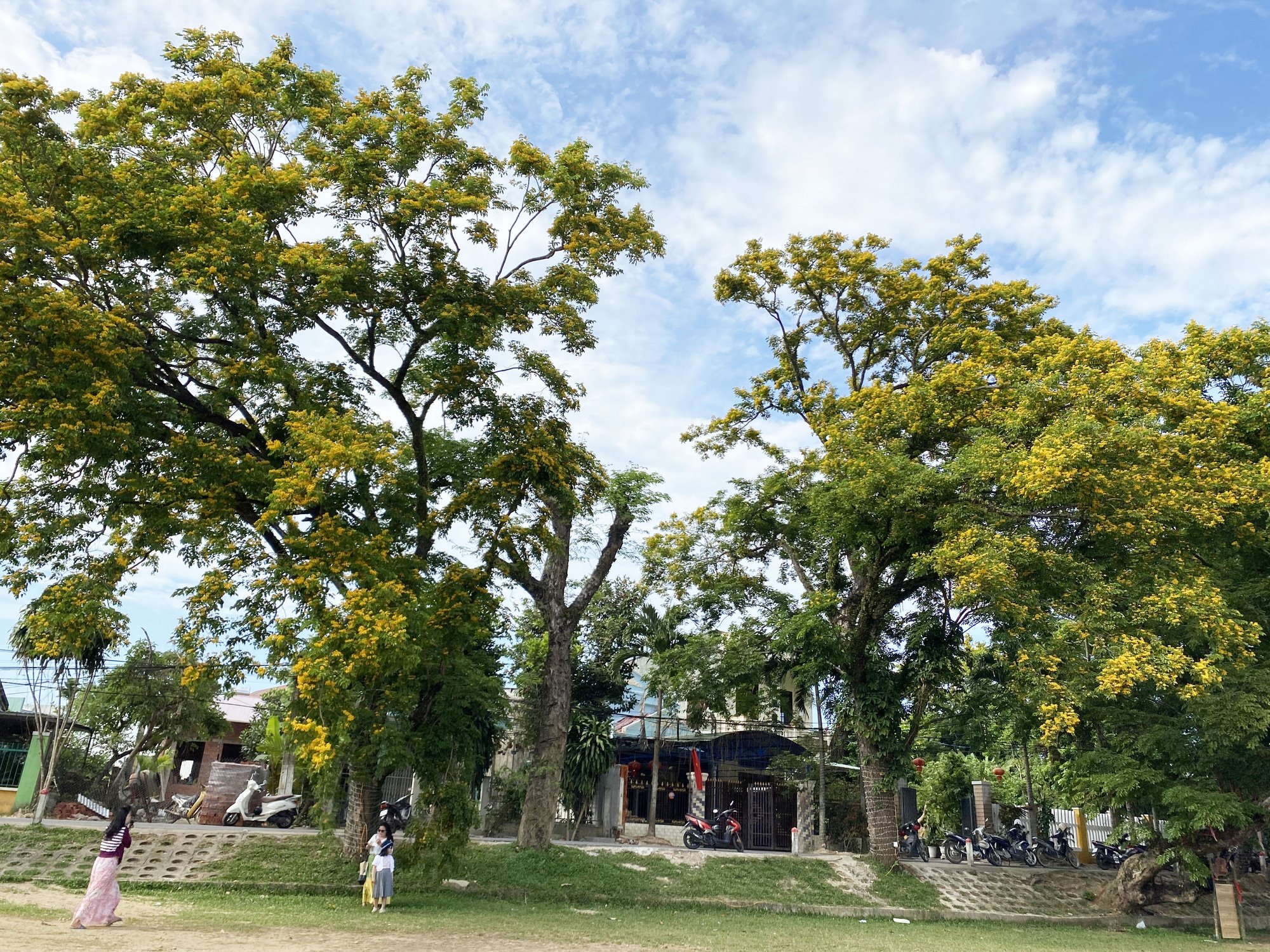
Indian sandalwood trees, also known as golden rosewood, in Huong Tra ecological village - Photo: LE TRUNG
On the evening of March 20th, Mr. Nguyen Minh Nam, Vice Chairman of the People's Committee of Tam Ky City, announced that he had just received notification from the Vietnam Association for the Protection of Nature and Environment regarding the consideration of the cluster of Indian rosewood trees (also known as yellow sandalwood) in the locality as Vietnamese Heritage Trees.
Previously, the association had received an application from the city requesting recognition of the cluster of 12 Indian sandalwood trees as Vietnamese Heritage Trees.
At the end of February 2024, the Vietnam Heritage Tree Council met to review the applications.
Therefore, it was concluded that 9 Indian sandalwood trees fully met the criteria to be recognized as Vietnamese Heritage Trees, while 3 trees did not meet the size criteria.
The association announces and congratulates the locality on the recognition of the cluster of sandalwood trees as Vietnamese Heritage Trees.
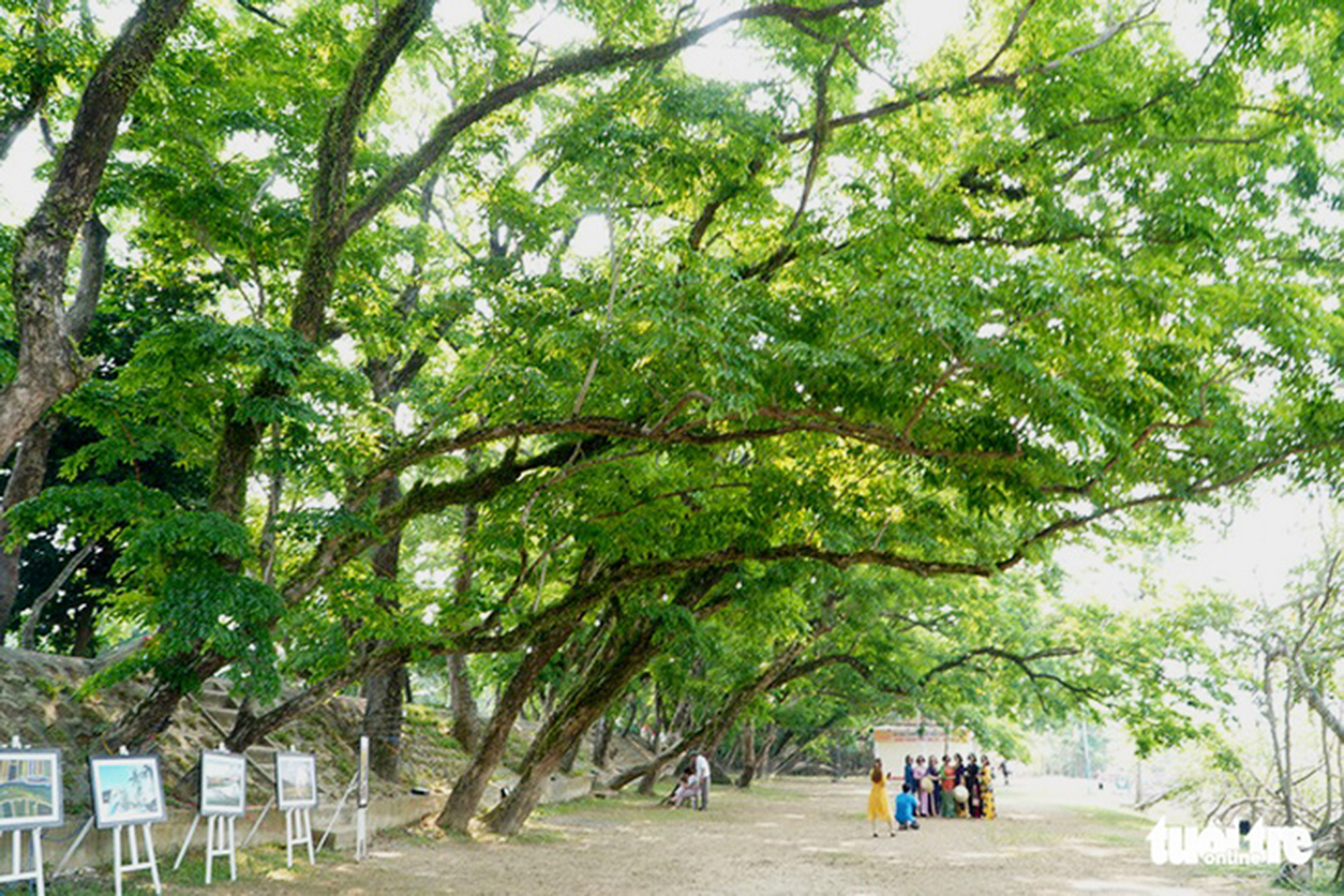
Ancient golden rosewood trees in Huong Tra ecological village - Photo: LE TRUNG
According to the application for recognition as a Vietnamese Heritage Tree submitted by the People's Committee of Tam Ky City, the Indian rosewood tree, commonly known as the Quang Nam golden rosewood, scientifically named Pterocarpus indicus Willd, belonging to the legume order, is located in Huong Tra ecological village, Hoa Huong ward.
Huong Tra village is located along the Tam Ky River, and since the village's inception, rosewood trees have been planted in front of the village gates.
The crape myrtle trees here are also known as "nine-mile fragrance" because the scent of their flowers from this village can travel up to nine miles.
The village was named Huong Tra (Fragrant Tea) for that very reason, so that future generations would always be connected to the village and show gratitude to the fragrant trees that their ancestors painstakingly cultivated.
Since ancient times, Dalbergia tonkinensis trees have been carried by floodwaters, and people have planted them along the riverbanks. With their easy growth characteristics—simply a cutting planted in the ground will sprout roots and firmly anchor the tree—residents have built dikes and planted these trees along the riverbanks to protect the land and prevent erosion.
From then on, every year the villagers built larger and longer dikes, connecting Huong Tra with neighboring villages. From September onwards, the villagers would cut branches from the Dalbergia tonkinensis trees to protect against storms and plant those branches along the village roads and around their houses.
Over time, the rosewood tree grew larger, its lush branches and leaves firmly protecting the dike and the village from storms and floods.
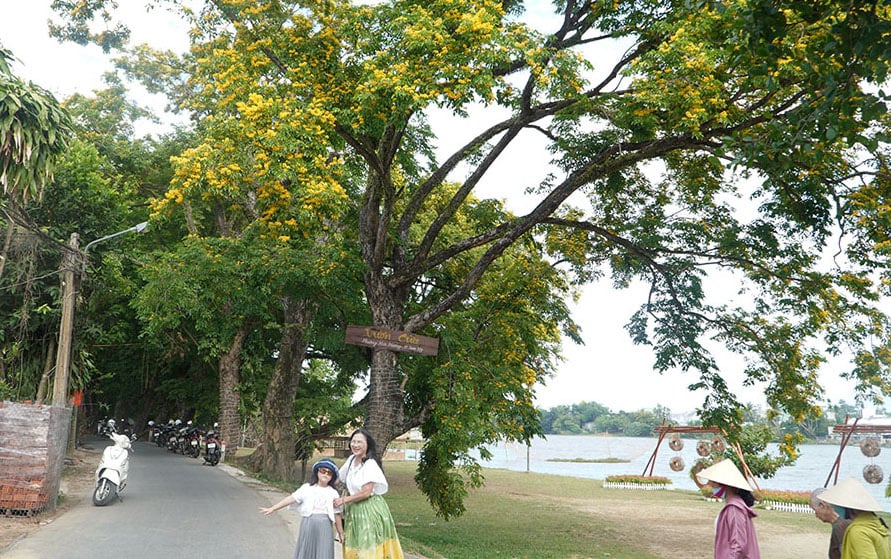
People check in next to rows of crape myrtle trees - Photo: LE TRUNG
The Huong Tra village area boasts the most beautiful heritage tree-lined road in Quang Nam, and nowhere else in Vietnam has such a long-standing row of Indian sandalwood trees.
Through surveys, experts assessed the distribution of Indian sandalwood trees in the village, noting over 50 trees that are nearly 100 years old or older, including 12 ancient trees over 200 years old. The oldest tree has a circumference at the base of 2.7m and a height of 9.2m.
The Indian sandalwood flower is bright yellow with a long, hairy stem, fragrant, and lasts for about 3-4 days before falling off.
The tree has a beautiful shape and flowers, and is popular for planting as an ornamental shade tree; its trunk is used to make beautiful household items and handicrafts.
This coming April, Tam Ky will also host the Tam Ky Festival - Sưa Flower Season 2024 with many interesting activities.
On April 5th, the ceremony to announce the decision and receive the certificate recognizing the cluster of nine Dalbergia tonkinensis trees as Vietnamese Heritage Trees will take place.
Source
![[Photo] Prime Minister Pham Minh Chinh presides over a meeting on private sector economic development.](/_next/image?url=https%3A%2F%2Fvphoto.vietnam.vn%2Fthumb%2F1200x675%2Fvietnam%2Fresource%2FIMAGE%2F2025%2F12%2F20%2F1766237501876_thiet-ke-chua-co-ten-40-png.webp&w=3840&q=75)










































































Comment (0)