


Hieuthuhai is enjoying success with his album "Mắt cửa mắt mở" (Eyes Closed, Eyes Open) . Three songs , "Dạo gần đây anh thấy anh không bằng ai hết" (Lately I feel I'm not as good as anyone else), "Vacheron Louie," and "Chờ tới khi anh về" (Waiting until he comes back ), are currently in the top 10 trending music charts . The album's streaming growth rate on digital music platforms is significantly higher than other releases at the same time. In terms of digital performance, it can be said that Hieuthuhai has been successful, but it remains to be seen whether he can surpass his debut album.
Recently, Ricky Star posted a video to share his thoughts on "how much it costs to make a song." In it, Ricky Star mentioned Hieuthuhai as an example of how the mixing and mastering process alone costs a singer/rapper a lot of money. And when Hieuthuhai sends each song to the US for renowned sound engineers to get involved in the final production, the cost can skyrocket.
Hieuthuhai is going big.
The rapper collaborated with Ben F Thomas on mixing and Eric Lagg on mastering. This is what sets the album "Mắt cửa mắt mở" apart from Hieuthuhai's previous releases. The rapper continues to compose his own songs, only working with his trusted producer, Kewtiie, before investing heavily in the hope of achieving a breakthrough in sound quality.
Ben F Thomas and Eric Lagg are two big names in the global music market. Ben F Thomas is a mixing engineer who has collaborated with Justin Bieber and Lil Uzi Vert. Eric Lagg, on the other hand, is the mastermind behind many hit tracks by US-UK stars such as Industry Baby (Lil Nas X) and Fck Love (The Kid Laroi).
Both roles are understated but indispensable in the production process for a song of the highest standard. For mixing, Ben F Thomas will work his magic on Hieuthuhai's rap/vocal parts using auto-tune and various other processes, finding the optimal solution to blend the vocals with the arrangement and ad-libs. The final task falls to Eric Lagg, whose mastering, often described as "sound makeup," will produce the cleanest possible track and optimize each aspect of the sound.


A great composition and an excellent arrangement require the support of outstanding sound engineers, produced in a studio that can cost "millions of dollars" to deliver a song that meets the needs of all listeners – from the average listener using phone speakers, computer speakers, or inexpensive headphones, to a discerning music connoisseur with a multi-million dollar sound system.
In the Vietnamese market specifically, many studios specializing in mixing and mastering have emerged, mainly concentrated in Ho Chi Minh City. According to Tien Phong newspaper's research, some studios have charged "thousands of dollars" for a single mixing and mastering project. The average price for a high-quality audio post-production product ranges from 10-20 million VND. The price varies depending on whether the mixing and mastering is done digitally (using virtual tools) or analogly (using physical equipment).
Hieuthuhai sought out renowned sound engineers, potentially doubling or tripling the cost compared to the average price of a studio in Vietnam. In return, the rapper benefited from collaborating with big names, enhancing the quality of his work. The sound quality in the songs from Hieuthuhai's new album has also received very positive feedback from listeners.
For a big name like Hieuthuhai, investing heavily in music production is the right thing to do. In fact, for several years now, many Vietnamese artists have sought out world-class sound engineers to mix and master their music. Audiences may not pay too much attention to the role of sound engineers, but artists place particular emphasis on it. When creating a song, they want to satisfy their own ears first.
Spending tens of millions of dong on post-production sound for a song is no longer a far-fetched idea in the Vietnamese music market.
Vietnamese music is developing strongly.
In the last five years, the remarkable improvement in music production quality has propelled the Vietnamese music market to a new level. While Vietnamese singers and rappers may not yet have reached top music charts or been performed on major stages, the quality of production – from catchy compositions and arrangements to high-quality sound – now boasts many products that meet international standards.
The increasing focus of Vietnamese artists on the mixing and mastering process is the most typical example of the market's rise. Fifteen years ago, the role of those working behind the scenes in the studio, doing post-production sound, was vague, and sometimes not even listed on the team. In the Vietnamese music industry between 2005 and 2010, the post-production sound engineer often also served as the producer.
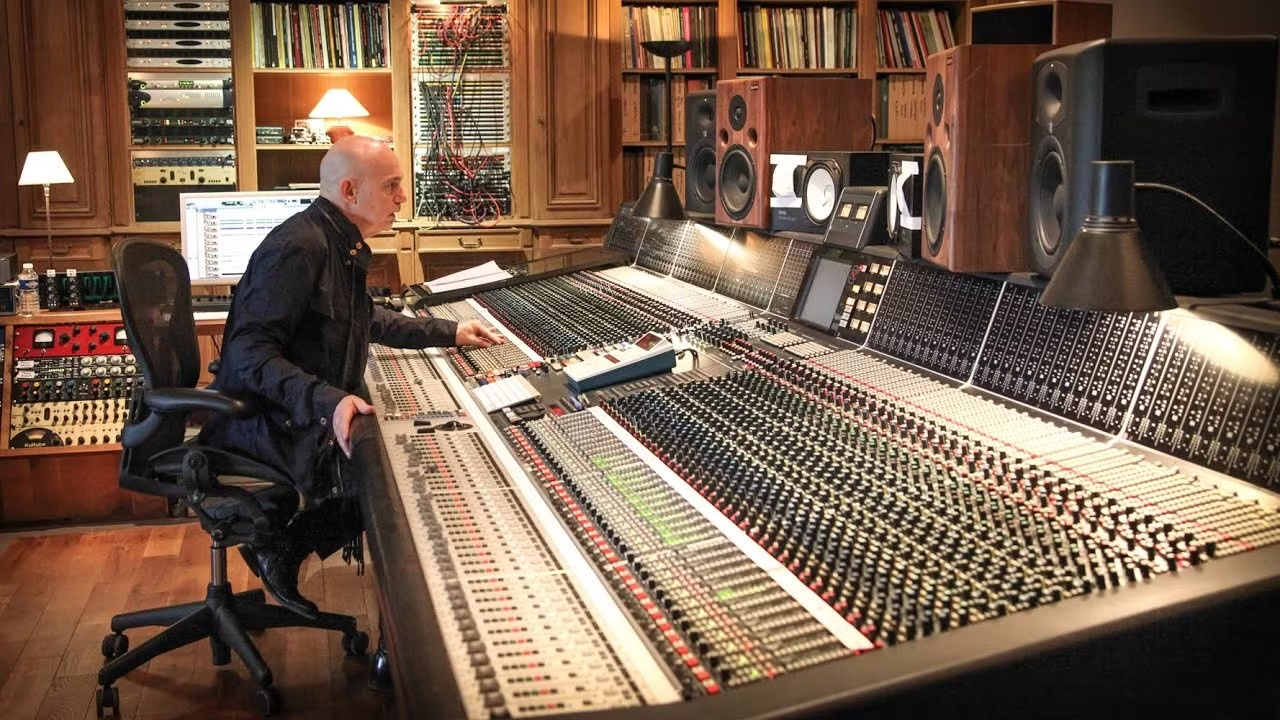
Let's revisit the old Vpop hits from the era of Dan Truong, Lam Truong, My Tam, Tuan Hung, followed by Ngo Kien Huy, Dong Nhi, Minh Hang, Noo Phuoc Thinh... to see the stark difference in music quality then and now. Simply playing them through relatively high-quality audio output devices with clearly defined high, mid, and low frequencies reveals a distorted overall sound, with poorly processed vocals and a chaotic mix of instruments.
At this time, sound engineers in the Vietnamese market appeared in large numbers due to high demand. All rappers/artists consider mixing and mastering a mandatory step. Some artists invest time in learning sound in depth and to control their vocals themselves during post-production. Most artists have to go to recording studios, depending on their budget, to work with sound engineers.
They invest in the present, which is also preparation for the long-term future. So that 20, 30 years from now, or even longer, when audiences revisit their products, the sound quality will still be relevant. This is a crucial factor for a song to have lasting appeal over time. In the short term, right now, a product with polished sound is a huge advantage in terms of immediate audience acceptance.
Source: https://tienphong.vn/ai-dung-sau-hieuthuhai-post1841997.tpo
![[Photo] National Assembly Chairman Tran Thanh Man working with the Standing Committee of the Law and Justice Committee](https://vphoto.vietnam.vn/thumb/1200x675/vietnam/resource/IMAGE/2026/05/21/1779378929214_ndo_br_1-4610-jpg.webp)



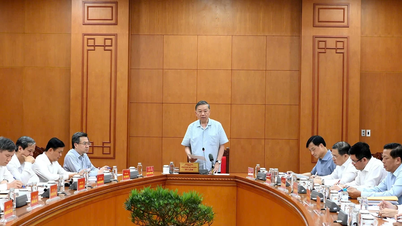
![[Photo] General Secretary and President To Lam presides over a working session with the Central Policy and Strategy Committee on the development of the materials industry.](https://vphoto.vietnam.vn/thumb/1200x675/vietnam/resource/IMAGE/2026/05/21/1779359935432_a3-bnd-3129-1412-jpg.webp)























































































Comment (0)