

When music emerges from separation and longing
During the brutal years of war, the Vietnamese people not only faced bombs and bullets but also endured prolonged periods of separation. It was from this context that moving songs were born—not with fanfare or slogans, but quietly touching the hearts of the people.
One of the most representative songs is "The Girl Who Opens the Way," composed by the late musician Xuan Giao in 1966. The song was created after he had served on the Truong Son trail. It not only praises the courageous spirit of the young female volunteers but also evokes the image of young women leaving their youth behind, facing danger. Each line blends ideals with silent losses, deeply moving the listener. "Walking under the starry night sky, whose singing echoes through the forest? Is it you, the girl who opens the way? I don't see your face, only hear your voice. Oh, those young women who are opening the way day and night! How old are you, that your strength is so extraordinary?"
Similarly, "Truong Son East, Truong Son West," composed by poet Pham Tien Duat in late 1969 on Route 20 in Quang Binh, was later set to music by composer Hoang Hiep in 1971. It became one of the most famous and enduring songs of the anti-American war era, telling a story of love during wartime.
The song isn't about long-term promises, just about the longing divided by the Truong Son mountain range. "Where are you, where am I?" – a simple question, yet it encapsulates the geographical distance and the separation caused by the times. It is this very simplicity that makes the song so relatable and poignant.

Another song, "Nostalgia for Winter," was composed by musician Phu Quang during the hot summer days of Saigon. After reading the short poem "Untitled" by poet Thao Phuong, he was moved and empathetic, adding lyrics to create the complete musical piece. The musician uses phrases like "the chilling northeast wind," "the distant sound of temple bells," etc., to evoke a feeling of coldness and endless nostalgia. A nostalgic, old-fashioned, sad yet strangely peaceful Hanoi . The line "How can I return to winter?" seems to urge Phu Quang to bring back the beautiful things of the past, only to ultimately have to console himself, pretending that winter has arrived.
Despite being created after the war, the song "Winter Nostalgia" still carries the spirit of old memories, where nostalgia is not just for one person but for an entire bygone era. The slow melody and profound lyrics immerse the listener in a space full of reminiscence.
Beyond romantic love, many songs also touch upon family feelings, one of the most powerful sources of emotion. "Mother Loves You" is one example. The song, composed by musician Nguyen Van Ty in 1956, was born from the joy of welcoming his baby daughter and the difficult, impoverished times his family was experiencing in his mother's hometown.
This is a quintessential work about maternal love intertwined with patriotism. The song doesn't tell grand stories, but rather a lullaby, a mother's quiet yet enduring love. In the context of war, when life becomes fragile, maternal love becomes even more sacred and easily brings tears to the listener's eyes.
Or consider "Love Song" by composer Hoang Viet, written in 1957. Although it doesn't directly address the war, it carries the sentiments of an entire nation. It expresses love for the country and its people through simple yet profound imagery. The combination of individual and collective elements creates a powerful and far-reaching impact.
Regarding the song "Love Song" by composer Hoang Viet, Professor and composer Nguyen Xinh, when mentioning "Love Song," said: "I think that to date, no love song has surpassed Hoang Viet's 'Love Song'."
In fact, the common thread among these songs is their genuine sincerity, touching the hearts of listeners. These songs don't try to evoke emotion through sentimental lyrics, but rather through the very real experiences of people in extraordinary circumstances. Perhaps that's why, even after decades, when people listen to them again, they still feel as if the story is unfolding somewhere in their lives. These songs are not just music, but living memories. They preserve emotions that history cannot record with numbers or events.
The melodies remain – indelible memories for generations.
After the war, the country entered a period of peace and development, but the moving songs of that era continued to live on in the spiritual life of the Vietnamese people. No longer sung amidst bombs and bullets, these melodies have become echoes of memory, recalled, sung again, and felt in different ways.
One of the songs that best expresses grief is "The Color of Red Flowers," by the late composer Thuan Yen, set to a poem by Nguyen Duc Mau, like a diary entry vividly depicting life. The song evokes images of those who have fallen, but not in sorrow; instead, it possesses a solemn beauty. "The color of red flowers is like the blood of the heart," the line serves as both a symbol and a tribute, leaving listeners deeply moved.
Similarly, the song "Homeland" by composer Pham Minh Tuan, based on the poem by poet Ta Huu Yen, composed in 1984, evokes echoes from the past whenever it is sung—a past that is both deeply painful and heroic for the Vietnamese people. It's not about grand slogans, but about familiar images that allow listeners to feel the value of peace. "Let me sing about you, my homeland/Let me sing about Motherland/Throughout her life of hardship/She cherishes the bamboo groves, the mulberry fields, the riverbanks/She loves with all her heart, through the salty taste of life and the bitterness of ginger."
From another perspective, Trinh Cong Son's 1984 song "Legend of the Mother" offers a special emotional depth. The image of the mother is not just a personal one, but also a symbol of the nation—gentle yet courageous and forgiving. "At night, I light the lamp and remember / Stories of the past / Mother returning home and standing in the rain / Sheltering her sleeping children? Watching for every enemy step." The slow melody and richly evocative lyrics make this song one of the most powerfully moving works for listeners.
It's impossible not to mention "Red Leaves," composed by musician Hoang Hiep based on the lyrics of poet Nguyen Dinh Thi. This song is both heroic and full of poetic imagery. "Meeting you high up in the wind/The strange forest rustles with red leaves/You stand by the roadside like my homeland/Your faded jacket draped over your shoulder, carrying a rifle." The image of red leaves falling on the marching road is not only a natural detail but also evokes the fragility of life. The contrast between beauty and danger creates a special emotion for the listener.
It's worth noting that these songs haven't become outdated over time. On the contrary, in the modern context, when people tend to seek out authentic values, these songs become even more meaningful. Young people today may not have experienced war, but they can still feel the nostalgia, sacrifice, and love in these songs.

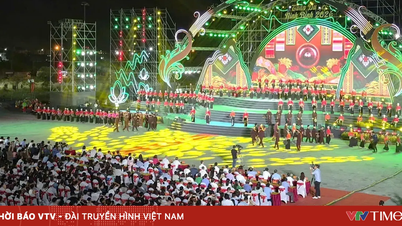
Many art programs, celebrations, and music competitions still choose these songs as an indispensable part of their repertoire. They are not only for performance, but also to tell the story of a bygone era. And each time, these old melodies are "revived" in a new space, with new listeners.
The enduring appeal of once-heartwarming songs lies not in technique or trends, but in their emotional value. That's something irreplaceable, something not easily forgotten. When a song can make listeners shed tears, think, or simply fall silent for a few minutes, it transcends the boundaries of music to become a part of their spiritual lives.
The moving songs of a bygone era in Vietnam not only reflect a historical period but also preserve profound humanistic values. These songs tell the story of the Vietnamese people with their love, longing, sacrifice, and hope. And even as time passes, these melodies remain, a reminder that some emotions are eternal, and music is the way for future generations to preserve the historical memories of the nation.
Source: https://baophapluat.vn/am-vang-cua-nhung-tieng-hat.html































































































Comment (0)