

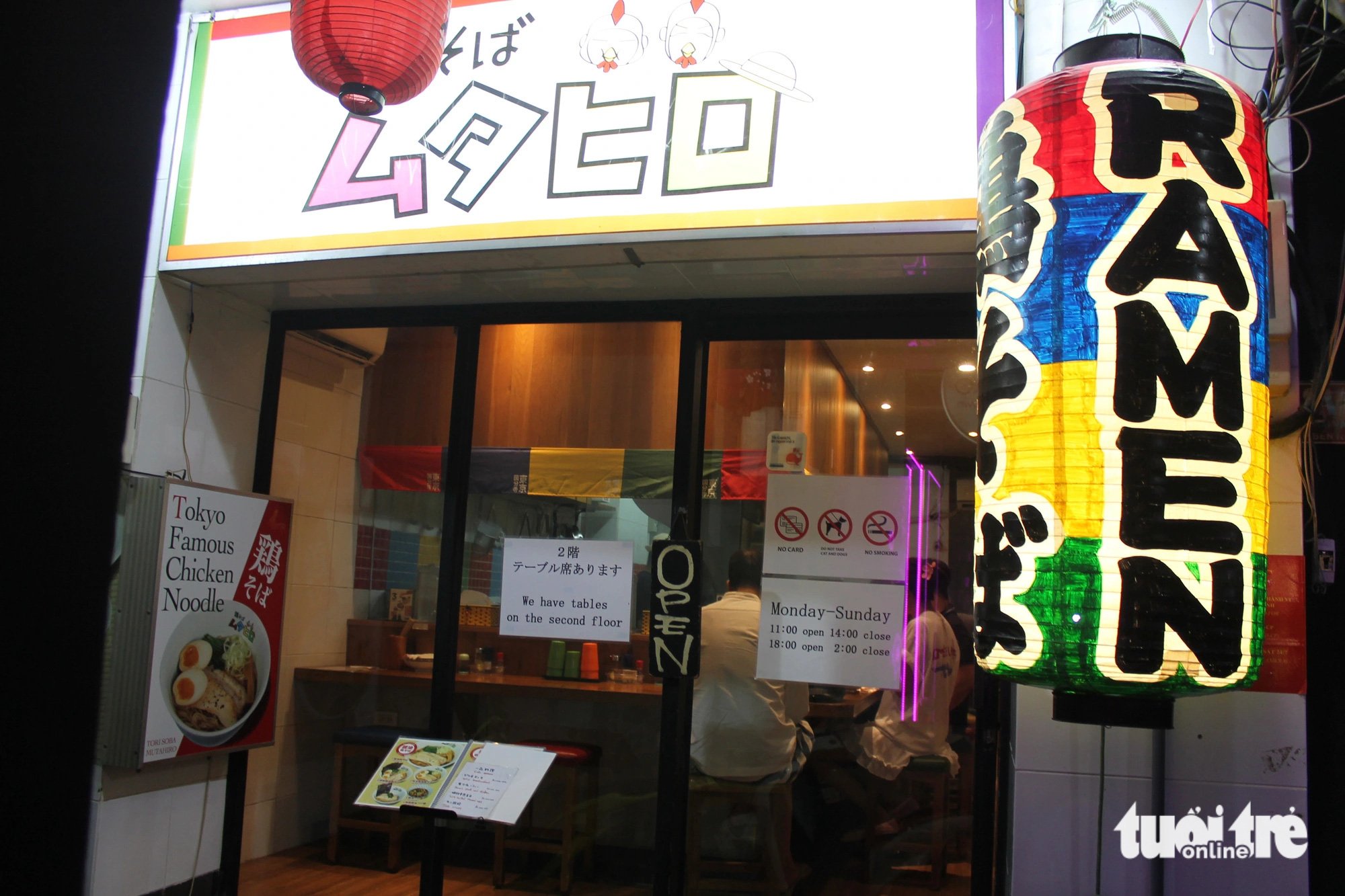
From the outside, Tori Soba Mutahiro stands out with its red, blue, and yellow color scheme. The name includes "soba" because "chukasoba" is another name for ramen, not referring to soba noodles. - Photo: TO CUONG
Ho Chi Minh City is one of Vietnam's most unique culinary crossroads, where diners from near and far can come to enjoy everything from European to Asian cuisine, from renowned Indian curries to Japanese ramen.
However, finding authentic Japanese ramen is quite a challenging journey, partly because ramen recipes are easily distorted through multiple re-editings, and partly because many chefs have made certain adjustments to the flavor to suit Vietnamese tastes.
Ramen noodles originate from the Japanese capital.
Today, Tuoi Tre Online discovered a delicious ramen spot hidden deep within Thai Van Lung alley, District 1, a place dubbed "Little Tokyo" in the heart of Ho Chi Minh City.
This place is filled with countless Japanese food stalls, crammed together to form a maze that overwhelms visitors; however, if you ask for the name Mutahiro , most locals will know it.
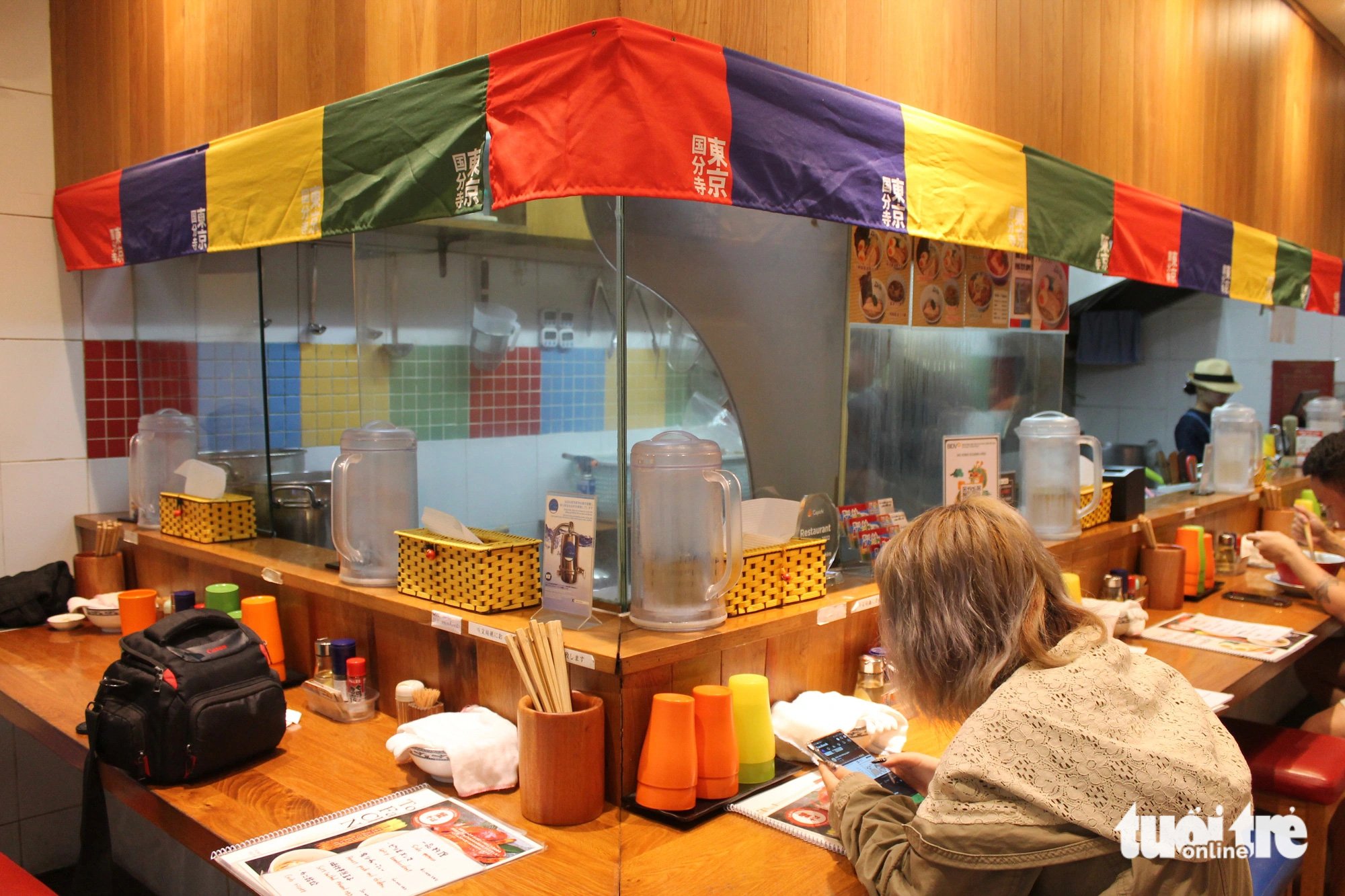
The interior of the restaurant is very cozy, and customers can sit at the counter to watch the chefs prepare their bowls of noodles - Photo: TO CUONG
The full name of the restaurant is Tori Soba Mutahiro (literally: Mutahiro Chicken Noodle Restaurant), originating from Tokyo (Japan). The owner is Japanese, and the restaurant has been open and training Vietnamese chefs since 2018, so you can comfortably enjoy the experience without worrying about language barriers.
The price of a bowl of ramen ranges from 120,000 to 160,000 VND, with portion sizes not varying significantly, only the amount of toppings added.
As its name suggests, what sets Mutahiro apart from most other ramen shops in Ho Chi Minh City is its chicken broth instead of pork.
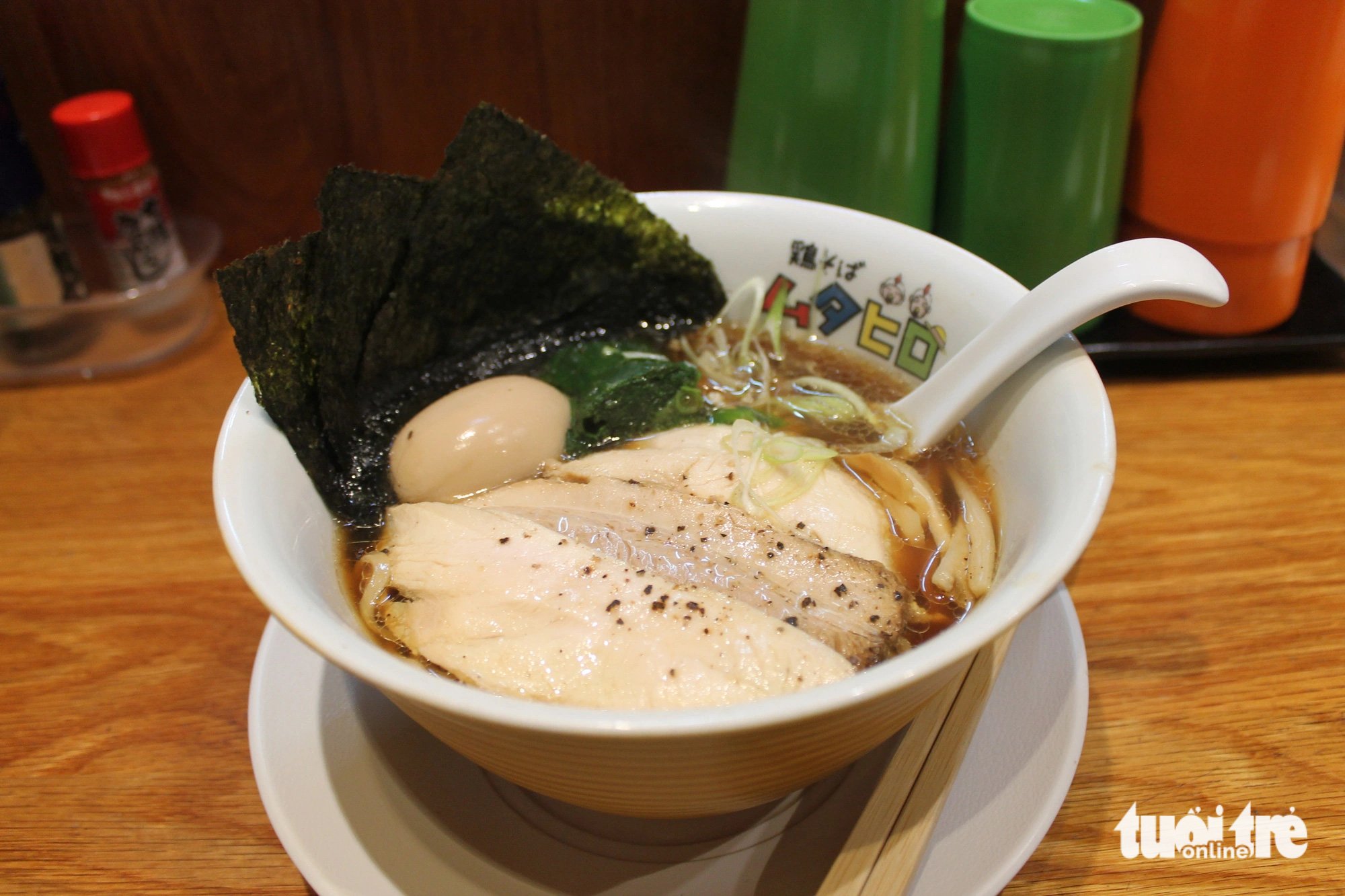
A close-up of a bowl of ramen with Japanese soy sauce broth; a large bowl like this costs 160,000 VND - Photo: TO CUONG
The advantage of chicken broth is that it's not very fatty, resulting in a clearer broth, and the subtle sweetness from the chicken allows the other ingredients to shine.
The ramen at Mutahiro revolves around two main broth types: soy sauce (shoyu ramen) and salt (shio ramen). While the salt-seasoned broth is clearer and lighter in flavor, the soy sauce-seasoned broth is richer and has more umami (savory) flavor.
Masterful ramen flavors
The moment the broth touches the tip of the tongue, its rich, creamy flavor immediately awakens the taste buds, leaving a sweet and lingering aftertaste that is incredibly captivating.
It is known that the soy sauce and traditional salt are regularly imported from Japan every week. If the restaurant runs out of either ingredient, they stop selling that dish entirely until the next shipment arrives, and they do not use any other substitutes.
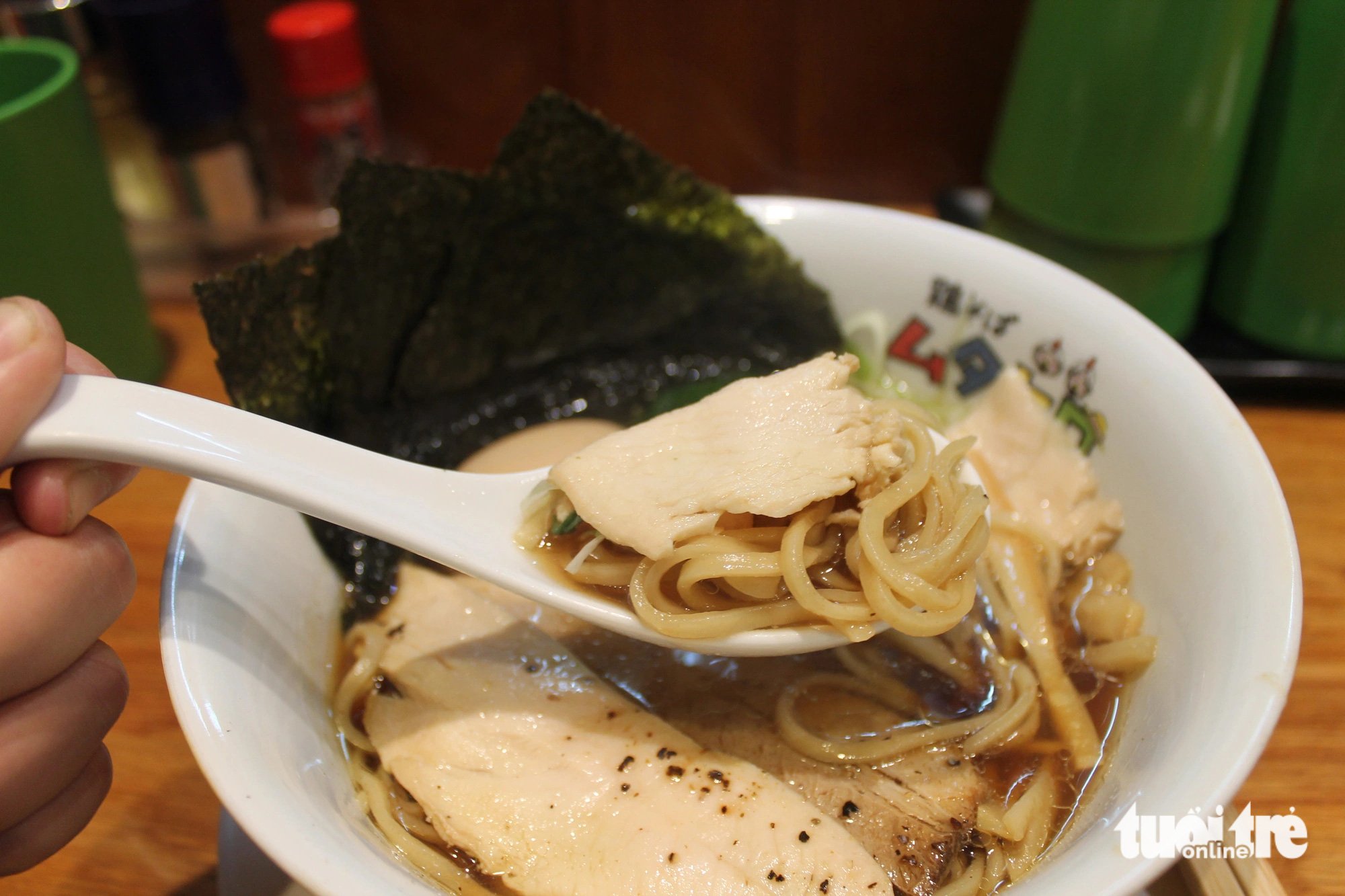
Inside the noodle bowl are: pork, chicken chashu, dried seaweed, bamboo shoots, leeks, a soft-boiled egg marinated in soy sauce, and mitsuba (Japanese celery) - Photo: TO CUONG
The other ingredients are equally impressive: the noodles are chewy and absorb the broth's flavor, the char siu pork melts in your mouth, and the runny egg yolk adds to the rich flavor profile of the bowl of noodles.
The most distinctive feature is the chewy, fatty chashu chicken, with a texture that gives the impression of biting into a mushroom. The flavor of the meat blends harmoniously with the broth, creating an indescribable richness.
Additionally, leeks, dried seaweed, bamboo shoots, and mitsuba (Japanese celery) are also present, acting to neutralize the salty and fatty flavors of ramen, making it enjoyable for diners to eat without getting tired of it.
However, the broth is quite salty for Vietnamese tastes. The restaurant provides vinegar, pepper, and chili powder so customers can adjust the flavor to their liking; customers can also ask the chefs to make it less salty to suit their taste.
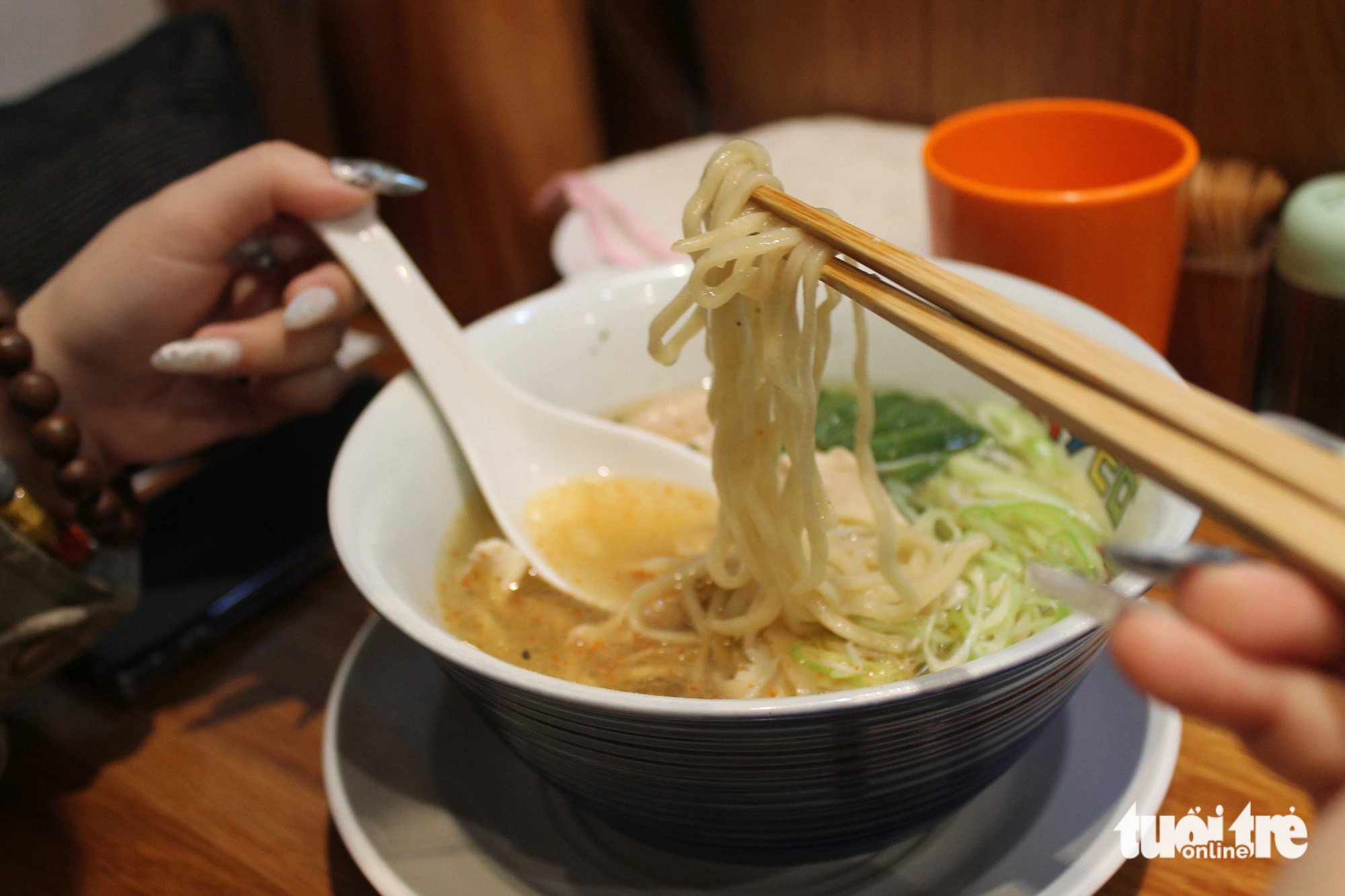
The broth, seasoned with salt, is clearer, and the chicken fat floating on top looks very appealing - Photo: TO CUONG
Previously, Mutahiro 's customers were mainly Japanese people working or renting houses around "Little Tokyo," but gradually more and more Vietnamese people learned about the cafe's reputation and came to experience it or become regular customers.
While sitting at Mutahiro , you'll occasionally hear a Japanese customer exclaim with delight, "Umai!" (meaning "delicious!" in Japanese).
Source: https://tuoitre.vn/an-thu-mi-ramen-chuan-nhat-gia-chi-bang-hai-to-pho-2024080517023017.htm

![[Photo] First session of the 14th Congress of the Vietnam Trade Union](https://vphoto.vietnam.vn/thumb/1200x675/vietnam/resource/IMAGE/2026/06/03/1780465947883_ndo_br_img-3852-jpg.webp)
























































































Comment (0)