


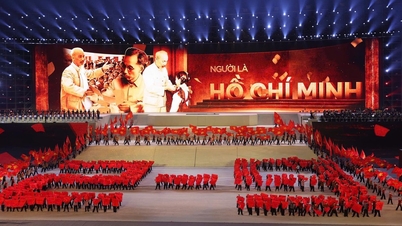
The world is undergoing unpredictable changes, with increasingly fierce technological and geopolitical competition. The gap between being ahead and lagging behind is sometimes just a few years of technological advancement. Domestically, Vietnam is implementing numerous reforms in organizational structure, institutions, governance, and new growth drivers. Against this backdrop, the article "The Light of Ho Chi Minh Guides Us" by General Secretary and President To Lam, on the occasion of the 136th anniversary of President Ho Chi Minh's birth, offers a message with strategic significance for the country's new development path: The more vigorous the reforms and the deeper the modernization, the more we must uphold the light of his ideology as the guiding foundation for development.
After 40 years of Doi Moi (Renovation), the country has entered a different stage of development. While the initial phase focused on liberating productive forces, opening up, and integration, the current phase emphasizes competition in terms of growth quality, technology, data, governance capacity, and strategic autonomy. The world is rapidly changing, and geopolitical hotspots continue to impact global trade, energy, and supply chains.
This is creating new pressures on Vietnam.
Over the past year, the country has streamlined its administrative apparatus, implemented a two-tiered local government model, reorganized administrative units, and promoted decentralization and delegation of power. This is the largest organizational revolution in decades, aimed at building a more streamlined, efficient, effective, and effective governance system. Alongside this, national digital transformation continues to be strongly promoted. Contributing over 14% to GDP by 2025, the digital economy is affirmed as one of the driving forces of growth and has significant untapped potential.
This shows that Vietnam is rapidly entering a new development space. But in this major transition, the crucial question is what direction to develop in and on what foundation.
It is here that Ho Chi Minh's thought demonstrates its exceptional guiding value!
What is profound about President Ho Chi Minh is that he never opposed modernization with national independence, nor did he oppose innovation with preserving national identity and social foundations. He also did not cling to rigid, closed-minded thinking, but always learned from the progress of humanity, absorbed the best of the world, developed science and technology, raised the people's intellectual level, and improved their living standards. However, all innovation had to be directed towards the people, for the happiness of the people and for the self-determination of the nation.
Therefore, modernization cannot be understood simply as growth at all costs or a mere technological race. Global experience shows that economic growth alone does not guarantee sustainable development if a nation fails to maintain strategic autonomy, ensure social progress and equity, and strengthen the people's trust.
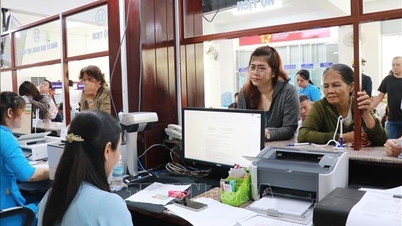
President Ho Chi Minh's spirit of "the people are the foundation" is therefore even more meaningful in the era of digital governance. Streamlining the administrative apparatus is not only about reducing intermediaries or administrative costs, but more fundamentally, it is about bringing the State closer to the people, processing work faster, and serving citizens and businesses better. Digital transformation is also not just about digitizing data or administrative procedures, but must aim for a more transparent, convenient, and efficient governance system.
Ultimately, all reforms must be measured by the satisfaction, trust, and tangible benefits of the people. If procedures remain slow, data is not interconnected, officials evade responsibility, or citizens still face difficulties accessing public services, then reforms will struggle to create real momentum for development.

In his article "The Light of Ho Chi Minh Guides Our Way," General Secretary and President To Lam emphasized the requirement of "innovation without deviating from the right path; rapid development but sustainable; deep integration but maintaining independence and self-reliance." This spirit clearly demonstrates the need for self-reliance and self-strengthening in the new development context.
Never before has mastering science and technology been as strategically important as it is today. A nation that does not master technology will find it difficult to control its own future development. The current global competition is no longer primarily about resources or cheap labor, but rather about AI, semiconductors, data security, green technologies, and innovation capabilities.
Therefore, Vietnam's promotion of a national semiconductor industry strategy, the development of digital infrastructure, data centers, high-quality human resources, and an innovation ecosystem is not only an economic requirement but also a requirement to maintain independence and self-reliance in the technological age.
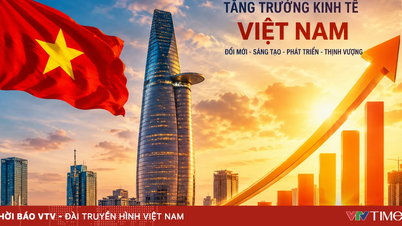
By 2025, Vietnam's GDP is projected to grow by approximately 8.02%, with the economy exceeding US$514 billion; total import and export turnover is expected to surpass US$930 billion. These figures demonstrate the country's enormous potential and room for development. However, they also highlight the need to enhance national technological capacity, labor productivity, and the quality of growth if Vietnam does not want to remain at a low position in the global value chain.
The spirit of "liberating ourselves with our own strength," which President Ho Chi Minh championed 81 years ago, needs to be understood more broadly today. It means mastering our own development capabilities, building a high-quality workforce, having strong technology enterprises, and combining national strength with the strength of the times to avoid falling behind.
Along with that comes the requirement to build a system of honest, efficient, and responsible governance. This is also a very noteworthy point in the article by General Secretary and President To Lam, when he places the fight against corruption, waste, negative practices, and bureaucracy in direct relation to national development.
In the era of global competition, "internal enemies" not only undermine the system but also rob the nation of opportunities for development. A project delayed for years, a wasted resource, an official shirking responsibility, or a stagnant institution can all cause the country to fall behind in the development race. Therefore, integrity today is not only a moral quality but also a key factor in national competitiveness.
But ultimately, the greatest legacy of Ho Chi Minh's thought remains the idea of development for the benefit of humanity. Technology cannot replace human values. Economic growth is not the ultimate goal of development. A strong nation must be one where its people live safely and decently, have opportunities for development, and enjoy the fruits of development fairly.
Therefore, commemorating President Ho Chi Minh's birthday is not just about remembering his immense contributions. More importantly, it's about translating awareness into action. Learning from and following President Ho Chi Minh cannot stop at slogans, but must be demonstrated through concrete actions: daring to innovate, daring to take responsibility, daring to serve, and placing the national interest above all else, using the effectiveness of serving the people as the measure of success.
The more significant the historical turning point, the more we must uphold the light of Ho Chi Minh. This is not only the light of faith, but also the light of courage, wisdom, and the direction of development for Vietnam to enter a new era of development with the aspiration for national strength and prosperity.
Source: https://baotintuc.vn/thoi-su/anh-sang-dan-duong-trong-buoc-ngoat-phat-trien-moi-20260518084840046.htm

![[Image] Close-up view of the interchange connecting the two expressways and Long Thanh Airport.](https://vphoto.vietnam.vn/thumb/1200x675/vietnam/resource/IMAGE/2026/05/25/1779703378210_ndo_br_z7863716673926-224453a31600126cce10622af6290afd-4549-jpg.webp)

![[Image] Hanoi's urban life under the challenge of a "scorching hot" environment](https://vphoto.vietnam.vn/thumb/1200x675/vietnam/resource/IMAGE/2026/05/25/1779706979265_nang-nong-t5-2026-minh-duy-7-4636-jpg.webp)












































































Comment (0)