

 |
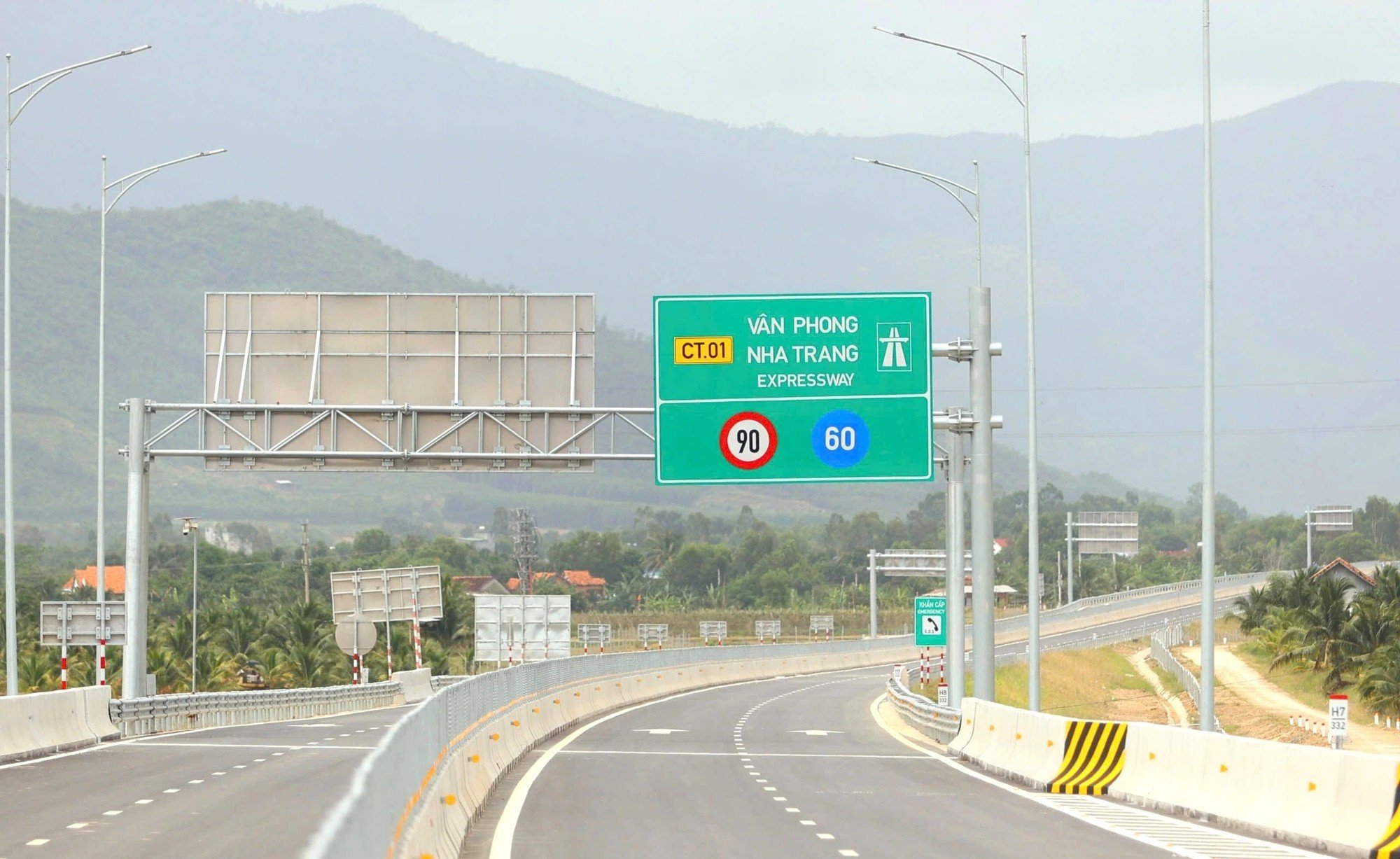
| The Van Phong-Nha Trang section of the expressway project - Photo: VGP/Tran Manh |
Take advantage of every opportunity to achieve the highest possible growth rate.
Sir, in the context of the IMF recently lowering its global growth forecast and the growth forecasts of major partner economies for 2025, how do you assess Vietnam's ability to achieve its GDP growth target of 8% or higher this year – given that the Vietnamese economy remains heavily dependent on exports?
Dr. Nguyen Bich Lam: In 2025, the Vietnamese economy will operate amidst global instability: geopolitical conflicts, escalating trade wars, high interest rates, and declining global consumption and investment. The IMF has lowered its global growth forecast to 2.8%, and also predicts global trade growth this year will only reach 1.7%, a decrease of 1.5 percentage points compared to last year. Major trading partners of Vietnam, such as the US and China, have also had their growth prospects downgraded.
In this context, Vietnam's ability to achieve its 8% GDP growth target this year is a major challenge, as our economy is heavily dependent on exports, while domestic consumer demand remains weak. I believe that striving for 8% or higher GDP growth should be understood as a guiding goal, reflecting our determination, and we need to make the utmost effort and utilize our resources to achieve the highest possible growth rate under the current objective conditions.
Regarding import and export growth forecasts, it is currently difficult to provide an exact figure due to the unclear situation regarding reciprocal tariff policies between the US and its partners. However, the import and export picture for the first quarter of 2025 remains bright: export turnover reached US$102.8 billion, an increase of 10.6% compared to the same period last year. Nevertheless, it should be noted that exports still heavily depend on the FDI sector, and some agricultural products have recorded declines.
According to assessments, achieving double-digit growth in exports and imports this year will be difficult. Some international organizations, such as the ADB, forecast Vietnam's export and import growth to be around 7%, but I believe that forecasting at this point is still premature. Therefore, the Government is making efforts to negotiate, respond to, and support businesses to maintain export momentum and overcome global trade challenges.
According to him, what efforts are needed to maintain exports in the context of increasing global uncertainties?
Dr. Nguyen Bich Lam: I believe that to maintain export momentum amidst global trade uncertainty, Vietnam needs to implement a comprehensive set of solutions. This includes strengthening negotiations to minimize the adverse impacts of reciprocal tariff policies, especially with the US market – Vietnam's largest export market. With a skillful economic diplomacy strategy, we need to proactively negotiate and effectively address tariff issues and non-tariff trade barriers.
Furthermore, it is necessary to effectively utilize the signed FTAs to expand markets and compensate for potential declines in exports from the US market. Businesses and industry associations need to prepare various response scenarios, seek new markets, and diversify export products. In addition, there is a need to shift the structure of export goods towards increasing the proportion of deeply processed products and high-tech products.
In particular, attention should be paid to developing service exports such as tourism, transportation, and banking and financial services. In the first quarter of 2025, Vietnam's service exports reached approximately US$7.58 billion (a 21.7% increase compared to the same period last year), demonstrating enormous potential. I want to emphasize that it is necessary to reduce the service trade deficit – a long-standing issue. Reducing the service trade deficit is a matter of considerable concern, because calculations show that a 10% reduction in the service trade deficit would contribute to a 0.36% increase in GDP.
Furthermore, the government needs to implement measures to support businesses in enhancing their competitiveness, improving the business environment, and screening FDI to prevent "disguised" exports and fraudulent exports with false origins that cause damage.
With a proactive and flexible approach, I believe that Vietnam will gradually overcome difficulties and continue to maintain its position in the global supply chain.| A notable point regarding foreign investment in Vietnam in the first quarter of 2025 is the very high number of newly registered projects, with 850 projects licensed, an increase of 11.5%; however, the registered capital reached US$4.33 billion, a decrease of 31.5%. The average registered capital per FDI project is only US$5 million, indicating that many FDI projects are small-scale. The Government and localities need to carefully review and screen FDI projects to eliminate investors coming to Vietnam to hide or evade the trade war. |
 |
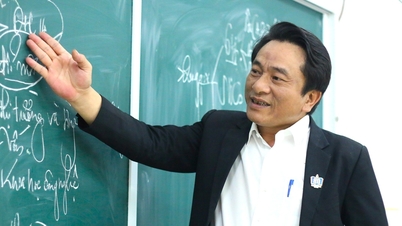
| Dr. Nguyen Bich Lam |
Key policy pillars that need to be prioritized.
So, in your opinion, what key policy pillars should be prioritized to create room to support growth in the context of weakening global demand?
Dr. Nguyen Bich Lam: In the context of a challenging global environment, to create room to support economic growth, Vietnam needs to prioritize the simultaneous implementation of several key policy groups as follows:
Firstly, boost public investment. Public investment capital will continue to play a key role as the main growth driver of the economy in 2025, especially in the context of slow consumer recovery. The total public investment capital in 2025 is VND 825.9 trillion; if 95% is disbursed, it will help increase GDP by an additional 1.07 percentage points, and if 100% is disbursed, it will increase it by an additional 1.4 percentage points.
Furthermore, I am also very impressed with the government's efforts to resolve outstanding projects, regardless of funding sources, in order to unlock resources for the economy. A review has identified 2,212 stalled projects, primarily domestic private investment projects, public-private partnership projects, and approximately 20% public investment projects. These projects are causing significant delays and waste of resources and land, and urgently need to be resolved to put them into use, boost investment momentum, and contribute to achieving growth targets.
Secondly, we need to promote private investment and FDI. Private investment accounts for approximately 50% of total social investment, so every one percent increase in private investment contributes significantly to overall growth. Therefore, it is necessary to remove legal barriers and improve the investment and business environment to activate capital flows from the non-state sector.
Thirdly, stimulate domestic consumption. Final consumption is the biggest driver of economic growth. A synchronized approach is needed, including: reducing personal income tax, increasing family allowance deductions, continuing to reduce VAT for a longer period, lowering transportation service prices to stimulate tourism, and strengthening promotional programs such as "Vietnamese people prioritize using Vietnamese goods".
Fourth, implement cautious expansionary fiscal and monetary policies. Monetary policy has been loosened to lower interest rates and support businesses. However, flexible management and close coordination between fiscal and monetary policies are needed to control inflation, stabilize exchange rates, and ensure the overall balance of the economy.
Fifth, develop new growth drivers. Innovation, science and technology, national digital transformation, development of the digital economy, green economy, and circular economy need to be promoted. These will be long-term drivers to help Vietnam improve productivity and competitiveness.
With such proactive and coordinated policies, we have reason to believe that the Vietnamese economy will overcome difficulties and achieve the highest possible growth rate this year.
According to him, what are the long-term reforms that Vietnam should promote starting this year to strengthen the foundation for sustainable growth?
Dr. Nguyen Bich Lam: To strengthen the foundation for sustainable growth, I believe we need to proactively implement the following long-term reforms:
Firstly, institutional reform is necessary. The legal system needs to be further improved, ensuring stability, transparency, and openness, eliminating overlaps and conflicts between legal documents. Modern institutions are a crucial prerequisite for promoting innovation, improving the business environment, and attracting investment.
Secondly, it involves restructuring the economy, reorganizing internal sectors, and innovating the growth model towards promoting the development of new economic sectors in line with global economic trends, developing the digital economy, green economy, circular economy, creative economy, sharing economy, and emerging sectors such as artificial intelligence, big data, cloud computing, and new energy. At the same time, it emphasizes promoting the application of new technologies, increasing labor productivity, and gradually reducing dependence on resource-intensive industries and cheap labor.
Thirdly, to build a modern and efficient state with effective national governance.
The state needs to shift from a heavily subsidized administrative management model to a development-oriented model that serves businesses and the people. Strong decentralization and delegation of power are necessary, along with the application of practical governance principles, transparency, and efficient public spending.
Fourth, the development of the private economy must become the most important driving force for growth. A strategy is needed to develop strong national enterprises, promoting entrepreneurship and innovation in the private sector. The role of the private economy should be emphasized, becoming the leading driving force for national growth and contributing to national prosperity.
I believe that with the strong reform commitment currently underway, Vietnam will build a solid foundation, enabling the economy to not only cope with short-term challenges but also achieve rapid and sustainable growth in the medium and long term.
Source: https://thoibaonganhang.vn/ap-luc-lon-hon-can-no-luc-cao-hon-163584.html


![[Photo] General Secretary To Lam visits the exhibition space showcasing books, photo exhibitions, and achievements of digital transformation in journalism.](/_next/image?url=https%3A%2F%2Fvphoto.vietnam.vn%2Fthumb%2F1200x675%2Fvietnam%2Fresource%2FIMAGE%2F2025%2F12%2F19%2F1766110879215_1766110240024-jpg.webp&w=3840&q=75)
![[Photo] Enchanting ancient rose garden on the mountainside in Nghe An](/_next/image?url=https%3A%2F%2Fvphoto.vietnam.vn%2Fthumb%2F1200x675%2Fvietnam%2Fresource%2FIMAGE%2F2025%2F12%2F19%2F1766109900916_vuon-hong-chin-do-thu-hut-du-khach-toi-check-in-o-ha-noi-3-20162778-1671624890024-1671624890104198100259.jpeg&w=3840&q=75)




























![[INFOGRAPHIC] Overview of the Hoa Phat Dung Quat Rail and Special Steel Production Plant Project](https://vphoto.vietnam.vn/thumb/402x226/vietnam/resource/IMAGE/2025/12/19/1766111183203_z7339170069817-126a3e5a095f62e606a0be41015c1b80.jpeg)







































Comment (0)