

Amidst the ever-fast-paced struggle for survival, they choose to remain with the sound of pestles pounding bark and the fragile sheets of paper as a way to keep the flame of their ancestors' memories alive.
Phong Phu village, known for its traditional handmade paper, was recognized as a provincial-level craft village in 2007. No one remembers exactly when the craft originated, only that by the time the elderly began to understand the world around them, they could already hear the rhythmic pounding of pestles, like the breathing of the village. At one time, traders from Thanh Hoa and Ha Tinh provinces flocked to the village. The handmade paper sold well, from paper used for calligraphy and fans to incense sticks and even for wrapping fish.

Now, those golden days are just memories. Hundreds of families who once practiced this craft have switched to other jobs. Only three families remain in the village, all of them over sixty years old.
Mrs. Nguyen Thi Loan, 66 years old, slowly recounted as she rearranged the paper molds: "My family has been doing this for over 40 years. This craft was passed down from my grandparents, and it would be a great loss to give it up. The income isn't high, but as long as we can still do it, we'll keep the craft going."
According to Ms. Loan, making dó paper is not physically demanding but requires perseverance. The main ingredient is the bark of the niệt tree. From stripping the bark, boiling, drying, cooking with lime, washing, grinding, rinsing, and then drying the paper… each step is labor-intensive and heavily dependent on the weather. Just one 50kg container of raw materials requires 20kg of charcoal for cooking.
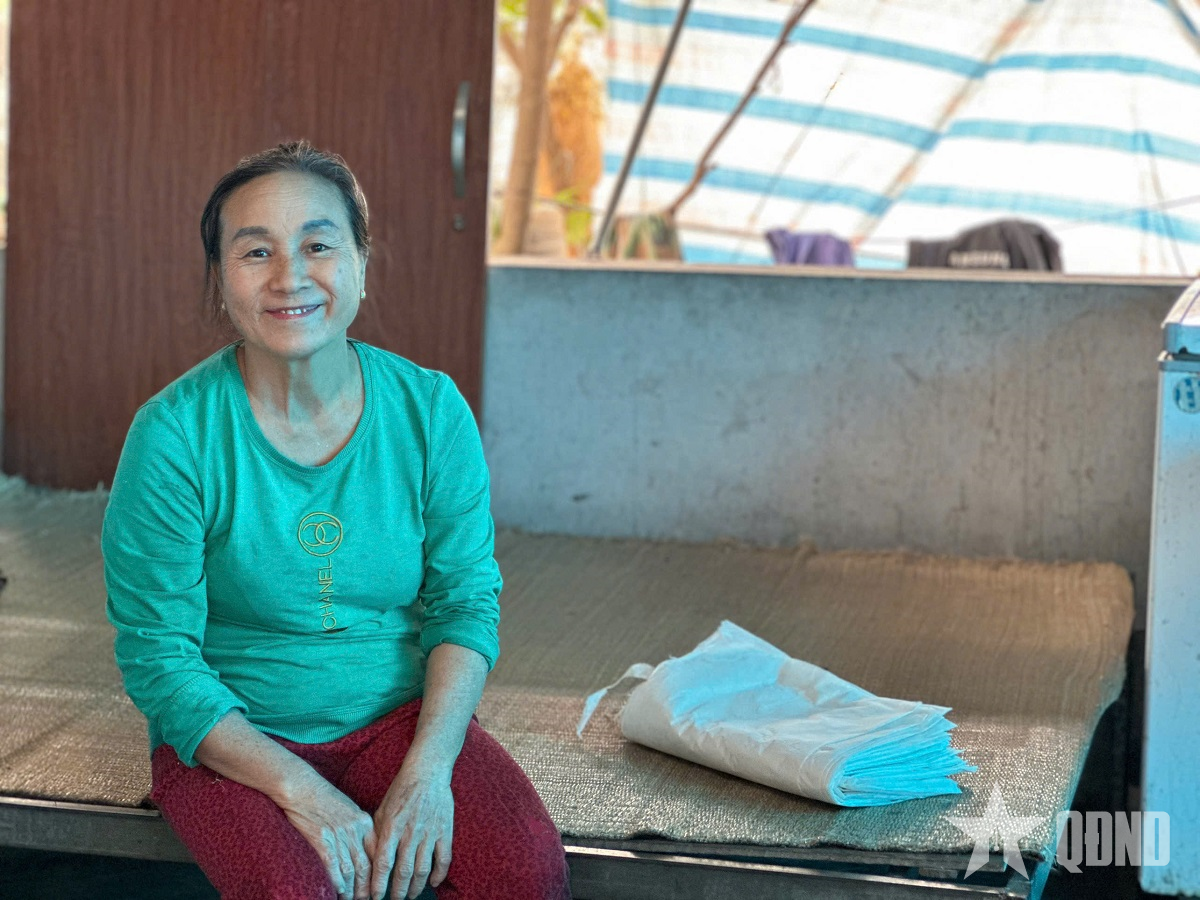
“The hardest part is scraping the bark until it’s really white. A slight mistake and the paper will stain immediately,” Mrs. Loan said. The paper-making process seems easy but requires skillful hands. The worker scoops the pulp mixture, places it on a mold, and rests it on a bamboo pole to let the water drain down. Only when a thin layer of pulp evenly covers the surface of the mold is it dried in the sun. The thickness of the paper depends on how the mold is adjusted and the amount of pulp.
A thin, translucent, and durable sheet of dó paper costs around 5,000 dong. Thicker sheets, custom-made for kites, lanterns, or artistic purposes, can cost up to 15,000 dong each. However, orders are irregular and must be placed in advance. On a good day, the income is around 300,000 dong.
Ms. Truong Thi Hai further shared: "On rainy days, we make the shells; on sunny days, we take advantage of the time to coat and dry them. This profession requires hard work, but few young people are interested in it these days." Most of the children and grandchildren in the village work in factories, go abroad for work, or engage in trade. With no young people continuing the tradition, the remaining three households practice the craft with the mindset of "getting by slowly."
Phong Phu's Do paper was once famous for its high durability. Do fibers have excellent moisture absorption and release capabilities, allowing the paper to last for many years without deteriorating. Every year, customers from Hanoi would come to order this beautiful paper for artistic purposes. However, the market is shrinking, and raw materials are becoming scarce, making the craft even more difficult.

Currently, Phong Phu handmade paper is displayed at the Nghe An Museum as a testament to its long-standing tradition. However, in everyday life, the craft is facing the risk of extinction. Of the three households still practicing the craft, the youngest is already over sixty years old.
Ms. Hoang Thi Xuyen, a specialist in the Economic and Urban Infrastructure Department of Vinh Loc ward, said: “Previously, the entire ward had hundreds of households practicing this craft, with about 120 households remaining in 2016 alone. Now, only three households are still clinging to it. Maintaining the craft is difficult due to scarce raw materials and unstable market demand.”
According to Ms. Xuyen, although the craft village has been recognized, the future of Do papermaking currently depends mainly on the self-effort of the households still involved. The local authorities are still interested in promoting and encouraging preservation, but for the craft to survive, it needs a market and a successor generation.
As evening falls, in the still, windless courtyard, sheets of opaque white dó paper gently sway in the faint sunlight. Three houses still have their fires burning, and the rhythmic sound of pestles pounding bark echoes. They make paper not just to sell, but to preserve a part of the village's soul. However, as human strength dwindles and there are no younger hands to carry on the tradition, those fragile sheets of paper still bear the burden of the impending collapse of a centuries-old craft village.
Source: https://baolangson.vn/ba-mai-nha-giu-lua-giay-do-phong-phu-5078121.html




![[Image] A brilliant symphony and explosive power in the skies of Da Nang.](https://vphoto.vietnam.vn/thumb/1200x675/vietnam/resource/IMAGE/2026/05/31/1780196945787_anh-man-hinh-2026-05-31-luc-10-08-51.png)











![[Video] Sunset at Lap An Lagoon – Where the sun sets over the fishing nets](https://vphoto.vietnam.vn/thumb/340x192/vietnam/resource/IMAGE/2026/05/31/1780192137701_beach-landscape-sea-water-nature-grass-745871-pxhere-com.jpeg)





































































Comment (0)