

 |
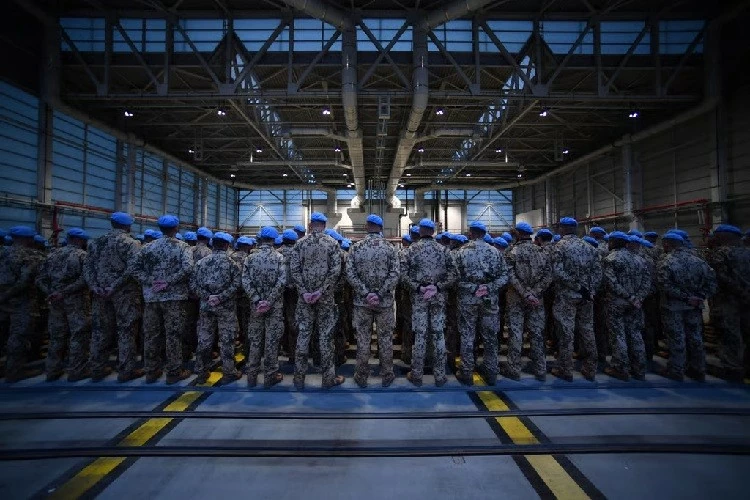
| German Chancellor Friedrich Merz declared a year ago that Berlin would build 'the strongest army in Europe'. (Source: Getty Image) |
According to Politico , Germany's rearmament process is a direct consequence of Russia's full-scale military campaign in Ukraine more than four years ago, forcing Berlin to spend hundreds of billions of euros to rebuild the German armed forces (Bundeswehr) into a force capable of large-scale conflict.
In an effort to accelerate the rearmament process, Defense Minister Boris Pistorius decided on May 19 to reform BAAINBw, the Bundeswehr's defense procurement agency. He acknowledged the significant challenge of transforming a procurement system built on prudence and civilian oversight into one capable of handling a defense budget increase of "tens of billions of euros."
After the Cold War, the Bundeswehr suffered from a prolonged lack of investment, hampered by complex regulations and outdated equipment. Now, German military planners are seeking to erase that legacy.
However, even though money is no longer an issue thanks to a strong public finance and legal changes allowing the disbursement of hundreds of billions of euros in new defense spending, the rebuilding of Germany's military strength is still hampered by three major bottlenecks: a slow procurement system, a defense industry lacking long-term contracts, and an outdated administrative apparatus unsuitable for the urgent need for rearmament.
Slow defense procurement
Germany's defense procurement system was designed to ensure that military equipment fully met legal and technical safety requirements and could be used for decades. But those very assurance mechanisms are now becoming obstacles.
The BAAINBw defense procurement agency currently has approximately 12,900 employees and is responsible for the procurement, development, testing, contracting, upgrading, and management of military equipment.
Even BAAINBw Chair Annette Lehnigk-Emden acknowledged the need to speed things up. In an interview with dbb Public Service Magazine, she said the agency had eliminated “around 80 of the 160 procedural rules,” emphasizing that “time is now of the essence.”
That is also what Minister Pistorius wants to achieve through the new reform. However, external oversight bodies believe that addressing the outstanding issues will not be easy.
Kay Scheller, chair of the German Federal Audit Office, stated that the Bundeswehr's procurement system has become "an organized system of irresponsibility," where a culture of avoiding responsibility exists instead of making quick decisions.
In the annual report, German Parliamentarian Henning Otte, who is in charge of the armed forces, also described the current procurement regulations as "extremely complex".
However, the problem is that Germany cannot simply eliminate the safeguards that perpetuate this sluggish system. These regulations are designed to protect soldiers, ensure efficient use of taxpayer money, and maintain parliamentary oversight of military spending.
Social Democratic MP Christoph Schmid also warned against blaming only the bureaucracy. According to him, "companies also have a responsibility to fulfill their commitments."
Lack of long-term contracts
Germany possesses one of the world's leading defense industries. The defense conglomerate Rheinmetall now produces more artillery shells than the United States, with output increasing from around 70,000 shells per year before the Ukraine conflict to approximately 1.1 million shells today.
However, the German defense industry is still struggling to achieve the production scale that the Bundeswehr requires.
According to an analysis by the strategic consulting firm Strategy & Germany , by 2035, Germany will need between 74 and 139 billion euros worth of new defense equipment annually, while its current domestic supply capacity is only 22 to 52 billion euros.
Hans Christoph Atzpodien, president of the German Defence Industry Association, refuted the conclusion that the German industry is incapable of meeting demand. However, he stressed that businesses need to receive "clear guidance on the quantity and types of products needed, as well as the timeline for deployment" before investing in factory expansion.
While businesses seek certainty, the German government wants companies to proactively expand their production capacity. Last year, Defense Minister Pistorius stated: "We need a defense industry that not only delivers on time but also proactively plans ahead."
Outdated procedure
According to current German regulations, all military procurement projects by the Bundeswehr worth more than 25 million euros must be approved by the Parliamentary Budget Committee. This regulation reflects Germany's post-war political culture, in which military power and defense spending are always subject to tight democratic control.
However, this also means Berlin is now trying to rearm itself using the very system designed to prevent decisions from being made too quickly.
Green Party MP Sebastian Schäfer argues that Germany now needs not only to fill old capability gaps but also to modernize outdated systems in the face of rapidly changing battlefield realities driven by unmanned aerial vehicles (UAVs), software, and electronic warfare.
He emphasized that there is still a "need for real reform" to ensure that the enormous existing budget is used effectively.
Meanwhile, Christian Democratic MP Andreas Mattfeldt, who oversees the defense budget, argued that increased spending necessitates even stricter oversight. He called for “consistent capacity checks and increased competition in procurement.”
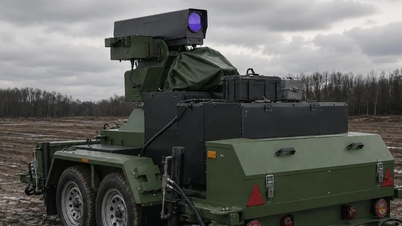
Mattfeldt and Social Democratic MP Andreas Schwarz are now using their roles on the Budget Committee to question numerous expenditures they deem inefficient, including essential military projects such as mobile reconnaissance systems and naval laser weapons.
The ruling coalition is now seeking to expedite parliamentary approval without dismantling the existing control system. A new Bundeswehr planning law is expected to define what constitutes "adequately equipped" military equipment and the appropriate funding mechanism.
However, many details remain unresolved, making it unclear whether this law can help Germany transition from a project-based procurement model to a long-term rearmament strategy.
Christian Democratic MP Florian Dorn, who covers procurement on the Defence Committee, agreed that reform is necessary, but stressed that it "must absolutely not come at the expense of diminishing Congressional oversight."
Amid growing concerns about a potential Russian attack and the risk of a US troop withdrawal from Europe, Germany now has little time left to reform its slow-moving defense procurement apparatus.
"We have to be realistic: the German defense industry for decades has never been designed for such a rapid acceleration in military capabilities as it is today," Dorn stated.
Source: https://baoquocte.vn/ba-nut-that-can-tro-tham-vong-cua-thu-tuong-duc-397805.html
![[Image] Hanoi's urban life under the challenge of a "scorching hot" environment](https://vphoto.vietnam.vn/thumb/1200x675/vietnam/resource/IMAGE/2026/05/25/1779706979265_nang-nong-t5-2026-minh-duy-7-4636-jpg.webp)


![[Image] Close-up view of the interchange connecting the two expressways and Long Thanh Airport.](https://vphoto.vietnam.vn/thumb/1200x675/vietnam/resource/IMAGE/2026/05/25/1779703378210_ndo_br_z7863716673926-224453a31600126cce10622af6290afd-4549-jpg.webp)





















































































Comment (0)