

On May 25, a high-level Iranian delegation arrived in Qatar to negotiate with the United States on a peace agreement and the release of frozen Iranian funds.
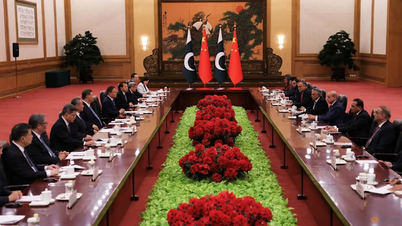
According to media reports, the delegation was led by Iranian Parliament Speaker Mohammad Bagher Ghalibaf and Iranian Foreign Minister Abbas Araghchi, who participated in direct talks in Pakistan in April.
The Iran-US negotiations in Qatar are attracting worldwide attention after US Secretary of State Marco Rubio suggested that an agreement could be reached on May 25th.
However, subsequent statements from both Tehran and Washington dashed any optimism about a quick agreement.
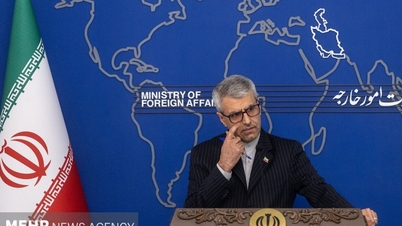
Speaking at a weekly press briefing, Iranian Foreign Ministry spokesman Esmaeil Baqaei said that while the two sides had reached conclusions on "most issues," "no one can confirm" that a deal would be signed anytime soon.
Mr. Baqaei also emphasized Iran's position that it will continue to manage maritime traffic through the Strait of Hormuz by collecting service fees.
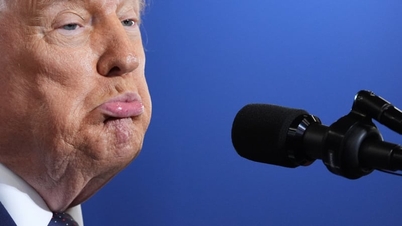
Meanwhile, social media posts by US President Donald Trump also showed a tough stance from Washington.
Trump urged his negotiators not to rush into reaching an agreement with Iran, repeatedly emphasizing that a deal with Iran would either be "a great and meaningful deal, or there would be no deal at all."
In a post that followed hours later, the US President also called on Muslim-majority nations across the Middle East and other regions to normalize relations with Israel, as part of a peace agreement in the region.
He argued that, following US efforts, countries including Saudi Arabia, Qatar, Pakistan, Türkiye, Egypt, and Jordan should all simultaneously sign the Abraham Accords, an agreement promoted to regulate the normalization of diplomatic relations between Israel and countries with a history of hostility towards it.
According to diplomatic sources, Washington and Iran are drafting a framework for a Memorandum of Understanding to extend the 60-day ceasefire and reopen the Strait of Hormuz.
According to the proposals, after Iran signs the memorandum, within 30 days it will immediately reopen the Strait of Hormuz and implement measures to ensure that trade resumes as it did before the conflict.
According to the proposal, Iran, the US, and their allies would declare an immediate cessation of all military activity on all fronts, including Lebanon.
The proposal also included Iran reaffirming its commitment not to develop nuclear weapons and the two sides working over the next two months to agree on a mechanism for handling Iran's stockpiles of enriched uranium.
Source: https://www.vietnamplus.vn/phai-doan-iran-den-qatar-de-chuan-bi-dam-phan-voi-my-post1112536.vnp

![[Image] Close-up view of the interchange connecting the two expressways and Long Thanh Airport.](https://vphoto.vietnam.vn/thumb/1200x675/vietnam/resource/IMAGE/2026/05/25/1779703378210_ndo_br_z7863716673926-224453a31600126cce10622af6290afd-4549-jpg.webp)

![[Image] Hanoi's urban life under the challenge of a "scorching hot" environment](https://vphoto.vietnam.vn/thumb/1200x675/vietnam/resource/IMAGE/2026/05/25/1779706979265_nang-nong-t5-2026-minh-duy-7-4636-jpg.webp)






















































































Comment (0)