

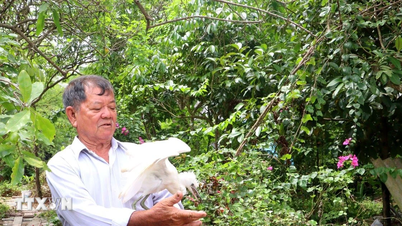
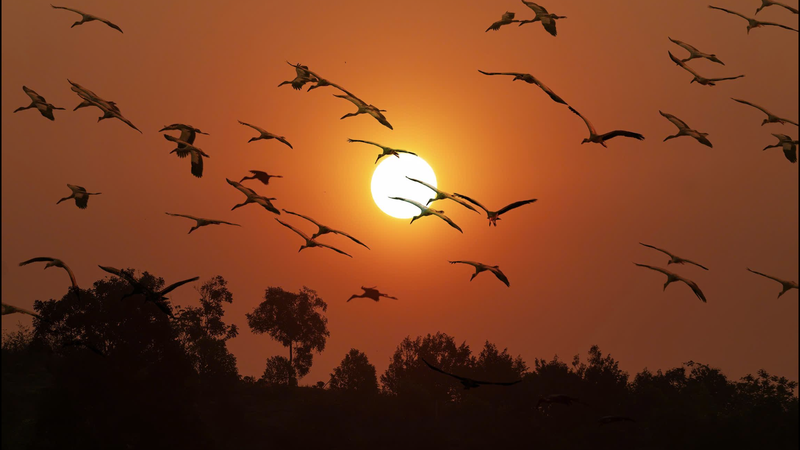
In Soc Trang, three generations of the family of 71-year-old Lam Van Huy in My Xuyen district have ceded more than 4 hectares of land to tens of thousands of birds, including egrets and storks, as a habitat.
Early in the morning of December, the bird sanctuary, located about 30 km from Soc Trang City and belonging to Mr. Huy's family in Trung Hoa hamlet, Giai Hoa 1 commune, resounded with the sounds of birds preparing to fly out to forage. The sanctuary is isolated like a miniature forest, with many overgrown trees that only the owner can easily navigate.
The first person to lay the foundation for preserving this garden was Mr. Huy's grandfather, Mr. Lam Van Ich. About 100 years ago, Mr. Ich's family discovered a few egrets nesting in the garden. At that time, the land was vast, so the garden owner didn't pay much attention. Later, hundreds of birds, including species like herons, egrets, and cormorants, came to take refuge there. Seeing that "good land attracts birds," Mr. Ich decided to preserve the garden's area, mainly planted with water coconut trees, so that they could live there.
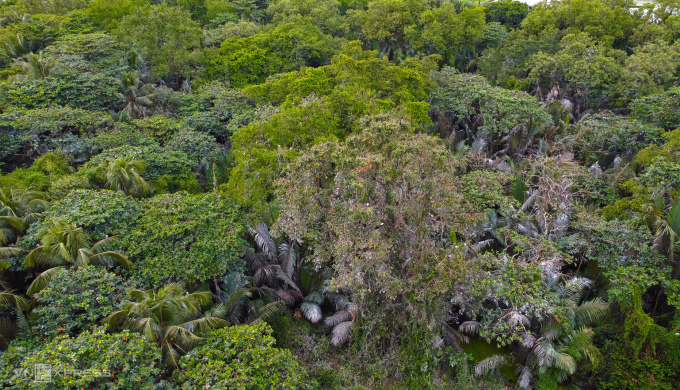
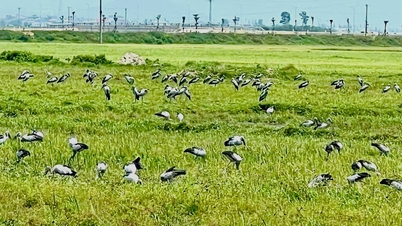
The bird sanctuary, spanning over 4 hectares, belonging to Mr. Lam Van Huy's family, has survived for over 100 years despite numerous changes. Photo: An Minh
Following the family tradition, Huy's father later built a fence and planted coconut and bamboo trees to provide a habitat for the birds. The flock grew larger and larger, reaching tens of thousands. In 1971, war broke out, the enemy established military posts, cleared the land, and cut down all the trees in the garden, forcing Huy's family to evacuate. The wild birds, having no place to live, also left.
After peace was restored, Mr. Huy returned to his old spot, and the whole family started cleaning up and replanting new trees, hoping the birds would return. About a year later, Mr. Huy was delighted when flocks of birds returned to nest. "At this time, many birds came back, and they built nests even on the low-lying reeds and bushes," Mr. Huy recounted.
The bird population in the garden grew larger every day, so the owner planted more coconut trees, bamboo, and some native plants for them to roost and breed. However, the increasing number of birds and egrets in the garden attracted many people who came to hunt them day and night. The number of species decreased significantly, and then almost all of them left.
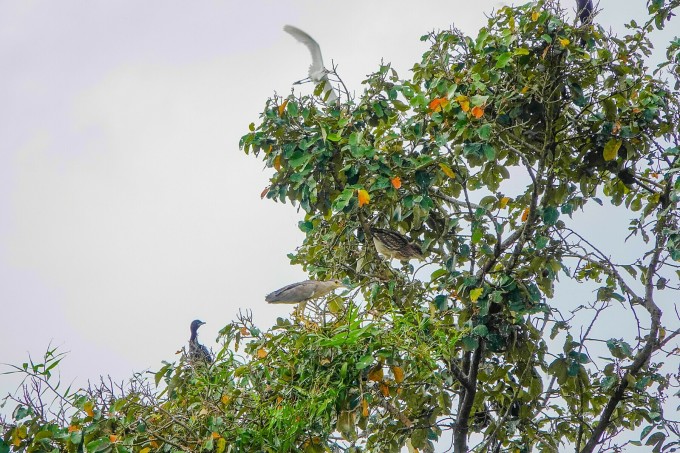
Besides egrets and herons, the garden also features rare species of storks and blackbirds. Photo: Chúc Ly
Disheartened by his inability to keep the flock of wild birds that his family had cared for for generations, Mr. Huy left to find work elsewhere. But because he missed his old home, four years later he returned to farm and tend his garden, hoping the birds would return. Just two months later, the flock returned, much to the joy of the garden owner.
"At that time, I discovered rare species like egrets and herons in the garden, which further motivated me to protect it," Mr. Huy said, adding that it was heartbreaking that he couldn't save the birds that were caught in bullets or traps set by poachers on many occasions.
In 1995, in order to ensure a year-round supply of fresh water for his garden and prevent salinization, Mr. Huy invested over 50 million VND in building embankments around it. He planted water hyacinth, tilapia, and catfish in the canal to treat the water and provide food for small birds that couldn't forage far for food.
Some time later, to make it easier to care for the wild birds, as well as to guard against poachers, Mr. Huy spent nearly 100 million VND to build a small concrete path through the garden. "Besides harvesting fresh coconuts every few months, the garden is completely a natural habitat for the birds; it doesn't generate any economic income ," he said.
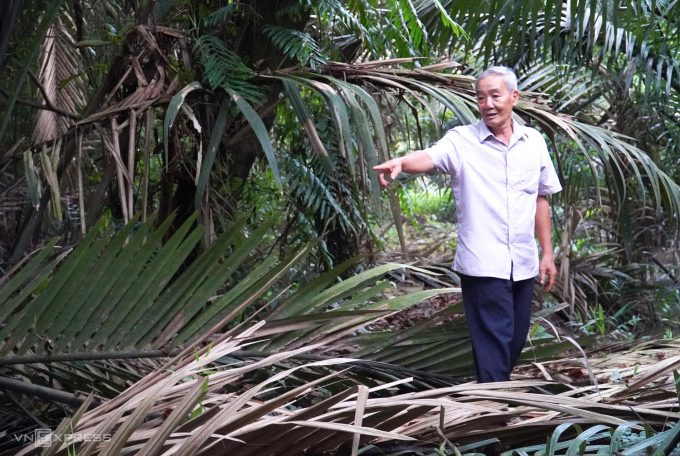
Mr. Huy points out the tracks left by bird hunters who trespassed into his garden. Photo: An Minh
The elderly farmer from the Mekong Delta said that even during the difficult war years, or when his family's finances were unstable, he always believed in not exploiting wild birds for sale. At that time, besides farming, he and his wife had to forage for crabs and snails to earn extra income to support their three children's education. "The flock of birds choosing to live on our family land is like a 'gift from heaven,' so it is my responsibility to preserve them," Mr. Huy said.
According to Mr. Huy, despite their large numbers, the bird species live quite harmoniously. In the morning, around 5 am, egrets begin to fly out to forage, followed half an hour later by herons. In the afternoon, around 5 pm, the diurnal birds return, and about an hour later, the herons begin to forage.
Currently, Mr. Huy and his wife live in a small house next to the bird sanctuary. Despite his advanced age and frail health, he regularly visits the sanctuary twice a day. In recent years, knowing that his family is alone, many thieves have come to hunt the birds. At times, he has had to ask relatives to take turns guarding the sanctuary. Therefore, he hopes that the people and the authorities will work together to protect the flock of wild birds that his family has preserved for many years.
An Minh
Source link

































































































Comment (0)