

With strong political determination and systematic steps in planning, infrastructure development, and the completion of the urban system according to the criteria of a Type I city, Bac Ninh is gradually realizing its goal of becoming a centrally-governed city before 2030.
Meets 13 out of 15 criteria for a Type I urban area.
Bac Ninh province has a natural area of over 4,718 km² with 99 administrative units at the commune level, including 33 wards and 66 communes; it also possesses a strategic location on important economic corridors, directly connecting with Hanoi, Hai Phong, Quang Ninh, and the northern mountainous provinces. In particular, its transportation system, including expressways, national highways, railways, and inter-regional logistics infrastructure, is creating a strong impetus for urbanization.
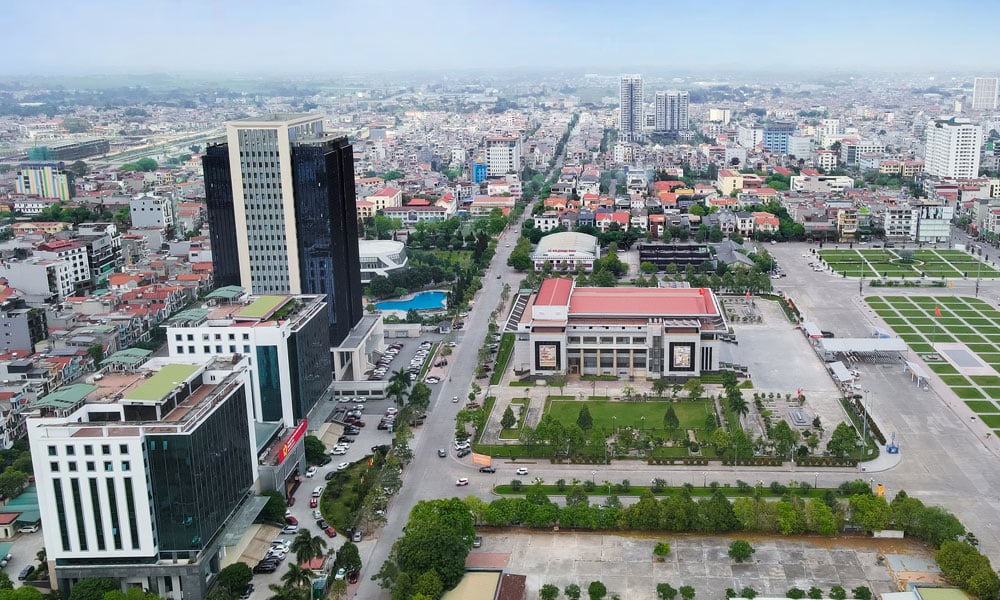 |
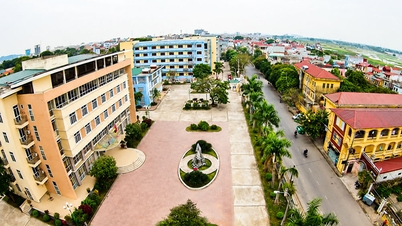
The central area of Bac Giang ward has been developed comprehensively. Photo: Quoc Truong. |
Over the past period, the province has issued many major programs and plans to concretize urban development goals. A prime example is Plan No. 61 dated March 10, 2026, of the Provincial People's Committee on the construction of Bac Ninh city as a centrally-governed city; functional agencies have synchronously implemented tasks related to provincial planning, urban master planning, and the urban development program until 2030.
To date, the province has established 25 urban areas, including 3 Type II urban areas (Kinh Bac, Bac Giang, and Tu Son) and 22 Type III urban areas. This is an important foundation for Bac Ninh to move towards meeting the criteria of a Type I urban area.
| To date, the province has established a system of 25 urban areas, including 3 Type II urban areas (Kinh Bac, Bac Giang, and Tu Son) and 22 Type III urban areas. This is considered an important foundation for Bac Ninh to move towards meeting all the criteria of a Type I urban area. |
Mr. Nguyen Viet Hung, Director of the Department of Construction, said: “After the merger, Bac Ninh has more room for urban development on a larger scale, with diverse development spaces and stronger regional connectivity. Currently, the Department is coordinating with localities to focus on reviewing and completing the remaining urban criteria. At the same time, we are advising the Provincial People's Committee to develop a specific roadmap to improve the quality of the urban system towards green, smart, and sustainable development.”
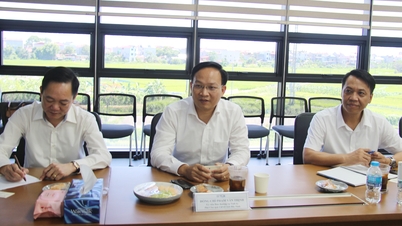
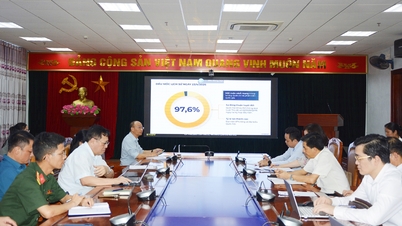
Recently, a working group from the Department of Urban Development (Ministry of Construction) worked with the Bac Ninh Department of Construction to review and assess the criteria for a Type I urban area according to Resolution No. 111/2025/UBTVQH15 of the Standing Committee of the National Assembly.
The results show that Bac Ninh has now met 13 out of 15 criteria for a Type I urban area. Specifically, Bac Ninh province ranks second nationwide in attracting foreign direct investment; its gross domestic product (GDP) is projected to increase by an average of 8.92% per year during the 2021-2025 period; and its per capita income is expected to reach VND 71.4 million by 2025, placing it among the highest in the country…
However, Bac Ninh still has two criteria that have not been met: the percentage of wards achieving urban development level type II (only 33.33%, while the minimum requirement is 50%) and the task of completing the new rural development program, which is still being implemented. These are both difficult criteria that require more time and resources to complete.
Developing green and smart cities.
Representatives from the Department of Urban Development and specialized departments of the Ministry of Construction also discussed the difficulties and obstacles that Bac Ninh is facing in the process of implementing the criteria for a Type I urban area.
Specifically, there is a lack of specific guidance on the smart city scoring framework, criteria for assessing resilience to climate change, and the identification of urban development areas in the master planning process.
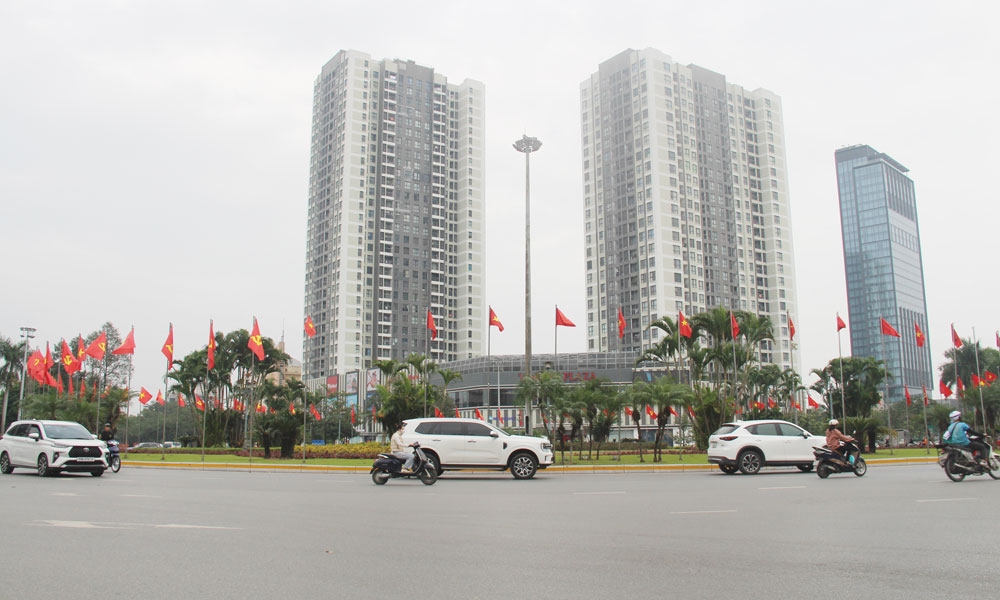 |
The Six-Way Intersection - a point of intersection in the urban area between Kinh Bac and Vo Cuong wards. |
According to Tran Quoc Thai, Director of the Department of Urban Development, Bac Ninh has many outstanding advantages in terms of geographical location, industrial scale, investment attraction capacity, and urbanization rate. These are favorable conditions for becoming a centrally-governed city. In the coming time, the province needs to continue to comprehensively improve its planning system, prioritize investment in key areas, and enhance the quality of existing wards to meet the standards of a type II urban area.
Simultaneously, developing green cities, smart cities, and climate change-adaptive infrastructure will create a foundation for long-term sustainable development. Investment in technical infrastructure will continue to be boosted with a series of key projects such as: Ring Road 4, Ha Bac 2 Bridge, A Lu Bridge, Gia Binh International Airport, and the connecting route to Hanoi...
The power supply, water supply, wastewater treatment, solid waste management, and digital infrastructure systems continue to be invested in and modernized, contributing to improving urban quality and the living environment. Continued attention is given to completing tasks in the new rural development program.
The province also prioritizes investment in education, healthcare, culture, sports, social housing, and public works to improve the quality of life for its residents. Numerous programs for urban beautification, public space renovation, green space development, urban lighting, and environmental management are being implemented synchronously across localities.
With strong political determination and the support of central ministries and agencies, Bac Ninh is gradually completing the remaining criteria to achieve the goal of becoming a type I urban area and a centrally-governed city before 2030.
Source: https://baobacninhtv.vn/bac-ninh-tang-toc-hoan-thien-tieu-chi-do-thi-loai-i-postid445890.bbg

![[Image] Hanoi's urban life under the challenge of a "scorching hot" environment](https://vphoto.vietnam.vn/thumb/1200x675/vietnam/resource/IMAGE/2026/05/25/1779706979265_nang-nong-t5-2026-minh-duy-7-4636-jpg.webp)


![[Image] Close-up view of the interchange connecting the two expressways and Long Thanh Airport.](https://vphoto.vietnam.vn/thumb/1200x675/vietnam/resource/IMAGE/2026/05/25/1779703378210_ndo_br_z7863716673926-224453a31600126cce10622af6290afd-4549-jpg.webp)










































































Comment (0)