

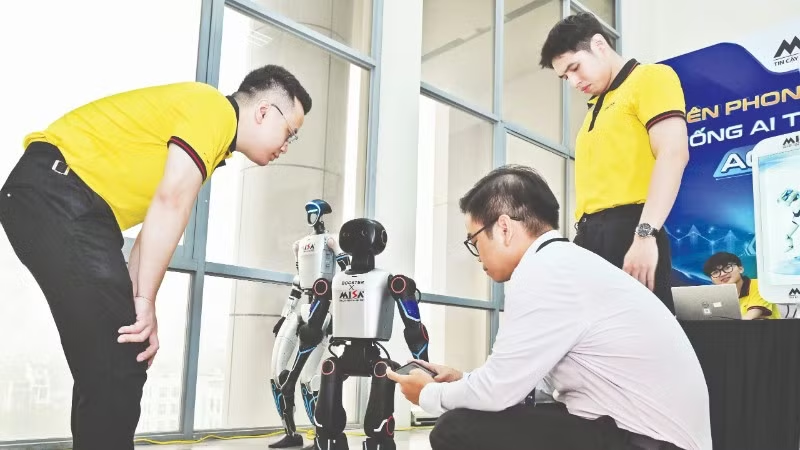
Many experts believe that a sufficiently robust ecosystem is needed for spin-off businesses to develop into strategic technology companies.
Movement from the public sector
Hanoi University of Science and Technology is considered one of Vietnam's leading centers for research and development in technology, fostering the formation of spin-off companies in many strategic technology fields such as electric vehicle infrastructure, smart sensors, AI applications in healthcare, education , environment, and rehabilitation robots.
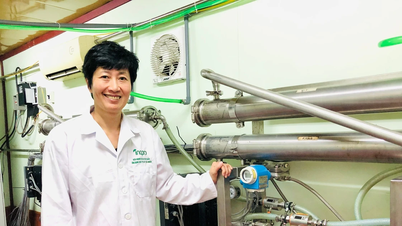
Associate Professor, Dr. Truong Viet Anh, Head of the Science and Technology Department at Hanoi University of Science and Technology, stated that the university is urgently developing spin-offs in the new phase. These spin-off businesses will receive technology, incubate and develop products, raise capital, and expand markets, while the university continues to play a central role in researching and developing new technologies, promoting interdisciplinary products and core technologies. According to the university's orientation, the innovation ecosystem, with the goal of commercializing technology and developing spin-offs, along with investment resources, will create a complete technology development chain from laboratories to collaborative laboratories and spin-off businesses.
The university is urgently developing spin-offs in this new phase. These spin-off businesses will adopt technology, incubate and develop products, raise capital, and expand their markets, while the university continues to play a central role in research and development of new technologies, promoting interdisciplinary products and core technologies. According to the university's direction, the innovation ecosystem, aimed at commercializing technology and developing spin-offs, along with investment resources, will create a complete technology development chain from laboratories to collaborative laboratories and spin-off businesses.
Associate Professor, PhD Truong Viet Anh, Head of Science and Technology Department, Hanoi University of Science and Technology
The trend of forming spin-off businesses is also being promoted in the public research institute sector. The Vietnam Academy of Science and Technology has established the High-Tech Innovation Center with the aim of promoting technology incubation, commercializing research results, and supporting the formation of science and technology enterprises; at the same time, the Academy encourages the formation of spin-off businesses from research institutes, implementing a program where each institute is linked with an enterprise to test, commercialize, and scale up technology.
In Ho Chi Minh City, a pilot project on commercializing research results is being implemented, considered an important legal foundation for the spin-off business model. The project focuses on removing several bottlenecks such as granting rights to exploit research results, valuing intellectual property, and sharing risks in innovation. In the first phase, 54 scientific and technological products participated, representing the potential "seeds" for screening and forming the first spin-off businesses.
Many argue that developing high technology requires significant financial, human, and time resources, while private enterprises often have limited research and R&D infrastructure. Therefore, the university spin-off model can overcome this shortcoming by leveraging strengths in research infrastructure, a scientific workforce, early integration with market-oriented thinking, and a lean startup model.
Supporting spin-offs to overcome the "capital shortage" phase.
Practical implementation shows that, although the legal system has formed many necessary "pieces" for spin-off development, there is still a lack of linking mechanisms for effective operation.
Associate Professor, Dr. Truong Viet Anh believes that the biggest challenge lies in the transitional phase between laboratory research and the formation of technology businesses in the market. Many research groups have achieved good results, even developing technology prototypes, but still face significant obstacles in terms of operational mechanisms, finance, and intellectual property valuation to further develop into spin-off businesses. Research groups can create technology in the initial stages, while businesses need technologies that are sufficiently mature to be put into production or commercial use. Between these two stages, there is often a lack of an intermediate structure to receive, further develop, and refine the technology. To address this issue, it is necessary to develop intermediate models such as joint labs.
Another major gap is the lack of "seed capital" and "proof-of-concept" funds to help spin-off businesses refine prototypes, test technology, and demonstrate commercial viability before raising private capital. This is also the highest-risk stage, so neither state funding nor private investment funds are yet ready to participate.
Valuing intellectual property for investment in businesses is also a major obstacle for spin-offs in Vietnam. Much of the technology developed by universities is in an intermediate stage of development; while the principle has been proven or a prototype exists in the laboratory, there is no market data or actual revenue. Therefore, determining the economic value of the technology often lacks a clear reference point.
Dr. Hoang Thi Hai Yen, from the Faculty of Management Science, University of Social Sciences and Humanities, Vietnam National University, Hanoi, argues that it is necessary to develop a national set of valuation standards, while encouraging the formation of specialized intermediary organizations for intellectual property valuation and building a national database on intellectual property transactions.
According to experts, spin-offs require the participation of businesses and venture capital, following a "three-party" cooperation model involving the state, educational institutions, and businesses. Businesses should not only play the role of technology transfer recipients but also participate early in the technology development process, co-investing and sharing risks.
Professor, Dr. Chu Hoang Ha, Vice President of the Vietnam Academy of Science and Technology, noted that spin-offs remain a risky model because a new technology needs a long time to be perfected, tested, and proven for market acceptance. He suggested the early establishment of state-funded venture capital funds to support spin-off businesses, and a more flexible mechanism for scientists participating in spin-offs, such as allowing them to take a break to try their hand at the business and then return to the institute or university if unsuccessful. Some advanced countries allow lecturers involved in founding spin-offs to take paid research leave or reduce teaching hours to focus on commercializing the product.
To foster the formation of large-scale technology enterprises from universities and research institutes, the State needs to commission major national technology projects and establish a public procurement mechanism for new technologies.
Based on practical experience in spin-off projects, Associate Professor, Dr. Le Anh Son, Deputy General Director of Phenikaa Group and Director of Phenikaa X Joint Stock Company, believes that for fields such as autonomous robots and unmanned vehicles, businesses need to be allowed to test their products in real-world environments instead of just conducting internal trials. Therefore, the State needs a mechanism for conditional exemption from liability during the testing phase.
Vietnam needs to pilot spin-off models at a number of leading research institutes and universities, allowing for the application of superior policies in finance, intellectual property, and human resources organization. These pilot models will serve as policy "sandboxes" to test and refine mechanisms.
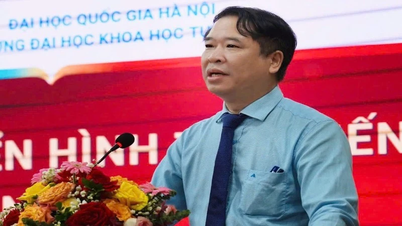
Dr. Nguyen Van Truc, Head of Technology Incubation Department, Department of Startups and Technology Enterprises (Ministry of Science and Technology)
According to Dr. Nguyen Van Truc, Head of the Technology Incubation Department, Department of Startups and Technology Enterprises (Ministry of Science and Technology), Vietnam needs to pilot spin-off models at some leading research institutes and universities, allowing for the application of superior policies on finance, intellectual property, and human resources. These pilot models will serve as policy "sandboxes" to test and refine mechanisms.
* Lesson 1: Technology Commercialization Strategy
Source: https://nhandan.vn/bai-2-he-sinh-thai-cho-doanh-nghiep-spin-off-post964274.html


























































































Comment (0)