

National Assembly Deputy Nguyen Van Huy ( Hung Yen ): Review to avoid overlap and duplication between national target programs .

I agree that merging the three programs into a single National Target Program on New Rural Development, Sustainable Poverty Reduction, and Socio -Economic Development in Ethnic Minority and Mountainous Regions by 2035 (the Program) will be more effective, with more focused policies, especially for ethnic minority and mountainous regions.
However, alongside this Program, at the Tenth Session, the National Assembly also considered and approved the investment policy for the National Target Program on healthcare, population and development, and the National Target Program on modernization and improvement of the quality of education and training. Therefore, it is requested that the Government and advisory agencies review these programs to avoid overlap and duplication between national target programs.
Regarding targets, the Program currently sets out a general objective and six specific target groups by 2030, and four specific target groups by 2035. However, I believe that, in the context of administrative unit mergers and the operation of a two-tiered local government, the Government has not yet issued criteria and conducted an initial survey on the multidimensional poverty situation for the 2026-2030 period; nor has it issued criteria for new rural development for the next phase or determined the current state of new rural development after the administrative unit mergers. Therefore, I propose that the Government should continue to review the general targets and objectives in conjunction with the specific targets and indicators in the content to ensure consistency, uniformity, clarity, logic, and feasibility in the implementation process.
The draft Resolution outlined six specific target groups for 2030 in considerable detail, especially those for ethnic minority areas. However, by 2035, only four target groups remain. I believe this lacks continuity and consistency with some of the goals for the 2026-2030 period.
Furthermore, I propose reviewing specific target number 6 in the 2030 goals, which is to ensure sufficient essential infrastructure, especially the physical facilities of the education and training system, to meet teaching and learning objectives; and the target of 100% of ethnic minorities and poor people having health insurance and access to basic free healthcare services. This is because we also see that some content and scope overlap with two other national target programs currently being considered by the National Assembly at this session.
National Assembly Deputy Nguyen Viet Thang (An Giang): Regulations on poor and disadvantaged areas need to be reviewed.
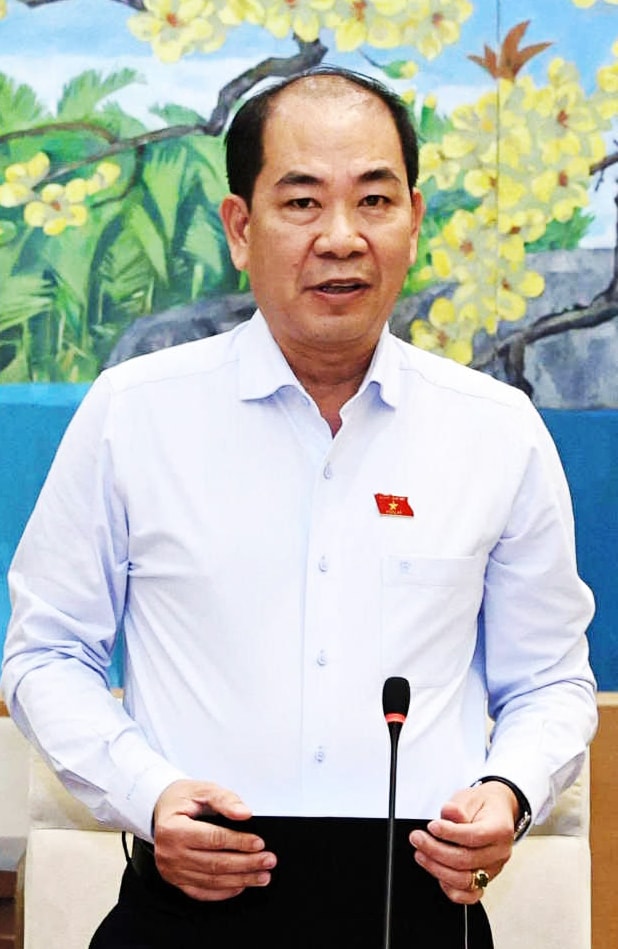
In reality, investing in individual national target programs is often scattered, fragmented, and involves overlapping tasks. Therefore, integrating the three programs will contribute to more effective implementation.
However, although the Government has set goals for the Program, it has not yet provided specific criteria for the national new rural development criteria set, regulations on the national multidimensional poverty standard, or criteria for poor communes for the next phase. Therefore, it is difficult to assess the suitability and feasibility of the Program in the coming period. Furthermore, while localities have previously developed models of new rural development, advanced new rural development, and model new rural development, the current program introduces several new models that have not yet been implemented or verified, such as modern new rural development, making it difficult to offer constructive feedback. Therefore, I propose that the Government should issue a set of criteria for these new models.
I also agree with the need to prioritize capital allocation, focusing on key and sustainable investments, with a focus on creating significant changes in building new rural areas, achieving sustainable poverty reduction, and developing the socio-economic conditions of ethnic minority and mountainous regions.
However, it is suggested that the Government carefully review the allocation of funds after localities reorganize their two-tiered local governments, because in addition to ethnic minority areas, there are also poor communes and communes facing extreme difficulties.
On the other hand, the Government has not yet issued regulations on the multidimensional poverty standard and criteria for defining poor communes for the period 2026-2030. Therefore, to ensure fairness and implement the principle of "leaving no one behind," the Government needs to review the regulations on poor and disadvantaged areas to make the investment program more appropriate and feasible. It is necessary to review and consider stricter and more appropriate regulations for poor and disadvantaged areas in general to benefit from the program's policies alongside other regions.
National Assembly Deputy Hoang Ngoc Dinh (Tuyen Quang): A high counterpart funding ratio is a challenge for poor and mountainous provinces.
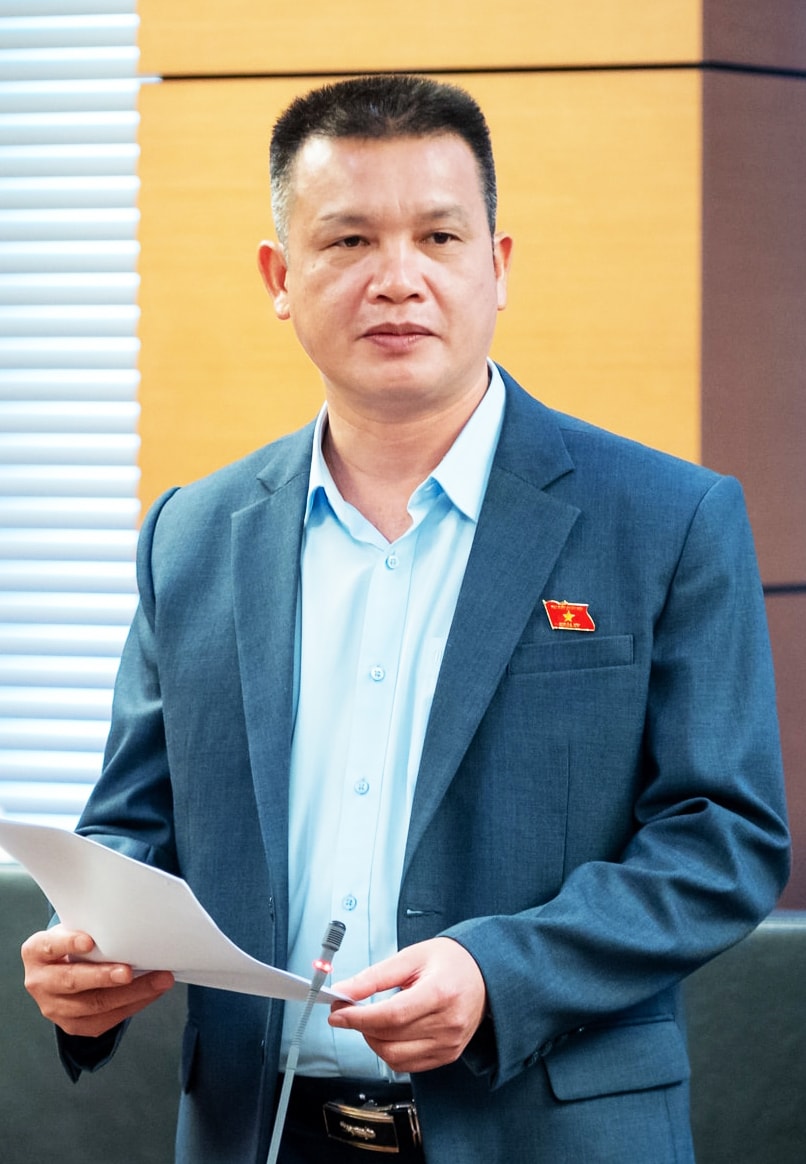
I strongly agree with the proposal to submit to the National Assembly for approval the investment policy for the National Target Program on building new rural areas, sustainable poverty reduction, and socio-economic development in ethnic minority and mountainous regions for the period 2026-2035. The policy of integrating three national target programs into one unified program is a major and correct step, reflecting the strategic vision of our Party and State in the new development stage.
To maximize the program's effectiveness and definitively address the shortcomings from the previous phase, I propose that the National Assembly's Resolution clearly state that the Ministry of Ethnic Minorities and Religions should be in charge of the second component to ensure the continuous, consistent, and highly effective implementation of ethnic policies. This is not merely a technical issue but a fundamental principle of ethnic policy. Without clear regulations in the resolution, it is easy for ethnic content to be "diluted" within the overall program, and the specific objectives of ethnic minority and mountainous regions will struggle to maintain their central role.
Regarding objectives and targets, although specific targets for 2030 have been quantified, the specific targets for 2035 proposed in the Government's submission are only guidelines and lack a clear basis for implementation. Specifically, the target of having approximately 65% of communes meet the new rural development standards is lower than the previously set target of 80%. The basis for this calculation needs to be clarified in the feasibility study report, ensuring that the stated target is higher than previously required.
The program management mechanism must be unified and streamlined, avoiding multiple management agencies handling similar and overlapping tasks. The program dossier is designed with two components: Component 1 covers general content to be implemented nationwide, while Component 2 focuses on specific socio-economic development in ethnic minority and mountainous regions. Clearly defining the general objectives and specific content is essential. It is recommended that a unified legal framework be issued soon regarding the principles, criteria, and allocation norms to ensure consistency, avoid overlapping tasks, and facilitate implementation at the local level.
Regarding funding and counterpart funding, the central government is expected to provide direct support of approximately VND 100,000 billion during the 2026-2030 period, including VND 70,000 billion for development investment and VND 30,000 billion for recurrent expenditures. However, the proportion of local government counterpart funding is projected to account for 65.7% of the total program funding. This poses a significant challenge for poor, mountainous provinces with unique characteristics. Therefore, I propose that the Government study and develop a mechanism to prioritize central government funding at the highest level, ensuring feasibility for disadvantaged localities, and consider stipulating that the counterpart funding ratio should not exceed 10% for these localities.
Source: https://daibieunhandan.vn/bao-dam-cong-bang-khong-de-ai-bi-bo-lai-phia-sau-10399520.html





















![[Video] Sunset at Lap An Lagoon – Where the sun sets over the fishing nets](https://vphoto.vietnam.vn/thumb/340x192/vietnam/resource/IMAGE/2026/05/31/1780192137701_beach-landscape-sea-water-nature-grass-745871-pxhere-com.jpeg)








![[Image] A brilliant symphony and explosive power in the skies of Da Nang.](https://vphoto.vietnam.vn/thumb/1200x675/vietnam/resource/IMAGE/2026/05/31/1780196945787_anh-man-hinh-2026-05-31-luc-10-08-51.png)






































































Comment (0)