

Today, museums are no longer just static display spaces with explanatory panels. Digital technology , social media, virtual reality, and digitized collections have enabled the public to interact with artifacts in entirely new ways.
However, a larger shift is taking place involving both visitors and the surrounding community. Museums are increasingly moving toward roles that promote engagement, social connection, and serve the broader community's needs.
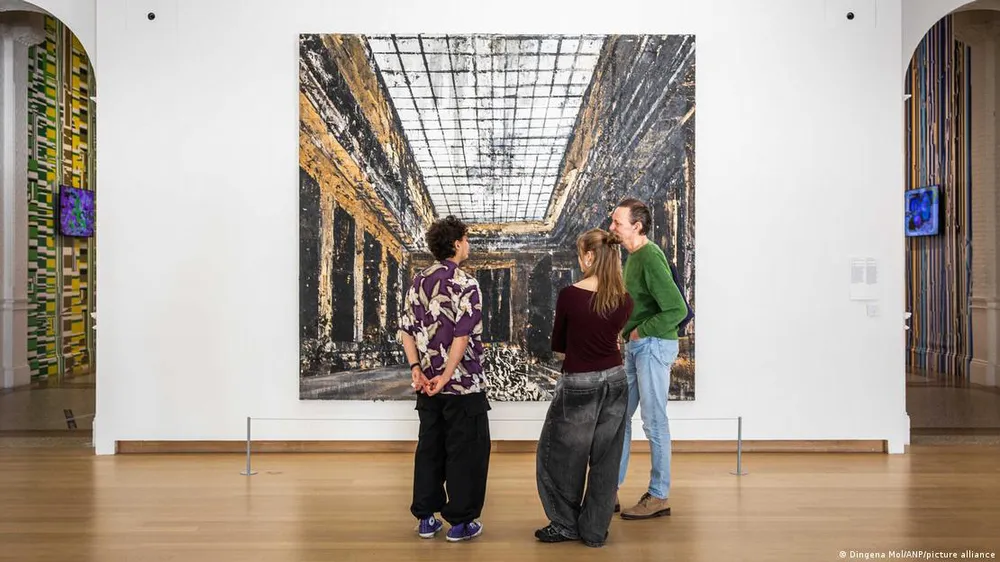
According to German broadcaster DW, Sandro Debono, a museum research and consulting expert, believes this trend is reflected in the new definition of museums by the International Council of Museums (ICOM) in 2022. The new definition emphasizes inclusiveness, diversity, and community participation as core elements of museum operations.
Latin America was an early adopter of community-based museum models, with numerous initiatives dating back to the 1970s, such as people-run museums and community museums. Later, the concept of "social museology" emerged, focusing on people, particularly marginalized groups, rather than solely on artifacts.
Currently, many European countries are also promoting a similar trend. According to Julia Pagel, Secretary-General of the Network of European Museums (NEMO), museums are shifting from collections to connections. She stated that since the state provides the majority of museum budgets in Europe, museums are increasingly linked to the need for social utility.
Therefore, museums are not just places to visit, but become public spaces where people can meet, exchange ideas, and participate in social activities.
Many museums are now expanding their activities beyond traditional exhibitions. At the National Museum of Singapore, older adults with cognitive and memory issues can participate in dance classes, art workshops, or discussion groups to enhance social interaction.
Meanwhile, the Hammer Museum in Los Angeles (USA) is hosting poetry readings and panel discussions with legal experts on issues related to the U.S. Supreme Court.
Many places also participate in "museum prescription" programs, working with the healthcare system to recognize museum visits as a form of supportive treatment for depression, loneliness, and other mental health issues.
A prime example of the community museum model is the Museu de Favela in Rio de Janeiro, Brazil. The museum describes itself as a “living museum,” where the main collection consists of local residents. Poor people participate directly in all activities, from street art exhibitions and oral storytelling to craft classes and community forums.
In Germany, the Bundeskunsthalle contemporary art museum in Bonn established a Social Forum in 2023, bringing together local people of all ages and backgrounds to advise the museum on how to create more accessible and engaging activities for the public.
The Stedelijk Museum in Amsterdam (Netherlands) also maintains a program that selects 15 local teenagers each year to participate in the museum's operations in areas such as guided tours, marketing, and program development.
Source: https://www.sggp.org.vn/bao-tang-khong-gian-cong-cong-moi-post855242.html
![[Image] A brilliant symphony and explosive power in the skies of Da Nang.](https://vphoto.vietnam.vn/thumb/1200x675/vietnam/resource/IMAGE/2026/05/31/1780196945787_anh-man-hinh-2026-05-31-luc-10-08-51.png)























![[Video] Sunset at Lap An Lagoon – Where the sun sets over the fishing nets](https://vphoto.vietnam.vn/thumb/340x192/vietnam/resource/IMAGE/2026/05/31/1780192137701_beach-landscape-sea-water-nature-grass-745871-pxhere-com.jpeg)






































































Comment (0)