

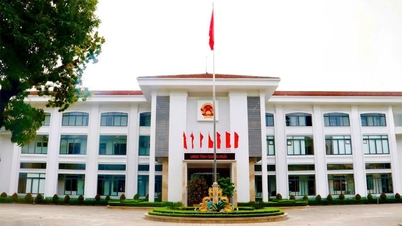
Amidst the vast, overgrown grounds, the gates of the Phu Cat Museum (Phu Cat commune, Gia Lai province; formerly part of Phu Cat district, Binh Dinh province) remain tightly shut. For many years, it has only opened when a group registers for a visit. The building, once envisioned as a repository of local history and culture, is now in a state of desolation and decay.
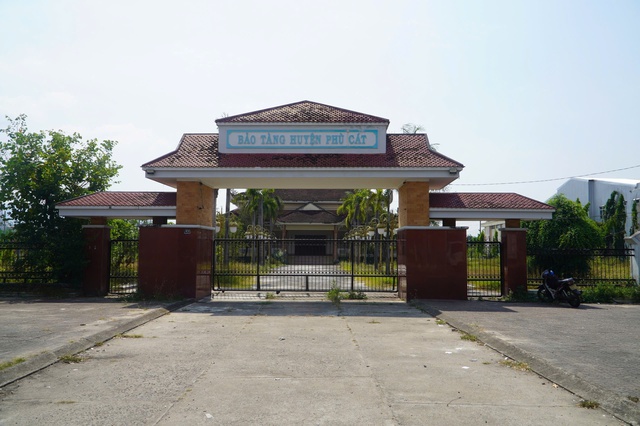
The Phu Cat Museum is always closed and locked.
PHOTO: DUC NHAT
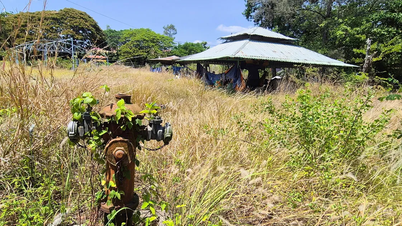
Observations reveal that the museum grounds are overgrown with weeds, and many structures show signs of deterioration after years of use. The pathways are covered in weeds, and the signage has faded over time. The memorial house is always closed, and there is hardly anyone passing by.
Construction of the Phu Cat Museum began in 2007, making it the only district-level museum in the former Binh Dinh province. The museum is located within the Phu Cat Cultural and Sports Center complex, which includes other facilities such as an office building, a youth activity center, a football field, and other supporting structures. Upon completion, it is expected to become a space for preserving the local historical and cultural values, as well as a traditional gathering place for residents and the younger generation.
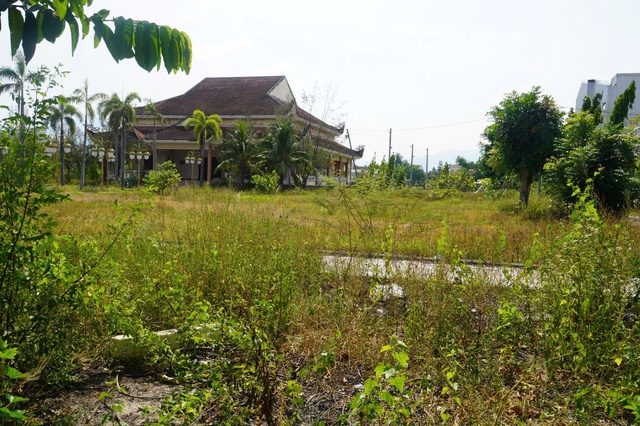
The grounds of the Phu Cat Museum are overgrown with weeds.
PHOTO: DUC NHAT
According to local authorities, the museum currently houses approximately 190 artifacts, including items from the resistance period across various historical eras, along with some indigenous musical instruments. With this collection, the museum was once expected to become a destination for traditional education and exploration of local culture.
However, contrary to initial expectations, the museum has been operating at a reduced capacity for many years. Not only has it lacked visitors, but the building has also faced difficulties in management, maintenance, and operation.
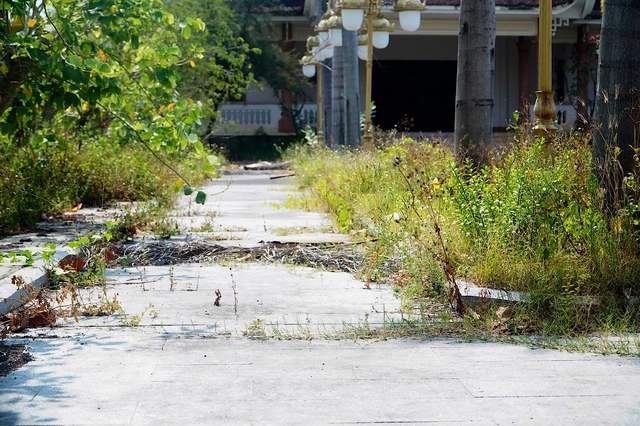
The pathways within the museum grounds were also overgrown with weeds and trash.
PHOTO: DUC NHAT
According to Thanh Nien newspaper's investigation, after the administrative reorganization, the facility is now managed by the Phu Cat Commune Cultural Center. However, due to a lack of funding, its regular operation is affected. Currently, management is mainly handled by a staff member of the Cultural Center who is responsible for both professional duties and overseeing the facility, opening it when visitors request it.
Due to a lack of operating funds, landscaping and weed removal are only carried out once or twice a year. The less attention it receives, the more deserted the area becomes.
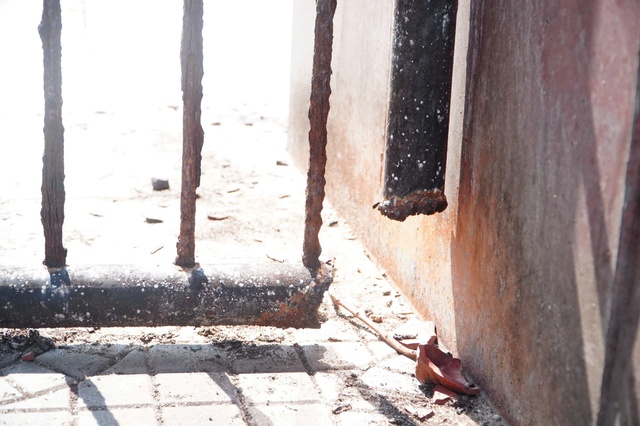
The museum's gate was also damaged and in disrepair.
PHOTO: DUC NHAT
Some locals say that since its opening, the museum has not been open to visitors very often. What was once expected to become a community cultural space has gradually become unfamiliar to the local people themselves.
"Many people live here but rarely visit because it's almost never open. Seeing it overgrown with weeds like that is a shame," shared a resident living near the museum.
Not only does this wasteful use of invested facilities lead to the loss of value for many artifacts inside over time, but the lack of proper operation also puts the value of these items at risk of being forgotten.
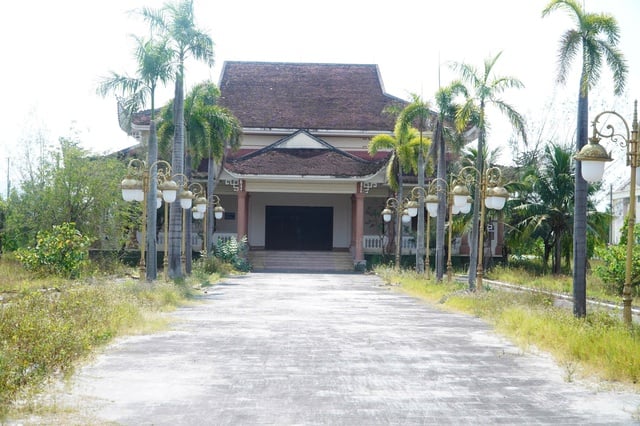
Phu Cat Museum with its doors tightly closed.
PHOTO: DUC NHAT
Mr. Bui Quoc Nghi, Chairman of the People's Committee of Phu Cat commune, said that the museum's activities are currently quite limited due to the low number of visitors.
"If it were open regularly, there wouldn't be many visitors, so the museum mainly opens when a group or school registers for a visit," Mr. Nghi said.
According to Mr. Nghi, although the museum's operations are not yet effective, the local authorities maintain the view of preserving the historical and cultural values of the area. Currently, the museum is still managed by staff from the Cultural Center and there are no plans to change its function at this time.
Source: https://thanhnien.vn/bao-tang-ngu-quen-giua-vuon-co-dai-185260514164257163.htm








































































Comment (0)