Large-scale transportation projects, along with a complete legal framework from 2026 onwards, are expected to lay the foundation for a sustainable market recovery.
Capital flows are shifting in line with the “new infrastructure map”.
Mr. Vu Thanh Le, a member of the Board of Directors of Phat Dat Real Estate Development Joint Stock Company, once shared that infrastructure is the number one driving force of the new cycle. Expressways, ring roads, metro lines, and expanded urban planning are reshaping investment flows.
"Previously, investors only cared about how far a project was from the city center, but now they look at regional connectivity, because infrastructure determines future value. Don't look at the current map, look at the map for the next 10 years. Money will flow with infrastructure, and whoever understands the planning will have the advantage," Mr. Le shared.
From 2026 onwards, the real estate market is expected to operate under the comprehensive impact of the 2024 Land Law, the 2023 Housing Law, the Real Estate Business Law, along with the new land price list effective from January 1, 2026. However, a particularly noteworthy point is the large-scale public investment plan over the next five years, considered one of the key drivers of this new growth cycle.
Boosting investment in key infrastructure projects will help improve inter-regional connectivity, promote urban decentralization, and create new growth poles along strategic infrastructure routes.
Market realities show that areas directly benefiting from infrastructure development have recorded positive growth. Western Hanoi, with the Thang Long Boulevard and Ring Roads 3 and 3.5, is becoming a new development hub for housing, urban areas, and services. Eastern Hanoi , with the planned construction of additional bridges over the Red River, is also attracting significant market attention.
The implementation of major infrastructure projects is of particular importance. This is a strong signal demonstrating the determination of the central government and Hanoi to invest in infrastructure development. When infrastructure projects are launched simultaneously, the real estate market will gain more confidence and a stronger foundation for recovery and sustainable development.
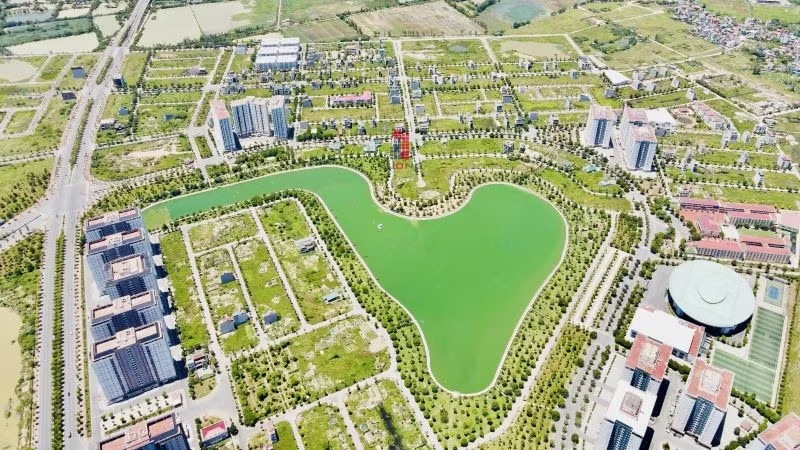
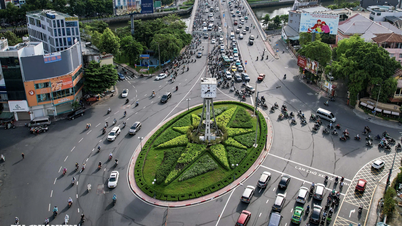
A view of Hanoi from above. Photo: Le Tien
Large-scale public investment provides impetus for the growth cycle.
Mr. Su Ngoc Khuong, Senior Director of Investment at Savills Vietnam, believes that Vietnam is facing a decisive "window of opportunity".
According to Mr. Khuong, the period from 2026 to 2030 is a crucial time, when infrastructure is no longer merely a supporting factor but has become a mandatory foundation for long-term growth. If the current opportunity is not seized to invest heavily and systematically in infrastructure, the economy risks losing its momentum in the following years, as its scale expands but its connectivity capacity fails to keep pace.
In reality, the most important requirement today is not just infrastructure investment, but investment in a synchronized and comprehensive manner, to ensure efficient resource utilization and optimize long-term benefits. Expressways, ring roads, airports, and seaports need to be placed within a unified whole to maximize their value and avoid fragmented investment efficiency due to a lack of interconnectedness between different components.
Transportation infrastructure is a key factor paving the way for new development projects. When infrastructure improves, geographical distance is no longer a major barrier. People can live further from urban centers while still ensuring convenient connectivity, thus forming satellite cities, industrial zones, and new residential areas. This trend not only helps reduce pressure on large cities but also facilitates a more rational redistribution of population and resources.
Forecasting the outlook for 2026, CBRE Vietnam stated that the real estate market in the South will continue its growth momentum as many important infrastructure projects are put into operation.
In the key economic zones of Ho Chi Minh City, Dong Nai, and Tay Ninh alone, it is projected that more than 50,000 new housing units will be launched, an increase of nearly 30% compared to 2025; of which approximately 65% will be apartments and 35% will be townhouses.
In Ho Chi Minh City, the total supply of apartments is expected to reach nearly 34,000 units, with the former Binh Duong area accounting for approximately 50% of the market share and continuing to play a crucial role in balancing supply and demand for the entire market.
For the landed house segment, supply is projected to improve thanks to new urban projects in the East and South areas, with approximately 5,500 units in 2026 and potentially increasing to over 15,000 units by 2028. The majority of this supply comes from large-scale urban projects developed by major investors such as Vingroup, Masterise, GD E&C, etc.
Assessing the market outlook for 2026, Ms. Duong Thuy Dung, CEO of CBRE Vietnam, stated that although some legal obstacles have not been completely resolved, the government's efforts demonstrate a strong commitment to the real estate sector. Notably, the plan to digitize real estate transactions and identify assets, expected to be implemented from March 2026, will contribute to increased transparency, reduced risks, and a foundation for the sustainable development of the market.
Source: https://giaoducthoidai.vn/bat-dong-san-sap-xep-lai-cuoc-choi-post766533.html



![[Photo] General Secretary and President To Lam presides over the meeting to approve the draft report on the results of the second inspection by the Politburo of the Standing Committee of the Hanoi City Party Committee.](https://vphoto.vietnam.vn/thumb/1200x675/vietnam/resource/IMAGE/2026/05/26/1779789811432_a2-bnd-4430-9620-jpg.webp)










































































Comment (0)