

- After the merger, Ca Mau province will continue to grow stronger, develop rapidly and sustainably (*).
- Ca Mau: United for development - stepping confidently into the future.
- Determined to accelerate progress, aiming for comprehensive and sustainable development.
Although the task is not easy, from an overall perspective, this goal is entirely achievable. If the province focuses its resources, resolutely addresses difficulties, and effectively implements solutions, Ca Mau can achieve positive and comprehensive results.
Removing bottlenecks to drive growth.
According to Mr. Nguyen Chi Thien, Director of the Department of Industry and Trade, after the province's merger, based on the status of completed projects and development potential, wind power has become one of the important driving forces contributing to making Ca Mau a leading renewable energy development center in the country. Currently, the total capacity of wind power projects put into operation in the province has reached 649 MW.
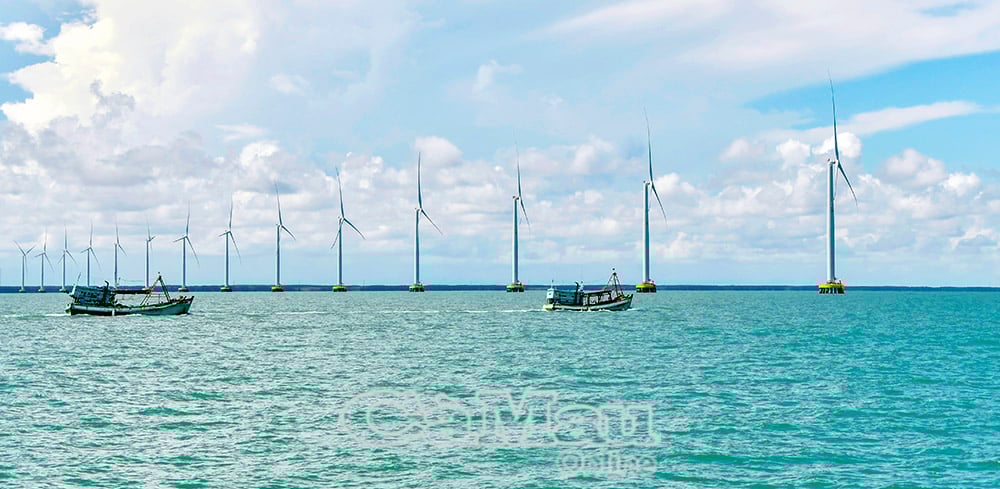
Specifically, the former Bac Lieu region currently maintains stable operation of 8 wind power plants , with a total capacity of 469.2 MW; meanwhile, the former Ca Mau region has 6 projects that have entered commercial operation, reaching a total capacity of 225 MW. In addition, the entire province currently has 8 other projects that have been approved for investment, of which 3 projects with a total capacity of 276 MW are under construction.
However, according to Mr. Thien, in the first six months of the year, the amount of wind power fed into the national grid remained limited, affecting the revenue of the power plants. The main reason is that the power transmission system has not yet met the actual demand.
For example, the 110kV Nam Can power line is experiencing delays due to land clearance issues, preventing the power supply from local power plants from reaching its full potential.
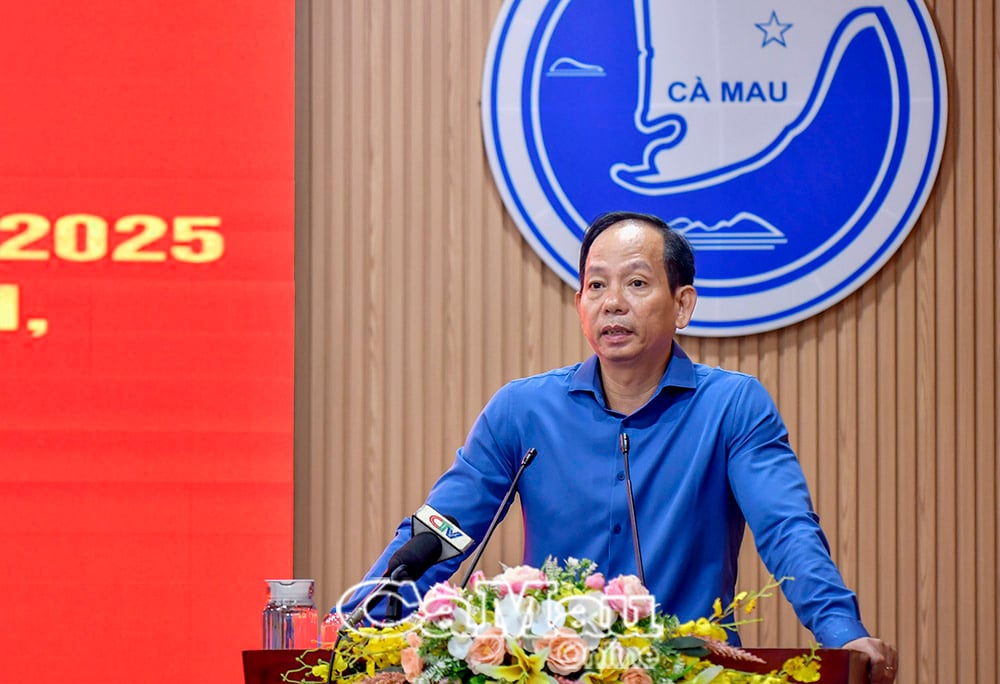
At the Ca Mau Gas-Electricity-Fertilizer Industrial Cluster , considered the "industrial heart" of the locality, the output from the two thermal power plants in the first six months of the year, especially during the dry season, decreased compared to the same period last year. The total electricity output in the area reached only 3,338 million kWh, a decrease of 3.2% compared to the same period last year.
Given this situation, the province needs proactive and groundbreaking solutions. In particular, it is necessary to request the Ministry of Industry and Trade and the National Power System Operation and Market Company (NSMO) to commit to stably mobilizing power from the two Ca Mau thermal power plants, while also ensuring the supply of input gas. Maintaining efficient operating capacity will not only help improve the industrial production index but also make a significant contribution to the province's overall economic growth.
Aquaculture – a traditional pillar of growth
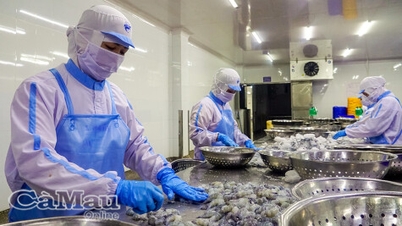
Another important sector significantly impacting the province's economic growth is seafood exports, particularly shrimp, a key industry closely linked to the lives, jobs, and livelihoods of the majority of local people. With its leading position nationwide in shrimp farming and processing, Ca Mau (formerly) continues to make its mark in seafood exports, despite the instability and unpredictable fluctuations of the global market.
In the first six months of the year, the province's seafood export turnover reached US$551.8 million, an increase of 4.2% compared to the same period last year. In addition, the urea fertilizer products of the Ca Mau Urea Plant also achieved impressive results, with export turnover reaching US$82.5 million, equivalent to nearly 60% of the annual plan and an increase of 20.8% compared to the same period. |
Prior to the announcement of new US tariffs on various countries starting July 8th, although accounting for only about 7% of total export value, this is the second largest market for Ca Mau (formerly) shrimp, with exports expanding to over 60 countries and territories. Two issues need to be considered regarding the new US tariffs: firstly, higher-than-normal tariffs will lead to higher selling prices, consequently, higher raw material costs for shrimp. Secondly, depending on the US tariffs imposed on competitors in the seafood sector, there will be both advantages and disadvantages, requiring appropriate responses based on the specific circumstances.
Infrastructure - a lever for expanding development opportunities.
After the merger, Ca Mau has a total natural area of 7,942.39 km2 (ranked 21st out of 34 provinces and cities); and a population of 2,606,672 people (ranked 20th out of 34 provinces and cities). The larger area, population, and economy will have a stronger influence on the socio-economic map and enhance the position of the new province in the national development strategy, especially laying the foundation to become a major growth pole of the Mekong Delta region.
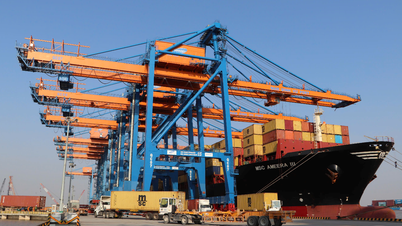
Mr. Pham Van Thieu - Deputy Secretary of the Provincial Party Committee, Chairman of the Provincial People's Council (formerly Chairman of the People's Committee of Bac Lieu province) once shared that before the merger, the old Bac Lieu province lacked four things: railways, highways, airports, and seaports. But now, under one roof with Ca Mau, the locality has all three important elements: highways, airports, and seaports – the "golden keys" to unlocking the door to development.
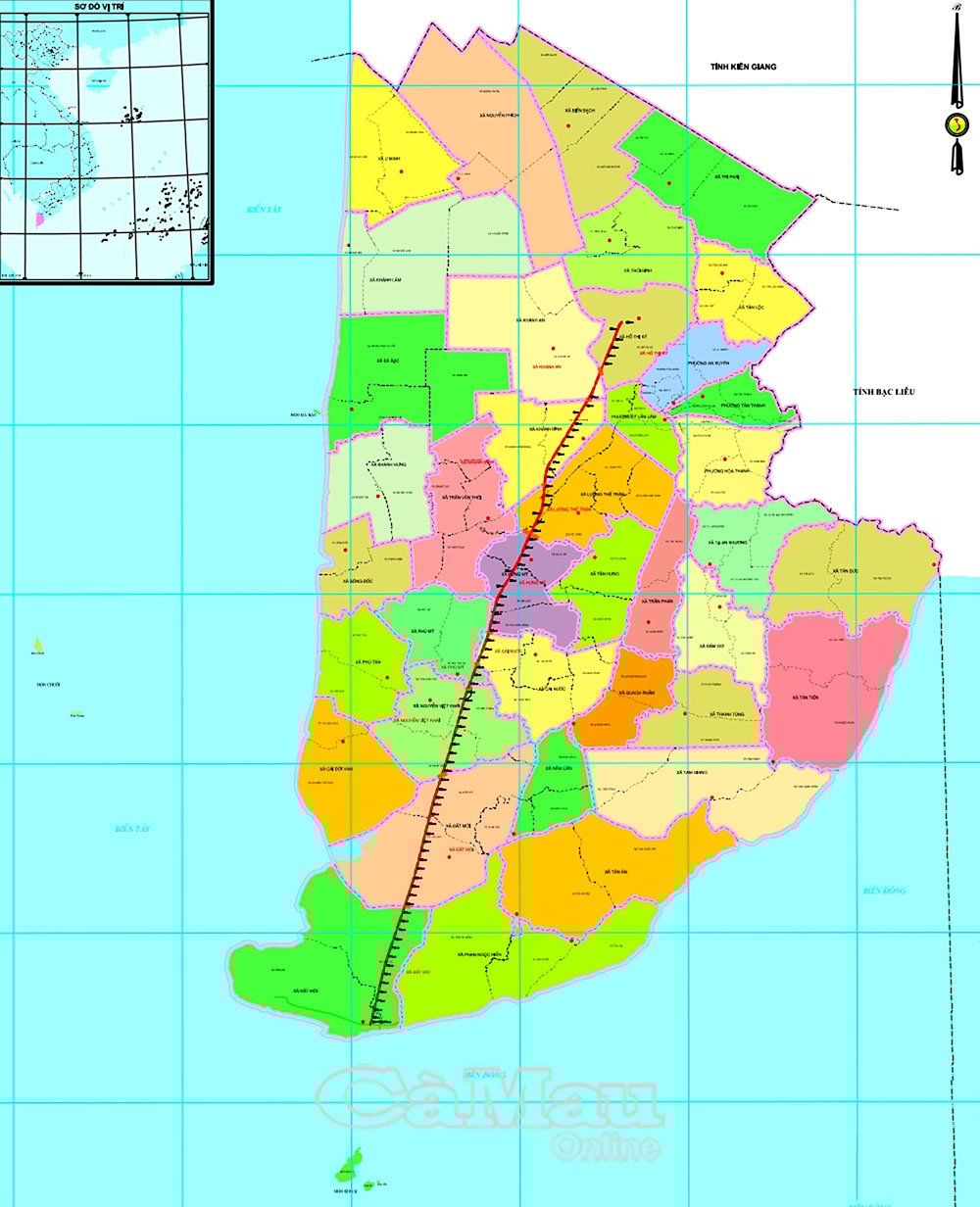
Ca Mau Airport is currently undergoing upgrades and expansion with a total investment of 2,400 billion VND. Simultaneously, the Can Tho – Ca Mau expressway is expected to be completed by the end of this year. Notably, in August, the project to extend the expressway to Dat Mui will officially commence construction. This project will be approximately 81km long, with 4 lanes, a design speed of 100km/h, a road width of 24.75m, and a total investment of nearly 59 trillion VND. The project is being implemented under an emergency mechanism and is expected to be completed in 2028.
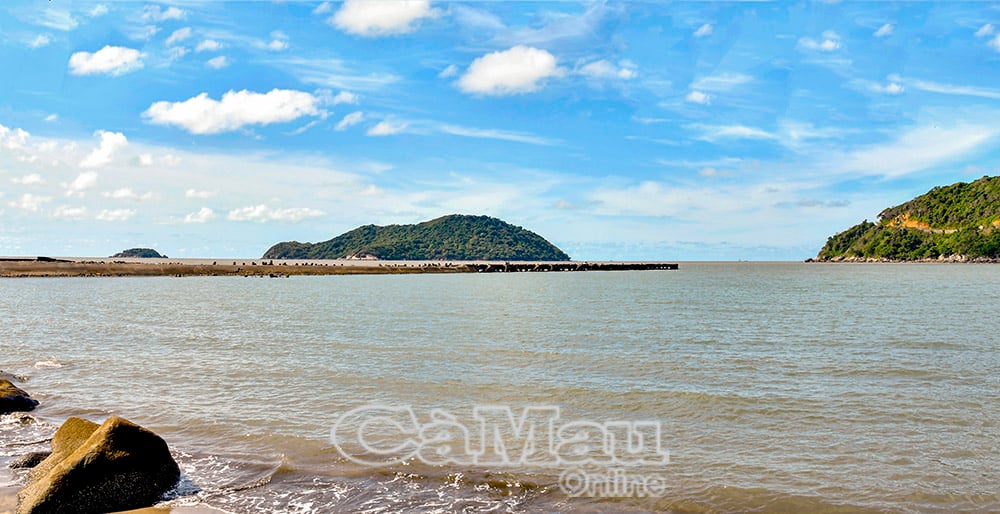
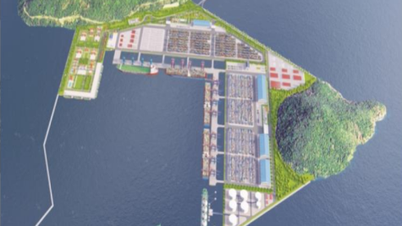
Simultaneously, investment is being promoted for the sea-crossing road connecting Dat Mui to Hon Khoai Port , with a length of approximately 17.55 km, a scale of 4 lanes, a design speed of 80 km/h, and a total estimated capital of 17 trillion VND. Alongside this, a dual-use Hon Khoai Port will be built in the South, between Hon Khoai and Hon Sao islands, with a total area of nearly 629 hectares.
Furthermore, the north-south expressway from Ha Tien – Rach Gia – Bac Lieu (formerly) is being fully planned, combined with the southern coastal corridor, contributing to maximizing the potential of coastal economic centers such as Khanh Hoi, Song Doc, Ganh Hao, Cai Doi Vam…
Expanding the development space will facilitate more synchronized planning and investment; enhance competitiveness, attract better investment, and maximize the exploitation and utilization of the locality's existing potential and advantages for development, such as: a fully integrated economy encompassing key sectors and promoting comprehensive economic growth.
Despite the challenging natural conditions of Ca Mau due to its geographical location, with the highest political determination, the exploitation of its unique advantages, and focused infrastructure investment, it will become a "launching pad" for Ca Mau to aim towards becoming the southernmost point of the country, a central connecting point, facing the open sea in regional integration and development, and an important development hub in the South of the country.
Tran Nguyen
Source: https://baocamau.vn/be-phong-cho-ca-mau-phat-trien-a75083.html



![[Photo] General Secretary and President To Lam presides over a working session with the Central Policy and Strategy Committee on the development of the materials industry.](https://vphoto.vietnam.vn/thumb/1200x675/vietnam/resource/IMAGE/2026/05/21/1779359935432_a3-bnd-3129-1412-jpg.webp)































































Comment (0)