

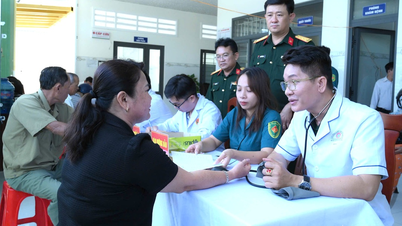
According to the Dien Bien Provincial Center for Disease Control, in May 2023, three outbreaks of cutaneous anthrax were recorded in Tua Chua District (Dien Bien province), with 13 cases. Authorities also identified an additional 132 people who had contact with or consumed meat from three buffaloes and cows in the affected areas. Symptoms included blisters and ulcers on the skin. Some individuals experienced headaches, abdominal pain, diarrhea, shortness of breath, and general body aches.
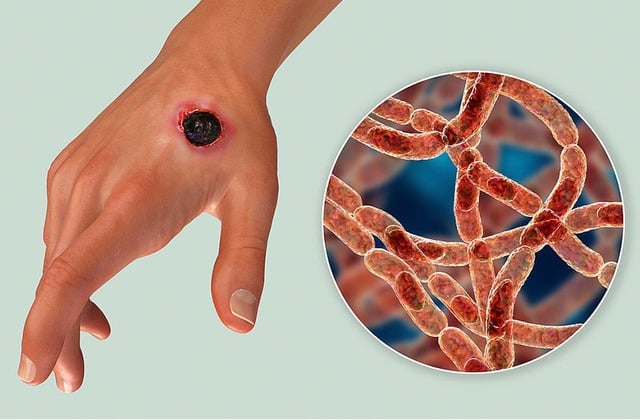
Black wounds are a typical symptom of anthrax.
How does anthrax spread?
Dr. Ho Thanh Lich, Deputy Head of the Intensive Care and Emergency Department at Nam Saigon International General Hospital, said that contact with anthrax pathogens can cause serious illness in both humans and animals. However, anthrax is not easily transmitted, meaning you cannot contract it like a cold or the flu.
Dr. Truong Huu Khanh, Advisor to the Department of Infectious Diseases and Neurology at Children's Hospital 1 (Ho Chi Minh City), said that the spores of the disease-causing bacteria are present in the soil, but it is usually difficult for them to naturally enter a wound and cause infection. Most commonly, it occurs through contact with sick animals such as cattle and sheep, as the bacteria or spores can penetrate the skin through wounds.
Anthrax is more common in animals than in humans, so we are at high risk of contracting it if the bacteria enter through cuts or abrasions. Infection can also occur if spores are inhaled or if meat from infected animals is consumed. Patients often experience severe symptoms. Therefore, this disease is currently a global threat, especially as it is a potential biological weapon.
Symptoms of anthrax infection
According to Dr. Lich, the incubation period until symptoms appear is usually from a few hours to 7 days, with most cases occurring within 48 hours of exposure. Depending on the route of infection, there will be different manifestations, with three main types: cutaneous anthrax, respiratory anthrax, and gastrointestinal anthrax.
Anthrax transmitted through the skin will manifest as blisters, small bumps, and itching similar to an insect bite. There will be mild swelling around the wound and increased inflammation at the peak of the disease. The skin lesions will appear black inside after the blisters and bumps subside.
Anthrax transmitted through the respiratory tract is rare in nature but can easily cause disease if anthrax spores are used as biological weapons. When anthrax spores are administered as aerosols, they can spread far in the atmosphere and enter the respiratory tract, causing disease with a high mortality rate.
Symptoms include fever and chills, chest discomfort and shortness of breath, dry cough, chest pain with coughing, nausea, vomiting, or abdominal pain, general body aches, and fatigue.
Anthrax, transmitted through the digestive tract, is difficult to recognize. Patients can go into shock and die within 2-5 days of the onset of the disease with symptoms such as fever and chills. Swelling in the neck or neck lymph nodes, sore throat, pain when swallowing, hoarseness or loss of voice, nausea and vomiting, especially vomiting blood, abdominal pain, diarrhea (sometimes bloody diarrhea), headache, dizziness, weakness, and fatigue.
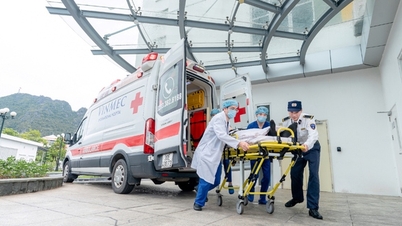
When symptoms appear, go to a medical facility immediately for timely examination.
How can we prevent anthrax?
To prevent the disease, Doctor Thanh Lich advises patients to avoid contact with, slaughtering, and eating meat from sick livestock. People who frequently come into contact with sick or dead animals (of unknown cause) should wear boots, rubber gloves, long pants, and long-sleeved shirts; and avoid contact between exposed or damaged skin and livestock.
After contact with pets, everyone must wash their hands and any exposed skin with soap under running water. If a family member shows symptoms of anthrax, the victim should be taken to the nearest medical facility for prompt treatment, and the local authorities should be notified to investigate and control the outbreak.
"People need to pay attention to food safety, eating cooked food and drinking boiled water. Maintain good personal hygiene, and take care of and pay attention to scratches or open wounds on the skin," advised Dr. Lich.
Source link
![[Image] A brilliant symphony and explosive power in the skies of Da Nang.](https://vphoto.vietnam.vn/thumb/1200x675/vietnam/resource/IMAGE/2026/05/31/1780193150738_anh-bia-copy-jpg.webp)



![[Video] Sunset at Lap An Lagoon – Where the sun sets over the fishing nets](https://vphoto.vietnam.vn/thumb/1200x675/vietnam/resource/IMAGE/2026/05/31/1780192137701_beach-landscape-sea-water-nature-grass-745871-pxhere-com.jpeg)














![[Video] Sunset at Lap An Lagoon – Where the sun sets over the fishing nets](https://vphoto.vietnam.vn/thumb/800x450/vietnam/resource/IMAGE/2026/05/31/1780192137701_beach-landscape-sea-water-nature-grass-745871-pxhere-com.jpeg)












































![[Video] Sunset at Lap An Lagoon – Where the sun sets over the fishing nets](https://vphoto.vietnam.vn/thumb/402x226/vietnam/resource/IMAGE/2026/05/31/1780192137701_beach-landscape-sea-water-nature-grass-745871-pxhere-com.jpeg)




































Comment (0)