On May 11th, the People's Committee of Dong Nai City issued Decision No. 03/2026/QD-UBND regulating the land price adjustment coefficient for 2026. The land price adjustment coefficient is a measure reflecting the fluctuation of market land prices, infrastructure development, and factors affecting investment attraction.
Non- agricultural land prices adjusted slightly upwards.
According to the aforementioned decision, the adjustment factor for market fluctuations in non-agricultural land (residential land, land for production, business, public and construction land, etc.) ranges from 1.03 to 1.39 times, depending on the area, land type, location, and infrastructure conditions.
 |
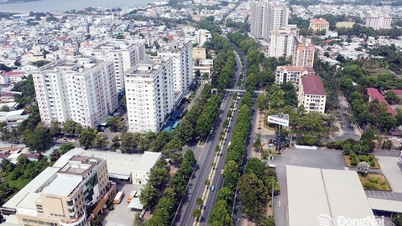
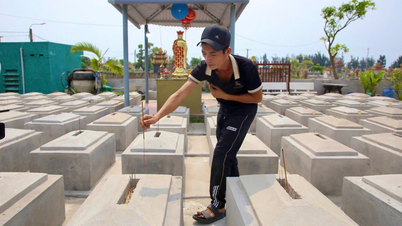
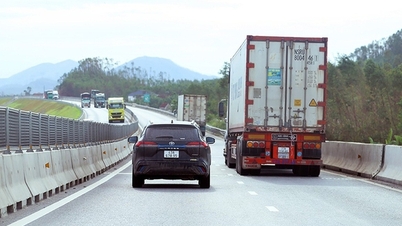
| The land area along National Highway 1A, specifically the section passing through Dong Nai City, has a stable land price adjustment coefficient. |
According to the Department of Agriculture and Environment, to develop this coefficient system, the consulting unit surveyed and valued thousands of different road segments and land locations. The aim was to ensure land prices were closer to market prices, limiting the significant discrepancy between government-set prices and transaction prices. The land price adjustment coefficient did not increase uniformly but showed clear differentiation between areas with infrastructure investment and suburban areas with less connectivity advantages.
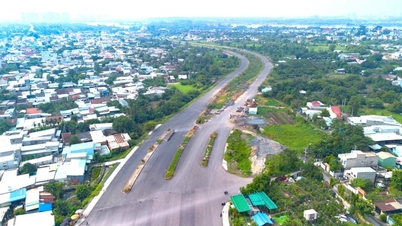
The group of roads with the highest adjustment coefficient, 1.39 times compared to the previous land price list, is mainly concentrated in areas undergoing significant changes in transportation infrastructure or inter-regional connectivity, such as the Suoi Chon - Bau Coi road (Bao Vinh ward) and the Song Trau - Cay Gao - Song Thao road (Trang Bom ward). This reflects the real estate market's rule that wherever infrastructure is developed, land prices will shift accordingly.
Roads with low adjustment coefficients, approximately 1.03-1.19 times, are mainly located in suburban areas or locations with limited connectivity, including roads in Tran Bien ward. The reason for these low adjustment levels is the lack of strong growth drivers from infrastructure or urbanization.
According to Mr. Tran Khanh Du, Director of MHD Valuation Company Limited, the consulting unit for developing land price coefficients in Dong Nai, although there is a difference, the adjustment margin is relatively soft, at 0.36 times. This shows that non-agricultural land prices in Dong Nai are aiming for stability, avoiding causing a shock to the financial obligations of people and businesses.
Divided across several key areas, the adjustment coefficients closely reflect the level of urban development. For example, in Bien Hoa ward, the highest coefficient reaches 1.17 times on Nguyen Van Lung street, with a unit price of over 20 million VND/m²; in Long Thanh ward, Le Duan street has the highest adjustment coefficient of 1.17 times with a unit price of 28.6 million VND/m²; in Nhon Trach ward, the highest coefficient reaches 1.23 times in the Phuoc Thien area.
From the adjustment coefficients mentioned above, it is easy to see that the price of residential land, land for production and business, and construction projects increases according to infrastructure connectivity, urbanization, and the actual investment attraction capacity of each area.
Prices are stable in many areas.
According to the consulting firm's assessment, this adjustment is mainly localized to areas with changes in transportation infrastructure or new urban development. Meanwhile, the land price adjustment coefficients in resettlement areas, urban areas, industrial zones, and industrial clusters are largely kept stable to ensure they are consistent with the general market level and to enhance competitiveness in attracting investment, especially FDI (foreign direct investment).
Mr. Diep Truong Vu, Deputy Director of the Department of Agriculture and Environment, stated that the early issuance of the new adjustment coefficient will help expedite the process of determining land use fees, land lease fees, compensation for land clearance, and auctioning land use rights. This is a crucial factor as Dong Nai city is implementing a series of large-scale key projects.
According to Nguyen Tuan Anh, Standing Committee member of the City Party Committee and Vice Chairman of the City People's Committee, land is no longer just an object of administrative management but has become a particularly important resource for socio -economic development and attracting investment. In reality, over the years, one of the biggest "bottlenecks" in infrastructure projects has been the determination of land prices and financial obligations. When the adjustment coefficient is issued in detail for each road, the calculation process will be more transparent and faster. The City People's Committee leader also stated that this land price coefficient is developed for each road according to the land price table and in compliance with the spirit of the National Assembly's resolution and the Government's decree.
On May 11th, the People's Committee of Dong Nai City issued Decision No. 03/2026/QD-UBND regulating the land price adjustment coefficients for 2026. There are three types of coefficients: adjustment based on market fluctuations for non-agricultural land ranging from 1.03-1.39 times and for agricultural land from 1.08-1.45 times; adjustment based on planning from 1-1.15 times; and adjustment based on other factors affecting land prices from 0.9-1.05 times.
For the real estate market, adjusting land price coefficients closer to their actual value will contribute to increasing revenue from land use fees, transfer taxes, registration fees, and even penalties for land-related violations. Furthermore, when land prices are determined more accurately, it will help curb speculation, reduce price inflation, and create a stable foundation for the real estate market and sustainable urban development.
Dong Nai is entering a new phase of development with a series of strategic infrastructure projects being implemented. This land price adjustment coefficient is an important basis for promoting land clearance, attracting investment capital, and simultaneously redefining the value of land resources.
Hoang Loc
Source: https://baodongnai.com.vn/kinh-te/202605/bien-dong-gia-dat-theo-he-so-dieu-chinh-moi-c130751/




![[Photo] Standing Committee member of the Party Central Committee Tran Cam Tu working with the Central Inspection Committee](https://vphoto.vietnam.vn/thumb/1200x675/vietnam/resource/IMAGE/2026/05/28/1779969579668_ndo_br_bnd-2495-jpg.webp)

















































































Comment (0)