

At the end of 2025, Bitcoin shocked the market by losing 30% of its value in just three months, retreating to the $85,000-$90,000 mark. 2026 is predicted to be the decisive year for this currency: whether it will become an essential part of global finance or simply a bursting bubble.

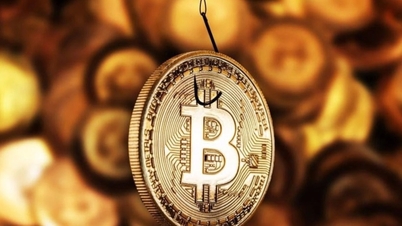
2026 is being seen as a pivotal year for bitcoin (Image: Bitcoin System).
When a "cold shower" is poured on the excitement.
Looking back at 2025, the cryptocurrency market experienced one of the most volatile cycles in history. After setting an all-time high (ATH) at around $126,000 in October, Bitcoin unexpectedly faced the harsh correction rules of the financial market. By the end of Q4 2025, the currency had retreated more than 30% of its value, currently trading around $86,000-$87,000, causing a wave of panic among individual investors.
From a technical perspective, David Morrison, a senior analyst at Trade Nation, believes that although the MACD indicator is in the oversold zone, the upward momentum is showing signs of exhaustion, posing a risk of breaking through key support levels.
Notably, strategist Mike McGlone from Bloomberg Intelligence recently issued a shocking warning to investors, predicting that Bitcoin could fall back to $10,000 by 2026. McGlone cited a worrying parallel to the 2007 situation: the market peaked just as the Fed began its interest rate cutting program, a precursor to the 2008 Great Recession.
This expert calls the phenomenon of Bitcoin's price falling in sync with interest rates "post-inflation deflation." If this scenario occurs, the cryptocurrency market capitalization risks "evaporating" from $3 trillion to $300 billion.
The era of small-scale players fending for themselves is over; the game is now in the hands of the "big players."
However, from the opposite perspective, many experts argue that comparing 2026 to 2008 or previous crypto winters is inappropriate because the nature of money flows in the market has completely changed.
While the market was previously dominated by retail speculation (FOMO), 2025 has seen a transformative shift. Matthew Cloete, founder of Everlong, stated: “We’ve moved from a speculative market to one where sovereign wealth funds, asset management firms, and corporate treasuries are the biggest buyers.”
The clearest evidence is the flow of capital into spot bitcoin ETFs. From a modest $30 billion at launch in early 2024, the total net assets of these funds have surged to nearly $125 billion. According to data from State Street Investment Management, 86% of institutional investors have either bought or are planning to buy bitcoin.

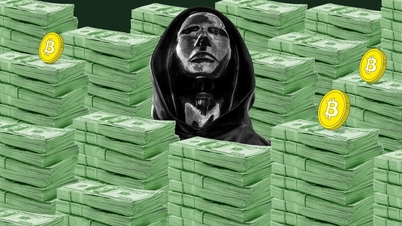
The market is no longer a playground for individual investors driven by emotions. Capital flows from ETFs and corporate treasuries are becoming the main liquidity support, completely changing the landscape of digital finance (Photo: FuW).
2026 is expected to be the year of real returns and practical applications, rather than just price speculation. Three main pillars are predicted to keep the market going:
Stablecoins are entering the real world: With the National Innovation and Guidance Act for Stablecoins (Genius Act) taking effect in the US in July, stablecoins are transforming from trading tools to payment infrastructure. McKinsey forecasts the value of stablecoins could reach $2 trillion by 2028.
Tokenizing Real Assets (RWA): Bringing Treasury bonds, real estate, or stocks onto the blockchain has transformed this market from $2 billion at the beginning of 2024 to over $18 billion today. By 2026, this trend will explode, turning idle assets like gold or fiat currency into profitable on-chain liquidity.
Legal maturity: While still controversial, clarity in regulations in the US and major countries is paving the way for large retirement fund streams (like 401k) to access bitcoin.
2026 Scenario: The $200,000 Dream or a Ground-Based Adjustment?
The short answer is: It's very difficult, but not impossible.
To reach a price of $200,000 from its current level (below $90,000), Bitcoin needs to more than double in value.
In fact, even the most optimistic institutions are having to lower their expectations. Standard Chartered Bank – which once shocked the market with its prediction that Bitcoin would reach $300,000 – recently adjusted its 2026 target down to $150,000. This is due to slowing ETF inflows and signs of dwindling demand from corporate treasuries.
David Jagielski from The Motley Fool warns: “Investors need to exercise extreme caution. Bitcoin is an extremely unpredictable asset and often moves in the same direction as the stock market. When individual investor sentiment is weak and the macroeconomic situation is worrying, downward pressure is imminent.”
However, in the long term, proponents still believe in the four-year cycle and scarcity of bitcoin. A Bernstein report suggests that, although hot money may withdraw, the continued presence of institutional capital will provide the foundation for bitcoin to reach new highs in the 2026-2027 period.

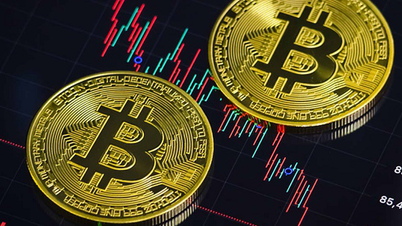
Regardless of the scenario, whether it breaks through to $200,000 or plummets to $10,000, 2026 will still be the year Bitcoin asserts its "legitimate" status (Image: GoMining).
For individual investors, the lesson from the crash at the end of 2025 is a costly reminder: Never go all-in on a risky asset without fully understanding its operating structure. Bitcoin may be digital gold, but it can also evaporate 30-50% of its value in just a few short months.
As Denham Preen, the founder of Envio, philosophically summarized: “It’s a double-edged sword. Government and institutional involvement brings stability, but it also strips away the inherent wildness that fueled those crazy price surges.”
Source: https://dantri.com.vn/kinh-doanh/bitcoin-2026-2-kich-ban-doi-lap-cho-thi-truong-tien-so-20251218134346052.htm


![[Photo] Prime Minister Pham Minh Chinh attends the Conference on the Implementation of Tasks for 2026 of the Industry and Trade Sector](/_next/image?url=https%3A%2F%2Fvphoto.vietnam.vn%2Fthumb%2F1200x675%2Fvietnam%2Fresource%2FIMAGE%2F2025%2F12%2F19%2F1766159500458_ndo_br_shared31-jpg.webp&w=3840&q=75)


































































































Comment (0)