



Where are you going, dear? I'll give you a cheap price!
Manh said nothing because it was his first time there and he didn't know. Lanh looked around and replied:
- I'm going back to Na Pat, I'm not taking a motorbike taxi, I'm looking for a regular taxi!
The motorbike taxi drivers, looking dejected, moved away, and one of them said casually:
- VIPs don't take motorbike taxis! With that dress, how could they possibly take one!
At this point, the motorbike taxi drivers began to observe the two passengers. The young man was wearing a T-shirt with English lettering, loose-fitting jeans, and had wavy, dyed hair. He carried a small backpack on his shoulder and a bag in one hand. The girl was wearing a rather loose T-shirt and a short white skirt, the skirt not reaching her knees, sneakers , and sunglasses perched on her gently wavy hair. She had a well-groomed makeup, not too heavy but not too pale either, and a faint scent of perfume. She carried a small handbag on her shoulder and a bag of items.
A motorbike taxi driver called a nearby taxi driver:
Hiep! We have a visitor!
His name was Hiep, and he rushed out excitedly:
Where are you going? Get in the car! The car's over there! If you have a lot of things, let me carry them!
In an instant, the white taxi rolled off in the direction of Na Pat. Inside, the driver cheerfully chatted with me:
- Where are you kids from, and why are you in Na Pat?
He quickly replied:
- We're from Hanoi, sir!
Are you visiting relatives?
No! I'm going home!
"Your house is in Na Pat, right?" the driver asked, looking surprised.
- Yes! What is it, sir? - Lanh asked, a little shyly.
The driver was a little confused, but he quickly came up with an excuse:
Looking at you, I'd guess you're from Hanoi; no one would think you're from Na Pat. You must have lived in Hanoi for a long time, right?
Yes! I've been down there for over seven years now!
What are you doing down there?
- After graduating from university, I immediately started working in Hanoi. I work in marketing, sir!
"So, who's your companion...?" the driver asked hesitantly, afraid of saying something wrong.
This is my boyfriend!
- Really? So where is your boyfriend from?
He's from Hanoi!
Oh! That's great!
The driver then cheerfully said to Mạnh:
- Don't you think the girls from Lang Son are great? They're both beautiful and talented, and when they come to Hanoi, they immediately find a handsome husband...
All three laughed heartily. Meeting the driver, who was so talkative and cheerful, made the deserted, winding road seem shorter. The further they got from the city, the more deserted the scenery became; houses were sparse, and the sides of the road were lined with trees. Some sections of the road ran under shady pine forests, while others had sharp, hairpin turns that made Lanh and Mạnh sway. Some sections were uphill and downhill, and some led to the top of a hill overlooking a deep valley. Mạnh looked out the car window and exclaimed:
- The scenery is so peaceful! But I can't drive on this road!
The talented man smiled and said:
- You guys are used to driving on forest roads; some sections are much more difficult than this. If it were on the way back to Hanoi, I'd give up too; the roads are so winding, I couldn't handle it.
The car finally reached the edge of the village, and Lanh reminded the driver to stop because the road from there was impassable to her house due to the narrow alleyway. She paid the fare, and they both carried their belongings home.
Lanh's village was surrounded by forest, the green of trees and small rice paddies nestled between the hills. A small stream flowed with clear blue water, its banks lush with grass and dense bushes. A fairly large flock of ducks swam leisurely along the stream, some perched on the bank preening, others diving for a while before surfacing and quacking with delight. The village consisted of about twenty houses arranged in terraces along the hillsides, the distant barking of dogs adding to the tranquil scene. The air was fresh; it seemed as if there were no dust, no car fumes, and no noise or hustle and bustle like Hanoi. The path to the village wasn't too far, fenced off with bamboo to keep chickens from digging up the vegetable gardens. Some sections were planted with banana trees, others with plums and peaches… Mạnh asked about everything he saw: What kind of tree is this? What is this? Why is the buffalo shed right on the road like this? It smells awful!
Then they both climbed the short slope to Lanh's house, and as soon as they reached the edge of the yard, Lanh quickly called out:
- Mom! I'm home!
From inside the house, a woman wearing a green Nung dress, with her hair neatly pinned up, rushed out, shouting:
- "Lục ma dà lo? Dad! Lục sáo ma dà! (You're back? Dad! Your daughter's home!)"
Lanh was happy but suddenly felt awkward when Mạnh asked:
- Is that your mother? What did she say?
Lanh turned to Mạnh with a worried expression and whispered:
- Hi Mom, I'll tell Dad we're home.
As Mạnh realized what was happening, he reached the wooden doorstep. Another man, not wearing traditional clothing, emerged from the house and came to the door. He guessed it was Lanh's father, and he bowed in greeting.
Hello, Aunt and Uncle!
Yes! Come inside, child!
Lanh's parents hurried about, one preparing drinks, the other turning on the fan to cool things down. Lanh's mother spoke a string of Nung words, and Lanh's father and Lanh responded in Nung. Mạnh sat there, feeling out of place. He didn't feel comfortable asking Lanh what they were talking about, so he observed the house. It was built of rough clay bricks, with earthen mortar, the bricks many times larger than those found in the lowlands. The door frames and doors were made of very simple wood. The roof was covered with weathered gray tiles. In the middle of the house was an old tea cabinet, its top also serving as an ancestral altar. On the guest table were many of Lanh's certificates, many yellowed, along with a few old calendars and a wedding photo of Lanh's older sister. On the wall above the altar was a picture of a plate of five fruits and two couplets on either side. Mạnh was surprised to see three paper flags, slightly larger than a hand, pasted on the entrance, and now flags were also displayed on the altar. In Hanoi, people usually hang small flags in strings to decorate the streets, but here they're decorating houses. Mạnh glanced out the window. Look! There were flags on the kitchen door, and red flags on the chicken coop door too. Mạnh was a little confused. People say ethnic minorities often have amulets; could this be...
After exchanging words in their ethnic language, Mạnh noticed that Lanh's mother had lost her initial warmth. To dispel Mạnh's awkwardness, Lanh's father then asked questions in Vietnamese. Lanh's mother also asked a few questions in Vietnamese, but with a thick ethnic accent, some of her speech unclear. After a few questions, her mother went to the kitchen to prepare dinner, and Lanh, changing into a tank top and shorts, went to help her. Meanwhile, Mạnh sat and talked with Lanh's father. They discussed all sorts of things, but mainly Lanh's father asked about his work and his family. Mạnh answered cautiously, still puzzled by the small paper flags pasted on the altar and doors.
When it was time for dinner, a mat was spread out in the middle of the house, and the table was neatly set with plates and bowls of food. Lanh's mother happily said to Mạnh:
- When you come home to visit, eat whatever is available. In the countryside, there's only chicken meat. Today, the butcher shop near the committee is selling roasted pork, but sometimes there's nothing at all. There aren't as many specialties here as in Hanoi, so just make yourself at home.
Manh looked at the meal with a mixture of surprise and excitement, and asked:
Wow! All specialties. How are the ivory meat and spicy meat dishes prepared? I've never tried them before.
Lanh quickly pointed to the plates of food and explained:
- This is boiled chicken, free-range chicken! And this is roasted pork, pork ribs, stir-fried water spinach…
Manh asked again, puzzled:
- Here, they call free-range chickens "ivory chickens," right?
Lanh's father burst out laughing, and Lanh, smiling, said to Mạnh:
- We still call it a chicken, but my mother is used to speaking the Nung dialect; she doesn't speak some Vietnamese words fluently.
Lanh's mother also laughed to cover her embarrassment, and then the whole family happily ate dinner.
After finishing their meal, Mạnh followed Lanh down to the kitchen to wash dishes and clean up. Mạnh asked Lanh:
- What were you and Mom and Dad talking about when we first got home that you were hiding from me, speaking in the Nung language?
Lanh was taken aback, and after a moment of thought, she said:
- It's nothing, my mother is used to speaking Nung, and she just casually asked you in Nung. My father and I told her that everyone in the family should speak Kinh (Vietnamese). My mother has never traveled far from home, staying within the village's bamboo groves, so she mainly speaks Nung with family and neighbors, rarely speaking Kinh.
The question that had been bothering Mạnh since he arrived at the house was finally being asked by him to Lanh:
- But why do you have flags pasted on the doors, and even on the altar?
- Those flags were put up before Tet (Lunar New Year), it's been a long-standing custom.
- What does that custom mean?
- My mother said that our grandparents have been doing this for generations, to bring good luck in the new year and ward off evil spirits.
Manh was surprised:
- Are there ghosts here? I heard people say there are chicken ghosts in the forest.
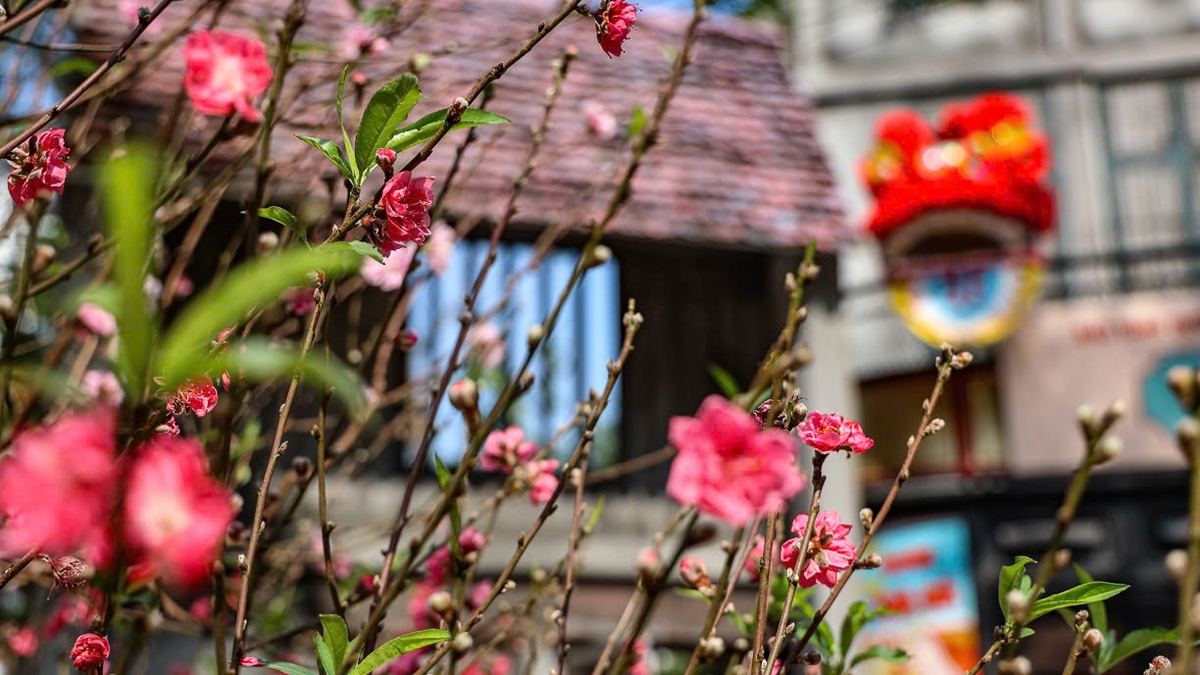
- There are no ghosts; that's just an old folk tale about ghosts and demons bothering people, especially during Tet (Vietnamese New Year). Ghosts and demons are afraid of the color red, garlic, firecrackers, and peach blossoms. Although firecrackers aren't used anymore, in my hometown, we still display peach blossoms and paste red paper during Tet as a tradition to ward off evil spirits.
- Oh! I thought...
Lanh smiled and replied:
- You thought it was a spell, didn't you? If it were a spell, with so many in Hanoi, I should be the one who fell under it first! I fell under your spell!
- So you weren't the one "catching a husband"?
They both laughed. After cleaning up, they went upstairs to talk to Lanh's parents. This time, Lanh brought Mạnh home not only to introduce him to her parents but also so Mạnh could convey his family's message that they were preparing to visit Lanh's family for the engagement ceremony. Lanh's parents asked Mạnh about the procedures on the groom's side so that the bride's family could make arrangements to ensure everything went smoothly and respectfully to both sides. Seeing this, Lanh quickly spoke up:
- My son thinks we should hold the ceremony at a restaurant outside the city. In Hanoi and the lowlands, they still hold ceremonies at restaurants with nice tables and chairs and beautiful decorations. It's also convenient for the groom's family to travel there by car.
Lanh's parents were a little surprised by their daughter's decision. In Na Pat village, every family had always held weddings at home; it wasn't like they didn't have houses to hold them at a restaurant. But Lanh said that even in Hanoi, weddings are held at restaurants, which made her parents hesitant. They were worried about what their relatives and neighbors would think. If the engagement ceremony was held at a restaurant, would the wedding be held there too? And what about the money? Having a wedding in the village meant more relatives could attend, and there was a sense of community where neighbors could help each other out, preparing chicken and pork for the feast, roasting pigs, etc. They had two daughters; when Lanh's older sister got married, the feast and singing lasted two or three days, creating a lively atmosphere throughout the village. Lanh, the youngest, was given the opportunity by her parents to attend a provincial boarding school, then university, work in the capital, and now she's married to someone from the capital. The grandparents also wanted to show off to the neighbors; no one in the whole village was as fortunate as their child, no other family could be as proud as they were. After years of hard work raising and educating their child, they still hadn't been able to rebuild a decent house like those of the Kinh people. And now, their child wants to get married in the city—what are they supposed to do?
Understanding her parents' worries about money, Lanh quickly reassured them:
- Regarding the venue rental and ordering food from outside restaurants, I'll take care of everything. I plan not to invite too many people; just a few representatives from the bride's side, and I'll ask someone who's an official and knows how to speak politely so the groom's side won't laugh or criticize. The groom's side said that only about one table of representatives will be invited.
Hearing Lanh's words, her parents didn't complain, and reluctantly agreed. There wasn't a single girl in the whole village who had such extensive social knowledge as Lanh, and she had already made all the arrangements. Besides, Lanh had said that she would ensure the groom's family wouldn't ridicule or look down on her and her family, so they decided to proceed as Lanh wished.
That evening, Mạnh called home so both families could see each other and talk via Zalo. The first meeting between the two families quickly led to an agreement, as both sides wanted the young couple to have a wedding that was both convenient and modern and civilized.
That night, mother and daughter slept together. The daughter was about to get married and would only be able to sleep with her mother a few more times. They talked about Lanh's engagement ceremony and the old days when the mother was young before marrying Lanh's father. The mother recounted that back then, very few people knew how to weave or dye fabric with indigo, but her grandmother had taught her all the steps. To prepare for the wedding, the mother wove fabric herself from flax fibers to create white linen cloth, which was then dyed with indigo. The indigo dyeing process was extremely elaborate: indigo leaves were soaked, then squeezed to extract the juice, mixed with lime, and then the starch was left to settle. The leaves of the *Saussurea involucrata* plant were heated over a fire, mixed with the indigo powder, and then combined with water extracted from wood ash to create a deep, shimmering blue color. The fabric was soaked and dried many times, with the ratio of ingredients varying to produce different shades of blue and pink indigo. But the most laborious task was dyeing the headscarf. Only after many soakings and drying could a scarf with white dots be considered a sign of a highly skilled woman. My mother was renowned for her beautiful Nung clothing tailoring and sewing. The most difficult part of sewing a Nung dress was attaching the buttons and sewing them onto the garment with colored thread, ensuring the stitches were even and shiny. My mother was a skillful woman in the region; girls from all over the village admired her weaving, indigo dyeing, and tailoring skills. My mother loved flax and indigo, so she named her beloved daughter Lanh with pride and hope. My mother said that nowadays, no girl knows how to weave or dye indigo; most clothes are made from ready-made industrial fabrics sold in the market. Lanh, being a bright and studious girl who had left home, would certainly not know how to practice those traditional crafts. Even so, my mother had prepared a beautiful dress for Lanh's wedding day. Lanh was marrying a Kinh man, and if she wore a dress like a Kinh bride on her wedding day, she should wear the indigo dress my mother made for the engagement ceremony to remember the traditions of the Nung people.
Lanh had a different opinion. She felt she had adapted to city life, and since her husband's family were Kinh, from the capital, wearing Nung clothing for the engagement ceremony at a restaurant wouldn't be appropriate. She and Mạnh had discussed it; they would both wear white ao dai (traditional Vietnamese dress) that day, and on the wedding day, she would wear a wedding dress, a suit, and then both wear red ao dai to commemorate their joyous occasion. Lanh's mother pleaded with her:
- Since the wedding wasn't held in the village, we should still wear traditional clothing so that our ancestors, even from afar, can see their descendants and remember their roots.
Lanh mumbled something in response to her mother's words and then changed the subject.
Lanh and Mạnh returned to Hanoi for work, and then Lanh received a call from her mother. After a few questions, her mother told Lanh that she had put the Nùng outfit she had prepared for Lanh to wear on her engagement day in her makeup bag. Lanh didn't know how to wear the headscarf, so her mother had already sewn threads into the folds; all Lanh needed to do was put it on her head and straighten the folds to make the two edges point squarely on either side. That day, her mother was worried she wouldn't have enough time to put the headscarf on Lanh. She said that she had painstakingly gathered the fabric, tying it tightly with hundreds of threads to dye it into such a beautiful polka dot scarf. Her mother told Lanh to remember to bring the outfit, even if she only wore it briefly on the engagement day. That day, her parents would be in the city waiting for Lanh to come from Hanoi to welcome the groom's family.
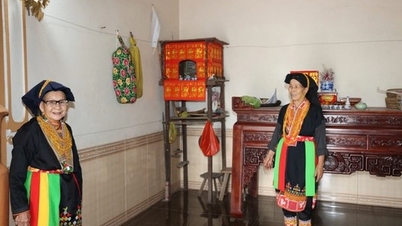
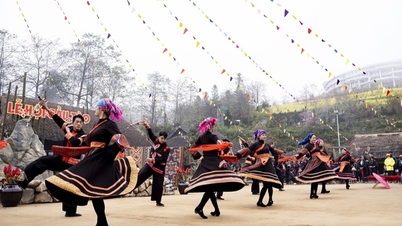
The day of Lanh's engagement ceremony arrived. Lanh's parents and several relatives from both sides of the family, along with Uncle Thu representing the bride's side, arrived at the restaurant early. Lanh was already waiting there for the entire bride's family. The engagement ceremony was held at the restaurant Lanh had arranged. The main space where the two sides discussed matters was very elegant and lavishly decorated. All the tables and chairs were covered with white tablecloths and clean white chair covers. The most dazzling part was the stage, which had a backdrop and many decorative flowers, and the colored lights shone brightly. Not only Lanh's parents, but also both sides of the family had never set foot in such a luxurious restaurant for a wedding ceremony before. Lanh urged her parents to adjust their attire to be more formal to welcome the groom's family. Her father wore the shirt and trousers Lanh had recently bought for him during her visit with Mạnh. As for Lanh's mother, she didn't wear the traditional ao dai that her daughter had prepared for her. Despite Lanh's persuasion, her mother still wore her neatly pressed traditional indigo dress. She said that nowadays, not many people wear indigo-dyed trousers anymore, so she wore satin trousers with a Nung blouse for formality, and she wore the same polka-dot headscarf she wore on Lanh's older sister's wedding day. Accompanying her mother, Aunt Nhinh and Aunt Thoi also wore Nung dresses like her mother, each carrying a small black leather bag slung across their shoulder. The three women admired each other, adjusted each other's scarves, and looked at themselves in the mirror with joyful, radiant faces. Then, all three took the opportunity to go on stage for photos. They looked so cheerful and lively, like they were at a spring festival. Seeing Lanh in her white ao dai, her mother gently asked:
- Did you bring back some Nung traditional clothes? Put them on later, okay? Take a few photos so I can look at them and not miss you so much.
Responding to her mother's expectations, Lanh said:
"I forgot! Besides, I'm still young, times have changed, and wearing that indigo outfit wouldn't be appropriate at a restaurant; it wouldn't match Mạnh's style. And Mom! When the groom's family arrives, please don't speak to anyone in the Nùng language, not even to our relatives!" After saying that, Lanh hurried off to attend to her duties.
Lanh's mother said nothing, but a hint of sadness flickered across her face. Could her daughter be ashamed of being Nung? Was she afraid that the Kinh family would look down on her parents if they heard their birth names?
Then the groom's family arrived. The entire groom's delegation was surprised and amazed at how elegantly, luxuriously, and thoughtfully the bride's family had welcomed them. The outfits of Uncle Nhinh, Mother Lanh, and Aunt Thoi were so unique! To answer the groom's family's questions and concerns, Uncle Thu, representing the bride's family, a relative, and also working at the village's cultural department, spoke up:
- Ladies and gentlemen of the groom's family, my brother and sister-in-law are Nung ethnic people, simple and honest farmers. They have worked hard and toiled to raise their daughter Lanh, who is the most talented in the village. Because of the hardships of raising their child, they haven't been able to rebuild their house properly. Fearing that the groom's family might ridicule them, they invited your delegation here to give them a proper welcome. We look forward to welcoming the groom's family at the bride's house in Na Pat on the earliest possible date. As for this Nung outfit, it is a traditional costume, dyed with indigo from the past. Remembering the tradition passed down from our ancestors, we wear it on important occasions; it is both a custom and a cultural feature, ladies and gentlemen.
In response to Uncle Thu, Manh's father spoke up:
- My son Mạnh met and fell in love with your daughter Lanh, that's how we got to know each other. "In-laws are one family," we live in Hanoi, but we are also simple working people. Our family doesn't discriminate based on ethnicity or wealth, so you don't need to worry. Ideally, the groom's family should come to your house to offer sacrifices to the ancestors. Mạnh is young and doesn't understand etiquette, so he didn't advise his wife, and we thought it was your intention. You are from an ethnic minority group, yet you raised such a talented daughter; we should be grateful. "When in Rome, do as the Romans do," we're not being overly concerned about that. The ladies' attire is very beautiful. But why didn't you wear a Nùng dress with your wife?
The two fathers burst into laughter, and the mother-in-law also praised Lanh's mother's charm, saying she must have been very beautiful when she was young. All four raised their glasses to toast the meeting and the strengthening of the two families. Lanh's mother no longer felt insecure about not speaking fluent Vietnamese, and the two mothers-in-law sat together, chatting happily about their families, children, and the customs of their respective regions.
The engagement ceremony concluded happily for both families, the wedding date was set, and the wedding ceremony was agreed upon, with the bride's procession following Nung ethnic customs and arriving from the bride's home in Na Pat. Everyone eagerly awaited the reunion on the wedding day of the young couple, Manh and Lanh, to learn more about Nung culture.
After the engagement ceremony, Lanh was troubled and uneasy because of Mạnh's father's words: "It would be proper for the groom's family to come to the house to offer sacrifices to the ancestors..." and Uncle Thụ's words kept echoing in her ears: "The Nùng traditional clothing... is both a custom and a part of culture." Thinking about this, Lanh felt shallow; instead of being proud of simple things, she had once been ashamed of them.
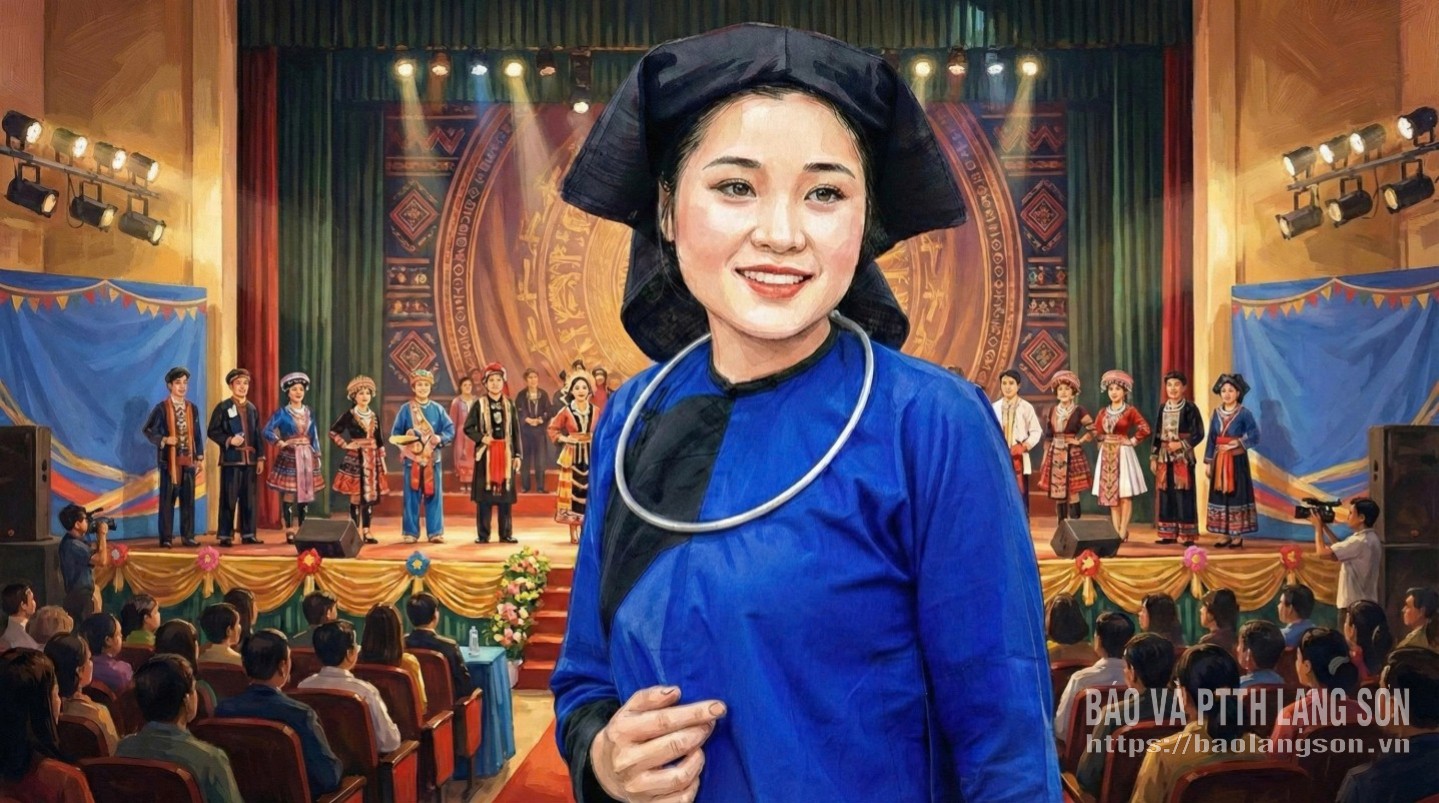
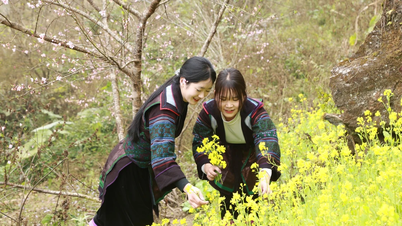
Lanh opened the blue plastic bag and took out the indigo outfit to admire it. Both the shirt and pants were inside out, folded very neatly by her mother. The dark indigo shirt, made of linen, still bore the creases of its original folds. Lanh turned it right side out and examined each button. The buttons were made entirely of fabric, attached to the shirt with colored thread, the stitches perfectly even, the red thread shiny and brand new. The sleeves and the placket at the shoulders were edged with glossy black fabric, the shoulder pads and the sides of the shirt were lined with floral fabric, and a floral fabric trim adorned the collar, along the side of the shirt where the slit was, each side having a tuft of colored thread, the tassels also beautifully tied. The pants were also made of linen, sewn in a loose-fitting style with a drawstring waistband. Her mother said that in the old days there were no irons, so they had to fold and press heavy objects on the clothes to keep them flat; only new clothes had such creases. Lanh took the scarf that her mother had already attached. She examined each white dot on the scarf, each one smaller than the tip of a chopstick, and there were hundreds of them. To get each white dot, her mother had spent countless hours gathering the fabric and thread to prevent the indigo dye from seeping into that spot. Now Lanh understood that the full name of the Nung people in her hometown, Nung Phan Slinh Hua Lai, meaning "Nung Phan Slinh Head with White Dots," originated from the headscarf dyed with indigo and white dots. Lanh put on the whole outfit and looked at herself in the mirror, smiling to herself. Then she carefully folded it back into its original shape and neatly put it away in her suitcase.
A month later, on a beautiful sunny day, Lanh's mother saw a flurry of text messages on her phone. She opened it and found that Lanh had sent her many photos wearing the Nung traditional outfit that her mother had sent her. Some photos showed Lanh alone, others with many people, some of her performing, some of her receiving awards... in every picture, her face was radiant and beautiful. Lanh sent her mother a long message: “Mom, I represented the company in the traditional costume competition at the Ethnic Groups Festival at the Vietnam Ethnic Groups Cultural and Tourism Village. I won second prize. There were many people wearing traditional ethnic costumes, but they were modernized and stylized versions. Everyone praised me for wearing the traditional Nung dress so beautifully. The rustic fabric and the indigo color from the leaves created a unique look because the Nung costume hasn't been lost or diluted. My own story, as a young, modern ethnic person who had once forgotten about it, and then proudly wearing the indigo dress, moved the judges and the audience. Thank you, Mom, for preserving the traditional indigo-dyed Nung dress. I understand now why you wanted me to wear this indigo dress on this important day; I will cherish it carefully.” Lanh's mother gave the message to Lanh's father to read aloud. After listening, she teared up, admiring each photo. She liked the portrait of Lanh with the end of her scarf covering a corner of her face the most. In the photo, Lanh looked gentle and shy, and the woman felt like she was seeing a reflection of herself from the past. After looking at the picture, she called Lanh:
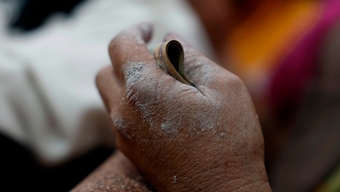
- My daughter! I told you to wear a Nung dress like your mother used to! The only difference is that you're fairer, prettier, and your hands aren't stained black with indigo like your mother's.
Lanh's father, sitting nearby and listening to the mother and daughter's conversation, chimed in:
- Back then, I was infatuated with her mother, I was also infatuated with her hands stained with indigo dye. Every time we met, she would hide her hands in her dress. Not everyone has hands like that.
Lanh smiled and said to her mother:
- Everyone was amazed when I showed off the clothes my mother made, saying she was truly an artisan. Traditional ethnic clothing helps preserve our culture, Mom.
Source: https://baolangson.vn/bo-ao-cham-bi-bo-quen-5078270.html










































Comment (0)