


According to Dr. Nguyen Van Tien, from the National Institute of Nutrition, mold in banh chung (Vietnamese sticky rice cake) is mainly caused by airborne mold adhering to the wrapping leaves and gradually developing from the outside in. Therefore, the preparation of ingredients and proper storage after cooking greatly determine the quality of the cake.
The banana leaves must be thoroughly washed several times and left to dry in a well-ventilated place, avoiding drafts that could carry fungal spores. Glutinous rice should only be washed clean and drained; do not soak it for too long as this can easily cause fermentation and make the cake sour. Before wrapping, it needs to be thoroughly dried and mixed with a little salt to enhance the flavor and inhibit microbial growth. The bean and meat fillings must be fresh, clean, and show no signs of spoilage.
When wrapping, the dumplings need to be pressed tightly to minimize any voids inside. After boiling, they must be washed immediately while still hot. At this time, the dumplings are expanding, making it difficult for water to penetrate. If washed after cooling, the water will seep back in, creating a damp environment favorable for bacteria and mold growth. After washing, arrange the dumplings in rows and gently press them to remove excess water before storing.
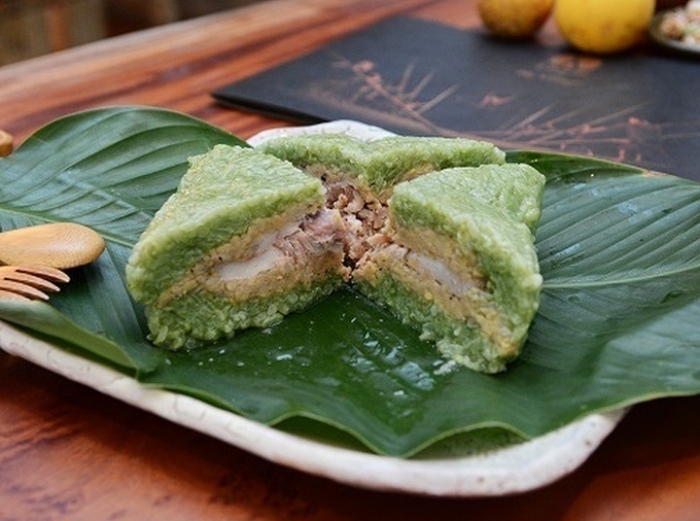
Sticky rice cakes (Bánh chưng) are delicious and nutritious, but if they become sour or moldy, they can be dangerous to eat. (Illustrative image)
A common mistake is soaking the cakes in water to maintain their vibrant green color. According to experts, this method causes the cakes to retain water longer, spoil faster, and become moldy more easily.
In dry weather, banh chung (Vietnamese sticky rice cake) can be stored for about 4-5 days at room temperature. If the weather is humid, it should be kept in the refrigerator. At lower temperatures, the shelf life can be extended to 15-20 days, but the cake is more prone to becoming hard and dry. When taking it out, it should be steamed, boiled, or reheated before eating to ensure safety. Frying the cake should be limited as it increases the amount of oil and fat in the diet, which is not good for cardiovascular health and weight management.
Alarmingly, many people only cut off the moldy part and eat the rest. However, according to nutrition experts, food that has mold on it can produce aflatoxin – a substance classified by the World Health Organization as a potential liver carcinogen.
This toxin is not only present on the surface but can also spread deep inside the food, undetectable to the naked eye. Therefore, when sticky rice cakes (Banh Chung) become moldy, it's best to discard the entire batch to avoid the risk of poisoning or long-term toxin accumulation.
Experts advise that keeping banh chung (Vietnamese sticky rice cake) green, chewy, and safe is not just about the taste of Tet (Lunar New Year) but also about protecting the health of the whole family.
Source: https://baolangson.vn/ly-do-banh-chung-de-bi-thiu-moc-5078392.html









































































Comment (0)