

Emission reduction linked to farmers' livelihoods.
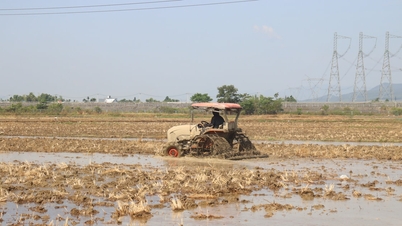
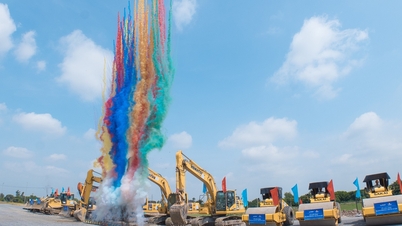
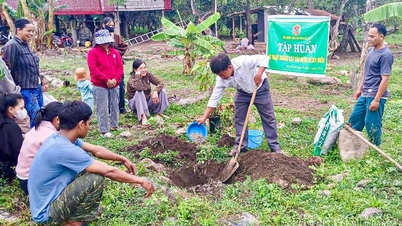
At the beginning of the 2026 summer-autumn planting season, the fields next to the Lo Lon Bridge (Hamlet 2, Vinh Vien Commune, Can Tho City) echoed with the sound of cluster-type rice planters – a stark contrast to traditional planting practices. This was the opening of a workshop demonstrating cluster-type rice planters in a rice production linkage model applying straw processing techniques and product buyback agreements, organized by the Vinh Vien Commune People's Committee in collaboration with businesses, attracting a large number of farmers and cooperatives.
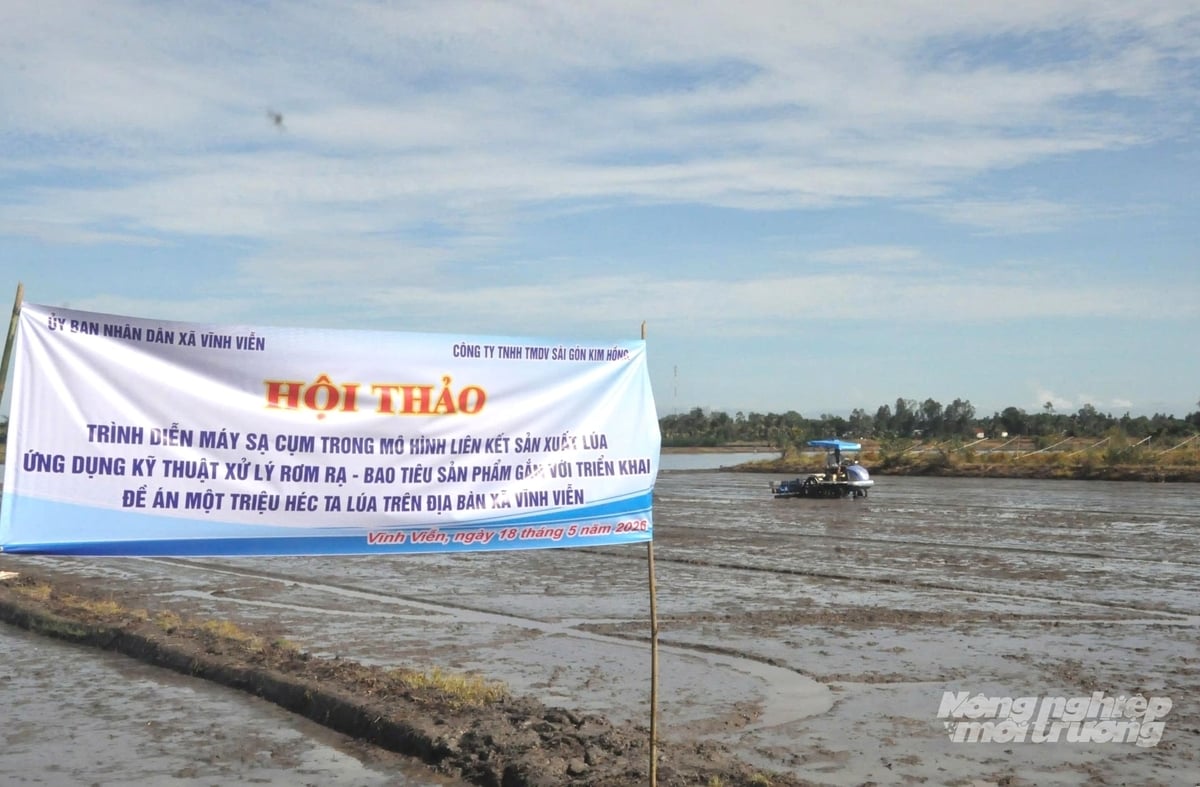
The People's Committee of Vinh Vien commune, in coordination with businesses, organized a workshop to demonstrate cluster-planting machines in a rice production linkage model applying straw processing techniques and product buyback agreements. Photo: Trung Chanh.
As a locality with over 4,000 hectares of rice production per season, however, in the context of continuously rising agricultural input prices, increasing production costs, and unpredictable market fluctuations, rice farmers are forced to change their methods if they want to maintain economic efficiency.
According to Mr. Vo Xuan Tan, Chairman of the People's Committee of Vinh Vien commune, reducing emissions is no longer just an environmental issue but is directly linked to farmers' livelihoods. To increase the value of rice, production methods must be changed, focusing on cost reduction, increased efficiency, and meeting the trend of green agriculture .
The first solution proposed was to mechanize the sowing process using cluster sowing machines. Practical demonstrations showed that the machines could sow evenly, at the correct spacing, and control seed quantities much more effectively than the broadcast sowing method. While farmers previously sowed seeds at rates exceeding 150 kg/ha, this solution reduced the amount to approximately 60-70 kg/ha.
Reducing the amount of seed used not only saves on input costs but also improves aeration in the rice fields, limiting pest and disease outbreaks. As the rice plants grow healthier, the need for pesticides decreases, significantly reducing costs for farmers.
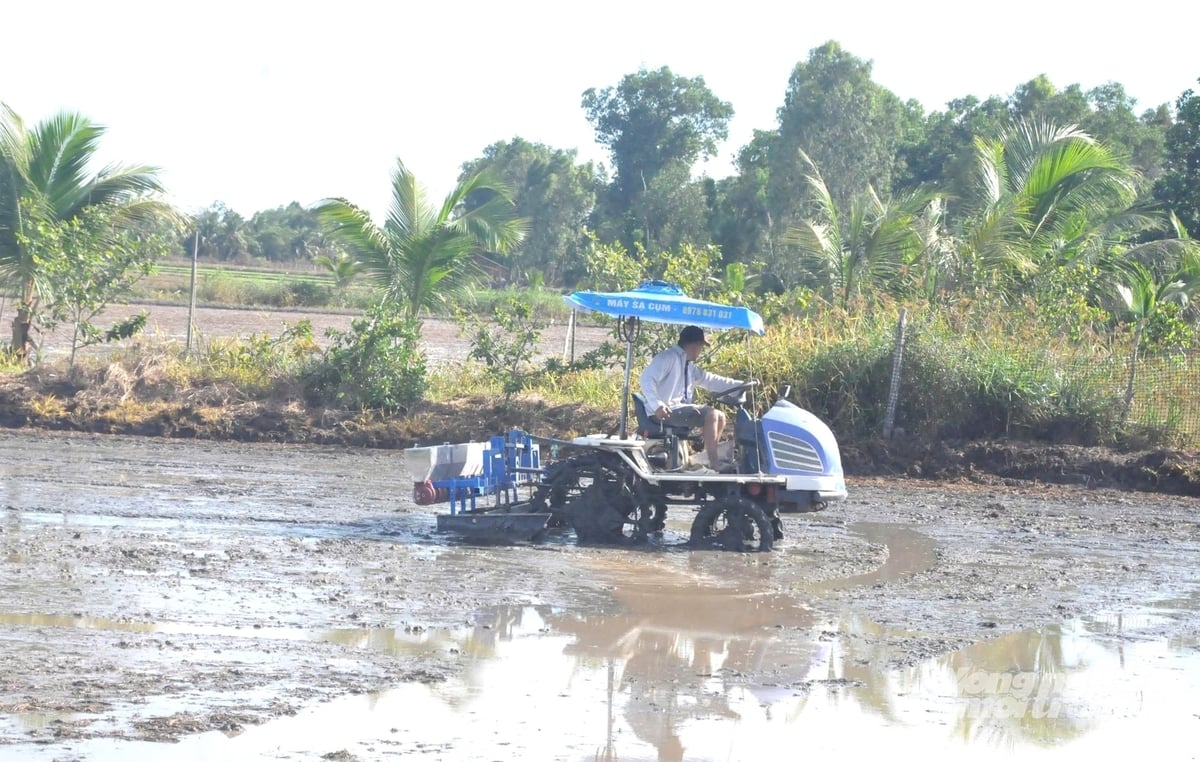
Machine-assisted sowing reduces the amount of rice seeds needed, not only saving input costs but also improving aeration in the rice field, limiting pest and disease outbreaks. Photo: Trung Chánh.
Ms. Dao Thi Nhu He, Director of Saigon Kim Hong Trading and Service Co., Ltd., said that the cluster seeding machine (Korean technology) has been introduced to Vietnam by the company since 2019 and they have been gradually coordinating with localities to build demonstration models. The goal is to help farmers directly observe the effectiveness, thereby encouraging them to boldly change their farming practices.
Another solution considered crucial is the circular, biological treatment of rice straw after harvest. This is a key link in the current goal of reducing emissions in the rice industry. About 20 days before sowing, rice straw after the winter-spring rice harvest is treated by tilling and burying it, combined with spraying microbial preparations to accelerate the decomposition process. The straw becomes an organic matter returned to the soil, replacing the traditional practice of burning fields, which generates smoke, dust, and greenhouse gases.
Mr. Vo Trung Lap, Deputy Director of Phan Tan Agricultural Machinery Co., Ltd., said that the solution of mechanized soil preparation combined with microorganisms helps to cut off the source of pests and diseases remaining on rice straw, promotes rapid decomposition, and improves the quality of cultivated land. In particular, if processed in dry soil conditions, it will significantly reduce emissions compared to allowing rice straw to decompose in a waterlogged environment.
The combination of mechanized planting and the processing of agricultural by-products is forming a synchronized technical solution chain, helping rice farmers reduce costs while moving towards environmentally friendly production.
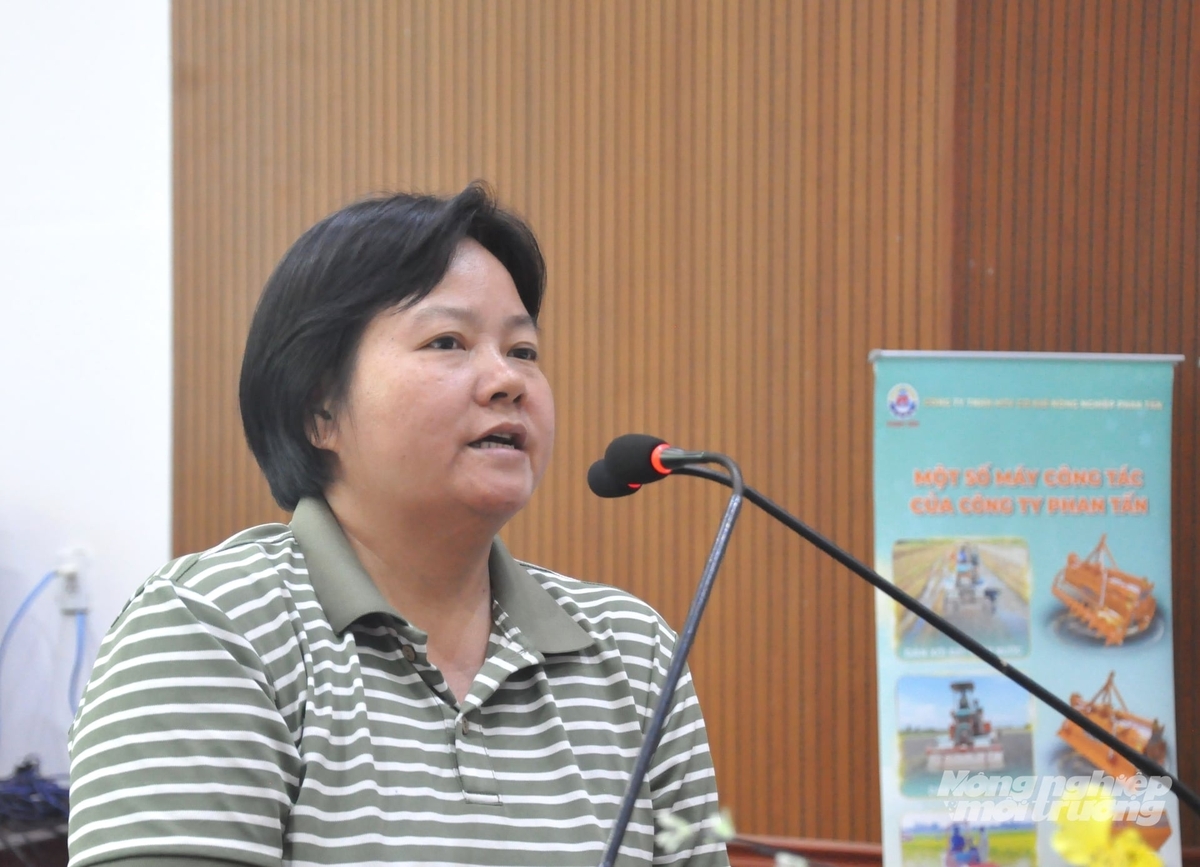
Ms. Dao Thi Nhu He, Director of Saigon Kim Hong Trading and Service Company Limited, presented the advantages of cluster seeders – a solution that helps rice farmers reduce emissions. Trung Chanh.
Production linkages determine sustainability.
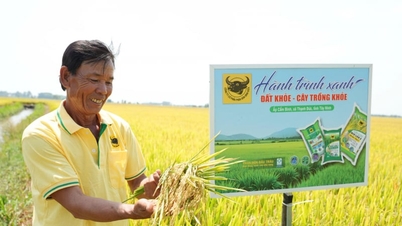
If technology is the foundation, then production linkages are the decisive factor in the sustainability of the model. In reality, farmers are only willing to change when they see clear economic benefits and a stable market. Representatives from the 175 Crop Production Joint Stock Company committed to purchasing the entire rice output in the linked area at a price higher than the market price at the time of harvest. This commitment provides a significant incentive for farmers to participate in the model.
However, the company also sets clear requirements for the production process. Farmers must adhere to standardized techniques, use microbial preparations to treat rice straw according to regulations, and implement cultivation processes according to agreed standards to ensure rice quality.
This represents a significant shift in current rice production thinking. From producing based on individual experience and a haphazard approach, farmers are moving towards standardized cultivation processes, linked to market demands and ensuring traceability and quality.
To implement the project of cultivating 1 million hectares of high-quality, low-emission rice in the Mekong Delta by 2030, Vinh Vien commune has developed a plan to deploy it on an area of over 1,500 hectares. Currently, the locality has organized 7 specialized high-quality, low-emission rice cultivation zones with a total area of nearly 750 hectares. Simultaneously, technical training programs are being implemented for farmers and cooperatives to gradually improve their production organization capacity.
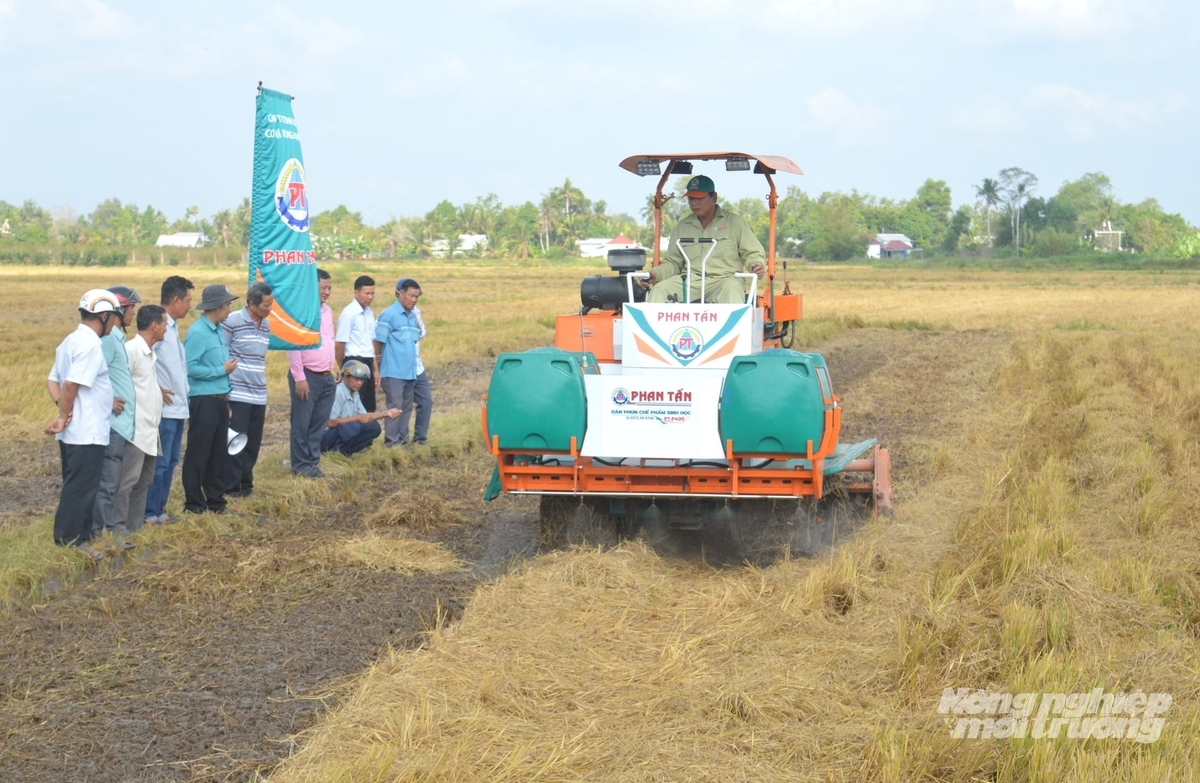
About 20 days before sowing, the rice straw from the winter-spring harvest is treated by tilling and burying it in the soil, combined with spraying microbial preparations to accelerate decomposition and return organic matter to the soil. Photo: Trung Chánh.
The transferred content focuses on the "1 must, 5 reductions" process, alternating wet and dry irrigation, integrated crop health management (IPHM), utilizing agricultural by-products according to the circular economy, and sustainable agricultural production standards.
Many local cooperatives were selected to participate in the Project, such as the Organic Agriculture Cooperative in Hamlet 12, Vinh Vien Commune, the Vinh Tien Agricultural Service Cooperative, and the Tan Tu Agricultural Trade and Service Cooperative. These are important forces in reorganizing production towards a more professional direction.
Besides technical and organizational aspects of production, the locality also focuses on developing infrastructure serving agricultural production, such as upgrading irrigation systems, improving rural transportation, connecting logistics, and gradually applying green energy.
From a business perspective, partnering with farmers goes beyond simply selling equipment or transferring technology; it also aims to build a complete rice production ecosystem. From seeders and harvesters to multi-functional tillage machines combined with straw processing equipment and biological products, everything is connected into a synchronized chain.
From the demonstration field in Vinh Vien, it's clear that green rice production is no longer a distant concept. When economic benefits go hand in hand with environmental benefits, this model has a solid foundation for replication, contributing to more sustainable rice production in the Mekong Delta, creating a green Vietnamese rice brand, and reducing emissions for consumption and export.
In reality, reducing emissions in rice production cannot be achieved through a single solution but requires the synchronized participation of the government, businesses, cooperatives, and farmers. When technical challenges are solved with technology, environmental problems are addressed through a circular economy, and output issues are resolved through consumption linkages, rice grains will gain added value.
Source: https://nongnghiepmoitruong.vn/bo-giai-phap-giup-nong-dan-san-xuat-lua-giam-phat-thai-d812112.html
![[Image] Affirming the aspirations and new standards of the Vietnamese real estate market in the new era.](https://vphoto.vietnam.vn/thumb/1200x675/vietnam/resource/IMAGE/2026/06/03/1780441948766_giai-thuong-bat-dong-san-2026-minh-duy-6-7364-jpg.webp)
![[Photo] General Secretary and President To Lam presides over a meeting on preparations for the review of one year of operation of the three-tiered government system.](https://vphoto.vietnam.vn/thumb/1200x675/vietnam/resource/IMAGE/2026/06/02/1780391821195_a1-bnd-4595-9717-jpg.webp)


















































Comment (0)