

MANY DIRECTIVES AND CORRECTIONS
Last school year, when the press and public opinion reflected on the situation of inserting subjects and voluntary activities into regular class hours in many places, the Ministry of Education and Training issued two documents (September and December 2023) requiring provincial Departments of Education and Training to review and strictly manage life skills education and extracurricular activities; if implemented, they must ensure the principle of voluntariness and must not be scheduled between regular class periods.
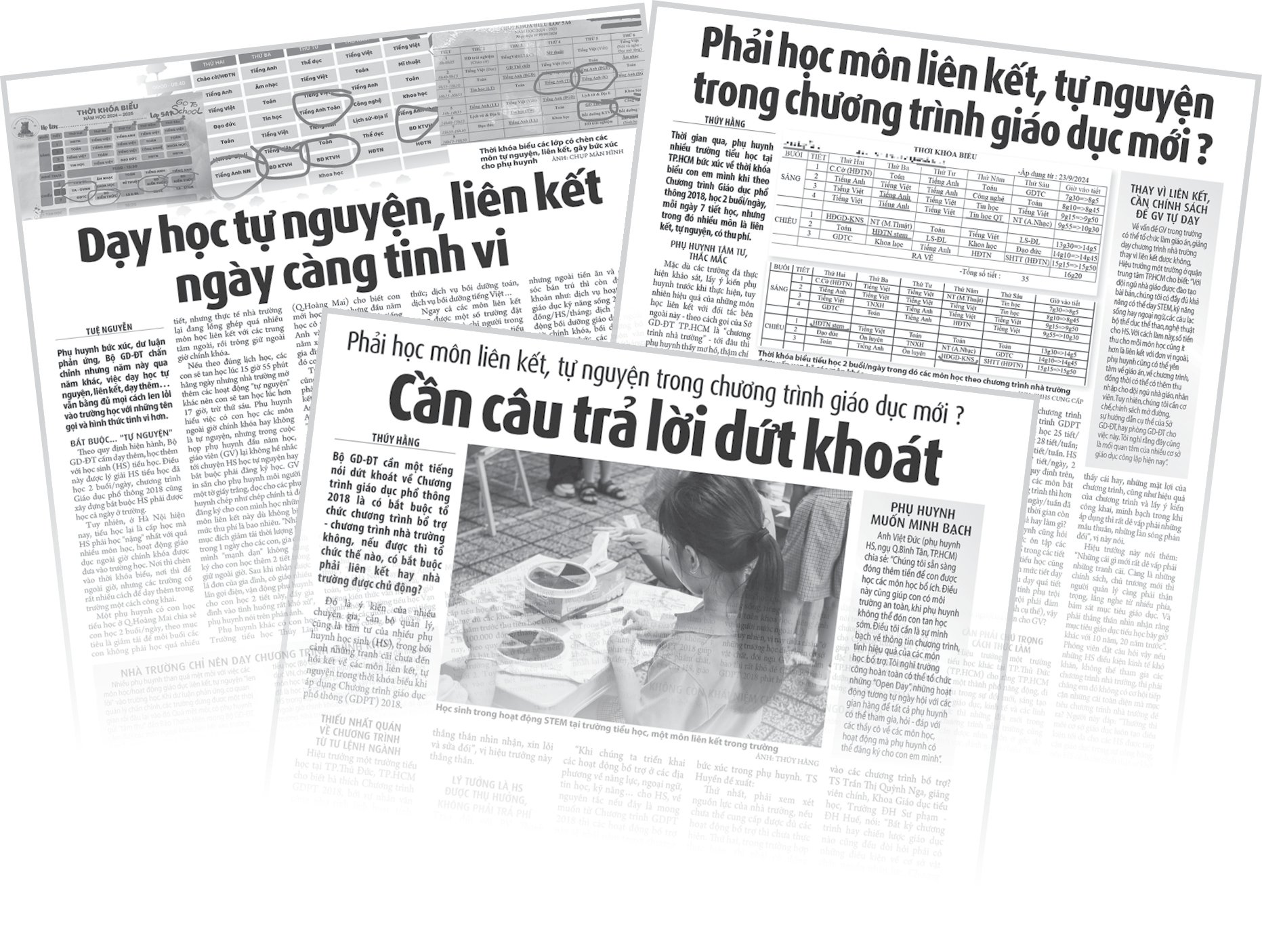
Responding to a reporter from Thanh Nien newspaper, Mr. Thai Van Tai, Director of the Primary Education Department (Ministry of Education and Training), affirmed: "Inserting subjects and voluntary educational activities into regular class hours is against regulations."
Department Head Thai Van Tai provided a detailed analysis: For primary schools, the 2018 General Education Program stipulates two teaching sessions per day with a mandatory 7 lessons per day. These are the core lessons that schools, regardless of their design, must teach all compulsory subjects, ensuring equal learning opportunities for all students. This is the responsibility of the schools.
If, after completing 7 lessons per day, teachers still haven't met their teaching hour quotas, schools must design supplementary activities and utilize their own resources to fulfill them.
Mr. Thai Van Tai (Director of the Primary Education Department)
There are two scenarios for organizing these supplementary activities: Firstly, teachers must utilize all available teaching quotas. Secondly, supplementary teaching should be based on the needs of learners, for example, English lessons with native speakers, enhanced art education, physical education, sports , etc. In the second scenario, supplementary teaching must be designed according to the needs of each student, ensuring the principle of voluntariness, and should not be arranged on a class-by-class basis. Furthermore, these activities must be conducted outside of regular school hours.
However, this situation continues this year in many sophisticated and disguised forms. Many readers have sent their opinions to Thanh Nien Newspaper hoping for decisive and resolute direction from the Ministry of Education and Training, rather than just issuing corrective documents and leaving it up to the schools.
A representative from the Hanoi Department of Education and Training stated that this school year, the Department will continue to require district education departments to manage and rectify the situation in schools, preventing parental dissatisfaction with joint-school programs.
It needs to be fair and clear.
A recent report by the National Assembly's Committee on Citizen Petitions also reflects the public's frustration regarding the situation where primary school students are enrolling subjects in optional joint programs as part of the main curriculum and charging fees for them. For example, programs introducing English, or English through mathematics and science, are offered to first and second graders.
"Parents are forced to register because the subject is part of the students' regular school hours. Voters believe this is a form of 'extra tutoring' and that more decisive and specific solutions are needed in the future," the report stated.
Education expert Nguyen Quoc Vuong acknowledges that while parents may opt for more expensive extracurricular centers outside of schools to enroll their children in enhanced subjects or English programs based on foreign curricula, introducing such integrated subjects into public schools in this manner erodes parental and public trust in education. Therefore, the education sector needs to be fair on this issue, and policies should clarify public-private partnerships.
"Has any school dared to try allowing parents to register their children for 'joint' classes through a secret ballot (without letting teachers or the school know whether their child is participating or not)?", asked Mr. Pham Van Cong, a teacher at Ky Dong Primary School (Hung Ha District, Thai Binh Province).
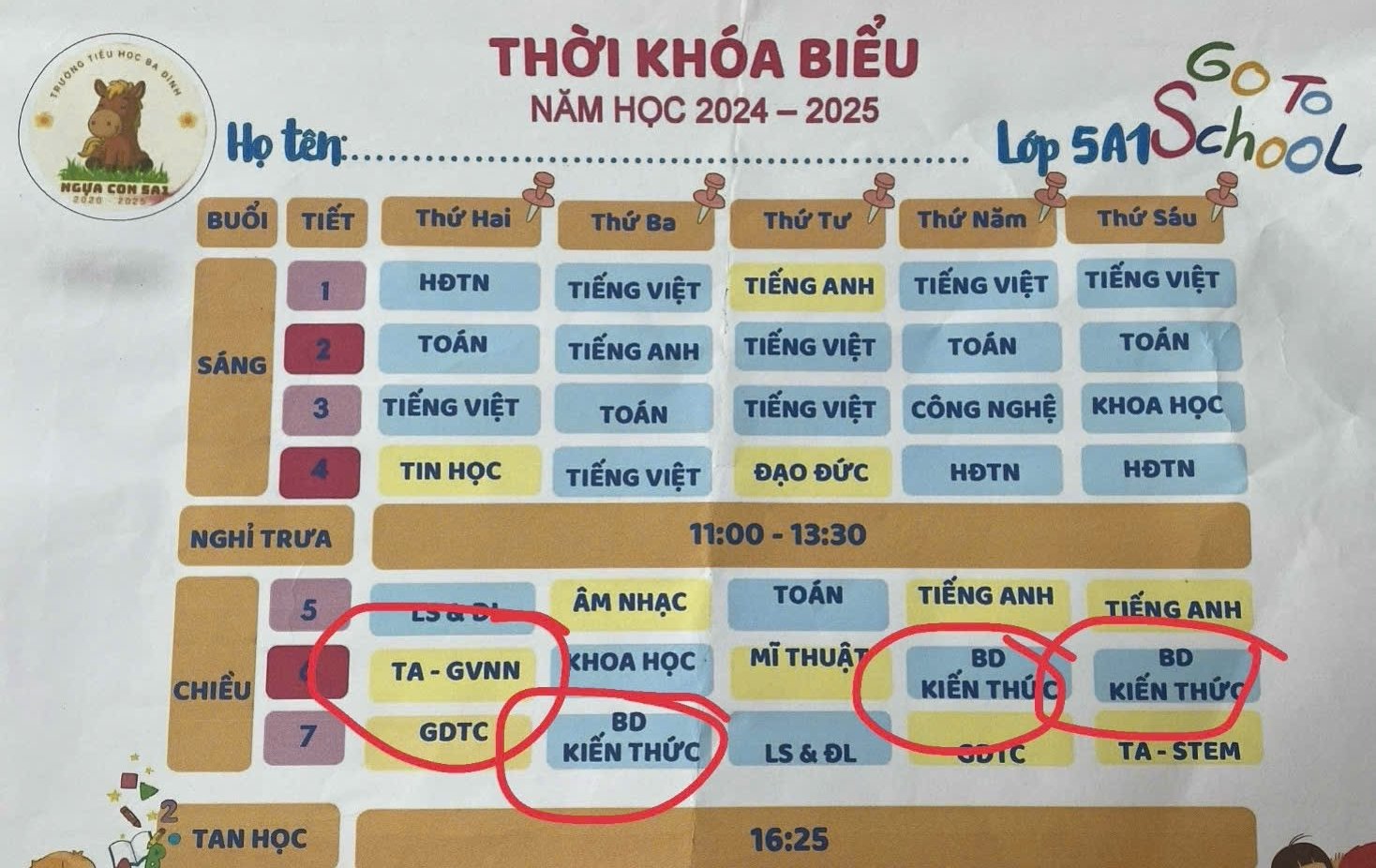
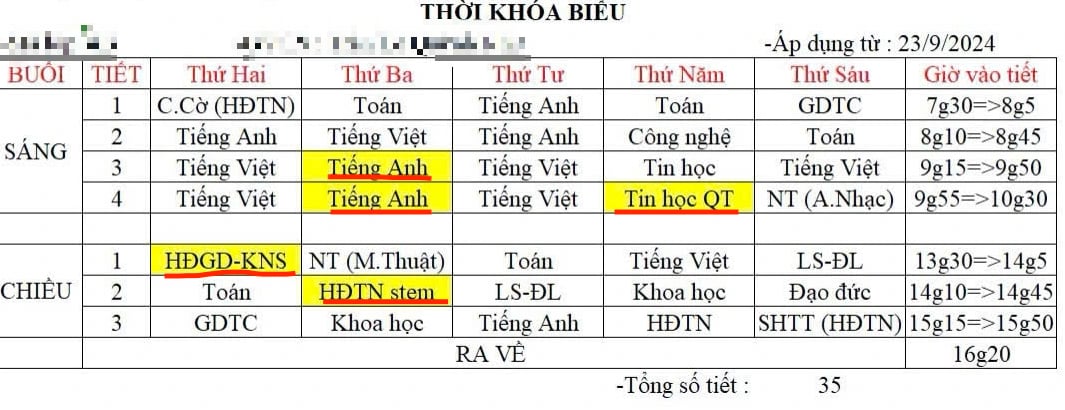
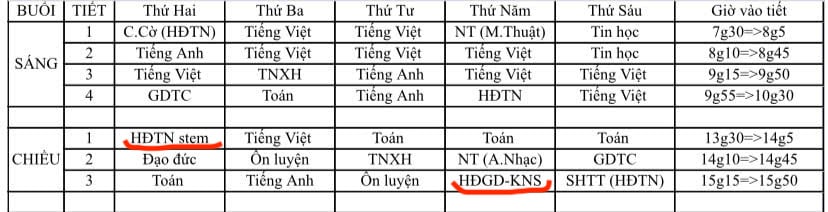
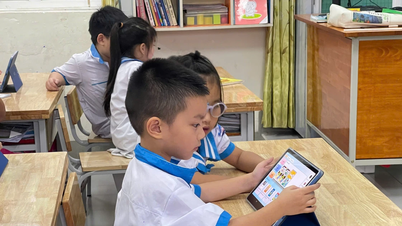
Parents are upset that the timetable includes voluntary and joint subjects.
We must pay attention to the "capacity" of the learners.
From the perspective of being "appropriate" for students, Associate Professor Tran Thanh Nam, Vice Rector of the University of Education (Vietnam National University, Hanoi), noted that even voluntary extracurricular tutoring needs to protect students from being overloaded by societal and adult expectations regarding the workload; protect students from conflicts of interest that could lead to discrimination in regular classes; ensure that teachers do not neglect the main curriculum to focus on tutoring; and ensure that students from economically disadvantaged families still receive necessary support within the framework of official school hours.
According to Associate Professor Tran Thanh Nam, extra tutoring is only truly effective when it is done with specific goals, is manageable, and is not threatening. Overwhelming children with extra tutoring will diminish their creativity and increase their fear of learning.
Associate Professor Le Minh Nguyet, Head of the Psychology - Education Department (Hanoi Pedagogical University), stated: The arrangement of timetables and learning time for students must ensure compliance with the principles of school health, such as students' "carrying capacity," their ability to concentrate according to age characteristics, and the time wasted due to moving between learning locations...
According to Associate Professor Bui Thi An, a member of the 13th National Assembly, school leaders and principals must clearly identify appropriate elective subjects for each grade level and age group. This requires careful discussion, consultation with school leaders, full input from parents, and reporting to the Department of Education and Training.
"I believe that students shouldn't be forced to study too much; there should be a level and curriculum appropriate to their age. Schools should guide students towards the most necessary and urgent subjects, preventing them from becoming overloaded or under pressure. There must be a balance so that students can develop comprehensively," said Associate Professor Bui Thi An.
The Ministry of Education and Training requires unannounced inspections and periodic evaluations.
In a document requesting enhanced management of life skills education and extracurricular activities sent to provincial Departments of Education and Training, the Ministry of Education and Training requested: Educational management agencies and educational institutions should closely coordinate with relevant departments, sectors, organizations, and individuals in managing life skills education and extracurricular activities; from licensing activities, to regular and unscheduled annual inspections and evaluations of educational institutions and units with life skills education and extracurricular activities.
The Ministry of Education and Training also requires provincial Departments of Education and Training to strictly manage the conditions ensuring the effectiveness of life skills education and extracurricular activities, including the location of organization, the quality of teachers, lecturers, and trainers. At the same time, they must ensure that teaching is conducted according to the curriculum and materials approved by the competent authority.
Schools are strengthening supplementary teaching to enhance students' skills as stipulated in the 2018 General Education Program, focusing on teaching theory with practice and developing life skills.
Review and plan for adjustments if implementation is not in accordance with regulations.
Following the report by Thanh Nien Newspaper, many schools in Hanoi held meetings on the afternoon of October 16th to review and plan adjustments if the regulations were not being followed correctly.
Previously, at a meeting to launch the new school year, Mr. Dao Tan Ly, Head of the Primary Education Department (Hanoi Department of Education and Training), emphasized that schools are absolutely prohibited from inserting extracurricular teaching hours into the main curriculum. Schools must implement mandatory regular lessons and cannot cut or reduce them. Schools must assign teachers to complete the full teaching load. Only after completing the full curriculum and meeting the teacher's teaching load, and with remaining free time, can extracurricular activities be organized. The school principal is responsible for surveying and compiling the needs for participation in extracurricular activities and developing an implementation plan.
"Schools can offer a variety of content and programs, but they shouldn't let students choose all of it. Schools should encourage students to choose 1-2 topics that are manageable, don't put pressure on them, and don't create difficulties for parents," Mr. Dao Tan Ly requested.
Source: https://thanhnien.vn/ep-hoc-tu-nguyen-lien-ket-bo-noi-sai-sao-van-tiep-dien-185241018195345084.htm
![[Photo] The heat at the fireworks display site on the opening night of the Da Nang International Fireworks Festival 2026](https://vphoto.vietnam.vn/thumb/1200x675/vietnam/resource/IMAGE/2026/05/27/1779889741485_ndo_br_z7872039145157-fecaba5112f39e8352544099d7ef4738-5140-jpg.webp)


![[Photo] The courage of new recruits of Brigade 144 on the training ground.](https://vphoto.vietnam.vn/thumb/1200x675/vietnam/resource/IMAGE/2026/05/27/1779881651341_anh-man-hinh-2026-05-27-luc-18-32-52.png)









































![[Photo] The courage of new recruits of Brigade 144 on the training ground.](https://vphoto.vietnam.vn/thumb/402x226/vietnam/resource/IMAGE/2026/05/27/1779881651341_anh-man-hinh-2026-05-27-luc-18-32-52.png)



















Comment (0)