

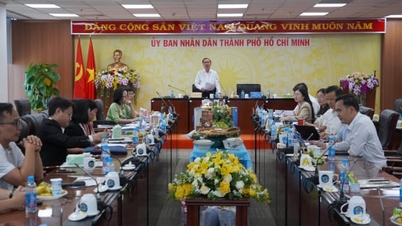
On the morning of May 2nd, the Ministry of Information and Communications held its monthly meeting on state management for April 2024. The meeting was chaired by Minister Nguyen Manh Hung, with the participation of Deputy Ministers Pham Duc Long, Nguyen Huy Dung, Phan Tam, and Nguyen Thanh Lam, along with leaders of agencies and units under the Ministry.
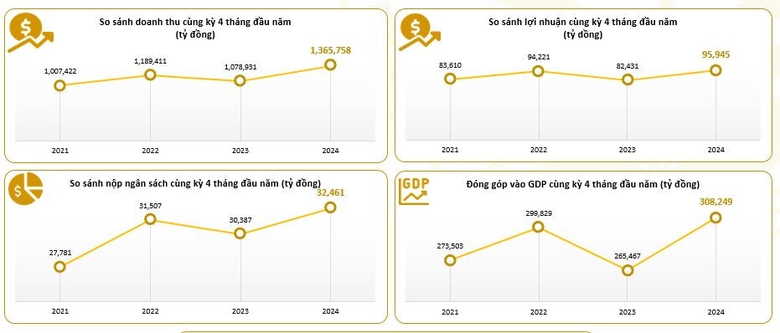
According to a report from the Office of the Ministry of Information and Communications, in the first four months of 2024, the total revenue of the information and communications industry is estimated at VND 1,365,758 billion. Total profit is estimated at VND 95,945 billion. The contribution of the information and communications industry to GDP is estimated at VND 308,249 billion.
For a virtual assistant to work well, the data must be accurate.
One of the highlights of the conference was a presentation on the use of virtual assistants and chatbots to support foreign affairs information work. This product was jointly developed by the Department of Foreign Affairs Information (Ministry of Information and Communications) and Misa Joint Stock Company since April 2023.
Unlike conventional virtual assistants, this AI chatbot is trained using a carefully curated database of foreign affairs information. The chatbot is currently being piloted on the website vietnam.vn.

According to Pham Anh Tuan, Director of the Department of External Information, the virtual assistant for external information is developed based on the principle of narrow-field AI. This chatbot can answer many questions related to foreign affairs, thereby supporting the work of Vietnamese external information professionals.
At the conference, the Department of External Information provided a live demonstration where users asked questions for the chatbot to answer, and then everyone shared their comments.
Sharing his views on how to create a virtual assistant, Minister Nguyen Manh Hung stated that the key to AI lies in the input data. The quality of the virtual assistant will depend primarily on the quality of the data used for training.
" The assets of organizations developing virtual assistants are data, not AI technology. Good data will lead to good virtual assistants. Agencies and organizations that want to build virtual assistants must build their own knowledge systems ," the Minister stated.
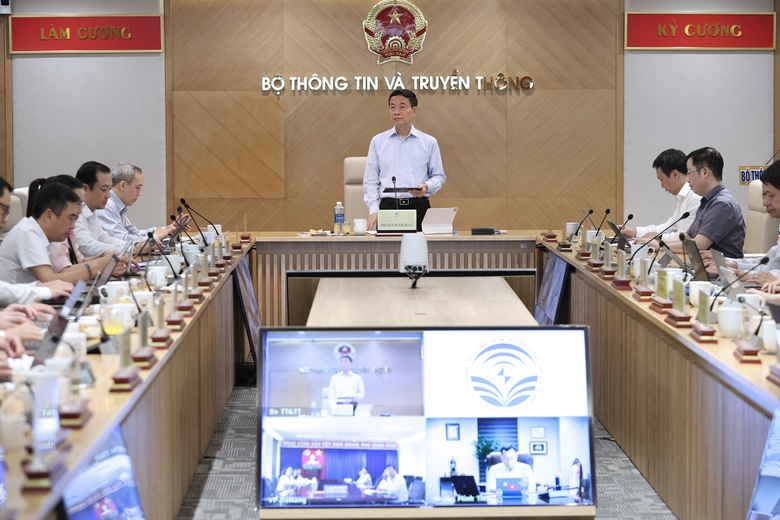
The narrower the AI, the better; the narrower, the smarter. The best AI is AI tailored to each individual. Therefore, the Minister directed Misa to focus on developing narrow-scope AI, starting from high-quality input data.
This platform must have tools for users to push in new answers, encouraging users to actively teach AI, thereby increasing user confidence in AI and reducing the development team's support effort.
Following the directive of Minister Nguyen Manh Hung, units within the Ministry of Information and Communications will develop AI for their own use, using several different platform providers for comparison. The Ministry of Information and Communications will take the lead in the application of AI on a smaller scale.
Successful digital transformation requires effective methods.
According to the Minister, for effective state governance, in addition to regulations, there must also be infrastructure, including tools and human resources for implementation. Regulations are necessary for AI to become part of daily life. The Ministry of Information and Communications will draft a proposal on AI management regulations, based on international experience, and then submit it to the Prime Minister for implementation by relevant ministries and agencies.
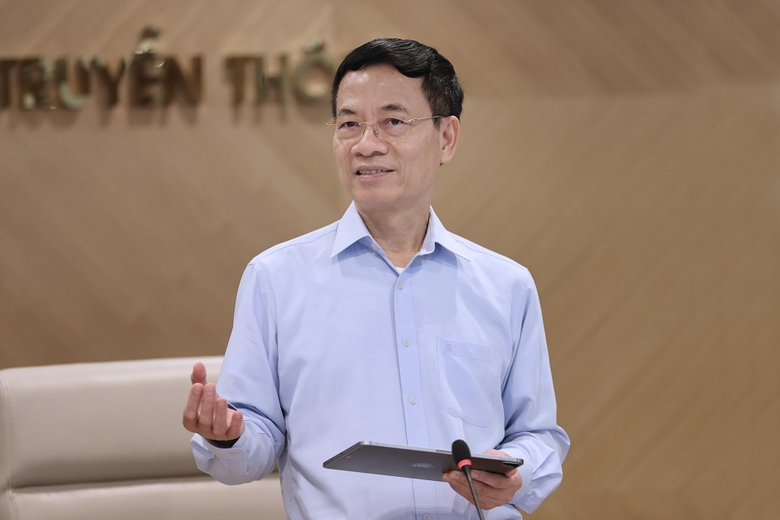
Minister Nguyen Manh Hung reiterated eight important points that he had stated at the 8th session of the National Committee on Digital Transformation. These are the conclusions drawn by the Ministry of Information and Communications after four years of implementing digital transformation.
Accordingly, for effective digital transformation, the first issue is "where the money will come from" and how to spend it effectively without causing problems. Localities, ministries, and sectors do not yet understand what digital transformation needs to be done and how to do it; therefore, pilot programs should be implemented in one place, then scaled up nationwide. The Ministry of Information and Communications will soon conduct a comprehensive assessment of the implementation of online public services, smart operation centers, and virtual court assistants to move towards wider adoption.
During the digital transformation era, shared platforms and centralized platforms have emerged. It's necessary to clarify what the central government and local authorities should do to facilitate implementation. Furthermore, for new, abstract tasks that have never been undertaken before, the Ministry of Information and Communications needs to provide detailed, step-by-step guidance so that all localities can implement them.
Artificial intelligence has entered a phase of widespread application. In Q2/2024, the Ministry of Information and Communications will release several sample applications, emphasizing that the narrower the AI, the easier it is to train, the smarter it becomes, and the more effective it is. We must train our own AI using our own data.
Digital transformation requires a digital transformation infrastructure, upon which applications are built. The government must invest in building this digital transformation infrastructure. In Q2 2024, the Ministry of Information and Communications will clarify what the "stacks" of the digital transformation infrastructure are, who will invest, and when it will be completed.
Digital transformation is widespread, and without supervision, it will be impossible to manage. According to Minister Nguyen Manh Hung's assessment, there is currently a significant discrepancy between paper-based and online reporting data; therefore, connecting to online management is mandatory. Online management is essentially digital governance, one of the four pillars of the digital economy. The Ministry of Information and Communications will also present successful formulas for digital transformation in a concise and accurate manner, making them easy for ministries, sectors, and localities to understand and implement.
Source

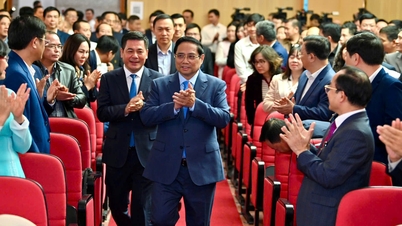
![[Photo] Prime Minister Pham Minh Chinh attends the Conference on the Implementation of Tasks for 2026 of the Industry and Trade Sector](/_next/image?url=https%3A%2F%2Fvphoto.vietnam.vn%2Fthumb%2F1200x675%2Fvietnam%2Fresource%2FIMAGE%2F2025%2F12%2F19%2F1766159500458_ndo_br_shared31-jpg.webp&w=3840&q=75)






















































































Comment (0)