

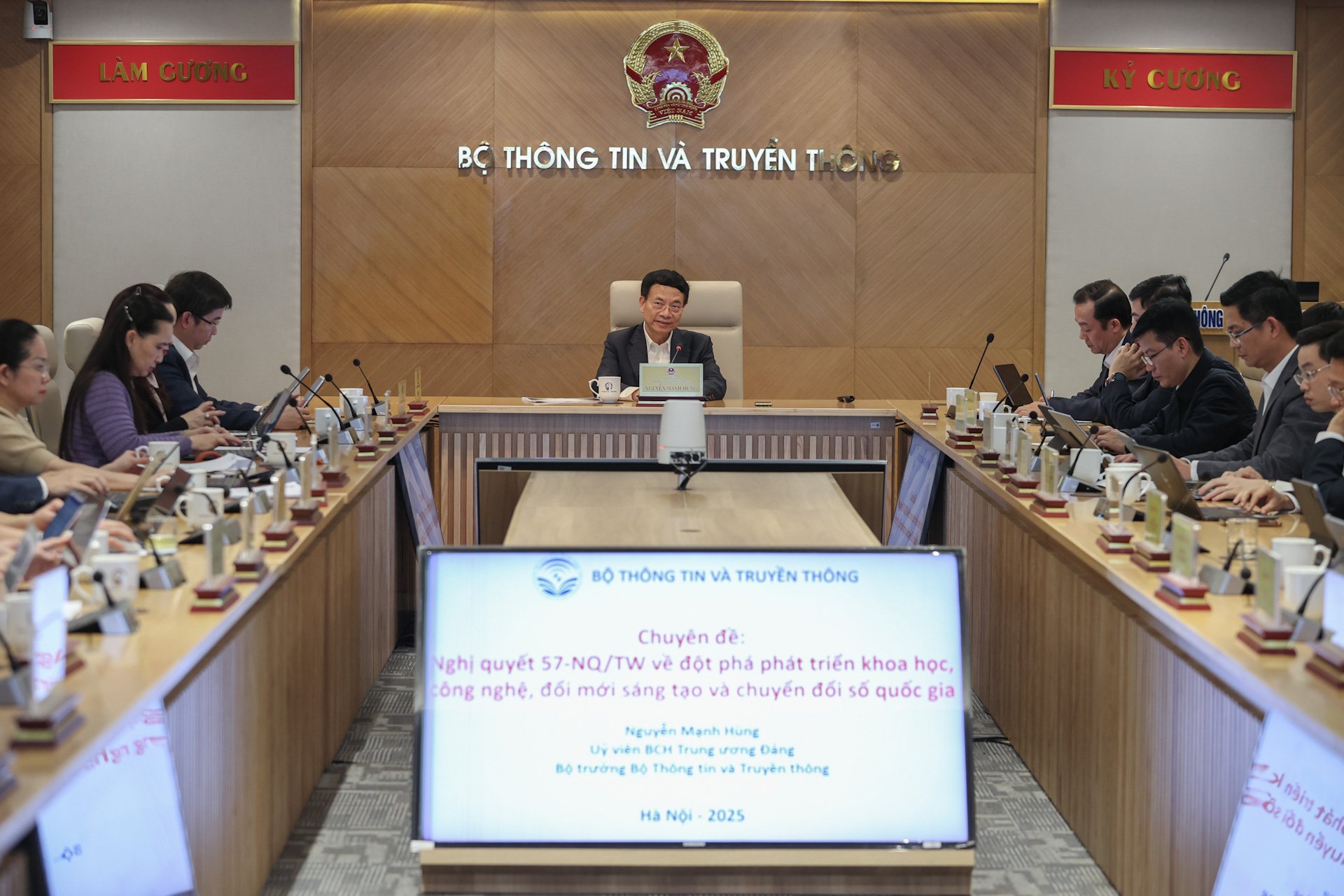
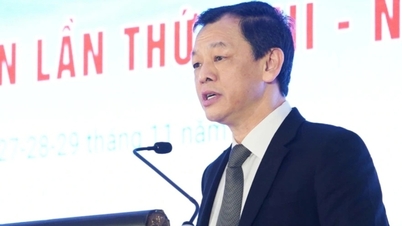
Minister Nguyen Manh Hung chaired the conference.
The spirit of Resolution 57: A continuation from Contract 10.
At the conference, Minister Nguyen Manh Hung stated that recently, General Secretary To Lam, on behalf of the Politburo , signed and issued Resolution 57, coinciding with the 80th anniversary of the founding of the Vietnam People's Army, December 22, 2024.
The Minister emphasized that this is a particularly important thematic resolution on breakthroughs in science, technology, innovation, and digital transformation, with many revolutionary viewpoints, tasks, and solutions, similar to Resolution No. 10 for agriculture 40 years ago, but this time for national science, technology, innovation, and digital transformation. From a situation of lacking science, technology, innovation, and digital transformation, we will move towards having sufficient, surplus, and even exporting large quantities of science, technology, innovation, and digital transformation, just as we have done with agriculture. Resolution No. 10 was for poverty alleviation, Resolution No. 57 was for escaping the middle-income trap. Resolution No. 10 was for liberating labor power, Resolution No. 57 is for liberating creativity. The general spirit of both Resolution No. 10 and Resolution No. 57 is management by objectives, not by methods; it is about empowering workers with autonomy and responsibility, and ensuring that workers benefit from the fruits of their labor and creativity.
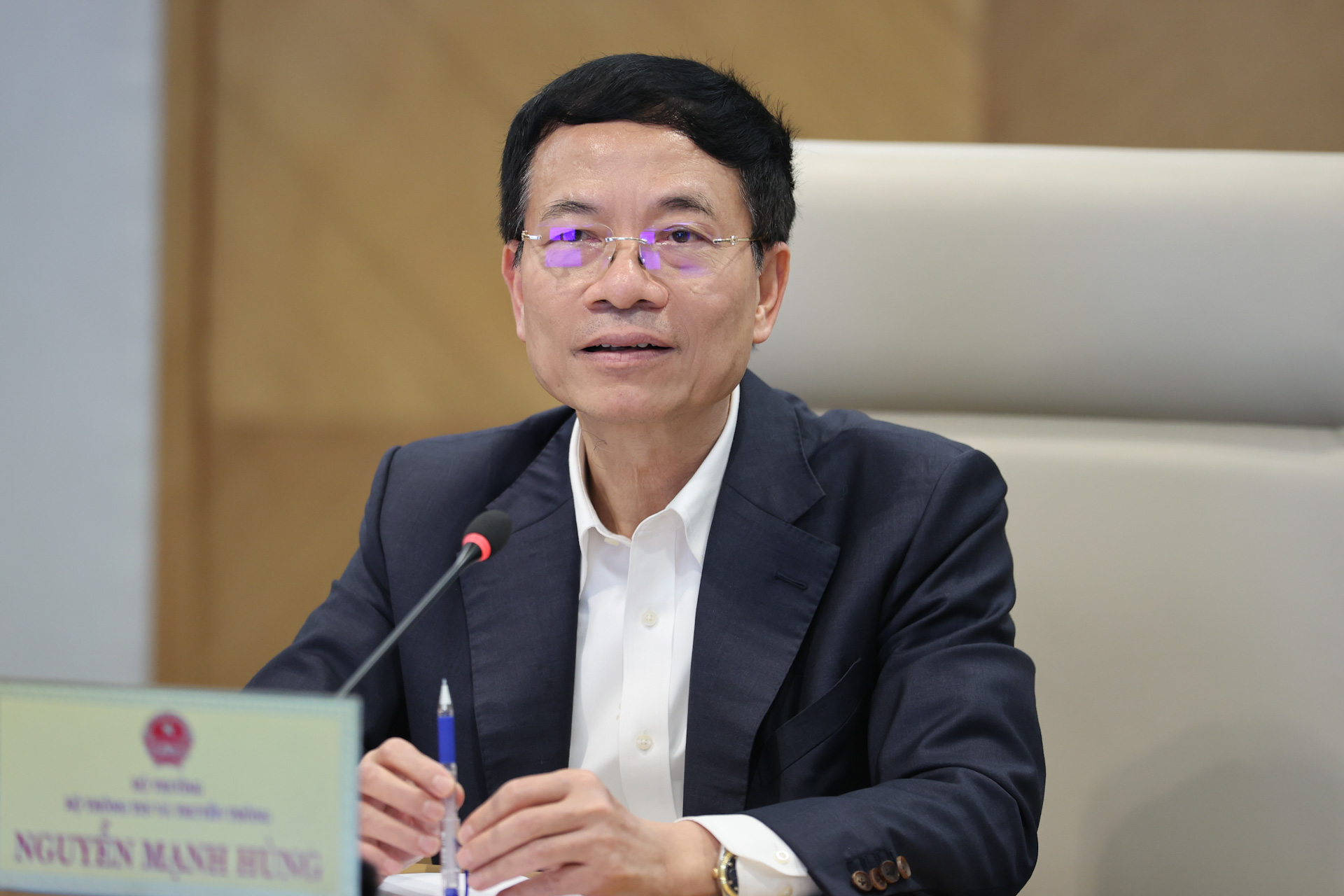
Minister Nguyen Manh Hung: "The general spirit of both Resolution No. 10 on Contract Farming and Resolution No. 57 is management by objectives, not by methods; it is about empowering workers with autonomy and responsibility, and ensuring that workers benefit from the fruits of their labor and creativity."
Three pillars: Innovation, Science and Technology, and Digital Transformation
Resolution 57 clearly defines the triad of science, technology, innovation, and digital transformation as the decisive factors in a nation's development. Innovation plays a driving role, transforming knowledge and tools into ideas and solutions. Science and technology are the foundation, creating knowledge and tools. Digital transformation is the realization of ideas and solutions into products and services, creating economic value.
Minister Nguyen Manh Hung emphasized that this is the first time the three pillars of science, technology, innovation, and digital transformation have been brought together in a single Resolution. This connection creates synergy. If our country wants to thrive in the new era, we must connect these three. This is a prerequisite for a strong, powerful, and prosperous Vietnam.
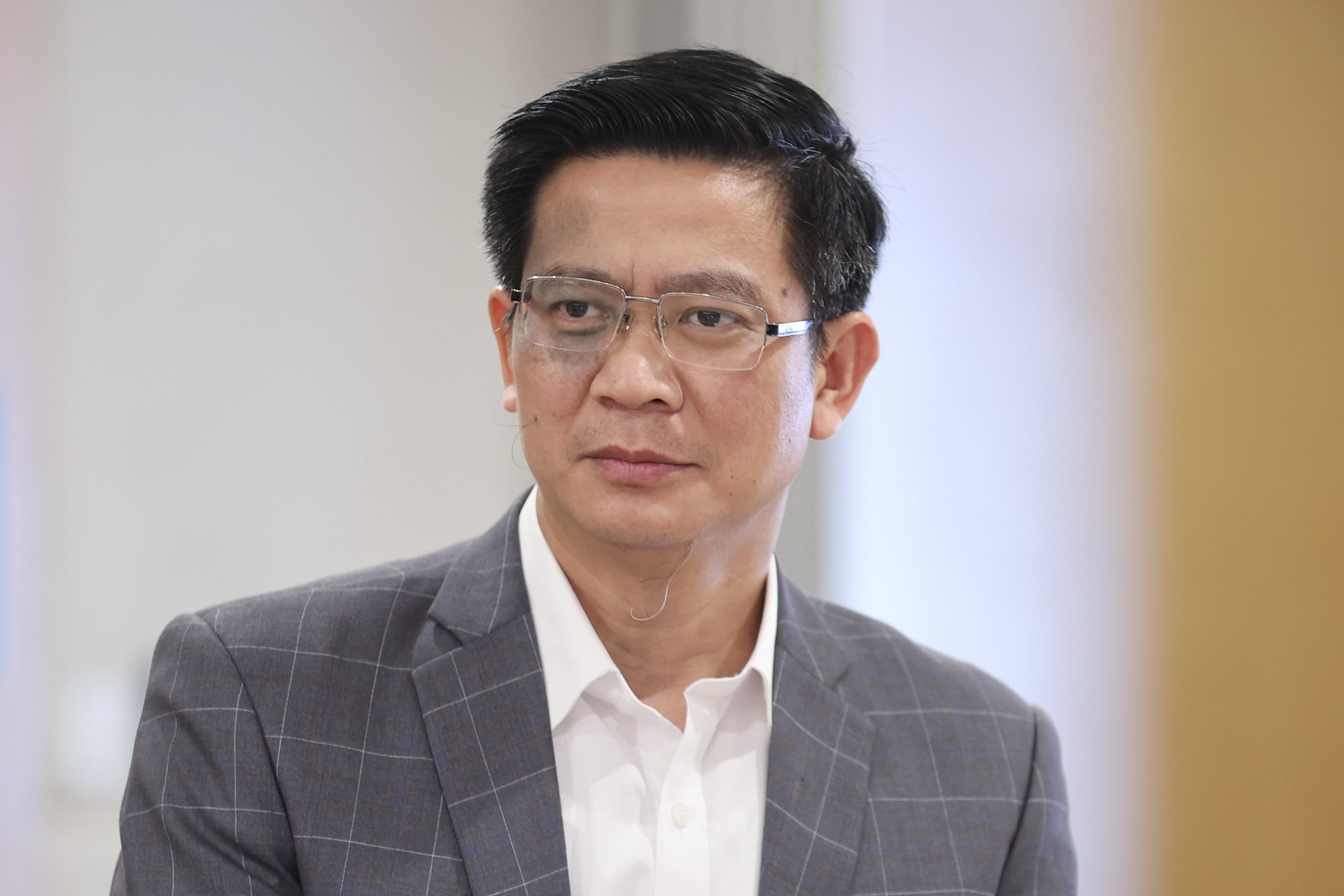
Director of the National Digital Transformation Agency, Le Van Tuan, posed a question to the Minister at the conference.
The Minister noted that Vietnam's digital transformation over the past five years has made significant strides, developing rapidly at one of the fastest rates in Southeast Asia and Asia. However, some challenges and obstacles remain. The legal framework, mechanisms, and policies regarding science, technology, innovation, and digital transformation have not yet met the requirements. Specifically, regulations on public procurement and bidding remain a "bottleneck," requiring amendments to ensure the selection of suitable products and partners, contributing to the country's development. Furthermore, Vietnam has not yet mastered fundamental strategic technologies such as AI, Blockchain, and cloud computing. There is a shortage of high-quality talent and human resources. Digital infrastructure, while good in some aspects, is not yet sustainable. Cybersecurity remains a significant challenge.
According to the Minister, Resolution 57 also requires strong, strategic, and revolutionary policies and decisions. This will lead to groundbreaking results in science, technology, innovation, and digital transformation, aiming towards Vietnam's double-digit growth and becoming a developed country.
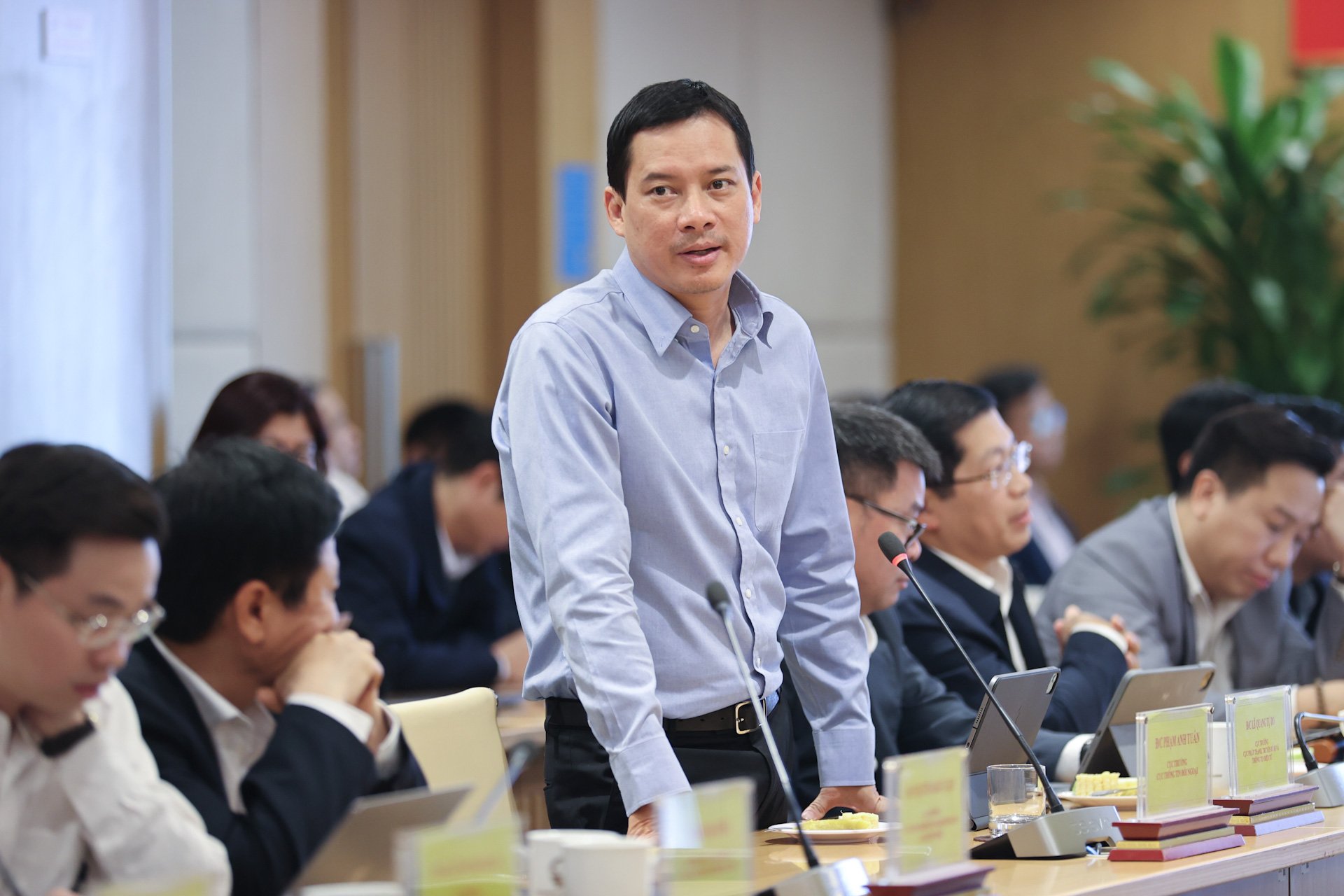
Director of the Department of Radio, Television and Electronic Information, Le Quang Tu Do, posed a question to the Minister at the conference.
The minister explained that revolutionary decisions mean changing the approach and perspective; for example, instead of setting low goals, we should set high goals. When we change our perspective, high goals can be achieved; if we maintain the old perspective, low goals cannot be realized.
Furthermore, setting high or very high goals for each task in the action plan contributes to discovering talent and revealing the abilities of the leader. This is because setting high goals forces leaders to seek groundbreaking solutions.
The guiding principles in Resolution 57
Resolution 57 identifies the trio of science, technology, innovation, and digital transformation as the main driving force for developing modern productive forces, perfecting production relations, and innovating national governance methods. These three pillars help to increase labor productivity and promote the country's development in the new era.
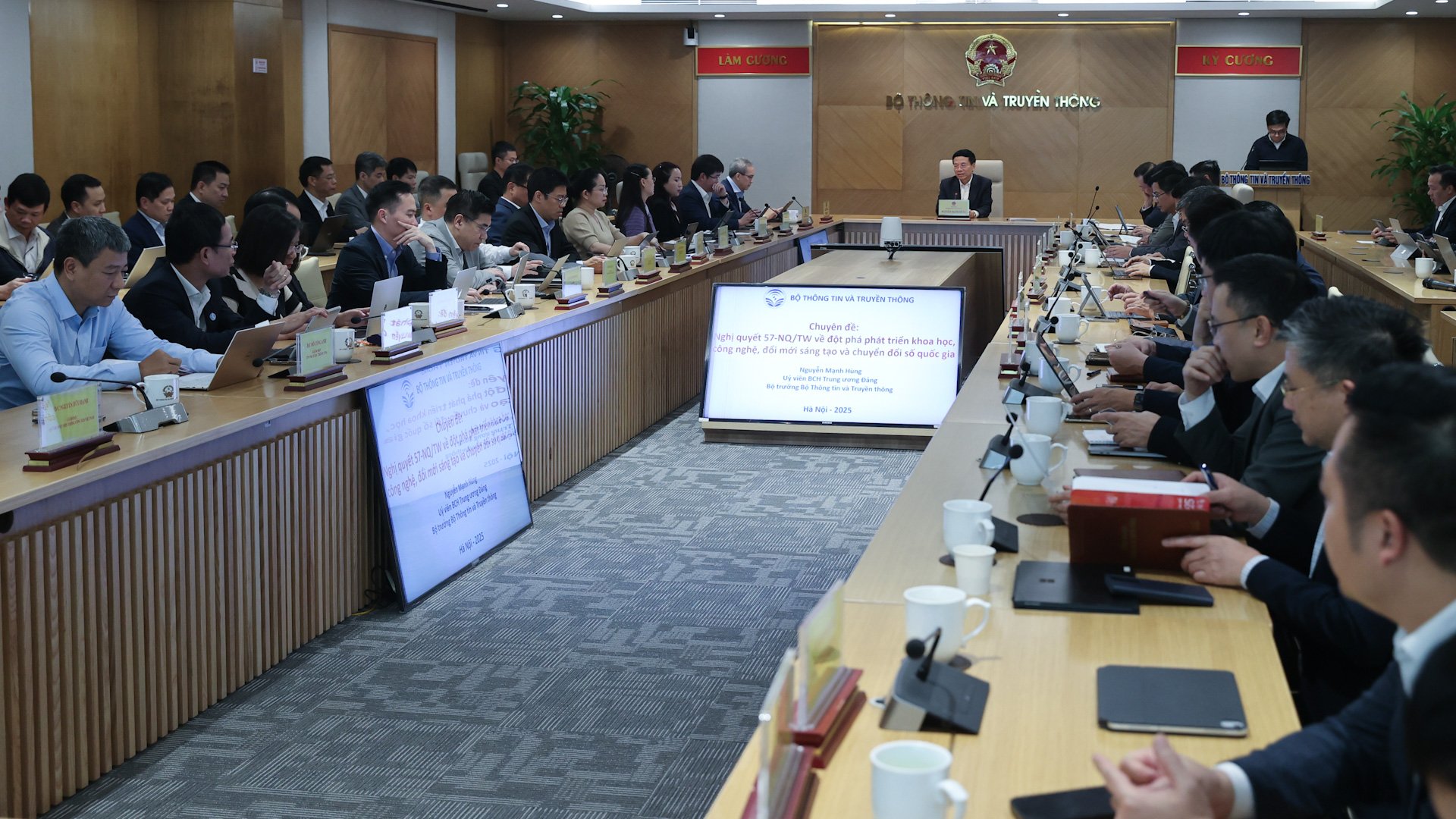
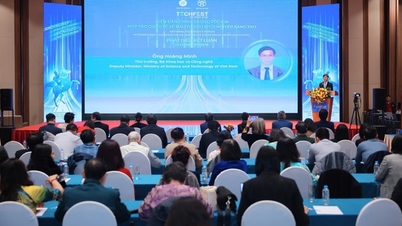
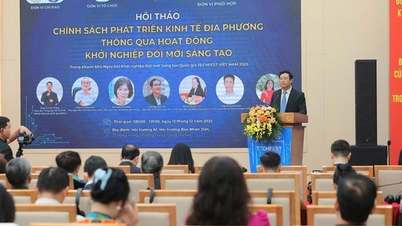
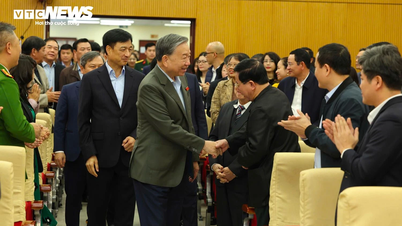
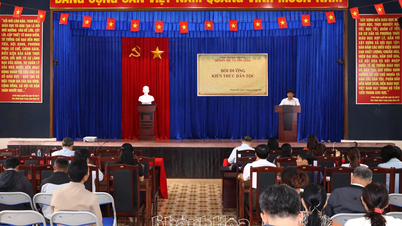
Conference scene
Science, technology, innovation, and digital transformation constitute a profound and comprehensive revolution across all fields. Revolution means rapid speed, destructiveness, discarding the old, and creating new ways of doing things.
A key guiding principle in the Resolution is that institutions, human resources, infrastructure, data, and strategic technology are core and central elements. Accordingly, institutions are a prerequisite, a step ahead, keeping pace with and fostering development, promoting innovation, and eliminating the "if you can't manage it, ban it" mentality. Resolution 57 emphasizes that management must keep pace with development and must be proactive.
The Minister analyzed that in the past, we rarely emphasized "mastering technology," but now, in this era of rapid technological development, if we develop based on science, technology, and digital transformation without mastering technology, it will be very dangerous.
To master strategic technology, it is essential to attract talent; therefore, the Resolution emphasized the need for special policies for talent. Talent is a core element in every stage of development. Policies are needed to attract talented individuals to work in state administration, businesses, research institutes, and universities. We can learn from Australia's experience in recruiting and utilizing talent in government agencies. Government agencies can hire talented individuals to work on projects, programs, or to draft policies and mechanisms, undertaking groundbreaking tasks, rather than requiring regular employment.
To master technology, we must walk on two legs; we must have the resources to master it. "Make in Vietnam" embodies the spirit of mastering technology, researching in Vietnam, innovating in Vietnam, and producing in Vietnam, contributing to helping Vietnam escape the middle-income trap and realize the aspiration of a strong and prosperous Vietnam.
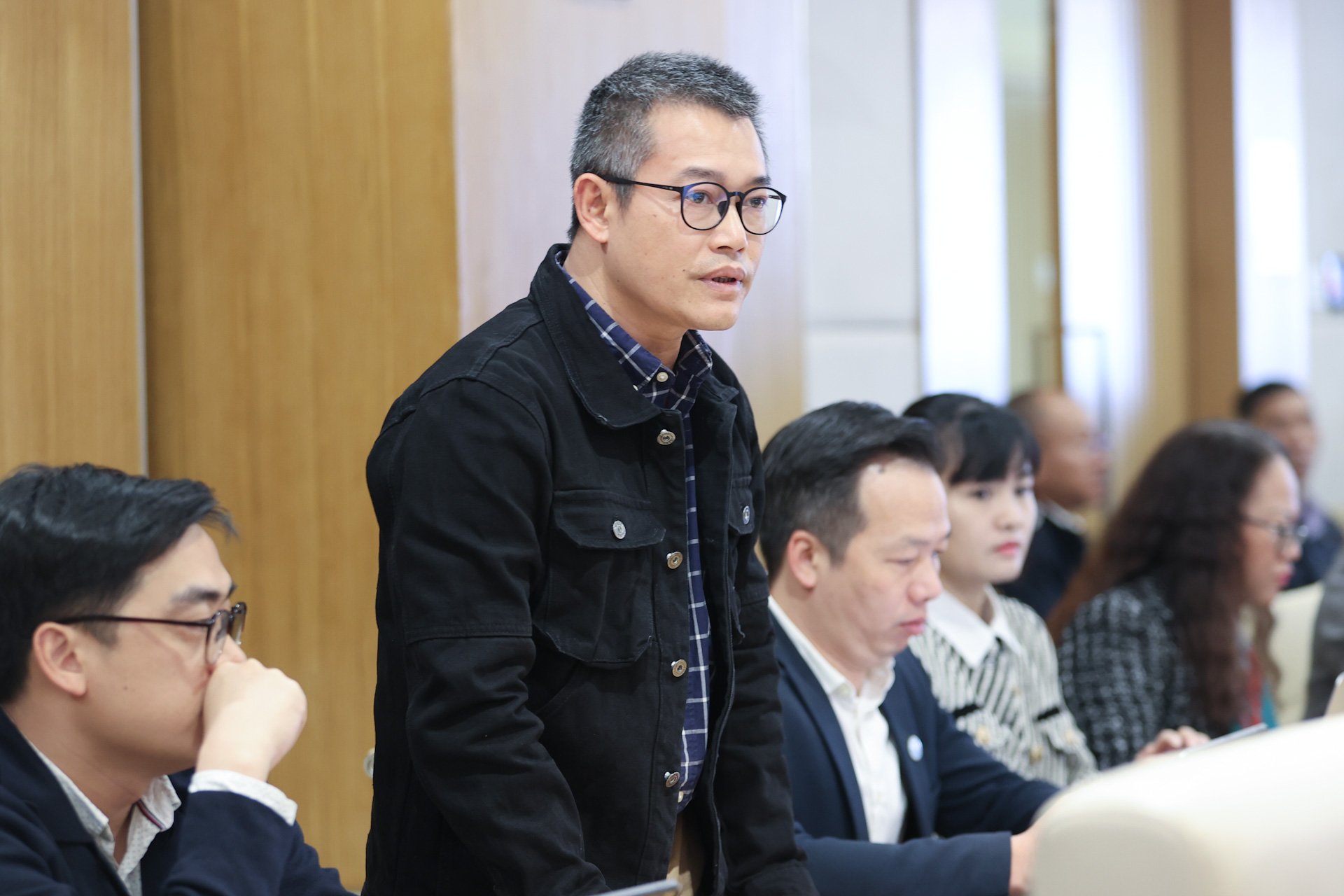
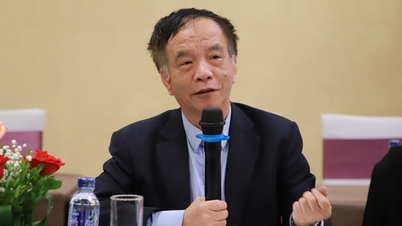
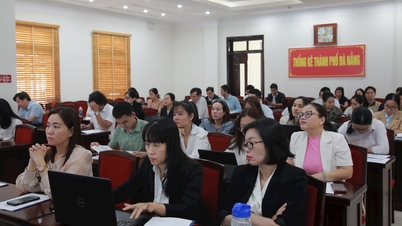
Delegates attending the conference asked questions to the Minister.
Institutional breakthroughs and enhanced international cooperation.
Regarding the tasks and solutions outlined in Resolution 57, the Minister emphasized the spirit of self-reliance, self-confidence, self-sufficiency, national pride, and the promotion of Vietnamese intelligence to successfully achieve the goals and tasks of national science and technology development, innovation, and digital transformation. The Minister noted that only with these qualities of "self" can our country transform into a dragon or a tiger, and become a developed nation.
The Minister also raised the issue that many countries are undergoing digital transformation too quickly and are therefore afraid of the risks, thus hesitant to allow experimentation. However, in the era of digital technology and AI, the country that dares to accept the risks and dares to allow experimentation will win.
The Minister added that Resolution 57, for the first time, acknowledges risks in scientific research and business to promote innovation. Resolution 57 also proposes the implementation of pilot mechanisms (sandboxes) and venture capital funds to support digital technology businesses in testing and development. It includes policies to exempt businesses, organizations, and individuals from liability in cases where testing new technologies or business models results in economic losses due to objective reasons.
In addition, Vietnam must strengthen international cooperation, especially with large technology corporations (Big Tech), to become a global hub for human resources in digital transformation and innovation.
Regarding personnel management, the Resolution clearly defines the responsibilities and important roles of leaders in digital transformation, scientific and technological development, and innovation. This is also the criterion for evaluating officials and leaders in terms of task performance, and for annual emulation and reward programs.
Concluding the conference, Minister Nguyen Manh Hung emphasized and clarified that studying Resolution 57 means learning its spirit and applying it to one's daily work. Leaders of units under the Ministry can use Resolution 57 to change the way they manage their units and staff, focusing on the final results when implementing tasks, and not hesitating to experiment with new approaches and methods.
Source: https://mic.gov.vn/bo-tttt-to-chuc-hoi-nghi-pho-bien-nghi-quyet-57-nq-tw-ve-dot-pha-phat-trien-khoa-hoc-cong-nghe-doi-moi-sang-tao-va-chuyen-doi-so-quoc-gia-19725010917055778.htm





















































































Comment (0)