

Notably, from 2025 to May 2026, the Ministry of Construction has decentralized 75 administrative procedures implemented at the ministerial level, reducing the number of administrative procedures under its management to 168 (nearly 30%); cutting nearly 6.9 billion VND in administrative procedure compliance costs (nearly 55%); and reducing the processing time for administrative procedures by 2,549 days (nearly 54%). In 2025, the Ministry of Construction completed the decentralization of 45 administrative procedures from the central to local levels, abolished 16 administrative procedures, and delineated the authority to resolve 41 administrative procedures from the district to the commune level.
Significant progress has been made in digital transformation and database development. The Ministry of Construction has implemented a centralized administrative procedure information system, providing 263 online public services out of a total of 266 administrative procedures under its jurisdiction (reaching 98.9%). The Ministry's system has received and processed over 57,700 applications, of which 55,395 were online (reaching 96%).
For the provincial and commune-level service systems, the Ministry of Construction has created nearly 67,800 accounts for local officials, received and processed 351,312 applications, of which 285,537 were online (reaching over 81%).
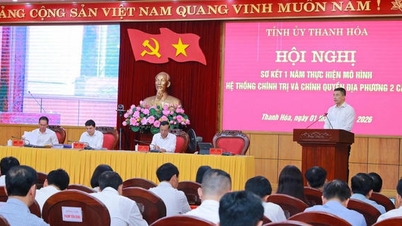
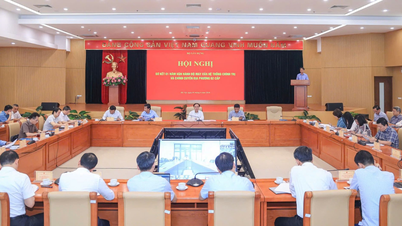
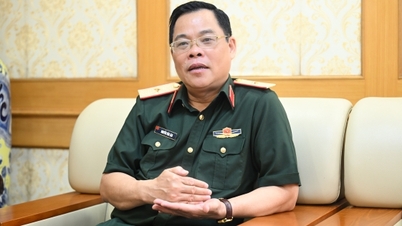
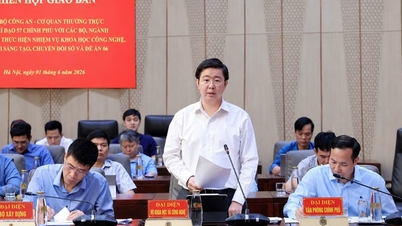
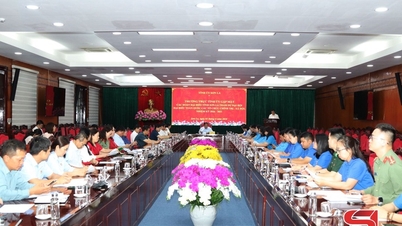
According to Deputy Minister of Construction Nguyen Van Sinh, implementing the two-tiered local government model is a major and important policy of the Party and the State aimed at streamlining the apparatus, improving the effectiveness and efficiency of state management, strengthening decentralization and delegation of power, and promoting the initiative and creativity of local governments.
After one year of implementation, this policy has gradually become a part of daily life, creating positive changes in the administrative apparatus, reforming administrative procedures, and improving services for citizens and businesses.
"Regarding the construction sector, despite facing many difficulties and challenges over the past year, the Ministry of Construction and localities have thoroughly implemented directives, closely followed practical situations, proactively developed solutions, and achieved many positive results," Deputy Minister Nguyen Van Sinh emphasized.
While acknowledging the achievements, the Deputy Minister of Construction also frankly pointed out some existing shortcomings and difficulties. Accordingly, the promotion of decentralization and delegation of power, and the operation of a two-tiered local government system, has increased the workload of provincial and commune-level local governments. Many localities still face difficulties in securing specialized construction human resources, leading to confusion in addressing the newly decentralized tasks.
Local authorities at the commune level are limited in capacity and lack human resources, leading to situations where they are unable to handle sudden increases in workload. Many tasks are being implemented while simultaneously refining institutional frameworks, resulting in difficulties in operational procedures for building information systems and databases, as well as in data collection and creation…
To further enhance the effectiveness of the two-tiered local government model in the future, Deputy Minister Nguyen Van Sinh stated that the Ministry of Construction will continue to strengthen leadership and guidance to ensure the timely and synchronized implementation of policies and conclusions from the Central Committee, the Politburo , the Secretariat, the Party Committee of the Government, the Government, and the Prime Minister.
The Ministry of Construction will continue to review and propose amendments, additions, and improvements to legal documents in the construction sector, with the aim of reducing and simplifying administrative procedures and business investment conditions, strengthening decentralization and delegation of power, ensuring the legal basis, consistency, and uniformity of the legal system, and its feasibility and suitability to practical realities.
On the local level, Deputy Minister Nguyen Van Sinh requested the People's Committees of provinces and cities to direct relevant agencies and units to uniformly use the Ministry's centralized administrative procedure processing information system (for administrative procedures under the Ministry of Construction's management), ensuring data synchronization; and to improve institutional frameworks and operational procedures as a basis for the synchronized deployment of information systems and databases under their management.
“The competent authorities and relevant local agencies also need to review and assess the capacity and conditions for implementing the tasks that have been decentralized and delegated to localities, especially at the commune level, in order to propose adjustments if necessary. At the same time, they should continue to promote a proactive and creative spirit; replicate good models and effective practices to improve the quality of management, administration, and service to the people and businesses,” Deputy Minister Nguyen Van Sinh suggested.
Previously, after one year of operating the two-tiered political and local government system, the Ministry of Construction acknowledged that the dissemination and thorough understanding of policies and guidelines for cadres, Party members, civil servants, and public employees regarding the restructuring and streamlining of the organizational apparatus had been seriously and effectively implemented by the Ministry and Party committees at all levels.
The restructuring and streamlining of the organizational apparatus has yielded clear results, with the Ministry of Construction significantly reducing the number of organizational units, continuing to reorganize sub-departments, port authorities, departments under bureaus, public service units, and internal units within public service units; and completing the settlement of benefits and policies for 542 people affected by the organizational restructuring.
Simultaneously, the decentralization, delegation of power, and delineation of authority have been implemented vigorously. To date, 81 tasks have been decentralized and delegated to localities, primarily based on an assessment of the implementation capacity of the local apparatus, staff, and resources.
Based on their functions and responsibilities, agencies and units under the Ministry of Construction have strengthened coordination in advising, guiding, inspecting, supervising, and resolving difficulties and obstacles for localities when operating the two-tiered local government model; focusing on establishing coordination mechanisms according to each specialized field.
Furthermore, efforts to build and connect databases have been accelerated. The Ministry has completed the construction and deployment of 10 out of 10 databases as required. Of these, 8 out of 10 databases have standardized information indicators and synchronized data with the National Data Center. The national database on construction activities has been in use since January 1, 2026, managing over 124,000 planning, project, and construction records.
Regarding the arrangement of public facilities and assets, proactive measures have been implemented. Out of a total of 365 properties (houses and land), the Ministry of Construction has arranged for 323 to be retained for continued use, 32 to be transferred to localities and other ministries and sectors, and 10 to be transferred internally. For road infrastructure assets, the Ministry has reported to and received decisions from the Ministry of Finance to transfer 368 properties (houses and land) to localities according to the decentralization plan, achieving 100% of the requirement.
Source: https://baotintuc.vn/kinh-te/bo-xay-dung-cat-giam-gan-55-chi-phi-thu-tuc-hanh-chinh-20260601203200427.htm





























![[Photo] Reception to welcome General Secretary and President To Lam and his wife on their State visit to the Philippines](https://vphoto.vietnam.vn/thumb/1200x675/vietnam/resource/IMAGE/2026/06/01/1780295488620_vna-potal-chieu-dai-chao-mung-tong-bi-thu-chu-tich-nuoc-to-lam-va-phu-nhan-tham-cap-nha-nuoc-toi-philippines-8798060-7855-jpg.webp)
































































Comment (0)