

 |
On May 20th alone, the global tech industry was shaken as three high-profile startups simultaneously moved closer to becoming trillion-dollar corporations.
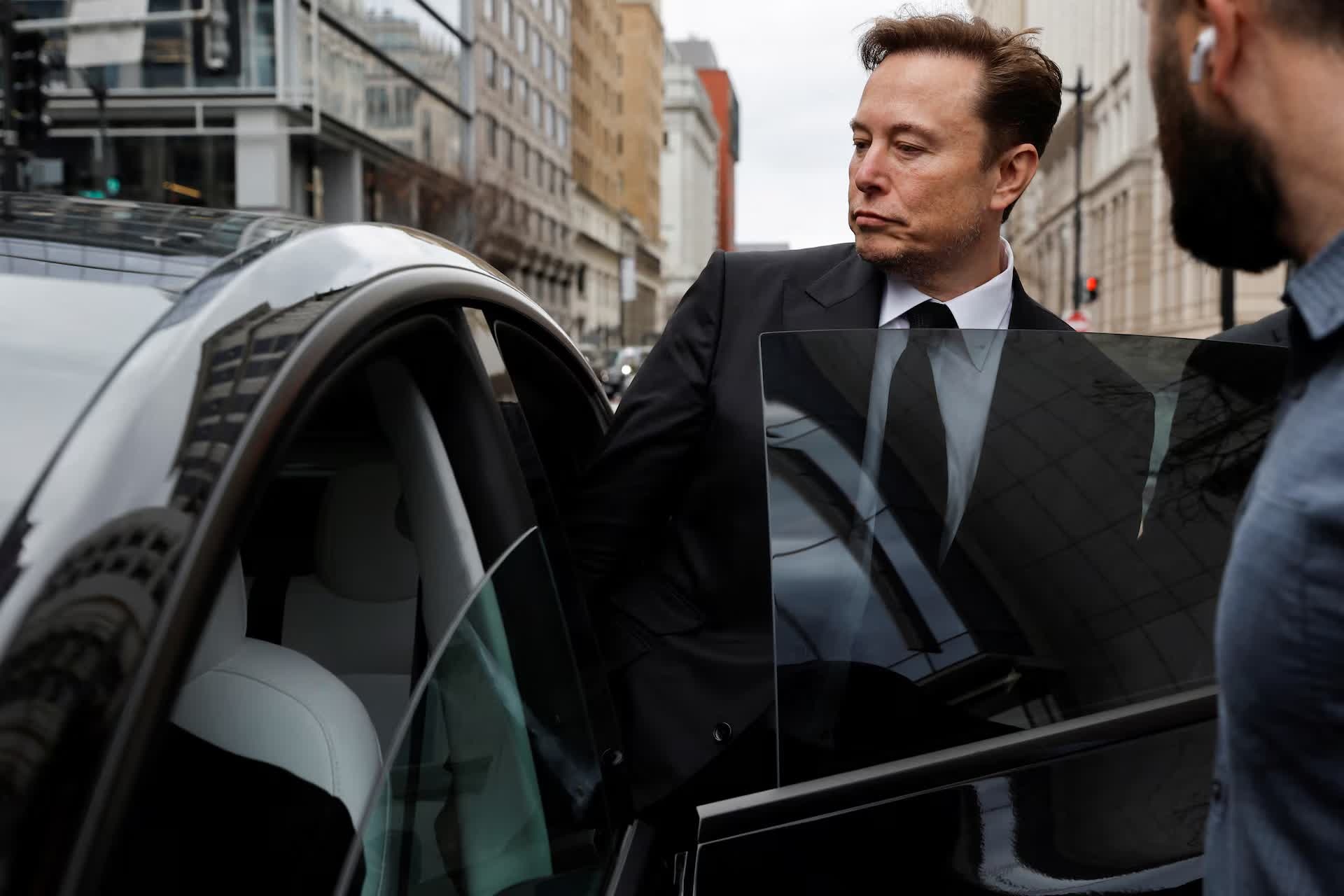
With the newly released filing, SpaceX has outlined a roadmap for a historic initial public offering (IPO), which will likely make Elon Musk the world's first trillionaire.
At the same time, Anthropic released figures showing the potential to become profitable much sooner than Wall Street had anticipated. OpenAI is also urgently preparing to file for an IPO, possibly as early as May 22nd, according to a report from the Wall Street Journal.
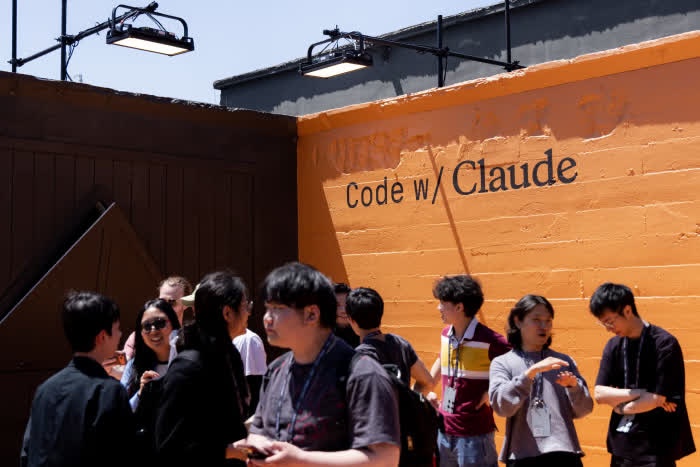 |
Attendees at an Anthropic event in San Francisco in early May. Photo: Wall Street Journal. |
Conversely, the world's two largest technology companies are facing new pressures in the AI era. Nvidia has failed to inspire investors despite recently announcing record revenue of $82 billion , while Meta Platforms has begun laying off 8,000 employees.
In a memo sent to employees on May 21, CEO Mark Zuckerberg called AI "the most influential technology in our lives."
"I'm optimistic about everything we're building. But success isn't guaranteed," Zuckerberg wrote.
The AI Race
Jeffrey Bernardo, CEO of Augustine Asset Management, said his company is willing to consider investing in AI startups after their IPOs, but will carefully review their financial records before making a decision.
According to him, demand for AI products is growing faster than supply, while also significantly boosting labor productivity.
In the early stages of the AI wave, Nvidia rose to become the world's most valuable company thanks to its leading position in the production of advanced chips.
However, the race is shifting to a new chapter as the demand for specialized chips to power artificial intelligence (AI) agents is increasing exponentially.
Although Nvidia's dominant position remains unshaken, its earnings results on May 21st reflect increasingly high investor expectations. Nvidia exceeded Wall Street's revenue forecasts, raised its business outlook, and announced a plan to buy back $80 billion worth of shares, yet the stock still experienced a sell-off.
Conversely, investors have so far shown more patience with startups like SpaceX, OpenAI, and Anthropic – companies with a history of burning through capital and losing billions of dollars each year.
On their way to IPOs, these three companies have all challenged a range of traditional expectations and overturned long-held financial perceptions about the commercial viability of the groundbreaking technologies they have developed.
The destinies and business paths of all three are also intertwined, as the leaders – Elon Musk, Sam Altman of OpenAI, and Dario Amodei of Anthropic – once worked together before competing in the AI race that they themselves helped to launch.
Musk co-founded OpenAI with Sam Altman and several other experts in 2015. Dario Amodei also previously held a senior research position at OpenAI.
Over a decade ago, the organization was founded as a non-profit foundation with the goal of developing AI to serve humanity.
However, as AI technology advanced rapidly, OpenAI leaders realized the company would need massive funding—billions of dollars—to pay for the computing power needed to train and improve large-scale language models.
OpenAI's shift to a for-profit commercial business model to attract funding from Microsoft has led to an irreparable rift with Musk.
In a recent lawsuit, billionaire Elon Musk vehemently accused OpenAI of "stealing from a charity."
Despite recent rulings in favor of OpenAI by both the jury and federal judge, Musk has declared he will not give up and has decided to appeal to the very end.
The new ruling has removed one of the biggest legal hurdles to OpenAI's IPO ambitions, a deal that could value the company at around $1 trillion .
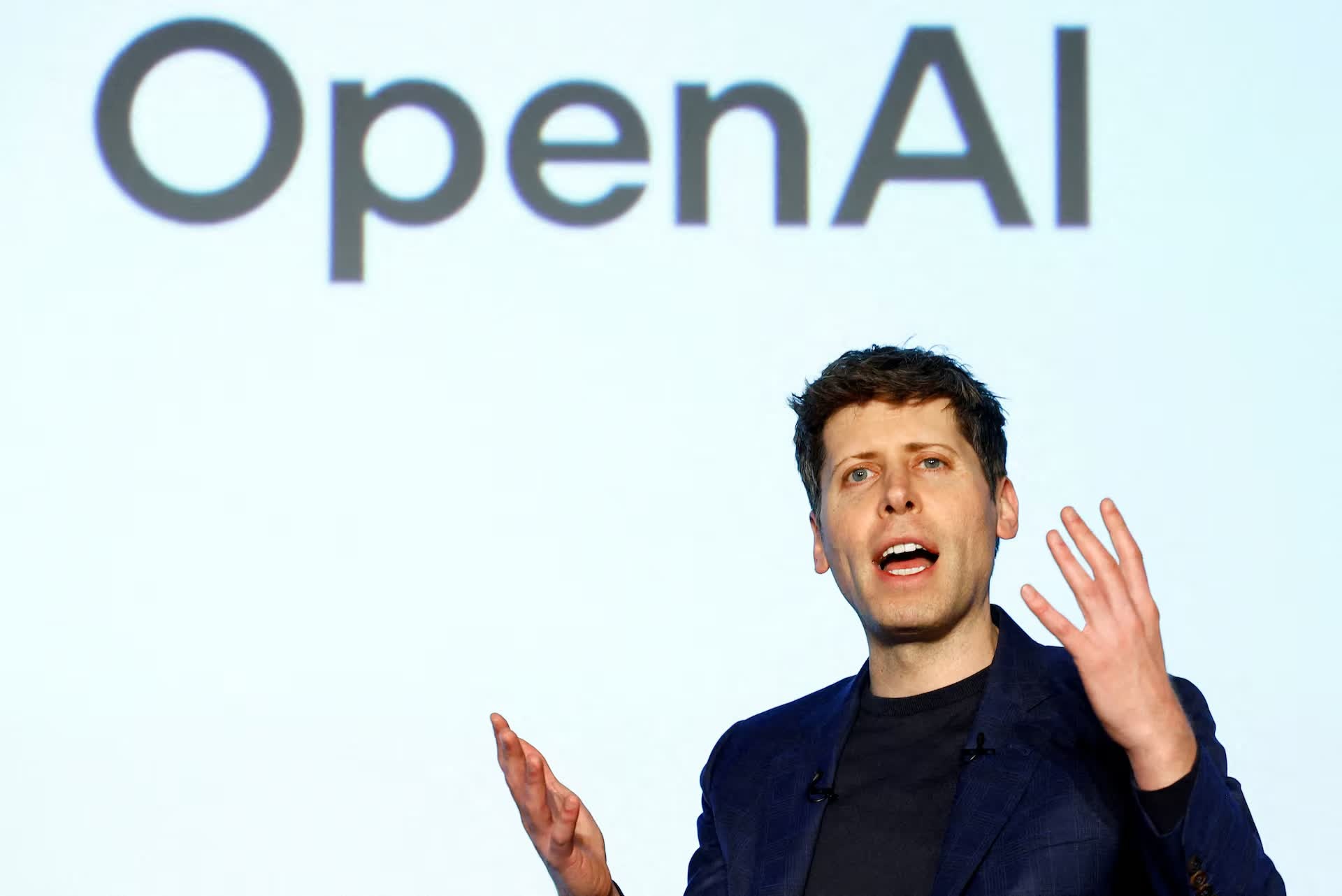 |
OpenAI CEO Sam Altman. Photo: Reuters. |
To compete directly, Musk founded the startup xAI, but the company's virtual assistant Grok is being criticized for falling behind due to its failure to attract a wide user base outside of the x social media platform (formerly Twitter).
Ahead of SpaceX's IPO, Musk was forced to strike deals with OpenAI's competitors to balance the playing field in the technology landscape, including Cursor—a startup specializing in automated programming tools—and especially Anthropic.
Multiple sources indicate that SpaceX is aiming for a valuation of between $1.75 trillion and $2 trillion .
For its part, Anthropic informed executives that it expects to record its first operating profit in the quarter ending in June, following a $45 billion partnership with Musk and SpaceX to address the computing infrastructure crisis.
Although Anthropic still projects a full-year loss, this forecast has surprised many. For years to come, most AI companies are predicted to be stuck in a cycle of spending exceeding revenue due to the high cost of operating computing infrastructure.
Expectations are high for SpaceX, OpenAI, and Anthropic, but many experts warn that AI also brings new risks.
Navrina Singh, CEO of Credo AI, analyzed: "The market has valued the potential of AI but has not properly accounted for the costs arising from the systemic vulnerabilities that this technology can create on a large scale, especially AI agents."
"Capital is flowing into AI at a breakneck pace, but those risks are not yet reflected in any current valuations," she added.
The opportunity for a trillion-dollar billionaire to emerge.
Elon Musk's rocket and satellite company is expected to list on the Nasdaq under the ticker symbol SPCX, with a valuation of approximately $1.75 trillion . The IPO is likely to take place on June 12th, and SpaceX is looking to raise up to $80 billion .
SpaceX, the world's leading rocket manufacturer and a key partner of the US government , secretly filed for an IPO in April.
The filing of confidential documents allows regulators to review the information before it is released to the public, according to The Guardian.
In its filing, SpaceX states: “Our mission is to build the systems and technologies necessary to bring life beyond Earth, understand the true nature of the universe, and spread the light of consciousness to the stars.”
Since its founding in 2002, SpaceX has grown to become the most valuable asset in billionaire Musk's vast technology empire.
The upcoming IPO also promises to bring the world's richest man closer to the $1 trillion mark in net worth.
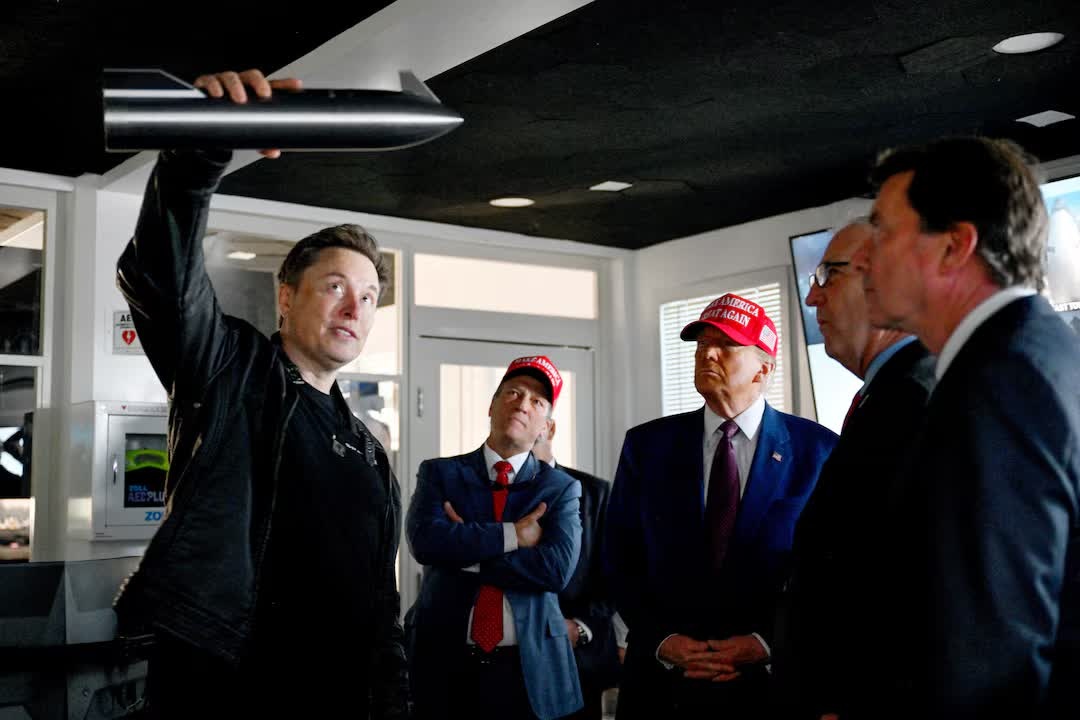 |
Billionaire Elon Musk leads US President Donald Trump and lawmakers on a tour of the control room before a test launch of the SpaceX Starship rocket in Brownsville, Texas in 2024. Photo: Reuters. |
Bloomberg estimates that Elon Musk is almost certain to become the world's first trillionaire. His current net worth is approximately $807 billion , according to Forbes.
The documents released on May 21 also revealed SpaceX's previously secretive financial situation.
Although SpaceX has consistently emphasized its ambition to send humans to Mars over the years, this goal has recently given way to other plans such as building a space-based data center to support the wave of artificial intelligence (AI) and expanding its Starlink service.
In February, SpaceX also acquired xAI, the AI startup founded by Musk.
However, behind the growth are shocking spending figures, especially for the AI race. In 2025, the company spent over $20 billion on investments, while revenue only reached approximately $18.6 billion . In just the first three months of 2026, SpaceX lost over $4.2 billion .
Elon Musk's rise has received strong support from those who see him as a visionary innovator, but it has also raised concerns among critics about his enormous wealth and growing political influence.
His growing influence in American politics continues to attract mixed opinions, particularly as he openly supports conservative politicians and participates in the Trump administration's efforts to reform and streamline the government.
Source: https://znews.vn/bom-tan-nghin-ty-usd-kich-no-tai-chinh-my-post1653163.html




















![[Photo] Reception to welcome General Secretary and President To Lam and his wife on their State visit to the Philippines](https://vphoto.vietnam.vn/thumb/1200x675/vietnam/resource/IMAGE/2026/06/01/1780295488620_vna-potal-chieu-dai-chao-mung-tong-bi-thu-chu-tich-nuoc-to-lam-va-phu-nhan-tham-cap-nha-nuoc-toi-philippines-8798060-7855-jpg.webp)

































































Comment (0)