

Some people experience less of a blood sugar spike after eating a bowl of pho compared to eating a large plate of white rice. Conversely, some people feel hungry again quickly after eating vermicelli because the meal lacks protein and fiber. Therefore, the impact of vermicelli, pho, and rice on blood sugar depends on the amount consumed and the accompanying dishes, according to the health website Healthline (USA).
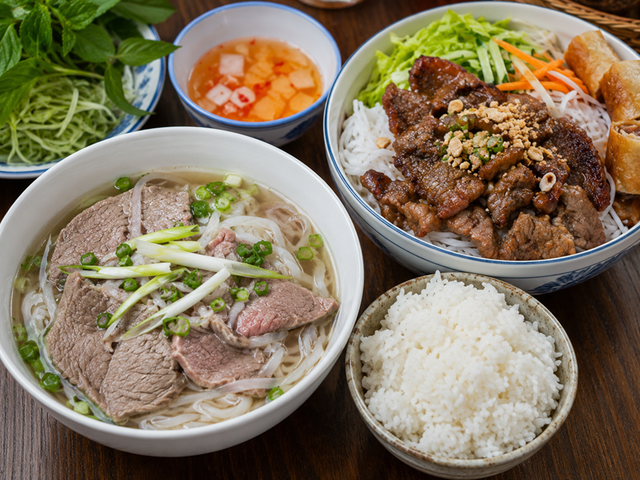
The extent to which pho, vermicelli, and rice raise blood sugar levels also depends on the portion size and accompanying dishes.
PHOTO: Created by N. Quy from GM
White rice typically has a high glycemic index.
White rice typically has a higher glycemic index because the rice grain has been refined, removing most of the fiber from the bran layer. When cooked, the starch in rice becomes softer and is more easily broken down into glucose by digestive enzymes, causing blood sugar levels to rise rapidly after eating.
In addition, rice is often eaten in fairly large portions during main meals. A person might eat 2-3 bowls of rice in a single meal, meaning the amount of carbohydrates consumed is significantly higher than a typical bowl of noodles or pho.
Rice noodles have a slightly higher proportion of resistant starch compared to rice.
Rice noodles are also made from rice, but they undergo a process of soaking, grinding, and pressing into strands, resulting in a different starch structure compared to cooked rice. For example, rice noodles are usually served cold, so the proportion of resistant starch is slightly higher than that of cooked rice. This is why rice noodles are digested more slowly than cooked rice. However, this does not mean that rice noodles are always a better choice for people who need to control their blood sugar.
The biggest problem lies in the portion size. A bowl of beef noodle soup, grilled pork noodle soup, or grilled pork noodle soup usually contains a lot of noodles. If you eat all the noodles but leave little vegetables or meat, the carbohydrate intake will still be high, causing a sharp increase in blood sugar.
Pho: Protein from the meat helps slow down the digestive process.
With pho, the noodles are still made from white rice, so they still contain a significant amount of starch. The difference is that pho is usually eaten with beef, chicken, herbs, onions, and bean sprouts. The protein from the meat helps slow down digestion, while the vegetables add fiber. This results in a lower rate of blood sugar spike after eating pho compared to eating white rice. However, it's worth noting that if the bowl of pho has too many noodles or if people add sweet sauces or sugary condiments, this benefit may be reduced.
In most cases, white rice tends to cause a faster increase in blood sugar than noodles or pho, especially when eaten in large portions and without accompanying vegetables and protein. Noodles and pho may have a slight advantage in terms of absorption rate, but they can still cause a high blood sugar spike if consumed in excessive amounts.
Simply put, what matters is not just whether we eat rice, noodles, or pho, but how much we eat, and whether we eat it with vegetables, meat, eggs, or other fiber- and protein-rich foods, according to Healthline .
Source: https://thanhnien.vn/bun-pho-va-com-mon-nao-lam-tang-duong-huyet-nhieu-hon-185260508142606236.htm



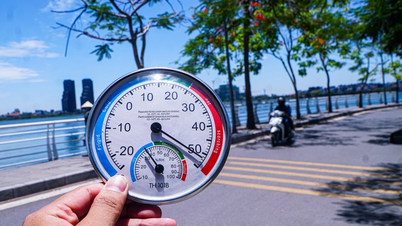
![[Image] Hanoi's urban life under the challenge of a "scorching hot" environment](https://vphoto.vietnam.vn/thumb/1200x675/vietnam/resource/IMAGE/2026/05/25/1779706979265_nang-nong-t5-2026-minh-duy-7-4636-jpg.webp)














































































Comment (0)