

This is considered a new approach in urban governance, placing citizens at the center and viewing quality of life as the goal of development.

Data for listening to the people.
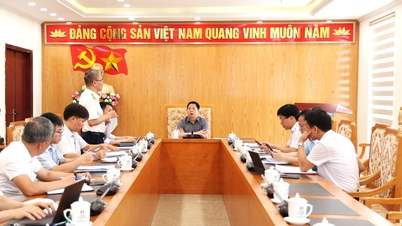
The People's Committee of Thu Duc Ward, in collaboration with the Ho Chi Minh City Institute for Development Research, has just announced the set of criteria for a "Happy Thu Duc Ward" and the results of the first survey in 2026.
The survey was conducted on 6,000 valid samples, reflecting quite fully the diverse population structure of Thu Duc ward with many different occupational groups, age groups, and living conditions. The criteria were developed starting in March 2026, referencing domestic and international happiness measurement models, combining field surveys, professional seminars, and feedback from residents in 52 neighborhoods. After several revisions, the official criteria comprise three aspects: material, spiritual, and cognitive; with 10 criteria and 50 specific measurement indicators, closely reflecting the daily living experiences of the people.
The survey results show that the cognitive aspect achieved the highest average score, approximately 7.4 points. This is also the group of indicators that clearly reflects the optimism, attachment, and trust of the people in the locality. The emotional aspect scored approximately 7.2 points, reflecting a feeling of being supported, neighborly bonds, a positive attitude towards life, and a level of satisfaction with their current lives.
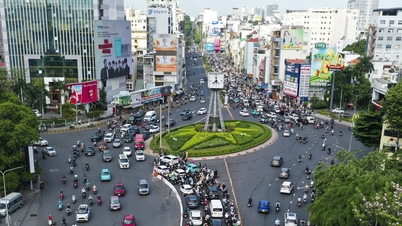
Meanwhile, the material aspect scored around 7 points, the lowest among the three criteria groups. The issues most frequently raised by residents included the pressure of living costs, traffic congestion, flooding, noise pollution, lack of green spaces, work pressure, and lack of leisure time.
Notably, 71.9% of participants rated themselves as "Happy" and "Very Happy," with approximately 26% giving a perfect score of 10/10. The "Less Happy" and "Very Less Happy" groups accounted for only about 2%. According to Mr. Pham Binh An, Deputy Director of the Ho Chi Minh City Institute for Development Research, the unit that collaborated with the locality in accessing research methods and developing the "Happy Thu Duc Ward" criteria set, this initiative is particularly significant as it is the first time that the people-centered approach to local governance has been concretized.
He argued that the happiness criteria are like a fairly honest "mirror reflecting the level of people's enjoyment of policies and the quality of governance at the local level. "This is a new approach in local governance, shifting from purely administrative management to people-centered governance. The criteria reflect how people truly feel about their lives, living environment, and policies," Mr. An said.
Unlike other awards that focus on infrastructure criteria, the happiness criteria delve into the practical feelings of the people. According to Mr. Pham Binh An, the development process faced many difficulties because the concept of "happiness" is very abstract and difficult to quantify, while urban residents comprise many different social classes. Therefore, the research team had to consult many international models and adjust the survey language so that people could easily understand and respond accurately to their feelings.
He also emphasized that the greatest significance of the criteria lies not in ranking or awarding titles of "happiness," but in helping the government identify existing problems to adjust policies and gradually improve the quality of life for the people.
It could become a model.
Commenting on the criteria, Dr. Nguyen Thi Hau, former Deputy Director of the Ho Chi Minh City Institute for Development Research, assessed the "Happy Thu Duc Ward" survey as a very noteworthy experiment in the context of Vietnamese cities facing the requirement to transform their development model from "growth cities" to "livable cities".
According to Dr. Hau, incorporating factors such as perceived happiness, social trust, spiritual life, and community engagement into local development assessments demonstrates a progressive, humane approach that aligns with modern urban governance trends. However, for the criteria to become a valuable long-term research and governance tool, further improvements are needed in survey methodology, data representativeness, and result interpretation. "It is crucial to maintain the objectivity and critical social impact of the survey, avoiding turning 'happiness' into a mere propaganda indicator or a ceremonial competition," Dr. Hau noted.
Dr. Nguyen Thi Kim Lien, Head of the Department of Cultural Development at the Regional Political Academy II, believes that the value of the index goes beyond mere "statistical reporting," becoming a crucial operational tool for ward-level authorities. "From the survey results, the government can identify neighborhoods with low scores to focus resources, pinpoint vulnerable population groups for appropriate social welfare policies, and monitor the effectiveness of each solution year after year," Dr. Lien said. The survey also recorded many direct suggestions from residents, such as digitizing flood management, implementing a two-way field reporting application, a rapid response channel within 24-48 hours, and utilizing surplus administrative facilities to develop parks and green spaces.
According to many experts, this is a very valuable source of data for policy planning that traditional statistical methods struggle to obtain. Experts believe the "Happy Thu Duc Ward" model has the potential to be replicated in many other localities in Ho Chi Minh City. Dr. Nguyen Thi Kim Lien believes the project meets the criteria to become a model at the grassroots level because its methodological framework is relatively complete, the implementation process is transferable, and the implementation costs are not excessive.
Surveys conducted via the Zalo community and QR codes facilitate rapid implementation, save resources, and align with current digital transformation trends. In particular, Thu Duc has a diverse population structure, high urbanization density, and has recently undergone mergers from several former wards, making it almost a "miniature Ho Chi Minh City." If the model proves effective here, its adaptability to other areas is quite high.
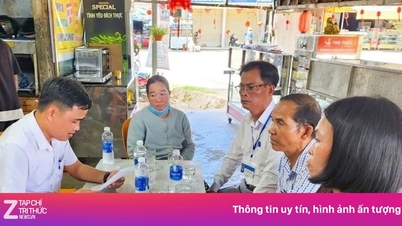
Mr. Mai Huu Quyet, Secretary of the Party Committee and Chairman of the People's Council of Thu Duc Ward, said that the 6,000 survey responses represent the voices, expectations, and thoughts of the people sent to the government. "I am truly moved to know that through the Zalo community network and QR codes, 6,000 people from 52 neighborhoods have shared their experiences very honestly," he said.
According to Mr. Quyet, the result that 71.9% of residents rated themselves as happy or very happy is a commendable sign, showing the optimism and confidence of the people in the locality. However, the ward leader also acknowledged that many life pressures still exist, such as traffic problems, flooding, noise pollution, lack of green space, and the pressure of living costs.
In the coming period, Thu Duc ward will continue to promote digital transformation, expand channels for receiving feedback via Zalo and social media, and shorten the time to handle urban issues to 24-48 hours. The locality also aims to implement the "5-in-1" model, helping people access essential services such as healthcare, education , employment, entertainment, and creativity within a 10-15 minute travel radius.
Although there are still many issues that need further improvement, from expanding the survey scope to include the elderly and tenants to adding more in-depth demographic data, the "Happy Thu Duc Ward" model has opened up a new approach in urban governance. More importantly, this model shows that urban development is not just about how many buildings are constructed or how many growth targets are met, but ultimately about answering the question: Do residents truly feel better, more secure, and happier living?
Source: https://baovanhoa.vn/doi-song/buoc-thu-nghiem-tien-bo-va-nhan-van-231315.html




![[Image] Close-up view of the interchange connecting the two expressways and Long Thanh Airport.](https://vphoto.vietnam.vn/thumb/1200x675/vietnam/resource/IMAGE/2026/05/25/1779703378210_ndo_br_z7863716673926-224453a31600126cce10622af6290afd-4549-jpg.webp)




















































































Comment (0)