

Saving money in a bank is a popular option, especially for those who don't like risky investments.
However, many people make the same mistake: putting all their money into a single savings account with a single term. This might seem like a simple way to manage money, but in reality, it carries quite a few inconveniences and financial risks.
1. Difficulty in managing finances when urgently needing money.
This is the most common reason why putting all your money into one savings account is not a sensible choice. In life, it's difficult to predict exactly when you'll need money. It could be an unexpected medical bill, car repairs, home repairs, or a sudden business opportunity.
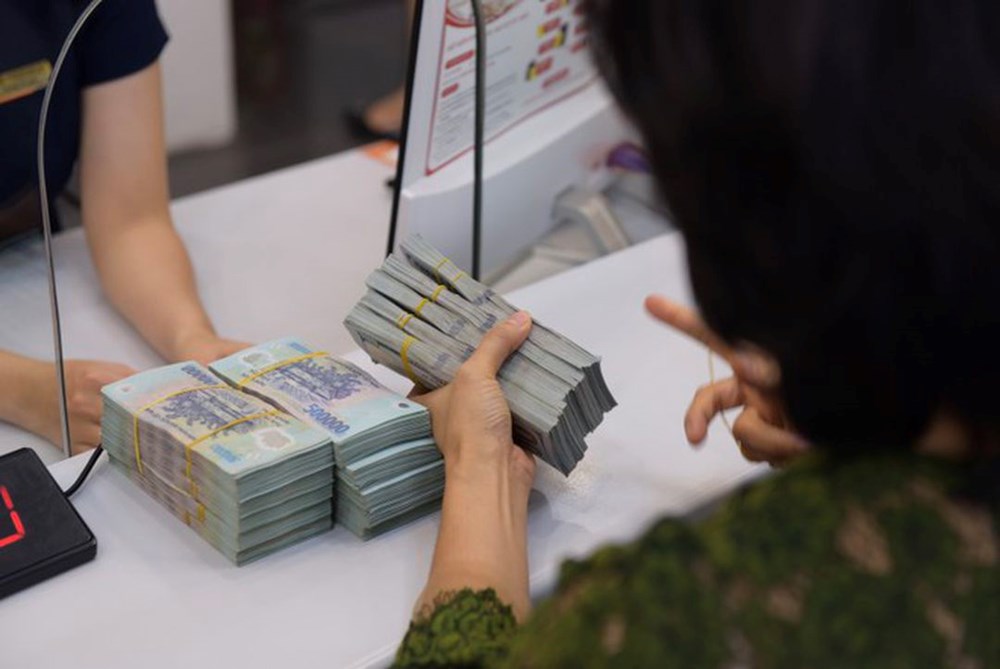
If all the money is in a long-term savings account, the depositor has almost no other option but to withdraw it early. In that case, the interest earned will be significantly reduced.
Meanwhile, if the money is divided into several smaller accounts with different terms, the depositor only needs to close one account with the exact amount needed. The remaining money continues to earn interest according to the original term, avoiding unnecessary loss of profit.
2. Not optimizing interest rates.
Another mistake of pooling money into one account is that it makes cash flow less flexible. For example, depositing all the money for a 12-month term might yield a higher interest rate, but in return, the depositor has to accept that the money is "frozen" for a whole year.
In the context of constantly changing bank interest rates, locking up all your money at one time can sometimes cause depositors to miss out on better interest rates that may appear later. Not to mention, everyone's financial needs change over time. A sum of money that isn't needed now may not necessarily remain "idle" after a few months.
Dividing your money into multiple accounts with different terms, such as 3 months, 6 months, or 12 months, will make your cash flow more flexible. Each period has a maturity date, creating a sense of financial control and making it easier to adjust your savings plan according to your actual situation.
3. Dividing your savings into multiple accounts doesn't have to be complicated.
Many people are hesitant to split their money into smaller accounts because they believe it will be difficult to manage or time-consuming to track. However, nowadays, most banks support opening and managing savings accounts online directly through their mobile apps. Depositors can easily create multiple accounts with different amounts and terms in just a few minutes.

Furthermore, breaking down your finances into smaller amounts can help you track your financial plan more clearly. For example, one account for an emergency fund, another for travel , and yet another for a car or house purchase. When each amount has a specific purpose, it's easier for you to maintain financial discipline than to have everything in one large sum.
Saving money in a bank account remains one of the safest and most suitable ways for many people to keep their money. However, it's not a good idea to put all your money into one large account.
Dividing money into multiple accounts with different terms not only optimizes interest rates but also increases flexibility and reduces financial pressure when unexpected funds are needed. In personal financial management, sometimes rationality is more important than trying to simplify everything into a single option.
Source: https://baovanhoa.vn/kinh-te/sai-lam-khi-gui-tien-ngan-hang-231399.html


![[Image] Close-up view of the interchange connecting the two expressways and Long Thanh Airport.](https://vphoto.vietnam.vn/thumb/1200x675/vietnam/resource/IMAGE/2026/05/25/1779703378210_ndo_br_z7863716673926-224453a31600126cce10622af6290afd-4549-jpg.webp)
![[Image] Hanoi's urban life under the challenge of a "scorching hot" environment](https://vphoto.vietnam.vn/thumb/1200x675/vietnam/resource/IMAGE/2026/05/25/1779706979265_nang-nong-t5-2026-minh-duy-7-4636-jpg.webp)
































































































Comment (0)