

According to the National Archives Center 1, the first building (designed by architect Henri Vildieu) was built in a neoclassical style between 1893 and 1899. It was a two-story building (because it was near the lake and the Turtle Tower, the French only allowed low-rise construction), with a wooden staircase and a roof covered with black ardoise tiles. The main facade faced Dinh Tien Hoang Street, while the side faced what is now Le Thach Street. The area where this building stands was formerly Bao An Pagoda (the Hoa Phong Tower remains in front of the post office today). From 1910 onwards, the building underwent several renovations and expansions. Another building was added next to the Northern Government House, on what is now Le Thach Street.
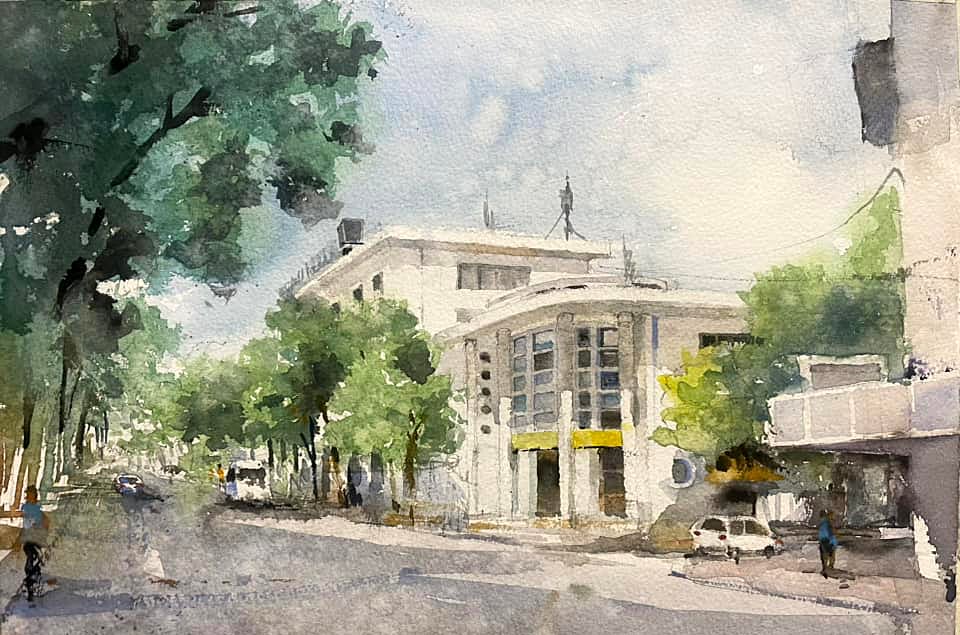
Sketches by architect Dang Phuoc Tue
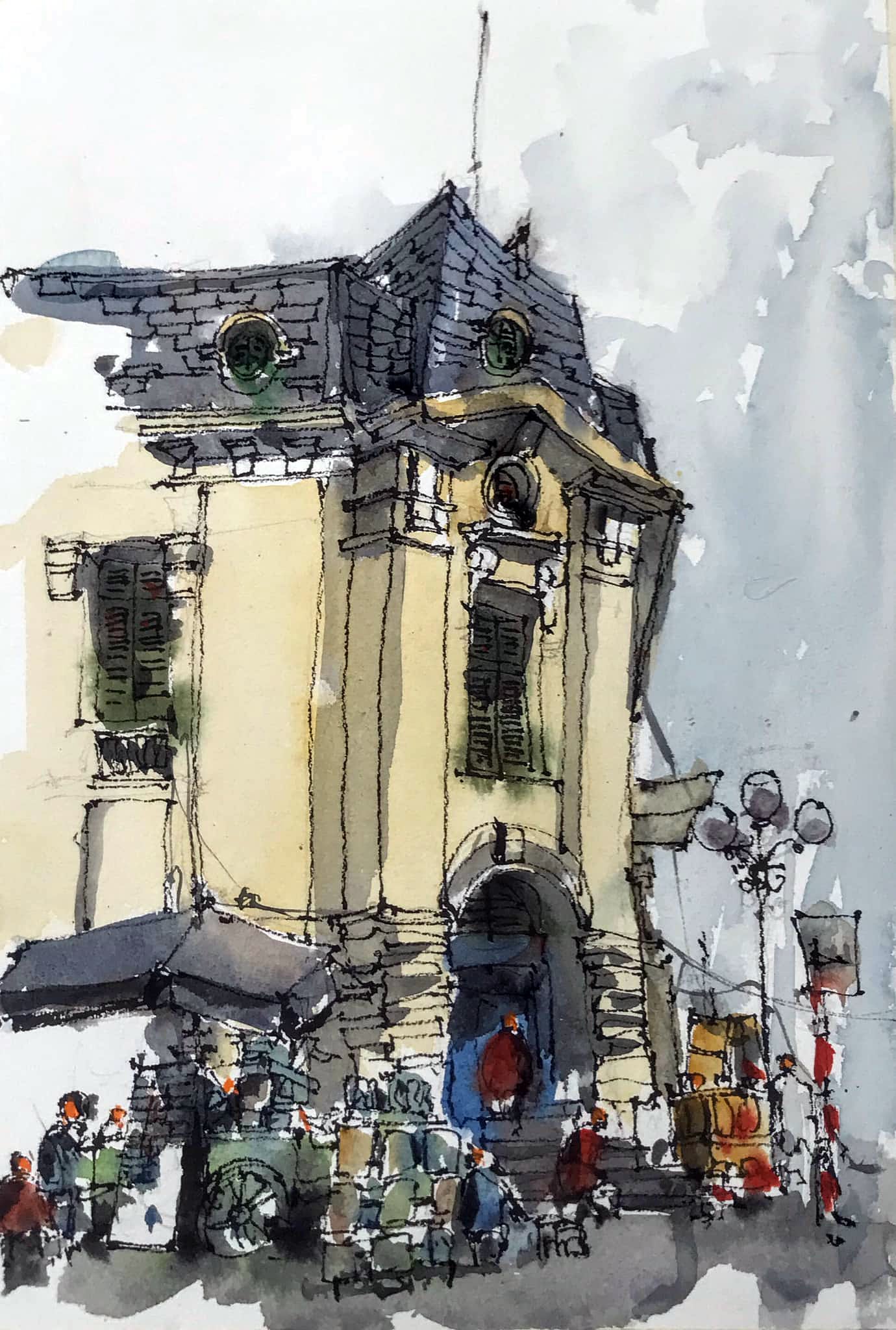
Sketches by artist Vuong Long
In 1943, the Hanoi Post Office continued to build a new building (at the corner of Dinh Tien Hoang and Dinh Le streets today) designed by architect Henri Cerutti-Maori in the Art Deco style.
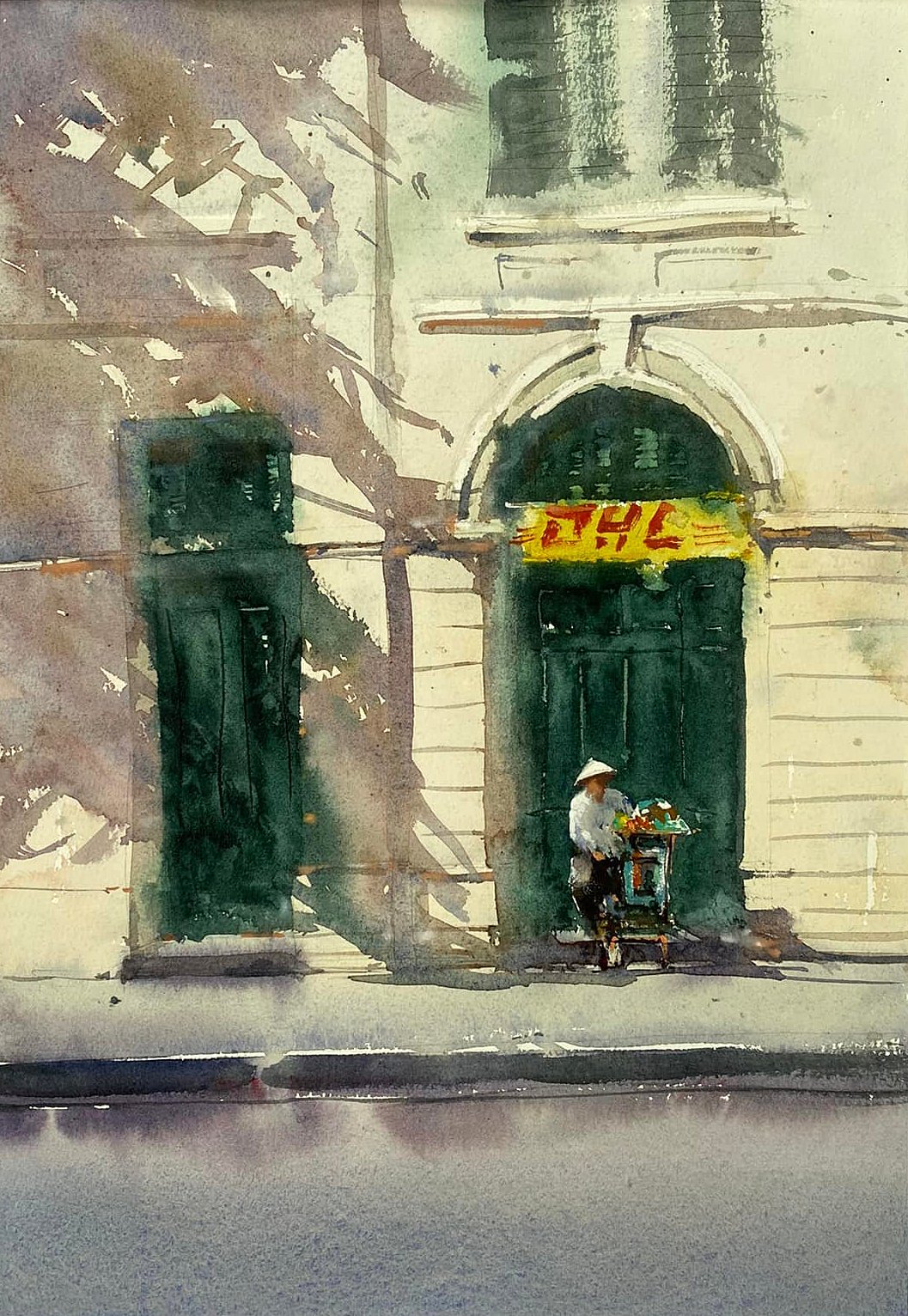
A corner of Hanoi's post office - a sketch by Hoang Quoc Dat
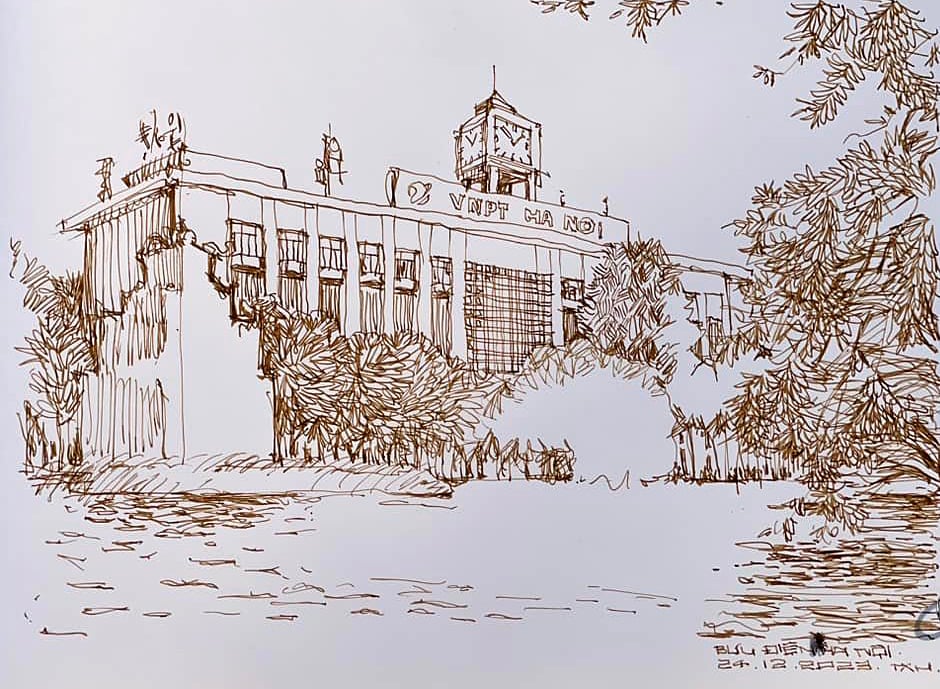
Sketch by architect Tran Xuan Hong
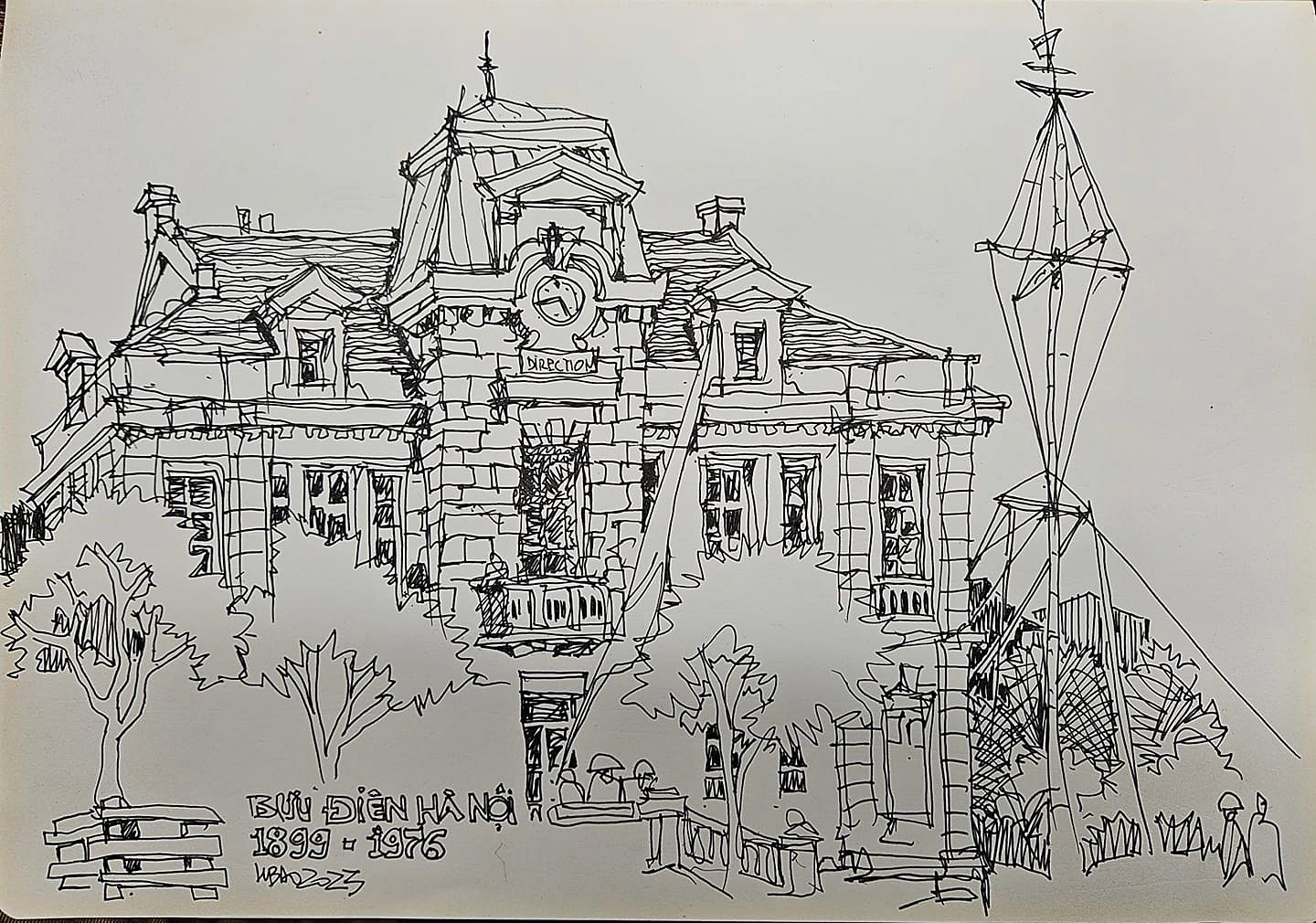
Post office before 1976 - sketch based on a photograph by architect Bui Hoang Bao
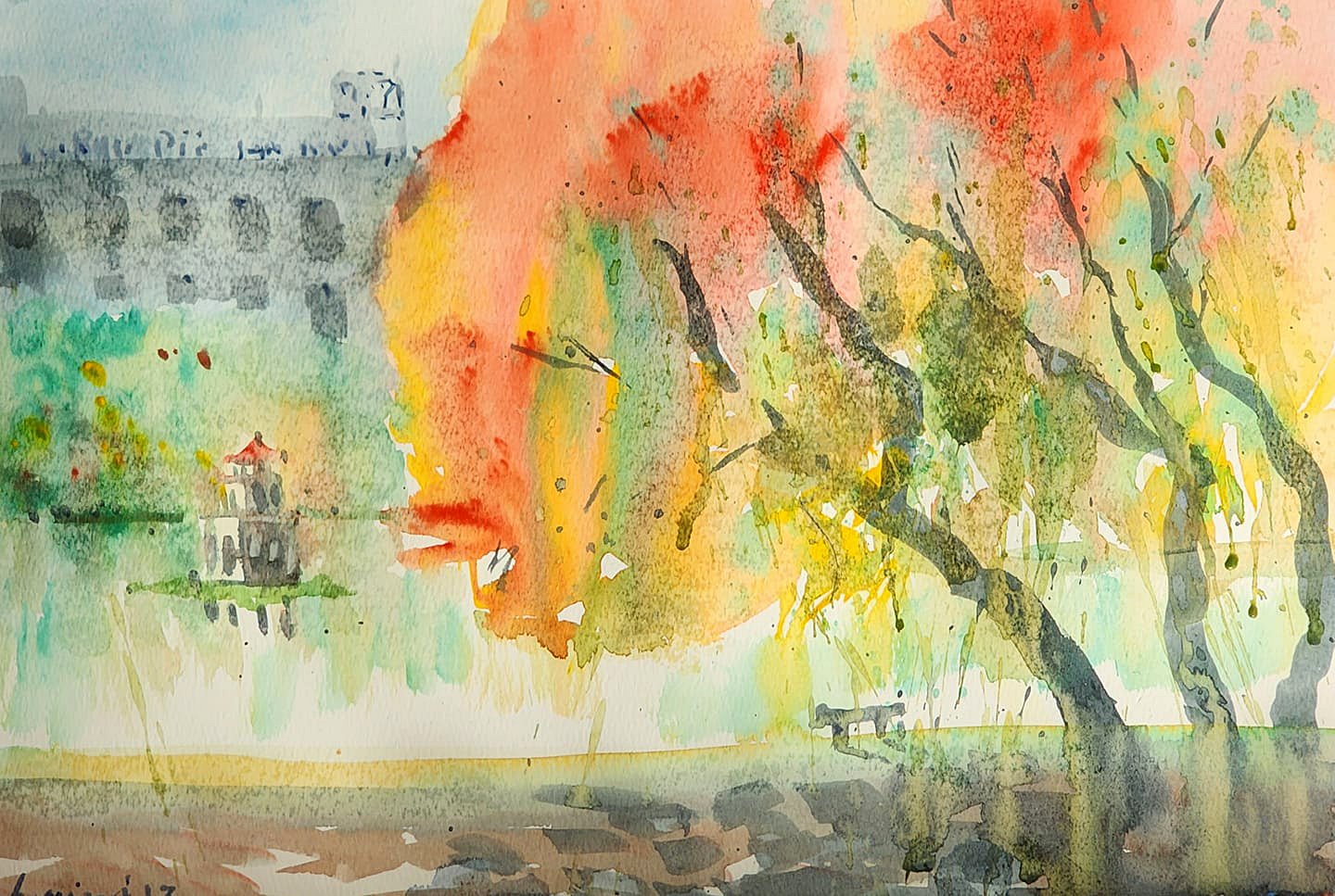
Sketch by architect Phung The Huy
In 1976, a new five-story post office was built in a modern architectural style with "aid" from China (this is the current VNPT building). The highlight of the building is the clock tower with four square faces, each side measuring 4.5 meters. In 1996, the building was included in the list of "newly constructed architectural works under review that negatively impact the landscape and spatial layout." (*)
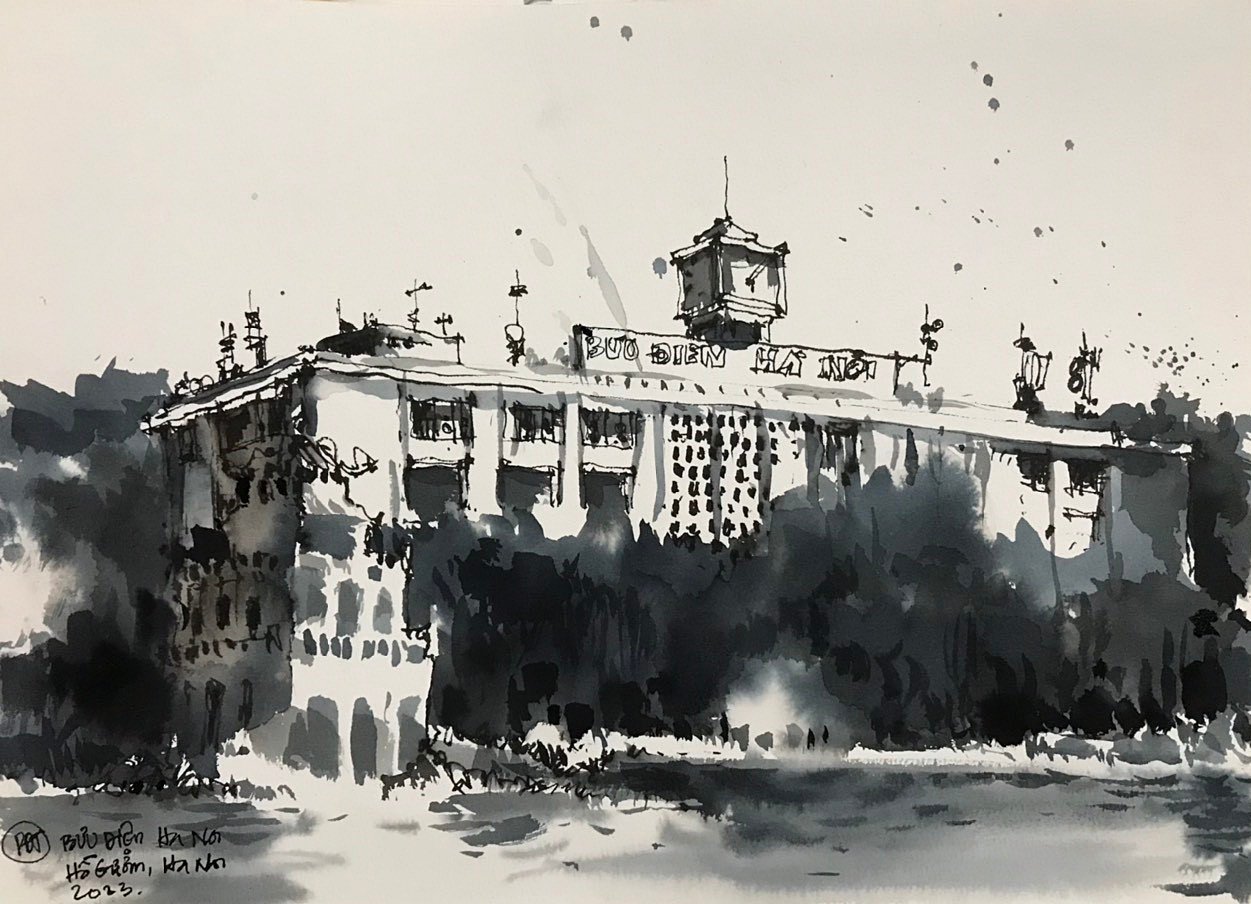
Sketch by architect Phan Đình Trung
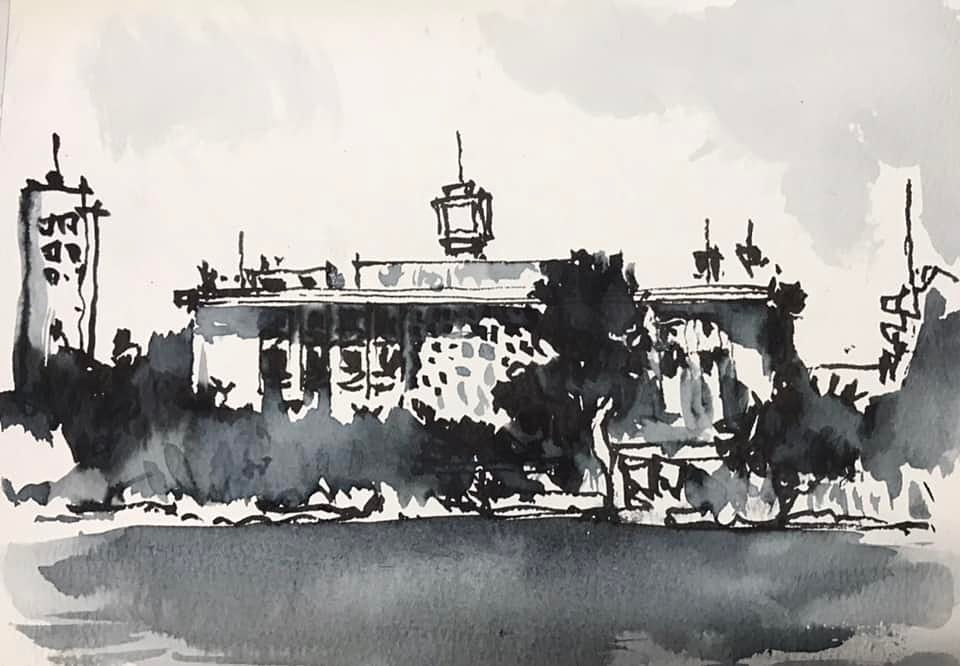
Sketch by architect Phan Đình Trung
In 2015, the sign that read "Hanoi Post Office" (installed in 1997) was replaced with "VNPT Hanoi," sparking considerable opposition.
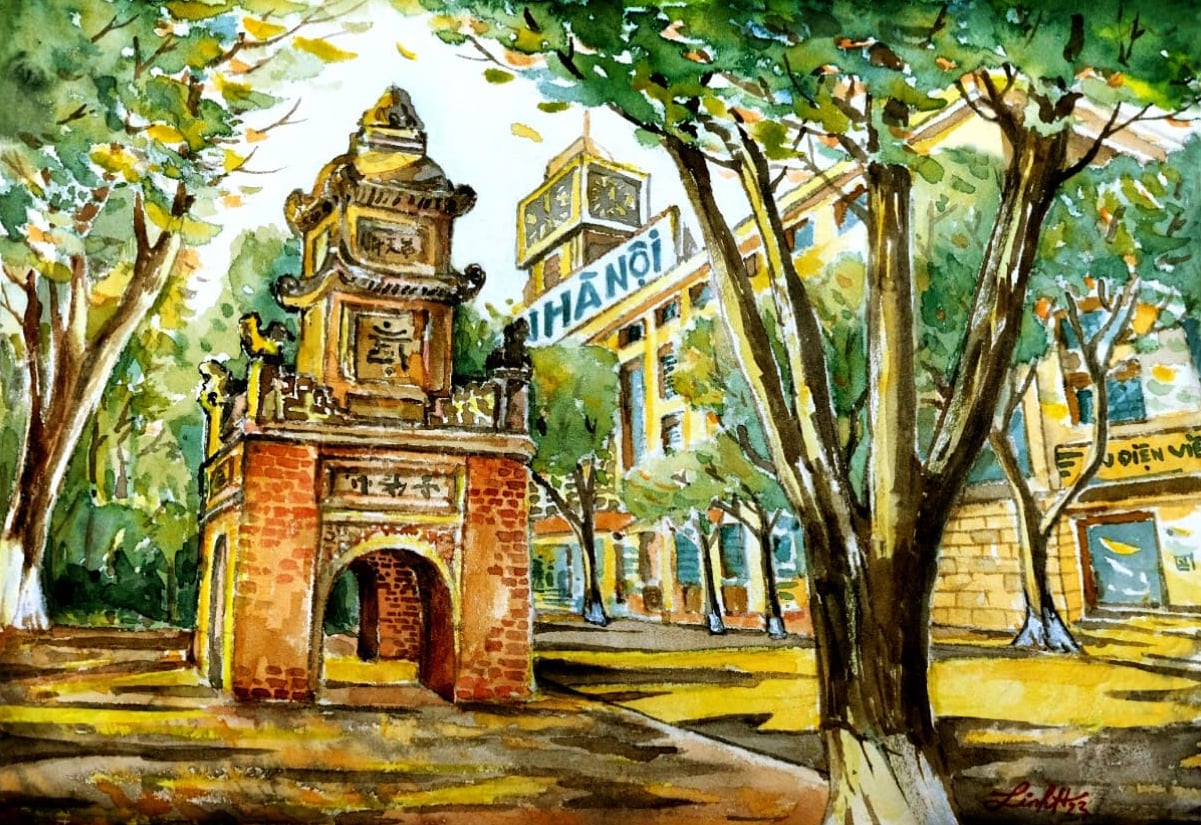
Hoa Phong Tower in front of the Post Office - a sketch by architect Linh Hoang.
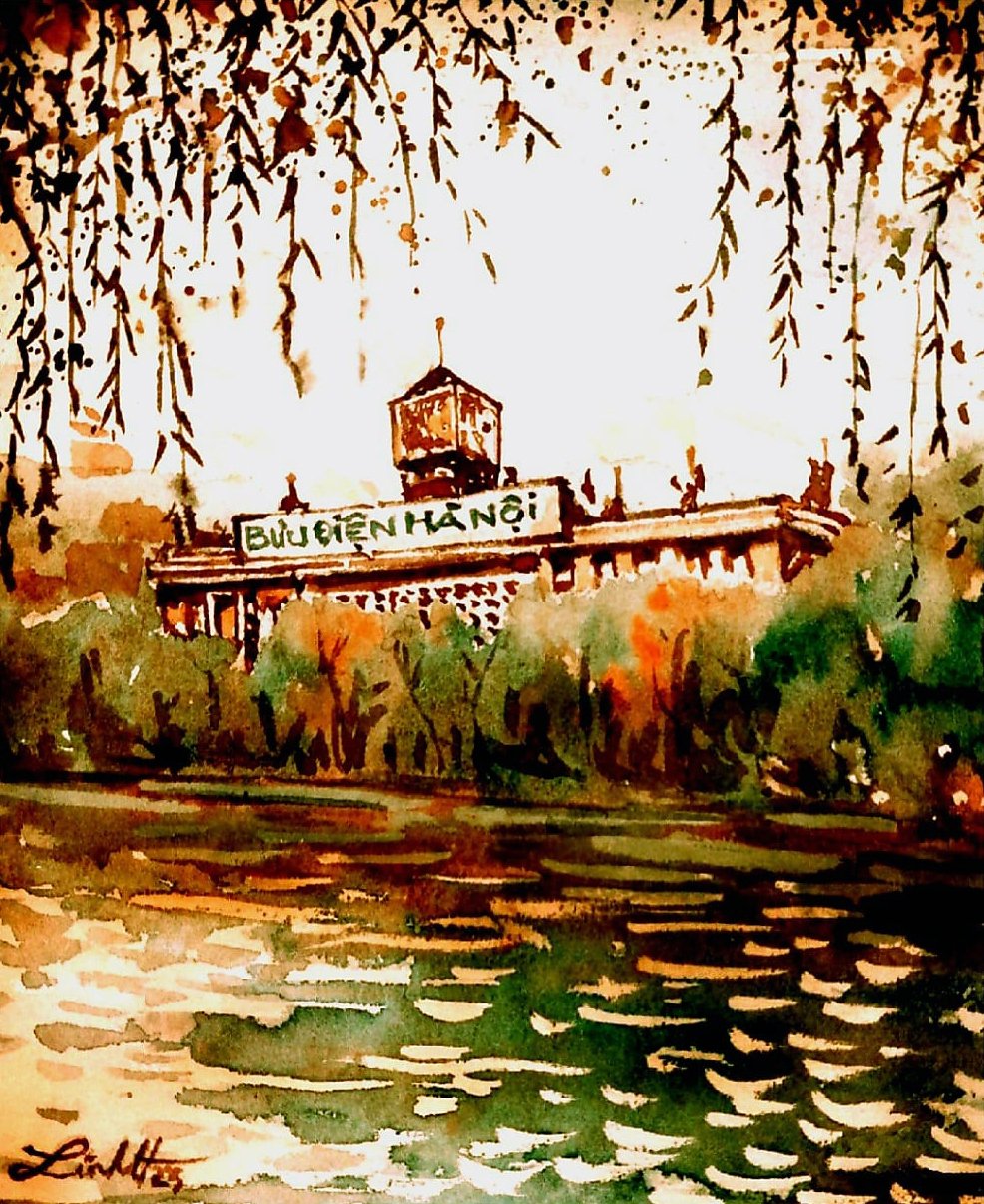
Sketches by architect Linh Hoang
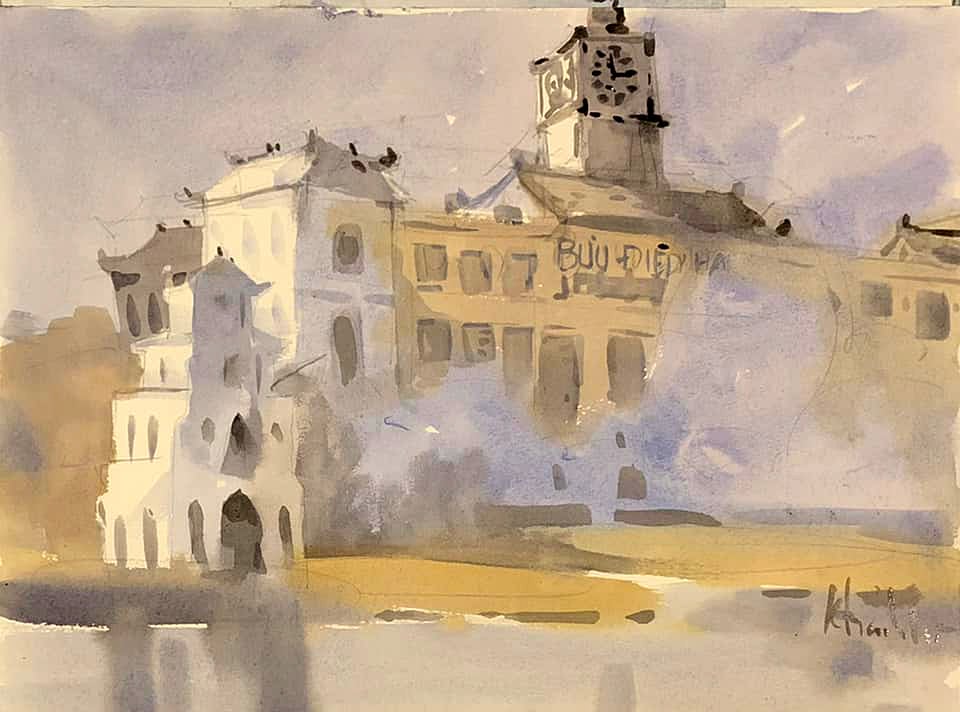
Sketches by architect Nguyen Khanh Vu
(*) In the decision signed by Minister Ngo Xuan Loc approving the detailed plan for the Ho Guom area and its surroundings.
Source link

![[Photo] The courage of new recruits of Brigade 144 on the training ground.](https://vphoto.vietnam.vn/thumb/1200x675/vietnam/resource/IMAGE/2026/05/27/1779881651341_anh-man-hinh-2026-05-27-luc-18-32-52.png)
![[Photo] The heat at the fireworks display site on the opening night of the Da Nang International Fireworks Festival 2026](https://vphoto.vietnam.vn/thumb/1200x675/vietnam/resource/IMAGE/2026/05/27/1779889741485_ndo_br_z7872039145157-fecaba5112f39e8352544099d7ef4738-5140-jpg.webp)



















































![[Photo] The courage of new recruits of Brigade 144 on the training ground.](https://vphoto.vietnam.vn/thumb/402x226/vietnam/resource/IMAGE/2026/05/27/1779881651341_anh-man-hinh-2026-05-27-luc-18-32-52.png)


























Comment (0)