

He is People's Artist Bui The Kien - a man who has dedicated more than half his life to searching for and restoring the seemingly lost sounds of his ancestors...
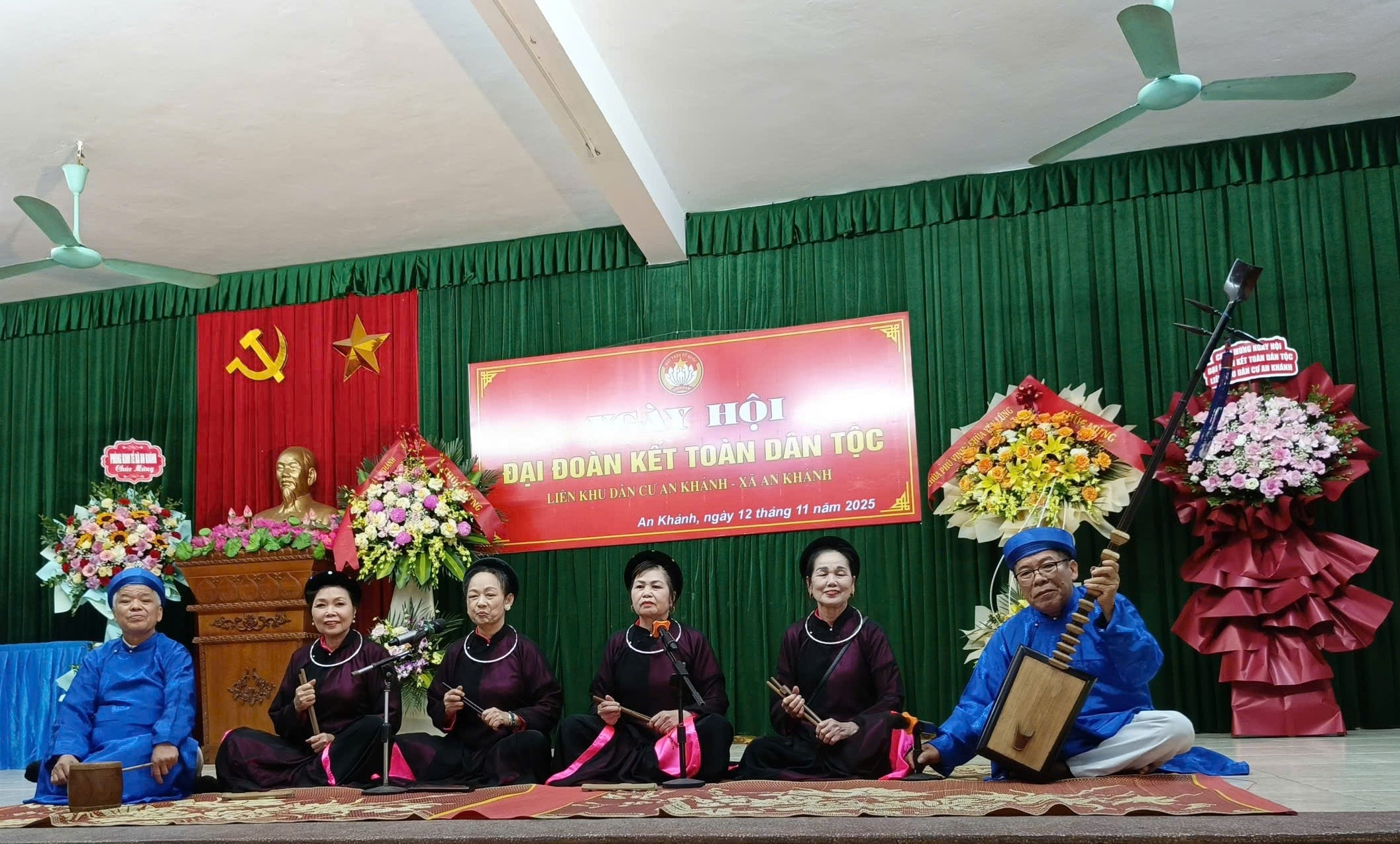
A late-blooming connection with "classical" music .
The home of People's Artist Bui The Kien is nestled deep within Ngai Cau village, An Khanh commune, where the breath of time seems to stand still amidst the rhythmic tapping of wooden clappers and the deep, resonant sound of the zither...
Welcoming us with the relaxed demeanor of a Northern Vietnamese scholar, Mr. Kien fondly recalled his early days with ca trù (traditional Vietnamese singing). Born in 1950, his youth was spent amidst the brutal years of war. In 1967, answering the call of the Fatherland, he joined the army, tasked with using music and singing to boost the morale of soldiers. Back then, he learned traditional musical instruments as part of the "singing drowns out the sound of bombs" movement, but his connection with ca trù only truly took shape decades later.
It wasn't until the late 1980s, when the country entered a period of reform and traditional cultural values began to be prioritized for restoration, that Mr. Kien truly had the opportunity to explore this art form.
He recounted that the biggest turning point in his life was an evening performance at the festival of the Cat Que village temple (now Duong Hoa commune, Hanoi ). At that time, the elderly villagers suddenly expressed their desire to hear the Ca Tru singing again – an art form previously considered a "luxury."
Witnessing the performances of the veteran artists, Mr. Kien was captivated by the profound beauty and wisdom in each verse and rhythm. The elders' words at that time felt like a heavy burden: "You young men play the instruments so well, you should learn this; not many people know how to do it anymore."
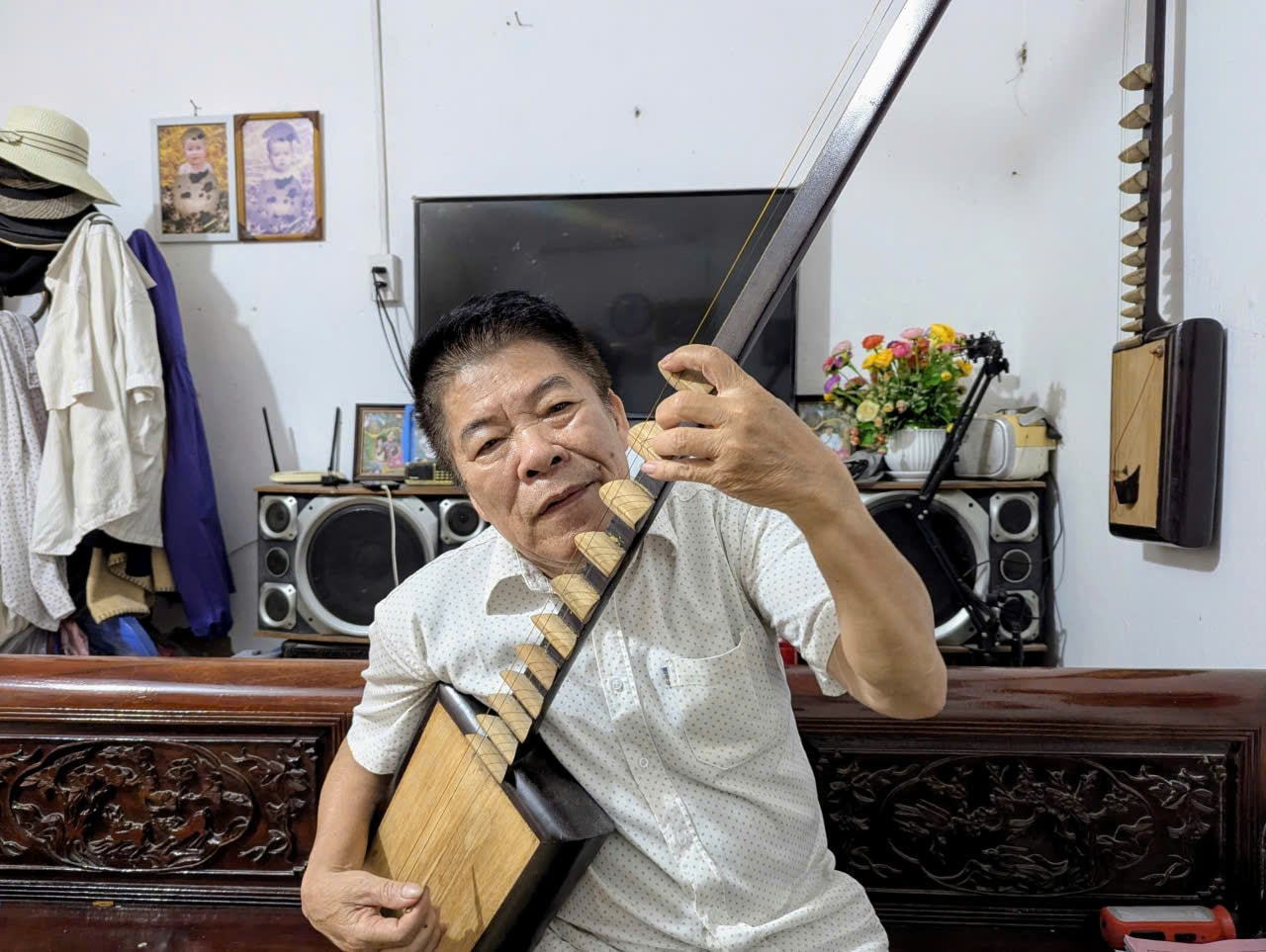
Those words of advice haunted the mind of the man who loved national culture. Mr. Kien began to delve into understanding it and realized that ca trù was not a trivial form of entertainment but a sophisticated art form, a crystallization of poetry, music , and philosophy of life. If xẩm singing was the voice of the poor laborers at the docks and bus stations, ca trù possessed a noble character, used exclusively in religious ceremonies and serving the royal court. It was this difference and depth that spurred him to embark on the arduous path: restoring the đàn đáy (a type of stringed instrument) of the Ngãi Cầu guild.
In the early 1990s, finding a proper, authentic đàn đáy (a type of Vietnamese stringed instrument) for practice was an impossible challenge. After decades of near-oblivion, most đàn đáy instruments in folk music had been damaged or destroyed. Undeterred, Mr. Kien traveled all the way to Hai Phong after hearing that a family from an old đàn đáy guild still possessed a complete instrument frame. In reality, only the rotting wooden frame remained. Undeterred, with the skillful hands of someone knowledgeable about musical instruments, he brought the frame back, meticulously measuring and studying the structure of every minute detail.
In 1993, the first đàn đáy (a type of Vietnamese stringed instrument) made by Mr. Kien himself was created. He meticulously explained that the đàn đáy has a very distinctive structure with a soundbox, bridge, and long neck. In the past, when troupes performed along the road, they often detached the neck of the đàn đáy to use as a carrying pole—a small detail, but one that shows the deep connection the instrument has with the life of the musician.
His act of personally building the instrument was not only to have a musical instrument for practice, but also an affirmation of his determination to revive ca trù (traditional Vietnamese singing) in his hometown. With the instrument, he began searching for like-minded people, mobilizing former ca trù singers and musicians in the area to form a club.
Preserving cultural identity
In 1995, the Hoai Duc Ca Tru Club was officially established, marking the return of a cultural tradition after many years of interruption. Subsequently, in 2003, the Ngai Cau Ca Tru Club was founded, becoming a cradle for nurturing the passion of those who love this art form in the locality.
Mr. Kien and his fellow members have taken the Ngai Cau singing tradition to compete in numerous large and small festivals. Prestigious awards such as the "Xiêm y" award at the 2011 National Ca Tru Festival – an award given to female singers whose singing skills have reached a mature level – are proof of the artist's tireless efforts in preserving the traditions and customs of his ancestors.
In the art world, there are often two ways of playing: "standard style" and "artistic style." While "artistic style" is a more unrestrained approach, adding many embellishments and melodic embellishments to please the listener, he steadfastly pursued the "standard style." Ca trù must adhere strictly to the standards, the musical notation, and the rhythmic patterns passed down from his ancestors. This strictness is the essence of an artist who values heritage more than fame... ( People's Artist Bui The Kien).
However, pride in the heritage is always accompanied by concerns about its continuation. Mr. Kien frankly shared the current reality: although the club's membership list is quite large, only a handful of people are regularly active and able to perform. Today's youth are caught up in the whirlwind of studying, working, and modern forms of entertainment; very few have the patience to pursue an art form that demands rigorous training and finesse like Ca Tru.
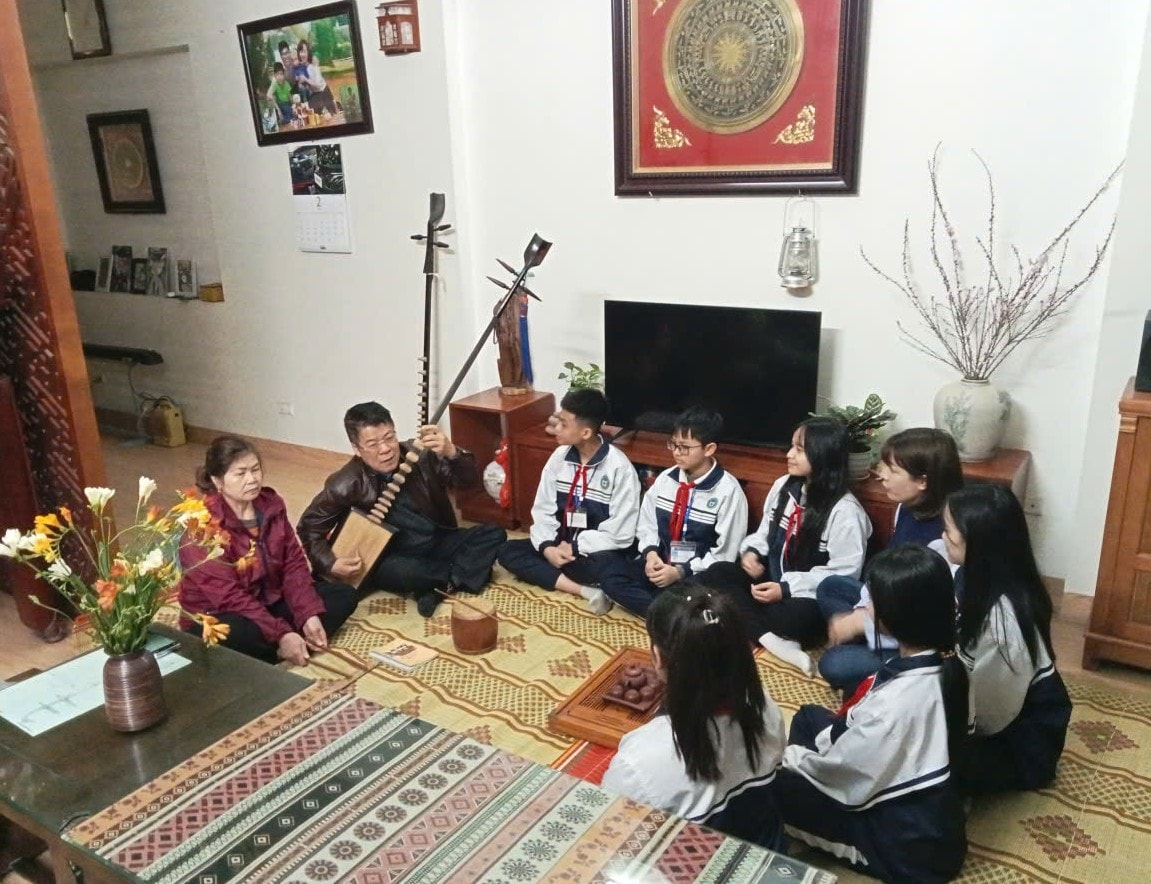
With the motto "I will teach even if there is only one person left to learn," he never refused anyone who came knocking on his door asking him to pass on his skills. He taught completely free of charge, using all the knowledge he had accumulated throughout his life, with only one wish: that the cultural heritage of Ngãi Cầu village would not be broken.
At 76 years old, having received the prestigious title of People's Artisan, Mr. Bui The Kien still lives a simple and humble life. He mentions the artisan allowances and social insurance benefits with a gentle smile, viewing them as a source of spiritual encouragement rather than material value. What worries him most is not income, but the fate of the musical instruments and ancient melodies he preserves. He often tells his children and grandchildren: "This instrument is very precious; as long as the instrument remains, the soul of Ca Tru (traditional Vietnamese singing) remains. If the instrument is lost, everything is lost."
The artist's aspiration is to ensure that ca trù (traditional Vietnamese singing) not only lives in museums or festivals, but is truly present in the daily lives of the people. He proactively writes new lyrics for ca trù melodies, incorporating messages about modern life and praising the homeland to make it more accessible to young people, while strictly adhering to the tonal rules and musicality of the traditional style. The image of the elderly artist teaching an 8-year-old child each rhythm instilled in us a belief and hope in the continuation of the cultural identity of the capital city...
Ca trù requires a musical prelude before singing, and the artist must memorize at least five basic musical phrases to be able to harmonize with the female singer and the male performer. These three figures form a perfect artistic triangle, blending the deep, resonant sound of the đàn đáy (a type of lute), the crisp sound of the phách (clappers), and the authoritative sound of the chầu drum. Spoken songs like Dương Khuê's "Hồng hồng tuyết tuyết" (Red and Snow) or the poems of Tản Đà and Nguyễn Công Trứ, through the singing of ca trù artists, suddenly come alive, imbued with the spirit of a golden age. Even as society changes, they remain true to their original values, because if those principles are lost, ca trù will no longer be ca trù... ( People's Artist Bùi Thế Kiên).
Source: https://hanoimoi.vn/ca-doi-canh-canh-nhip-phach-ngai-cau-745018.html



![[Photo] General Secretary and President To Lam presides over a meeting on preparations for the review of one year of operation of the three-tiered government system.](https://vphoto.vietnam.vn/thumb/1200x675/vietnam/resource/IMAGE/2026/06/02/1780391821195_a1-bnd-4595-9717-jpg.webp)


























































Comment (0)