

| Commodity Trading Q&A (Issue 66): Strategies in Option Trading Commodity Trading Q&A (Issue 67): Strategies in Option Trading (Part 2) |
Besides the Bull Spreads strategy, there is another strategy that helps investors achieve stable profits and limit losses to a manageable level: the Bear Spreads strategy.
Bear Spreads Strategy
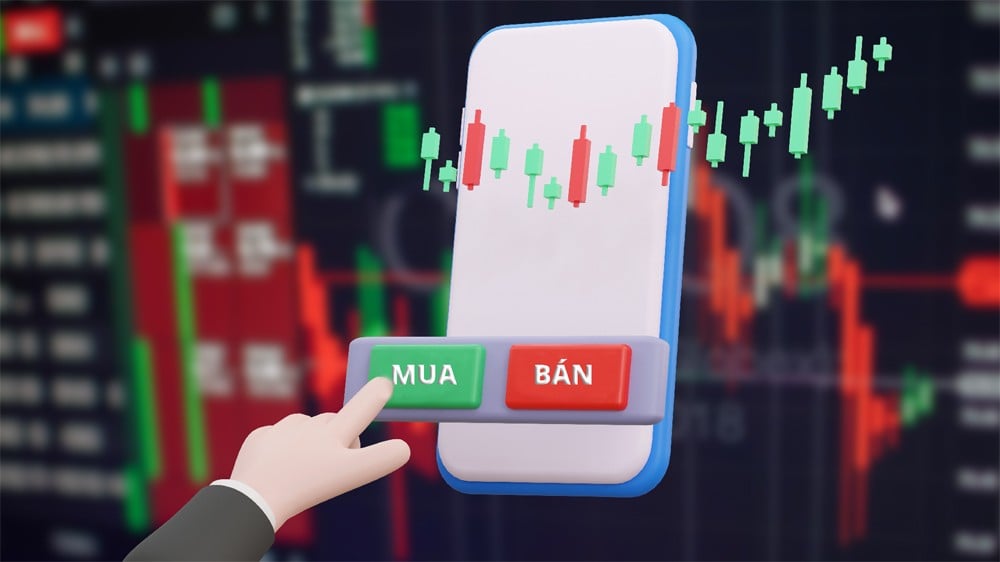
This strategy involves simultaneously buying and selling options with different strike prices at different price levels of the same underlying asset and with the same expiration date.
 |
This strategy takes two forms, including:
Bear Spreads strategy with call options: With this strategy, the investor sells a call option at a certain strike price and simultaneously buys a call option at a higher strike price.
Bear Spreads strategy with put options: With this strategy, the investor sells a put option at a certain strike price and simultaneously buys a put option at a higher strike price.
Thus, in contrast to the Bull Spreads strategy, the Bear Spreads strategy is suitable for investors who expect to receive stable profits when the price of the underlying asset falls and limit losses to a certain level when the price of the underlying asset rises.
For example:
An investor employs a Bear Spreads strategy with call options. This investor simultaneously sells a call option on a December 2024 wheat contract with a strike price of 720 cents/bushel and an option premium of 64 cents/bushel, and buys a call option with a strike price of 820 cents/bushel and an option premium of 34 cents/bushel.
Profits from the Bear Spreads strategy depend on the price of the December 2024 wheat futures contract (ZWAZ24). The following scenarios are possible:
Case 1: The ZWAZ24 contract price increases by more than 820 cents/bushel.
If the price of the ZWAZ24 futures contract exceeds 820 cents/bushel, both call options are exercised. The investor incurs a loss (excluding transaction fees and other taxes/fees) calculated as the difference between the exercise price of the two options and the option premium difference, or (820 – 720) – (64 – 34) = 70 cents/bushel.
Case 2: The ZWAZ24 contract price falls below 720 cents/bushel.
If the price of the ZWAZ24 futures contract falls below 720 cents/bushel, neither of the two call options will be exercised. The investor will then receive a profit equal to the option premium difference, which is (64 – 34) = 30 cents/bushel.
Case 3: The ZWAZ24 contract price is between 720 and 820 cents/bushel.
If the price of the ZWAZ24 futures contract is between 720 and 820 cents/bushel, let's say 760 cents/bushel. Then, only the call option with a strike price of 720 cents/bushel will be exercised. The investor must buy a ZWAZ24 contract at 790 cents/bushel to fulfill the obligation and incur a loss (excluding transaction fees and other taxes/fees) of (760 - 720) - (64 - 34) = 10 cents/bushel. The loss incurred by the investor in this case will not exceed the loss incurred by the investor in case 1, and the profit earned by the investor will not exceed the profit in case 2.
Source: https://congthuong.vn/hoi-dap-giao-dich-hang-hoa-so-68-cac-chien-luoc-trong-giao-dich-hop-dong-quyen-chon-phan-3-328091.html
![[Photo] Prime Minister Pham Minh Chinh presides over a meeting on private sector economic development.](/_next/image?url=https%3A%2F%2Fvphoto.vietnam.vn%2Fthumb%2F1200x675%2Fvietnam%2Fresource%2FIMAGE%2F2025%2F12%2F20%2F1766237501876_thiet-ke-chua-co-ten-40-png.webp&w=3840&q=75)




























































































Comment (0)