

Concerns about counterfeit goods ahead of major events.
With only a few days left until the 2026 World Cup officially kicks off, football fever is spreading across many countries, especially in Argentina – the reigning world champions – where fans are starting to buy football-related merchandise to support their national team. However, along with flags, jerseys, and souvenirs, a familiar problem is also returning: counterfeit goods and imitations capitalizing on major sporting events like the World Cup.
In the shopping streets of Buenos Aires, Argentina, jerseys bearing Lionel Messi's name are displayed in abundance on roadside stalls. Priced between $8 and $28, they are significantly cheaper than the official versions.
According to the Buenos Aires Federation of Trade Unions, the World Cup craze is driving strong demand for tournament-related products, but the majority of sales are flowing into the informal market.
Fabian Castillo, President of the Buenos Aires Trade Federation, stated: "We have observed that 70% to 80% of the jerseys sold on the streets have an unclear origin. This means they are produced in illegal workshops, posing numerous labor and intellectual property issues. This is something that needs special attention."
Amid declining purchasing power in Argentina due to persistent inflation, many consumers are opting for cheaper alternatives. A national team jersey sells for around 40,000 pesos, equivalent to $28, while an authentic Adidas product can cost over 150,000 pesos, equivalent to over $100.
Facundo Gentille, an Argentinian, shared: "The reality is that my family often buys alternative versions because the original jerseys are usually too expensive."
Not only jerseys, but also collectible cards, souvenirs, and World Cup-branded merchandise are increasingly appearing on online platforms at significantly lower prices. However, this is not the first time global sporting events have become targets of the counterfeit market. Before the 2024 Paris Olympics, French authorities warned of a surge in counterfeit goods entering the country as the number of international visitors increased sharply. According to the French Anti-Counterfeiting Association UNIFAB, in 2023 alone, French customs seized more than 20 million counterfeit products, many of which could pose a health risk to users.
Delphine Sarfati-Sobreira, Director of UNIFAB, stated: "Consumers need to understand that fake mascots can be dangerous when parts are not securely attached and children could swallow them. Fake clothing, scarves, or hats may also contain dyes with high lead content, posing a health risk to users."
From the World Cup to the Olympics, the planet's biggest sporting events not only attract fans and tourists but also create opportunities for counterfeiters to exploit the surging consumer demand. And as these tournaments increasingly become global commercial events, the fight to protect intellectual property and consumers is becoming more urgent than ever.
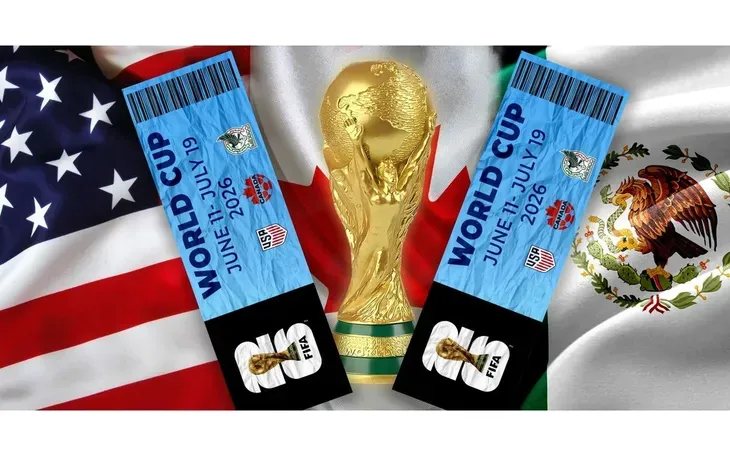
From World Cup-themed jerseys to luxury goods, the counterfeit market is now worth approximately $467 billion annually.
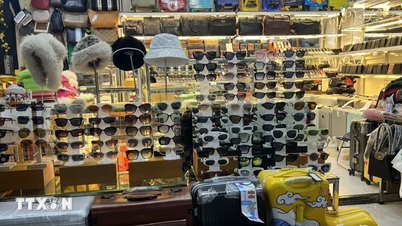
Counterfeit goods are being sold rampantly on e-commerce platforms.
From World Cup-themed jerseys to luxury goods, the counterfeit market is now worth approximately $467 billion annually, according to the OECD. This figure is larger than the entire economies of many countries around the world.
If translated according to international trade flows, counterfeit goods currently account for approximately 2.3% of total global imports. In other words, for every 100 containers of goods imported worldwide , more than 2 containers contain counterfeit goods or goods infringing intellectual property rights.
Europe is also one of the most heavily impacted markets. Every year, $117 billion worth of counterfeit goods arrive at European ports, equivalent to nearly 5% of the bloc's total imports.
While counterfeit goods were previously transported in large shipments or openly sold in traditional markets, they are now increasingly appearing on online platforms. With just a few clicks, consumers can access a wide range of well-known branded products at unusually low prices. From live streams and social media to cross-border e-commerce platforms, tracing the origin of products is becoming more difficult for authorities.
From e-commerce platforms and social media to live stream sales, with just a few clicks, consumers can access a wide range of well-known branded products at unusually low prices.
In the US, ahead of Amazon's Prime Day shopping event, consumer protection organizations issued warnings about the increase in fake websites, fake reviews, and products of unknown origin appearing online.
Melanie Mcgovern, spokesperson for the Better Business Bureau, stated: "If a product receives a series of identical 5-star reviews or if they are posted within the same timeframe, those could be fake reviews. Consumers should also be wary when an item that is scarce everywhere suddenly becomes available in large quantities at very low prices. This could be a sign of counterfeit goods."
According to the OECD, the growth of e-commerce is changing the way counterfeit goods circulate globally. Instead of large containers easily detected at border crossings, counterfeit products are increasingly being broken down into individual orders and shipped directly to buyers through cross-border online platforms. This also makes it more difficult for authorities to inspect, trace, and prosecute violations.
Notably, the category of counterfeit goods is also expanding rapidly. It's not just clothing, shoes, or handbags; international agencies have documented an increasing number of cases involving counterfeit cosmetics, perfumes, children's toys, electronic batteries, automotive components, electronic devices, and even pharmaceuticals. This shows that the issue of counterfeit goods today is no longer simply about revenue losses for well-known brands. In many cases, it has become a direct concern for consumer health, product safety, and the reliability of the global supply chain.

Many countries are stepping up crackdowns on products that infringe intellectual property rights.
Countries are taking strong action against counterfeit goods.
Faced with the expansion of the global counterfeit market, many countries are stepping up crackdowns on intellectual property infringing products. This ranges from confiscating counterfeit and substandard goods at border crossings to applying AI technology to expose counterfeit products.
In the US, authorities have conducted numerous inspections in New York's Canal Street shopping district – a location long considered a hotspot for counterfeit goods trafficking. Meanwhile, in Europe, customs agencies are also facing increasing pressure as cross-border trade explodes with the rise of e-commerce.
Kristian Vanderwaeren, Director General of Belgian Customs, stated: "In Belgium alone, losses related to counterfeit goods could amount to 4 to 5 billion euros per year. On a European scale, this figure is around 40 billion euros. This is truly a very big problem."
In addition to increased inspections at border crossings and logistics centers, many technology companies are also joining the fight against counterfeit goods using artificial intelligence tools.
Paul Thomas, President of Bosch North America, shared: "Essentially, this technology works by recognizing the surface characteristics of a product. Instead of relying on labels, chips, or identification codes, the system uses the unique physical characteristics of each object to create an unforgeable digital identity. Once registered in the system, the application can quickly authenticate the product through live video images."
From scanners at border crossings to AI tools that can authenticate products using only a phone camera, the fight against counterfeiting is entering a new phase. It's no longer just a chase between customs officials and smuggling rings, but increasingly a race between counterfeiting technology and authentication technology.
Source: https://vtv.vn/cac-nuoc-quyet-liet-chong-hang-gia-100260602110914617.htm




![[Photo] General Secretary and President To Lam presides over a meeting on preparations for the review of one year of operation of the three-tiered government system.](https://vphoto.vietnam.vn/thumb/1200x675/vietnam/resource/IMAGE/2026/06/02/1780391821195_a1-bnd-4595-9717-jpg.webp)


















































































Comment (0)