

Six months after Moscow announced it would cripple Ukraine's exports through the Black Sea, Kyiv has opened a new shipping route to break free from Russia's stranglehold.
In mid-July 2023, President Vladimir Putin announced Russia's withdrawal from the Black Sea grain corridor initiative, mediated by the United Nations and Turkey. Moscow decided to reinstate a full-scale blockade of Ukrainian maritime transport, attacked port infrastructure in the cities of Odessa and Chernomorsk, and warned that any cargo ships arriving in Ukraine could be considered military targets.
"At that time, the whole world thought that Russia would completely cut off Ukraine's exports and neutralize its seaports. Everyone understood that there was only one naval power in the Black Sea," Olya Korbut, an expert at the Centre for European Policy Analysis (CEPA), commented on Russia's overwhelming advantage in the strategic waterway.
However, after six months, Kyiv reversed the situation. Ukrainian food exports via the Black Sea reached 4.8 million tons in December 2023, while the peak of the grain initiative period was around 4.2 million tons, according to statistics from Spike Brokers, an agricultural trading company in Kyiv. Before the outbreak of hostilities in February 2022, Ukraine exported an average of about 6 million tons of grain per month via the Black Sea.
According to Korbut, Ukraine broke through the "strangulation" of the Russian military with two bold strategies: establishing its own maritime corridor and forcing the Russian Black Sea Fleet to retreat deep into its rear.
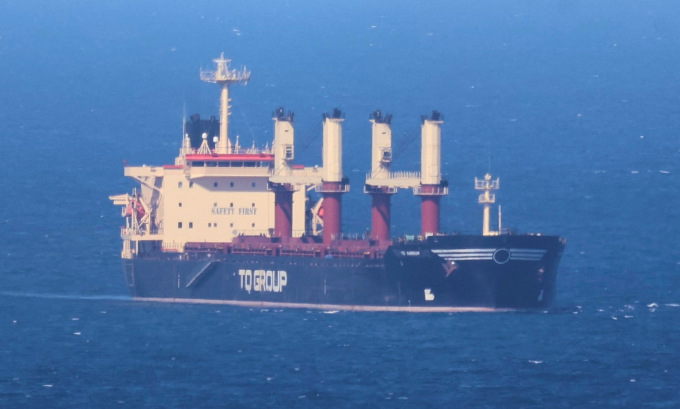
A cargo ship carrying grain in the Black Sea on July 17, 2023. Photo: Reuters
Of the six countries bordering the Black Sea, Ukraine had the second-longest coastline at 2,782 km before Russia annexed Crimea in 2014, second only to Türkiye. Before the start of hostilities in February 2022, half of Ukraine's exports passed through its port system, with agricultural products being a key commodity.
Following Russia's blockade of Ukrainian shipping lanes in the Black Sea, the European Union (EU) and several neighboring countries sought to alleviate Ukraine's economic hardship by establishing road and rail corridors for grain transportation. However, this approach proved ineffective due to high costs and inadequate rail and road infrastructure to handle Kyiv's grain export capacity. Pressure from farmers and political groups in Poland, Romania, Bulgaria, and Hungary further hampered Ukrainian goods at border crossings.
With Russia withdrawing from the Black Sea grain agreement and refusing to negotiate, establishing its own shipping corridor through the region became Ukraine's only option.
Ukraine's new maritime transport corridor utilizes its and Romanian port infrastructure at the mouth of the Danube River, traversing Romanian and Bulgarian territorial waters to deliver goods to Türkiye's Bosphorus Strait and then around the Aegean Sea to the Adriatic Sea in Southern Europe.
This initiative indirectly leverages NATO's security umbrella to reduce the risk of grain ships being intercepted by the Russian navy, as Romania, Bulgaria, and Türkiye are all NATO members. Russian attacks targeting the Danube estuary are limited to Ukrainian ports. Kyiv only needs to consider protecting the ships until they enter the territorial waters of its neighbor.
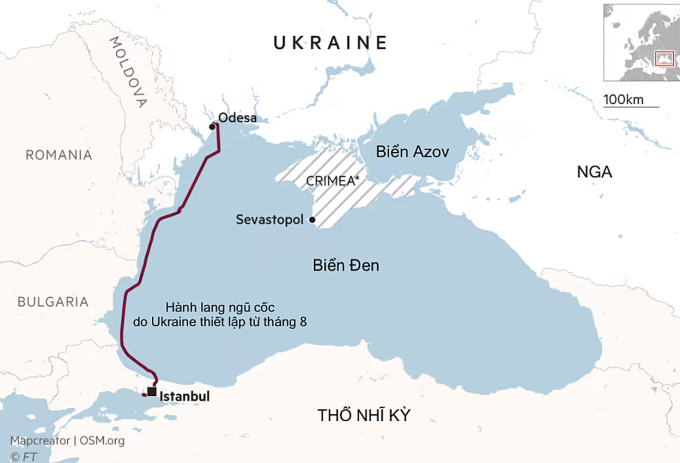
The new grain corridor was established by Ukraine in August 2023. Graphic: FT
According to expert Korbut, support from Romania is "key to success" for Ukraine's new grain corridor. Despite a series of attacks targeting the Danube estuaries and Odessa in 2023, Ukraine, in cooperation with Romania, completed numerous projects to renovate ports, dredge riverbeds, increase the number of pilots, and improve the mechanism for coordinating waterway traffic.
In 2023, the port of Constanta in Romania achieved record-high grain export volumes, with 40% originating from Ukraine. The country plans to open a dedicated port for Ukrainian grain in March. Greece and Croatia are also making significant contributions by allowing Ukrainian grain to transit through their Adriatic port systems.
Ukraine's exports through Danube river ports increased from 14.5 million tons of goods in the period of February-December 2022 to 29.4 million tons from January-November 2023. In the last five months of last year, after Ukraine declared its own establishment of a transport corridor through the Black Sea, Ukraine's grain exports reached 8.6 million tons, peaking in December 2023 with 5 million tons.
Throughout 2023, Ukraine exported a total of 57 million tons of various goods, including food, via sea routes, matching the 2022 figure but only about one-third of the 2021 figure. Ukrainian Infrastructure Minister Oleksandr Kubrakov expressed confidence that the country could boost food exports via the Black Sea corridor to 48 million tons per year.
In the initial phase after withdrawing from the Black Sea grain initiative, Russia repeatedly attacked ports in Mykolaiv, Chornomorsk, and Odessa in Ukraine. Ukrainian port infrastructure and warehouses along the Danube River also became targets, including Reni, Izmail, Orlivka, and Vylkove.
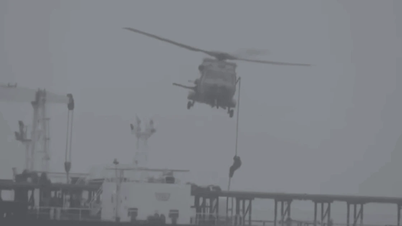
According to statistics from Kyiv, from August to December 2023, approximately 180 Ukrainian port infrastructure facilities were partially or completely damaged by Russian attacks, resulting in the burning of about 300,000 tons of grain. Ukraine also accused the Russian military of firing warning shots at the Palau-flagged cargo ship Sukru Okan on August 14, 2023, as it passed through the Danube River en route to the Romanian port of Sulina, and then deploying Ka-29 helicopters to disembark and inspect the ship.
Faced with the risk of the newly established shipping lanes being choked off by Russia "in their infancy," the Ukrainian military quickly deployed a second spearhead in its plan to liberate maritime exports: intensifying attacks on Russian military targets in the Black Sea and the Crimean Peninsula.
Ukraine has leveraged its diverse arsenal to gain an advantage in the unequal conflict in the Black Sea.
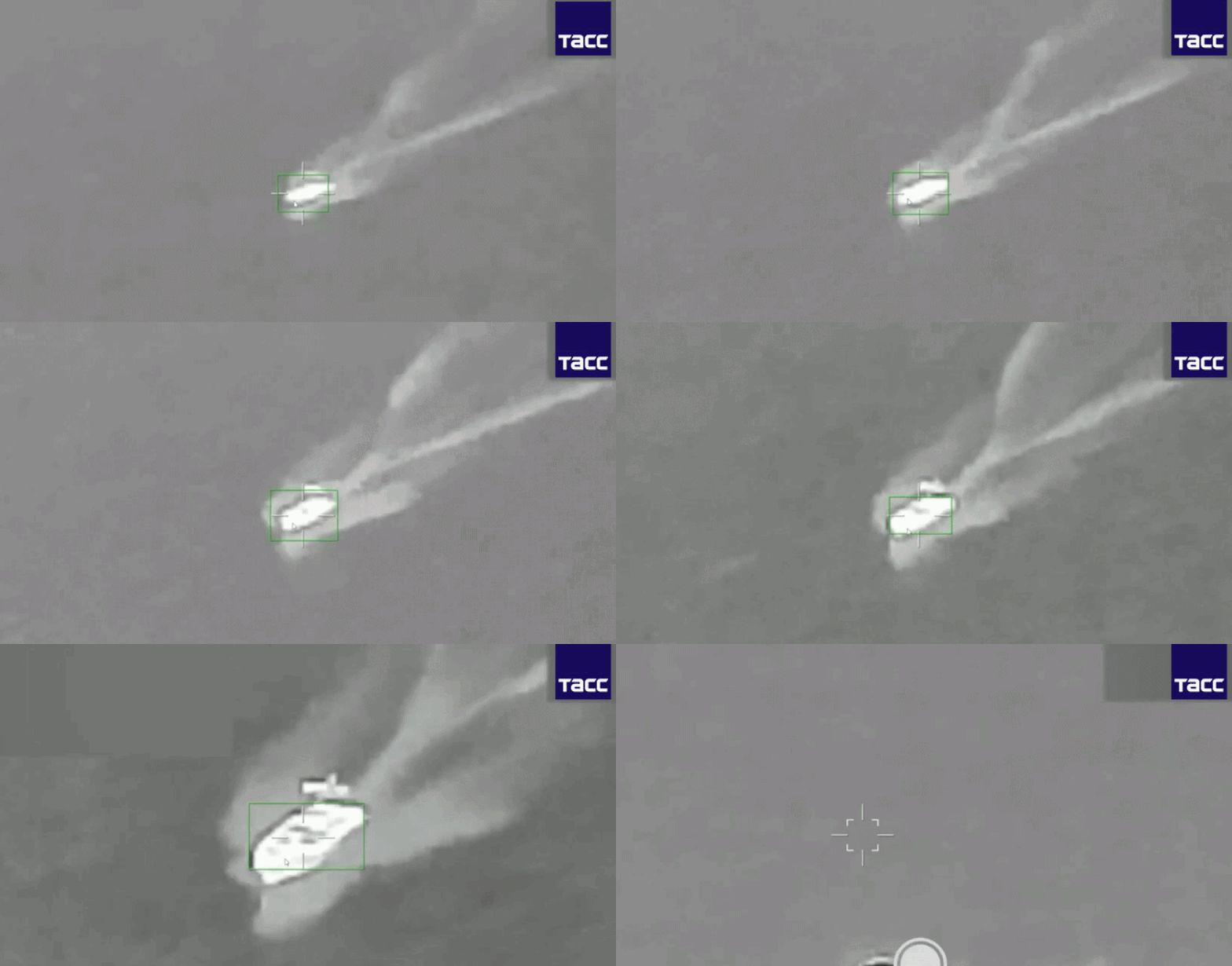
They used Neptune missiles, developed from the Soviet-era 3M24 Uran subsonic anti-ship missile, to prevent Russian warships from approaching the southern coast. Kyiv was further bolstered with Storm Shadow cruise missiles supplied by Europe to strike targets deep within the Crimean Peninsula. The Ukrainian military also developed suicide boats and drones to attack Russian ports and warships at the Sevastopol naval base.
Between 2022 and 2023, Russia recorded at least 16 Ukrainian warships being hit, while Kyiv reported hitting 24 Russian targets. As a result, the Black Sea Fleet had to gradually withdraw from Crimea, moving its forces further east.
Taking advantage of the Russian navy's setback, the Ukrainian military also regained control of oil and gas platforms off the coast of Crimea in September 2023. In December 2023, the 4,000-ton Novocherkassk landing ship was sunk in Feodosia, southeast of Crimea.
The attacks carried out by Ukraine were similar to an anti-access/area denial strategy, creating a narrow but sufficient corridor for the smooth transport of goods by sea. For the first time since the war broke out, the Black Sea Fleet was pushed back from the Ukrainian coast. The successive losses forced Russia to loosen its blockade of the Black Sea.
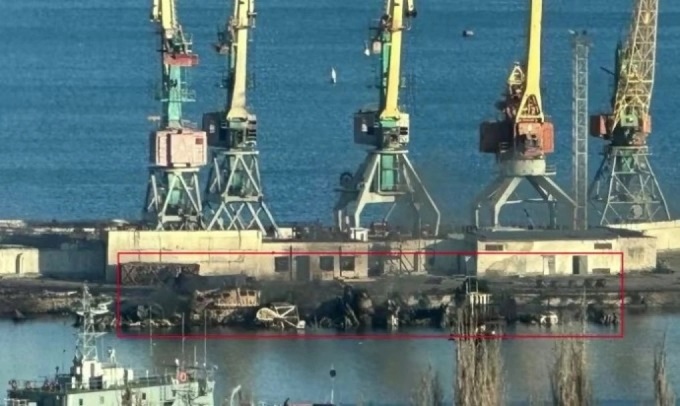
Debris believed to be from the Novocherkassk at a port in Crimea following the attack on December 26, 2023. Photo: Pravda
According to Tymofiy Mylovanov, head of the Kyiv School of Economics, breaking the blockade imposed by Russia on the Black Sea is the only solution for Ukraine to save its agriculture and prevent the country from collapsing economically.
After nearly two years of conflict, Ukraine recorded a budget deficit of $43 billion in 2023, forcing them to seek solutions to stand on their own two feet and avoid complete dependence on financial and economic aid from the West. Opening new shipping routes in the Black Sea became a "life-or-death option" for Ukraine.
"Recent developments show that the leadership in Kyiv realizes they cannot rely indefinitely on foreign aid and loans. Ukraine must generate its own revenue," said Oleg Suslov, an analyst in Odessa. "The difficulty is that Russia also understands this and will not abandon its goal of stifling Ukraine's exports through attacks on port infrastructure."
Thanh Danh (According to CEPA, Al Jazeera )
Source link

























![[Photo] Reception to welcome General Secretary and President To Lam and his wife on their State visit to the Philippines](https://vphoto.vietnam.vn/thumb/1200x675/vietnam/resource/IMAGE/2026/06/01/1780295488620_vna-potal-chieu-dai-chao-mung-tong-bi-thu-chu-tich-nuoc-to-lam-va-phu-nhan-tham-cap-nha-nuoc-toi-philippines-8798060-7855-jpg.webp)






































































Comment (0)