 |
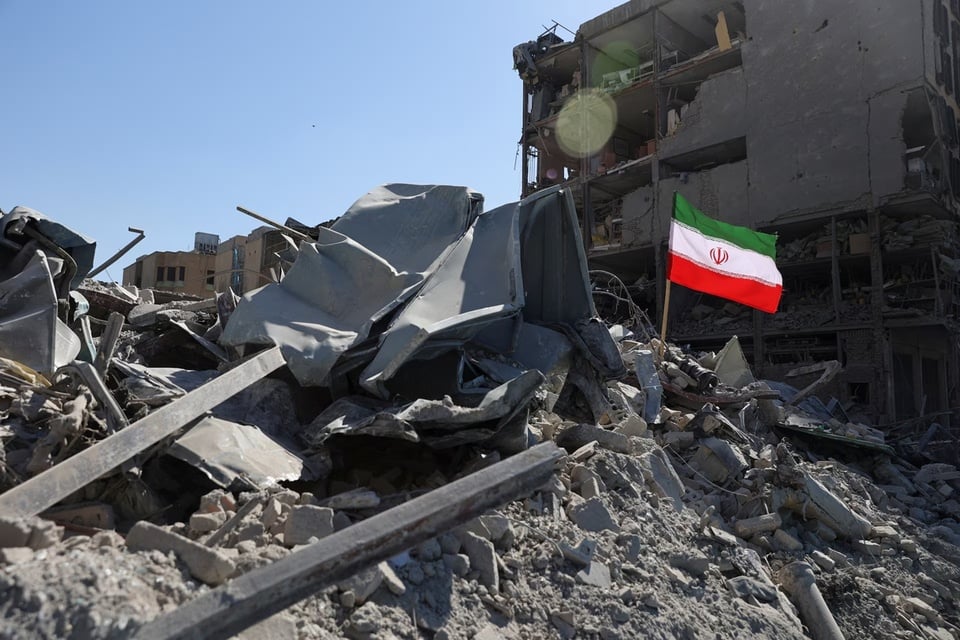
An Iranian police station was destroyed in the conflict. Photo: Reuters . |
With an agreement signed and negotiations beginning, the US war with Iran is on hold, at least for now. President Donald Trump is assuring the American people that they have won.
"NOTHING!" Trump wrote Thursday in a post on his social media platform, where he also listed the benefits of a memorandum aimed at continuing negotiations with Iran over the next 60 days.
"Oil is flowing, Iran will never have nuclear weapons (the world will be safe!), the stock market is booming, jobs are at record levels, and prices are falling (affordability!). Our country is stronger, safer, and more respected than ever before," Trump said.
After the agreement to withdraw the United States from the conflict with Iran was announced, many Americans asked themselves: Was what America had sacrificed in the past few months worth it?
More than 100 days of conflict between the US, Israel, and Iran, in which 13 US soldiers were killed along with over 7,500 civilians in the Middle East, reveals a far more complex story.
Losses of $132 billion and more.
According to the consulting firm Moody's Analytics, the cost of a conflict with Iran would reach $132 billion . This figure comes from increased military spending as well as the additional costs of energy, goods, and interest rates that Americans would have to pay, according to chief economist Mark Zandi.
According to calculations by a research team at Brown University, Americans have spent an additional $60 billion on gasoline since the conflict began due to rising prices. This is equivalent to an average of $460 per household and is still increasing.
Gasoline prices in the US have risen from an average of $2.98 per gallon to around $4 per gallon due to the conflict. At its peak, this figure reached $4.56 per gallon. The high gasoline prices have also impacted a range of related services – from airfare and transportation to goods.
Fertilizer prices also increased by up to 47% during the conflict, leading to higher food prices. According to a survey by the American Farm Bureau Association, about 70% of American farmers said they could not afford to buy enough fertilizer to meet their needs.
In addition, the conflict has also caused mortgage interest rates to rise, making it more difficult for Americans to buy homes. Earlier this year, average interest rates had fallen below 6%, giving Americans hope for a more favorable housing market.
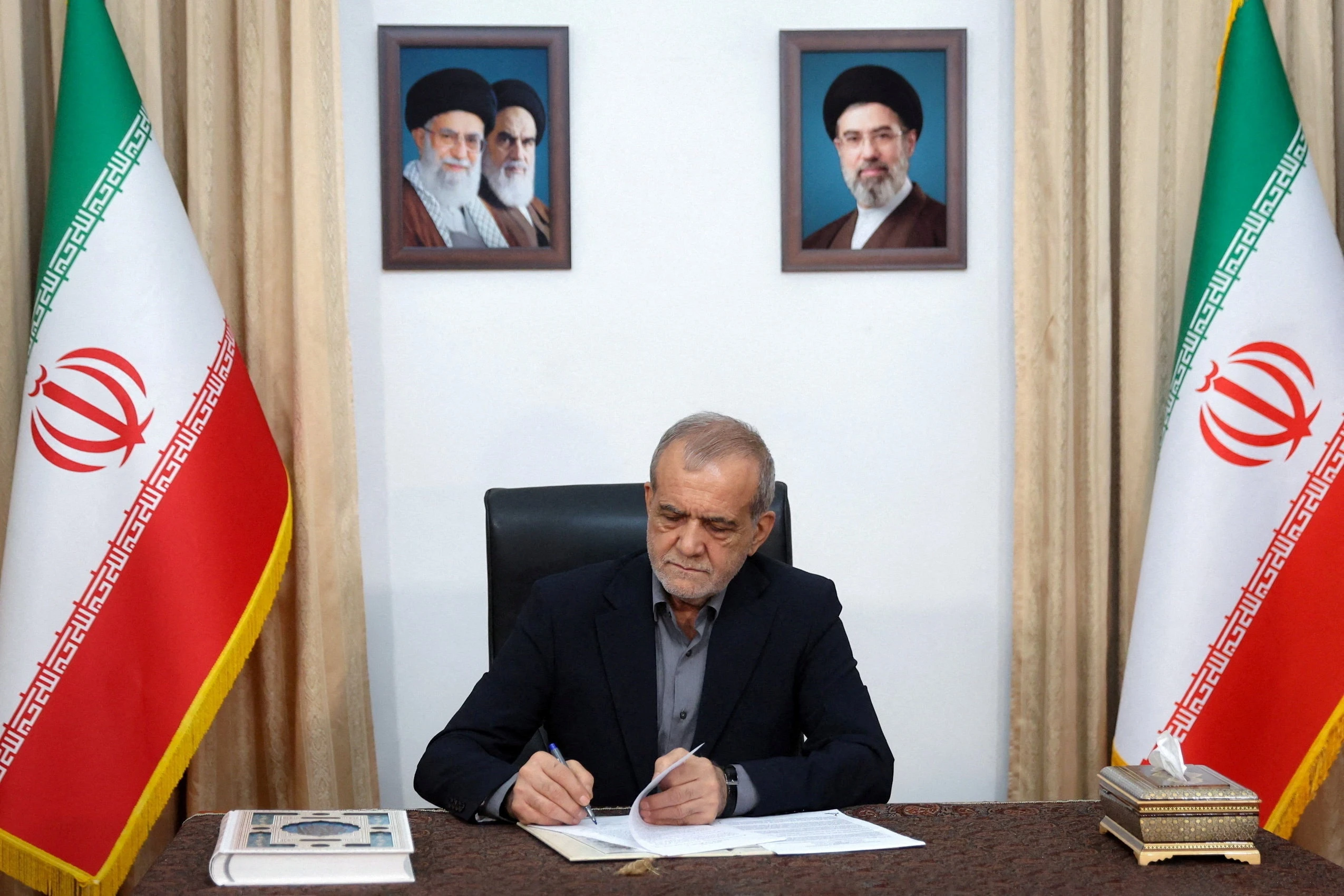 |
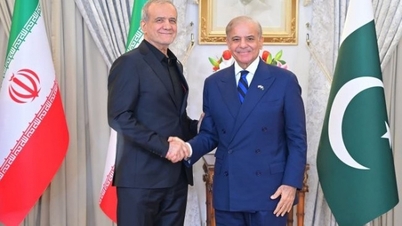
Iranian President Masoud Pezeshkian signs an agreement with the US on June 18. Photo: WANA/Reuters. You may also like  North Korea aims to build two large warships per year for the next five years.(CLO) North Korean leader Kim Jong Un announced that the country needs to build two new warships, each the size of the 5,000-ton Choe Hyon destroyer, annually within the next five years, in order to significantly enhance its naval capabilities.  Iranian President visits Pakistan: Affirms he will never negotiate with the US on the missile program, offers new proposals on Middle East security.On June 23, Iranian President Masoud Pezeshkian arrived in Pakistan for a one-day visit to discuss bilateral relations and regional and international issues of mutual concern with Prime Minister Shehbaz Sharif.  Trusting in agreements with the West is constantly pushing Russia to the brink of disaster.While diplomats were hoping to reach an agreement in Anchorage, the situation in Crimea and other parts of Russia deteriorated due to the supply of long-range drones from Europe. |
However, the conflict with Iran has contributed to interest rates rising to 6.5%. If someone buys a $400,000 house with a 20% down payment, the additional monthly payment would be $110 .
For the world , the conflict in the Middle East is also having negative consequences. The World Bank has lowered its global growth forecast to 2.5% – the lowest level since the Covid-19 pandemic.
Decline in military strength
The U.S. military reported that 13 soldiers were killed. While this number is relatively low compared to other conflicts, the fact that soldiers were killed has still provoked a reaction from the American public.
Meanwhile, Israel reported that 26 of its soldiers were killed. Iran's casualty count stands at 3,375, including both soldiers and civilians. Thousands in Lebanon and dozens in Gulf states have also been victims of the conflict.
Testifying before Congress in May, a senior Pentagon official stated that the cost to the U.S. military had reached $29 billion . This figure does not include the cost of repairing U.S. bases in the region attacked by Iran.
According to the Wall Street Journal, the US Deputy Secretary of Defense informed Congress last week that the Department would request $80 billion in additional funding to cover war costs and other expenses. Experts believe this figure has not yet been fully assessed.
During the conflict, approximately 20 U.S. bases in the region suffered damage. 42 military aircraft—both manned and unmanned—were destroyed or damaged.
Calculating the cost of replacing the missiles already launched is even more difficult. The U.S. military has launched over 1,000 Tomahawk missiles and over 1,500 anti-aircraft missiles. American media reports suggest that replacing this quantity of missiles would take up to six years. By then, U.S. capabilities on other fronts would also have significantly declined.
In addition, the costs of maintaining and repairing equipment, as well as the operating costs of the aircraft carrier at sea, must also be taken into account.
"Just deploying the personnel and equipment there costs a considerable amount of money," assessed Linda Bilmes, an expert at the Harvard Kennedy School. In addition, the cost of purchasing replacement ammunition is higher than the original price, further driving up expenses.
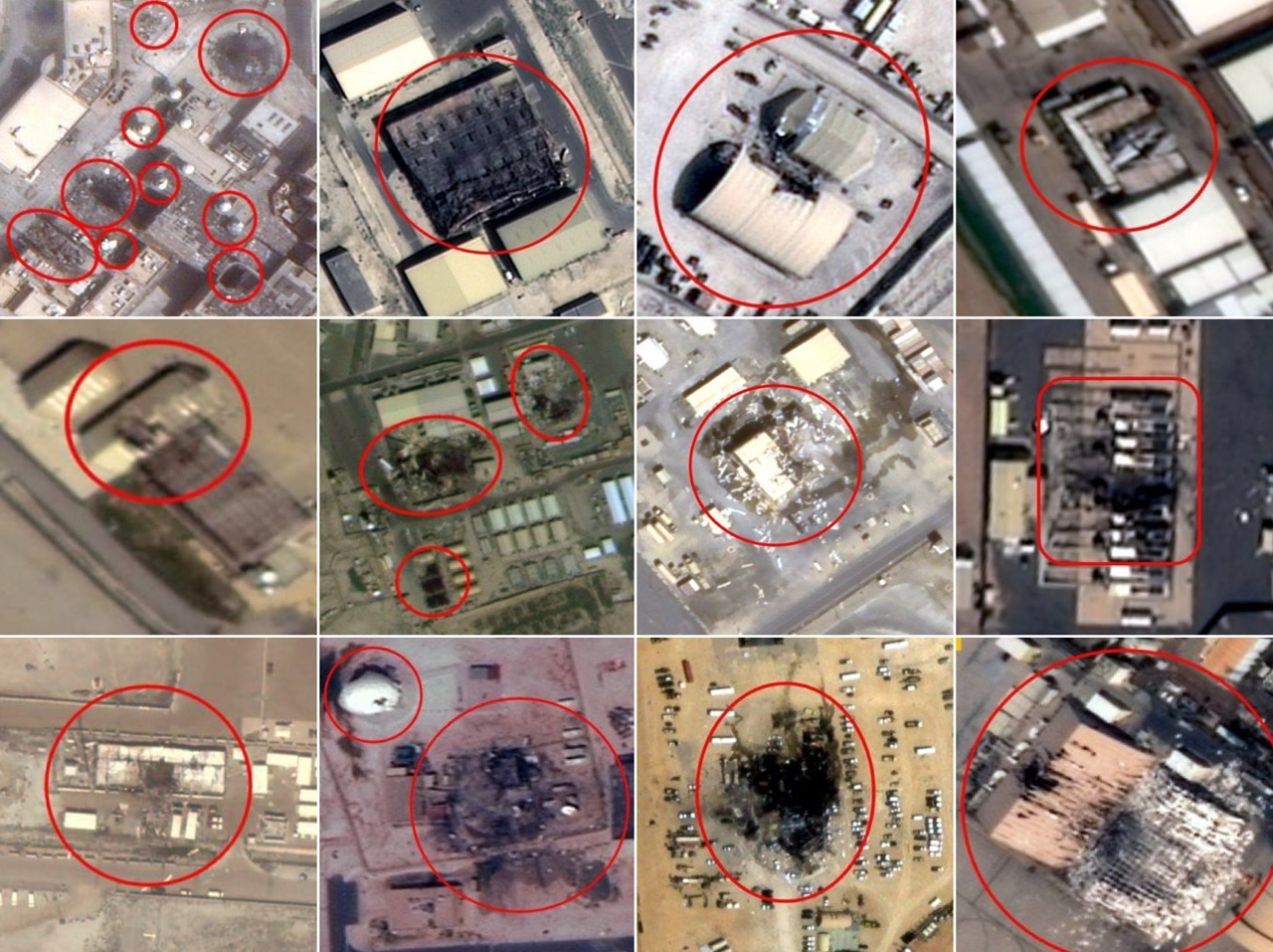 |
Damage to several US bases in the Middle East during the conflict with Iran. Photo: Washington Post. |
America's reputation has declined.


Another “hidden cost” that isn’t always readily apparent is the impact on the Trump administration’s standing and prestige, both domestically and internationally.
Within the United States, the image of the Trump administration has suffered significant damage. According to a University of Maryland survey in early June, a majority of Americans surveyed rated the negative impact of the conflict with Iran on the United States as far outweighing the positive impact.
The war also exposed the limitations of American military power. Compared to the original goal of completely eliminating the threat from Iran, what Washington achieved seemed insignificant.
"The deal would be a victory for Iran. I don't think Iran will make many concessions in the next 60 days of negotiations," a senior European diplomat told the Telegraph.
Furthermore, the conflict also affected relations between the US and its allies. Trump was angered by some European countries refusing to allow US military aircraft to use their airspace, and by NATO member states failing to send ships to help the US open the Strait of Hormuz.
"Frustration over the erratic shifts in (Trump's) foreign policy is growing and becoming increasingly evident. We always answer the phone when the U.S. calls. But now, the frequency of responses will be lower," the European diplomat shared.
Source: https://znews.vn/cai-gia-vuot-xa-132-ty-usd-o-iran-post1661588.html
![[Photo] Prime Minister Le Minh Hung presides over the thematic session on promoting science and technology development and innovation.](https://vphoto.vietnam.vn/thumb/1200x675/vietnam/resource/IMAGE/2026/06/23/1782207872934_ndo_br_dsc-1724-jpg.webp)