

 |
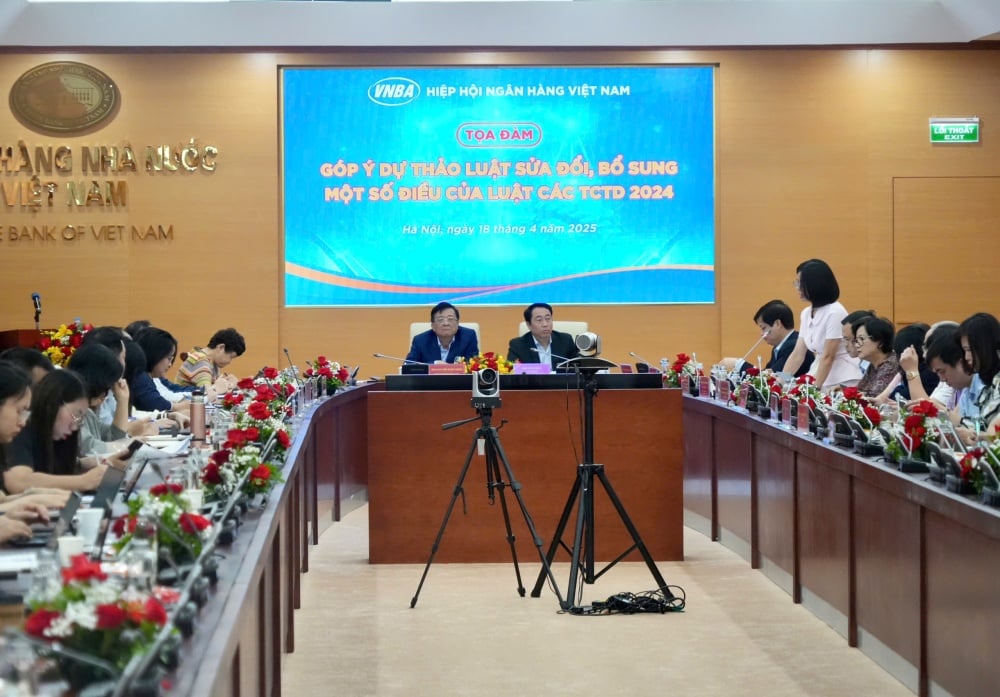
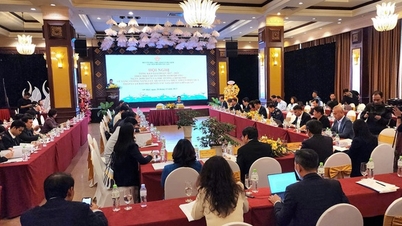
Overview of the Seminar |
The rate of customers voluntarily repaying their debts to the bank remains very low.
In his opening remarks at the seminar, Mr. Nguyen Quoc Hung, Vice Chairman and General Secretary of the Vietnam Banking Association, stated that the Law on Credit Institutions of 2024 does not contain provisions on handling bad debts. The expiration of Resolution 42 has led to a significant and serious impact on the handling of bad debts.
In fact, credit institutions have been very active and proactive in implementing many measures to handle bad debts, control and limit the 발생 of new bad debts, strengthen credit operations, and implement policies to restructure repayment terms and maintain debt classifications to support customers. However, in the context of a domestic economy still facing many difficulties due to the impact of the global situation, while the legal framework for handling collateral assets and bad debts still has many shortcomings, lacks uniformity and consistency, leading to an increase in bad debts.
 |
| Mr. Nguyen Quoc Hung - Vice Chairman and General Secretary of the Vietnam Banking Association, delivered a speech at the seminar. |
By the end of 2024, the total non-performing loans (NPLs) amounted to over 1 trillion VND, including the five restructured banks. Excluding these five banks, the NPL ratio was approximately 1.93%, an increase compared to 2023 (approximately 1.7%). Of this, on-balance sheet debt was approximately 780,000 billion VND, debt sold to VAMC was approximately 101,000 billion VND, and debt with potential NPL risks was approximately 450,000 billion VND. Thus, the total amounted to over 1,000,000 billion VND.
In 2024, the debt recovery rate, primarily related to collateral, accounted for approximately 46.6%. The rate of customers proactively repaying bad debts to banks was only 36%; the remaining debt sold to VAMC and debt enforced through the sale of collateral accounted for a very low percentage, approximately VND 7,000 billion. Thus, the rate of customers voluntarily repaying their debts to banks is very low.
In the first two months of 2025, non-performing loans increased rapidly (by approximately VND 34,000 billion), while the rate of non-performing loan resolution only reached about VND 15,000 billion due to credit institutions setting aside risk provisions for resolution.
"Thus, the main source of bad debt resolution comes from credit institutions drawing from their risk provisions. This has greatly affected the business results of credit institutions, as well as reducing resources to support businesses, hindering cash flow, and impacting liquidity if not addressed promptly," Mr. Nguyen Quoc Hung analyzed.
Furthermore, the Vice President and General Secretary of the Banking Association also stated that judgments that have become legally enforceable are facing obstacles and difficulties. Some judgments, even after 27-28 enforcement attempts, auctions, and asset sales, remain unresolved due to constraints under the Land Law. Of the more than 40,000 cases that have become legally enforceable and transferred to enforcement, only 15% were resolved in 2024, with the amount of money involved being small compared to the legally enforceable judgments.
"We all have a responsibility to protect the legitimate rights and interests of the people, but that doesn't mean protecting wrongdoing. Borrowers have an obligation to repay their debts, not to make promises to the bank to repay but then find ways to delay, evade, or repay the principal without paying interest, or even join groups that default on loans," Mr. Nguyen Quoc Hung emphasized.
Given the aforementioned difficulties, Mr. Nguyen Quoc Hung believes that amending and supplementing some articles of the Law on Credit Institutions 2024 not only facilitates debt recovery for banks but also serves as a wake-up call for borrowers to be conscious and responsible in repaying their debts, eliminating the mindset of finding ways to avoid repayment, refusing to hand over assets, requesting interest waivers, or even borrowing to repay the principal without paying interest, while having substantial collateral.
Amending the Law aims to remove obstacles in debt resolution and unlock investment resources for the economy.
Affirming that after Resolution 42 expired, banks were very concerned about being unable to recover debts, Vice Chairman and General Secretary Nguyen Quoc Hung said that there are currently many contents in the Law on Credit Institutions 2024 that need to be amended and supplemented, but because those contents are related to other laws, such as the Land Law, which also needs to be adjusted accordingly.
Based on practical experience, the difficulties faced by credit institutions, and the viewpoints previously drafted for inclusion in the Law on Credit Institutions, Mr. Nguyen Quoc Hung stated that the Banking Association has compiled three main points: legalizing regulations on the right to seize collateral; legalizing regulations on the seizure of collateral by the party obligated to execute the judgment; and legalizing regulations on the return of collateral that is evidence in criminal cases, and adding regulations on the return of collateral that is evidence or means of administrative violations.
During the drafting process of this draft, the Vietnam Banking Association also participated alongside the State Bank of Vietnam and the drafting agency to submit it to the Government. The Government also agreed with the proposal of the State Bank of Vietnam and unanimously agreed to submit it to the National Assembly for consideration of amendments and additions to the draft Law on Credit Institutions (amended) at the 9th Session of the 15th National Assembly.
Commenting on the Draft Law, Ms. Nguyen Thi Phuong – Deputy Head of the Banking Legal Club, Vietnam Banking Association, stated: When a contract/agreement is signed by the legally authorized representatives of the parties, there is a basis to determine that the parties have agreed, unified, and consented to all the contents recorded in the signed contract/agreement, including the content that "the secured party has the right to seize the collateral for the bad debt when the case of handling the collateral occurs according to the provisions of the law".
 |
| Nguyen Thi Phuong – Deputy Head of the Banking Law Club, Vietnam Banking Association, shared her opinion. |
“Adding the phrase ‘the guarantor agrees to’ to point b, clause 2, Article 198 of the Draft is unnecessary and creates difficulties in enforcing the law in cases where contracts/agreements lack this phrase. Therefore, it is necessary to consider removing the content ‘the guarantor agrees to allow the secured party the right to seize the collateral of the bad debt when the collateral is processed according to the provisions of the law’,” Ms. Phuong suggested.
In addition, a representative from the Banking Law Club raised concerns about the regulation requiring credit institutions to notify the party holding the collateral before the seizure date (for movable assets).
According to Ms. Phuong, this regulation is unsuitable/impractical for collateral vehicles such as cars/transportation vehicles because they are frequently moved/not fixed in place, making it difficult to accurately identify the person holding the collateral and notify them in advance. She suggests that the drafting committee consider removing the requirement for prior notification to the person holding the collateral (to suit the specific characteristics of this type of asset) or consider including a provision for notifying the person holding the collateral (if applicable) to ensure consistency within the provisions.
Ms. Phuong also expressed concern about the phrase "contrary to social ethics" in the Draft: "...During the process of seizing collateral, credit institutions, branches of foreign banks, debt trading and processing organizations, and organizations authorized to seize collateral shall not apply measures that violate legal prohibitions or are contrary to social ethics." (Clause 6, Article 198a of the Draft).
However, this is a difficult issue to define, lacking specific regulations and standards, and heavily reliant on subjective assessment. Consequently, credit institutions find it very difficult to determine what measures are considered ethically sound during the seizure of collateral, potentially impacting their debt recovery and resolution. Currently, Decree 21/2021/ND-CP dated March 19, 2021, guiding the Civil Code on securing obligations, also lacks detailed guidance on this matter.
In his remarks, Dr. Can Van Luc stated that the amended Law on Credit Institutions of 2024, which officially came into effect on July 1, 2024, has introduced adjustments to address difficulties and obstacles in the legal regulations of the banking system. However, it is regrettable that the 2024 Law on Credit Institutions did not codify some provisions in Resolution 42/2017/QH14, such as the right to seize collateral, affecting the ability of credit institutions to handle bad debts. Therefore, according to him, this amendment to the Law on Credit Institutions aims to fill legal gaps; clarify unclear points; and ensure consistency and uniformity among related laws.
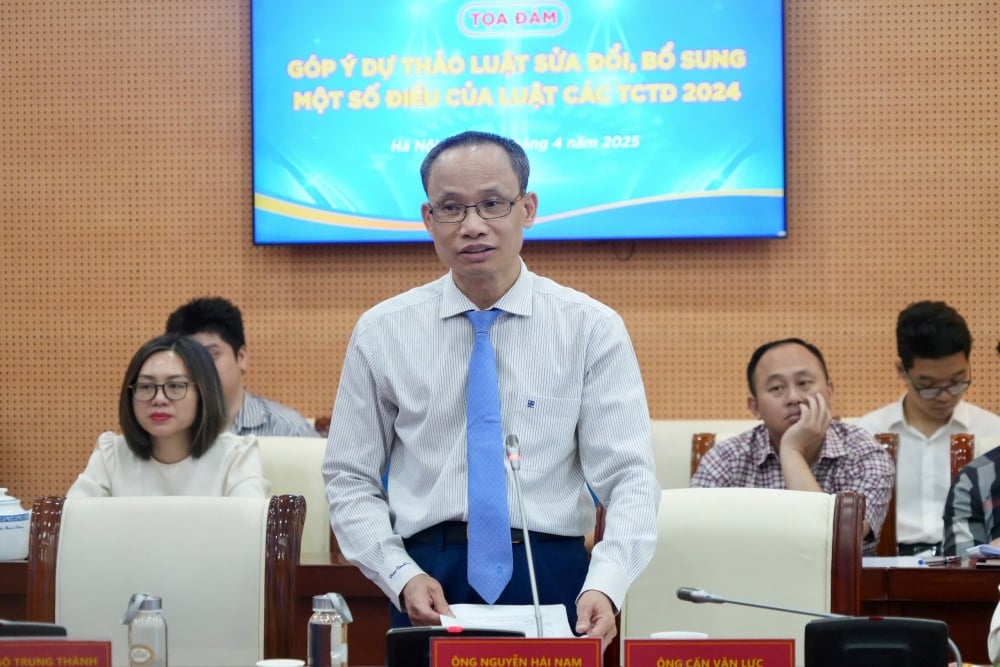 |
| Dr. Can Van Luc contributed his opinions to the Draft. |
"More importantly, we need to remove obstacles and barriers, unlock resources, improve the effectiveness and quality of legislation, and act in line with the directives of the General Secretary, the Prime Minister, and the National Assembly , especially in the context of increasing bad debts…," Dr. Can Van Luc expressed.
In that spirit, Dr. Can Van Luc contributed his comments on the draft law amending several issues, such as the right of credit institutions to seize collateral; the mechanism for handling collateral that is evidence in a case; and the handling of collateral that is the right to exploit mineral resources...
At the seminar, many delegates representing ministries, sectors, banks, and experts discussed and contributed many practical ideas to the draft amendments and additions to several articles of the Law on Credit Institutions of 2024 to be submitted to the National Assembly for approval.
Source: https://thoibaonganhang.vn/can-som-sua-luat-de-go-nut-that-xu-ly-no-xau-163005.html


![[Photo] Prime Minister Pham Minh Chinh presides over a meeting on private sector economic development.](/_next/image?url=https%3A%2F%2Fvphoto.vietnam.vn%2Fthumb%2F1200x675%2Fvietnam%2Fresource%2FIMAGE%2F2025%2F12%2F20%2F1766237501876_thiet-ke-chua-co-ten-40-png.webp&w=3840&q=75)




















































































Comment (0)