

US-Iran tensions continued to escalate in early June, as a series of military and economic developments unfolded rapidly in the Middle East.
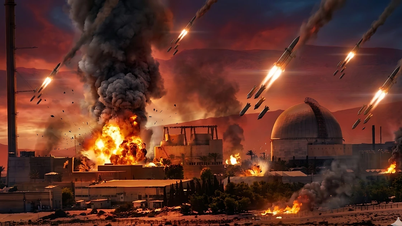
According to Iran's Mehr news agency, on June 3, several loud explosions were recorded in the area of Qeshm Island, a strategic location in the Strait of Hormuz. The cause of the explosions has not yet been determined, but this development immediately attracted attention amid the region's potential for instability.
At the same time, the U.S. Central Command (CENTCOM) announced that U.S. forces had neutralized a Botswana-flagged oil tanker heading toward Iran. According to CENTCOM, the vessel failed to comply with warnings and instructions from U.S. forces during its voyage, forcing the U.S. to use Hellfire missiles to strike the ship's engine room.
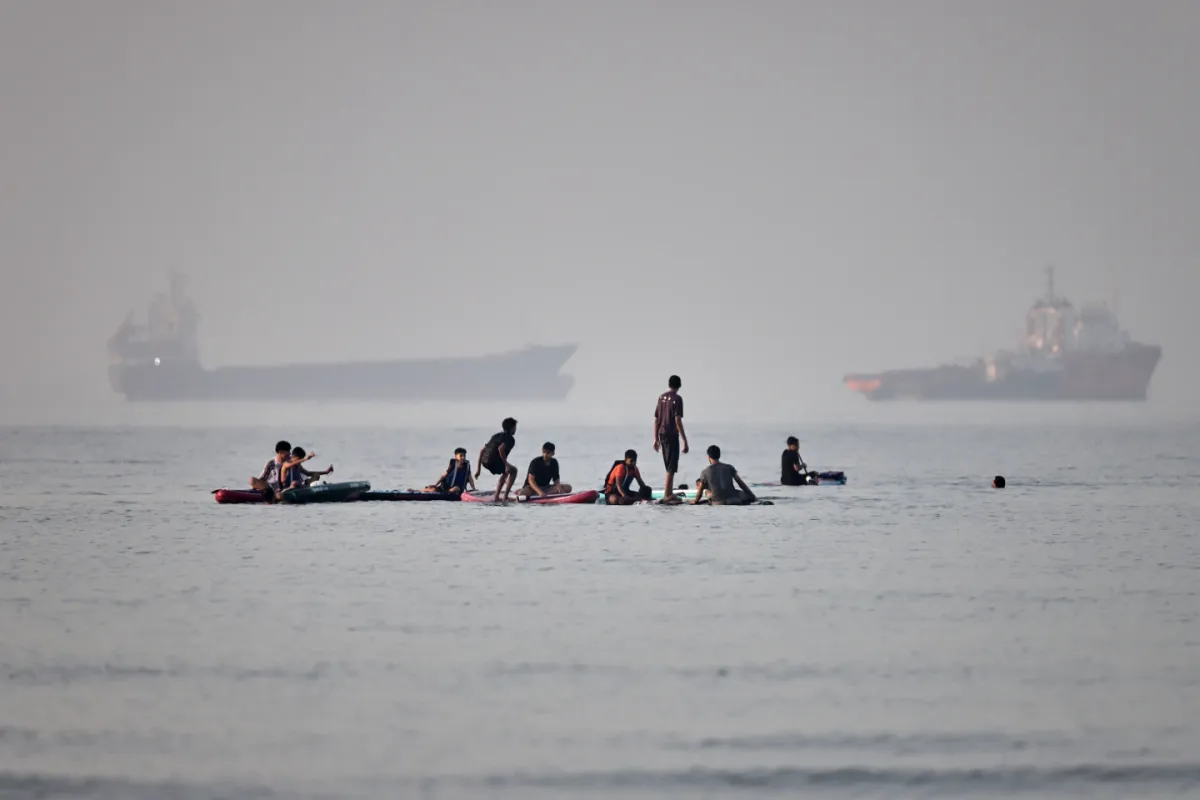
The Strait of Hormuz off the coast of Bandar Abbas, Iran, on June 1, 2026. (Photo: AP)
The situation continued to escalate as Kuwait activated its air defense system following attacks on bases housing US forces. Bahrain also issued warnings and ordered evacuations in several areas. CENTCOM later stated that the Iranian attacks did not hit their targets and announced that US forces had conducted retaliatory strikes on Qeshm Island.
On the economic front, the US continues to expand sanctions targeting Iran's financial system and digital assets. The US Treasury Department has added Nobitex and several other Iranian digital asset exchanges to its sanctions list, accusing these platforms of facilitating sanctions evasion.
The series of developments on multiple fronts indicates that US-Iran tensions are rapidly escalating. With multiple forces operating simultaneously in the Middle East, the risk of miscalculation could lead to a situation spiraling out of control.
Source: https://vtv.vn/cang-thang-my-iran-leo-thang-บน-nhieu-mat-tran-100260603143030925.htm
![[Photo] General Secretary and President To Lam presides over a meeting with the Central Organizing Committee.](https://vphoto.vietnam.vn/thumb/1200x675/vietnam/resource/IMAGE/2026/06/03/1780482764658_a1-bnd-4741-3342-jpg.webp)
![[Photo] First session of the 14th Congress of the Vietnam Trade Union](https://vphoto.vietnam.vn/thumb/1200x675/vietnam/resource/IMAGE/2026/06/03/1780465947883_ndo_br_img-3852-jpg.webp)

![[Photo] Secretary of the National Assembly Party Committee, Chairman of the National Assembly presides over the meeting of the Standing Committee and Executive Committee of the National Assembly Party Committee.](https://vphoto.vietnam.vn/thumb/1200x675/vietnam/resource/IMAGE/2026/06/03/1780480353201_ndo_br_bnd-2585-jpg.webp)









































![[Video] Sunset at Lap An Lagoon – Where the sun sets over the fishing nets](https://vphoto.vietnam.vn/thumb/1200x675/vietnam/resource/IMAGE/2026/05/31/1780192137701_beach-landscape-sea-water-nature-grass-745871-pxhere-com.jpeg)
































Comment (0)