Among the countless rustic dishes of Northern Vietnam, the fish soup from Quynh Phu, Hung Yen province, still holds a very special place, simple and unpretentious yet refined and profound. More than just a familiar breakfast dish, this fish soup is also a memory and a source of pride for generations of people from this rice-growing region.
The enduring appeal of this dish lies not only in its ingredients but also in the meticulous attention to detail in each step of its preparation. From the plump, fresh snakehead fish and the translucent white rice noodles made from local rice grains, to the steaming hot broth fragrant with ginger and dill… all combine to create a culinary masterpiece deeply rooted in the spirit of Northern Vietnam. Each bowl of Quynh Phu fish soup is the result of a series of elaborate tasks, requiring skill, patience, and a deep understanding of the ingredients.
Quynh Phu fish soup has become a local delicacy, a culinary brand with widespread appeal. From small roadside stalls in Quynh Phu to restaurants in Hanoi , Hai Phong, and many other provinces, the name "Quynh Phu fish soup" retains its appeal. For the people of Hung Yen, this dish is a way to "identify their hometown"; just a hot bowl of fish soup is enough to evoke memories of home.
Fish - the soul of the dish and the art of elaborate preparation.
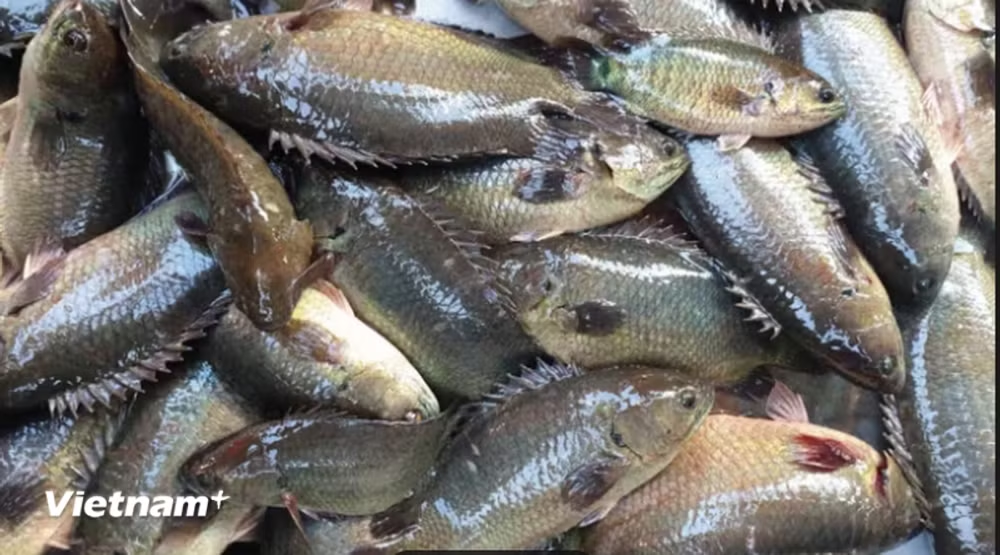
To make a truly authentic fish soup, the first and most important step is selecting and preparing the fish. Typically, people in Quynh Phu prefer snakehead fish – a type of fish closely associated with the rice paddies of Hung Yen, especially those caught in October when the rice plants are flowering. These fish feed on the rice blossoms, making them fatter, firmer, and more flavorful. Nowadays, due to the decline in natural fish stocks, carp or snakehead fish may be substituted, but snakehead fish is still considered the quintessential ingredient for authentic flavor.
The fish is scaled but its fins are left intact to make it easier to remove the bones when boiled. Then, the cook will cut the fish open along its belly, remove the intestines but keep the roe if any – the part considered the "essence" of the fish.
Next, the fish is placed in a bowl, a little salt and lemon juice are added, and it's tossed well to remove the slime. This is an important step to ensure the fish is clean, odorless, and retains its natural freshness. The entire process is usually done with gloves to ensure hygiene.
After initial preparation, the fish is boiled in a pot of boiling water with a few slices of old ginger, crushed dried onions, and a pinch of salt. The key is to add the fish only when the water is boiling vigorously. This helps the fish's surface firm up, reducing the fishy smell and preserving its natural sweetness. Once the water boils again, the cook skims off the foam and reduces the heat to low, simmering for about 3-4 minutes depending on the amount of fish.
The method for checking if the fish is cooked is also very simple: just gently break off the head of the fish; if the bones break easily, it's done. The fish is then removed and immediately immersed in ice water to "cool it down," helping the flesh firm up and making it easier to separate the bones.
The process of deboning the fish requires almost absolute dexterity. The fish is placed in the palm of one hand, while the other hand gently removes the fins, then separates the flesh from the bones. The central and belly bones are carefully removed to ensure the fish meat is completely clean.
The fish head and backbone are not discarded but are kept to simmer in the broth, creating a naturally sweet flavor. A small portion of the bone with some meat still attached is finely chopped and mixed with the fish meat, dill, and spices to make fried fish balls, further enriching the dish.
Fish braising techniques and the art of creating rich, deep flavors.
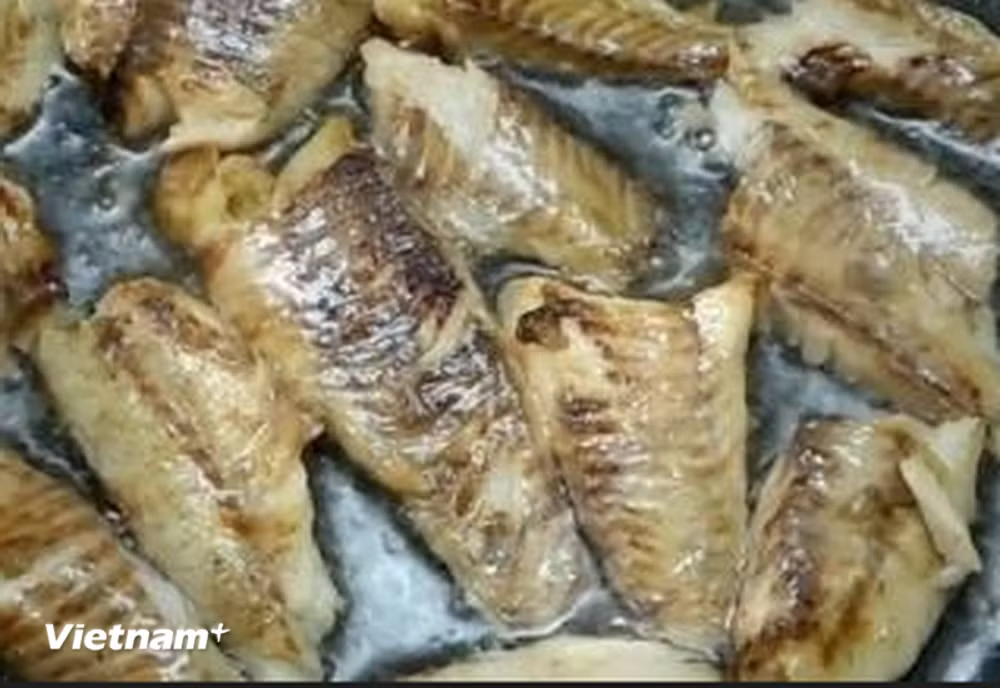


After initial preparation, the fish fillets are thoroughly marinated to absorb the full flavor. The seasoning includes high-quality fish sauce, crushed turmeric juice, annatto oil, salt, seasoning powder, pepper, and finely chopped dried onions. All ingredients are mixed well and marinated for at least one hour to allow the fish to absorb the flavors deeply.
Unlike many crispy fried fish dishes in other regions, Quynh Phu fish soup has its own unique characteristic: the fish is simmered over low heat. Dried onions are sautéed until fragrant, then the marinated fish is added, stirred well, and simmered over low heat. The fish is simmered for at least an hour until the liquid evaporates, the fish pieces become firm, turn golden brown, slightly charred on the surface, but still soft and sweet inside. This is what makes it different: not crispy like fried fish, but firm, flavorful, and deeply infused with spices.
Alongside the fish simmering process is the broth-making stage—a crucial element determining the dish's "clear, sweet, and flavorful" taste. Fish bones and heads are simmered with pork bones to create a sweet base. In the broth, the cook adds aged ginger and roasted shallots to remove the fishy smell and enhance the flavor. During simmering, avoid stirring vigorously to prevent clouding the broth; instead, skim off the foam frequently to maintain clarity.
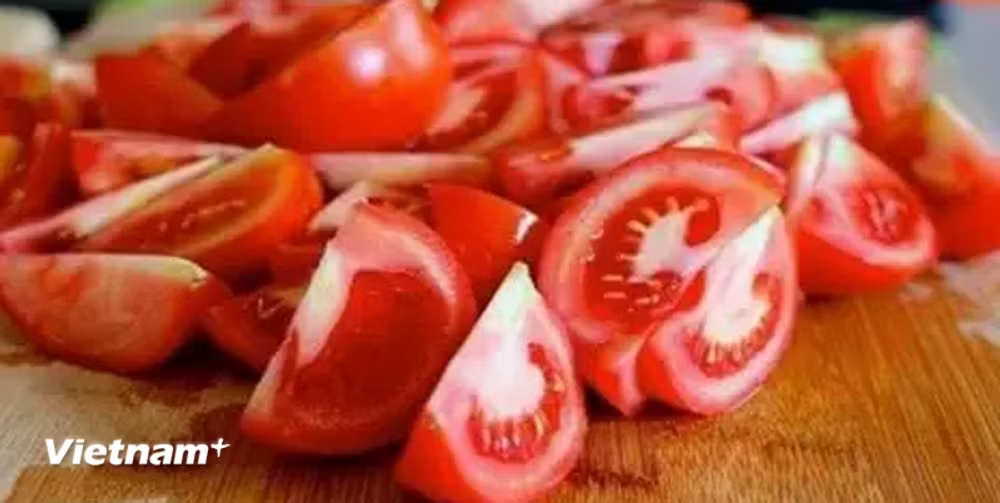
After simmering for the required time, the broth is carefully strained and mixed with bone stock. Next, fragrant fried onions and a few tomatoes are lightly sautéed and added to the pot to create an attractive natural color. Finally, the broth is seasoned with fish sauce, salt, and seasoning powder to taste. The result is a clear, sweet broth with a subtle fishy aroma but no fishy smell, offering a light yet rich and unforgettable flavor.
A blend of ingredients and memories
A complete bowl of Quynh Phu fish soup is not just a combination of ingredients, but a deliberate arrangement of flavor structures. The celery is cleaned, soaked in diluted salt water or rice water, rinsed, drained, and then cut into 4-5 cm pieces. The celery is gently squeezed to release its essential oils, making it softer and more fragrant when cooked.
Quynh Phu rice noodles are blanched before being placed in the bowl. These noodles are made from local rice, thinly steamed, dried, and have a characteristic translucent and chewy texture. When mixed with hot broth, the noodles soften but don't break apart, retaining their fibrous structure and the aroma of the rice.
On a base of rice paper and vegetables is braised fish, sometimes topped with fish roe. The broth is poured directly over the dish while still hot, then sprinkled with chopped scallions, dill, pepper, and sliced chili peppers according to taste.
The requirements for a perfect bowl of fish soup are that the fish meat should be firm but not dry; the broth should be clear, sweet, and flavorful; the rice noodles should be soft but not mushy; and the green vegetables should retain their freshness. When all the ingredients combine, the bowl of fish soup appears like a "countryside painting"—simple yet full of depth.
The beauty of fish soup lies in its flavor and the sensation it evokes. Whether on a chilly morning or a sweltering summer day, a steaming bowl of fish soup is enough to bring comfort. The delicate sweetness of the broth, the subtle richness of the fish, the aroma of the vegetables and rice noodles, the warm spiciness of ginger, and the fragrant dill… all transport the eater back to the fields, canals, and childhood memories of the Northern Vietnamese countryside.
From simple, rustic dishes to the culinary identity of the countryside.
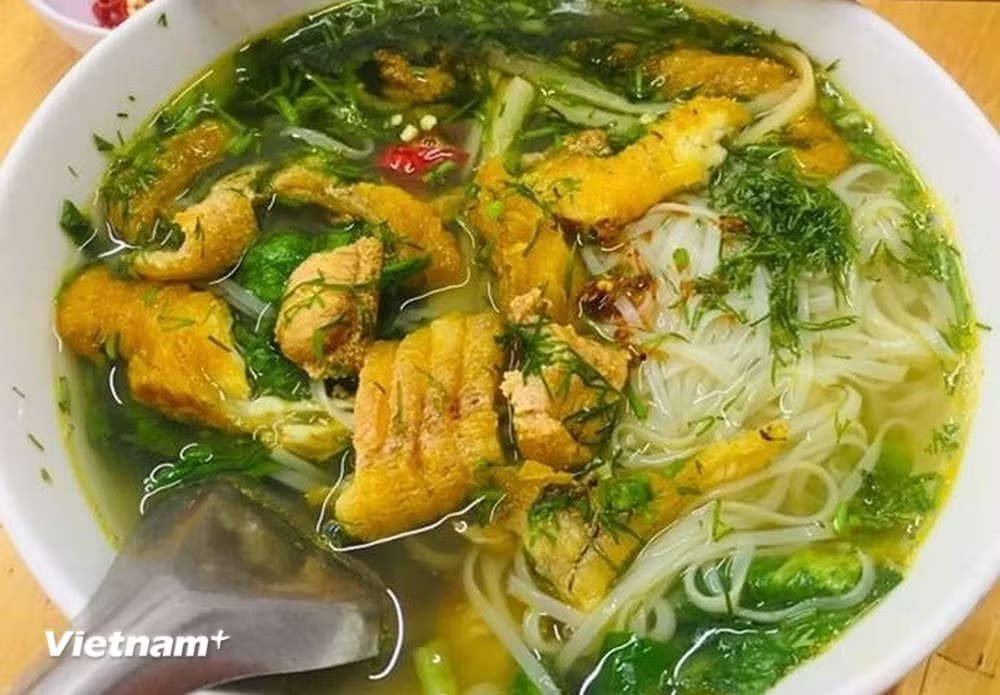
Quynh Phu fish soup is a local dish and a culmination of folk knowledge, sophisticated processing techniques, and the culture of rice-farming agriculture. From selecting the fish, preparing it, simmering it, and cooking the broth to the way it's eaten, each step reflects meticulousness and experience accumulated over generations. Perhaps it is this simplicity and sophistication that makes Quynh Phu fish soup a dish you'll remember even when you're far away, a dish you'll want to return to after just one bite, not only for its delicious taste, but also for the memories of home encapsulated in each steaming bowl.



Quynh Phu fish soup is a breakfast dish, a culinary masterpiece embodying the spirit of agricultural laborers, skillful preparation, and a love for the homeland preserved through generations.
From small roadside eateries in Quynh Phu commune to restaurants in distant towns, that flavor is still preserved, as a way for people from Hung Yen to recognize each other amidst the hustle and bustle of life.
In the context of increasingly diverse modern cuisine, this dish still retains its unique value: it is not elaborate in appearance, does not rely on industrial seasonings, but relies entirely on natural ingredients and traditional techniques.
That's what makes Quynh Phu fish soup a "flavor signature" of Hung Yen - a dish that those who leave home may forget many things, but can hardly forget the taste of a hot bowl of soup in the early morning in their hometown.
Source: https://www.vietnamplus.vn/canh-ca-quynh-phu-tinh-hoa-am-thuc-tu-dong-que-lua-post1118419.vnp

![[Photo] General Secretary and President To Lam receives Palestinian Ambassador Saadi Salama](https://vphoto.vietnam.vn/thumb/1200x675/vietnam/resource/IMAGE/2026/06/25/1782365384740_a1-bnd-9423-8322-jpg.webp)
![[Image] Schools organize meetings and introduce teaching models to students admitted to grade 10.](https://vphoto.vietnam.vn/thumb/1200x675/vietnam/resource/IMAGE/2026/06/25/1782368077271_ndo_br_z7970052192242-1ec8daeb77a6eed1a4e9f58c564ddd3e-jpg.webp)

![[Image] Ho Chi Minh City: Ma Lang area, Chicken-Rice Market about to change its appearance](https://vphoto.vietnam.vn/thumb/1200x675/vietnam/resource/IMAGE/2026/06/25/1782377698627_ndo_br_m1-jpg.webp)