


Speaking to the Nguoi Lao Dong newspaper, Ms. Minh Hoang (a resident of Da Nang City) said she was recently scammed out of nearly 3 million VND when she made a deposit for a hotel room through a fake fanpage.
Scams and more.
Ms. Minh Hoang recounted that, needing accommodation for her family of five to enjoy a weekend getaway in Da Nang to watch the fireworks, she searched for several 4-5 star hotels online. Seeing that Wink Icon Riverside Da Nang Hotel had three Facebook fan pages, she chose the one with the most likes and most frequently updated information to contact them.
The fanpage provided very professional advice. In addition, the fanpage reassured Ms. Hoang by suggesting she check prices on platforms like Agoda and Booking, where she could get a slightly lower quote.
"Despite being cautious, due to the lure of discounted prices and the thorough consultation, when they provided the name, sent a deposit receipt, and showed the account holder's company name, I didn't hesitate to transfer the money. After the transfer, they claimed a system error and that the booking couldn't be processed, then told me to contact accounting to get my money back. At this point, I knew I had been scammed. I called the hotel directly, and the staff said that the fan page was fake," Ms. Hoang said resentfully.
Ms. Ngoc Bich (residing in Tan Binh District, Ho Chi Minh City) was luckier. Recently, she searched for Movenpick Phan Thiet resort online to book rooms for her summer vacation . Seeing the common price of around 3 million VND/room/night, while a fan page also bearing the resort's name offered a "special deal" of 2.5 million VND/night including three meals, she considered booking 10 rooms. To be sure, she found the phone number and called the hotel for further information, only to be told that the other fan page was fake.
In Ho Chi Minh City, several 4-5 star hotels such as Majestic Saigon and Rex have warned about the appearance of numerous fake Facebook pages using names and images to scam guests into booking rooms and services. Ms. Nguyen Thi Xuan Dao, Deputy Director of Majestic Saigon Hotel, stated that besides collecting deposits or advance payments for non-existent services, the scammers are more dangerously collecting guests' personal information for other purposes.
Therefore, in addition to refraining from providing personal information, bank account details, or making any transfers to unofficial Facebook pages of the hotel, customers should be wary of promotions that appear suspicious.
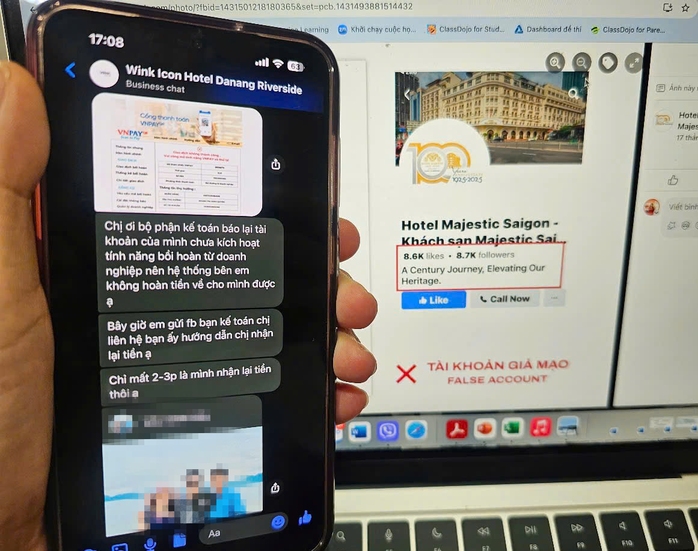
Numerous fake fan pages impersonating the hotel have appeared online to scam people.
Reduce risk
According to our research, scams involving tour bookings, flights, and hotels tend to increase during the peak summer travel season. Notably, these scammers not only take deposits but also trick customers into clicking on malicious links to steal bank account information and embezzle money.
Dennis Nguyen, Director of Maxbooking Consulting and Services Company, said that Maxbooking has assisted many hotel partners in handling situations where customers booked rooms through websites impersonating their brands. He commented that in the context of developing e-commerce, online fraud is constantly occurring. Customers should book services through reputable platforms and brands, and verify information with travel companies and hotels by phone to see if it matches the information online.
Representatives from Vietravel Tourism Company generally agree that scams are becoming increasingly sophisticated and organized. Many individuals are impersonating travel companies, creating fake fan pages or websites, advertising tours with "surprisingly low prices," and requesting customers to transfer money immediately to reserve their spots.
"They exploit the psychology of wanting cheap prices and the fear of tours being sold out during peak season, causing many tourists to fall into traps and lose money unnecessarily," a representative from Vietravel commented. According to this representative, to minimize risks for customers, the company regularly issues early warnings on official channels, providing clear information about its office system, call center, and tax identification number. Simultaneously, the company advises customers to only transact through verified official channels.
According to many travel companies, eradicating fraud is a difficult task because technology is becoming increasingly sophisticated, brand impersonation is becoming easier, while a segment of consumers lack the skills to identify authentic information.
Therefore, companies hope that regulatory agencies will establish more effective coordination mechanisms with businesses and various social media platforms to quickly address impersonation and fraudulent advertising. In addition, it is crucial to raise awareness and improve safe consumer practices among tourists.
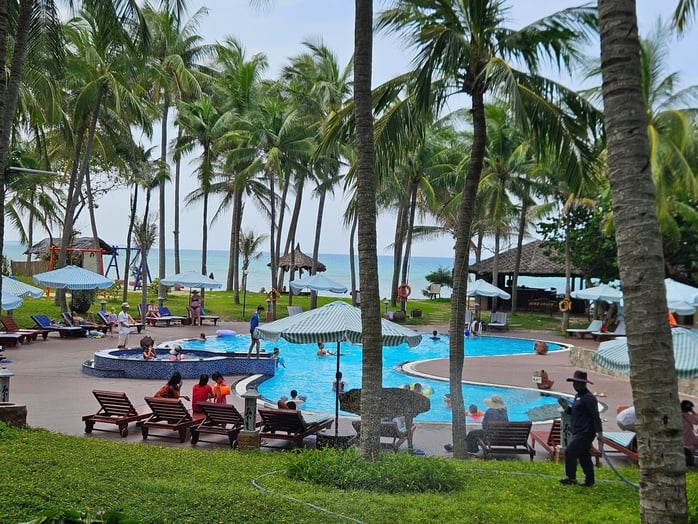
With increased travel demand during the summer, tourists are advised to exercise caution when booking services online.
Verified Facebook pages are not always official.
According to reporters, many people book rooms and travel services through verified Facebook pages because they trust them, but they are still scammed.
Explaining why fraudulent fanpages still have blue verification badges, information security expert Nguyen Huu Nguyen said that many scammers set up "ghost" companies and use fake information to apply for blue verification badges from Facebook. In addition, there are many groups that specialize in building and "nurturing" fanpages that meet the requirements for blue verification badges, then reselling them to those in need, including scammers.
To avoid losses, Mr. Nguyen advises users to carefully check information such as the business name, operating hours, address, legal representative, and bank account number. Before transferring money, customers should make a video call to verify the identity. "Reputable businesses will readily answer questions, while scammers often avoid appearing," he emphasized.
Province
Source: https://nld.com.vn/canh-giac-chieu-lua-dip-he-196250619223724675.htm















































































Comment (0)